
Chef Thomas
A Proper Bacon Sandwich
Back bacon in a hot pan, good white bread, soft salted butter. Ten minutes between waking up and the first bite of something that makes the morning make sense.
A cooking platform built around craft, culture, and the stories behind what we eat.
Created by Chef Thomas
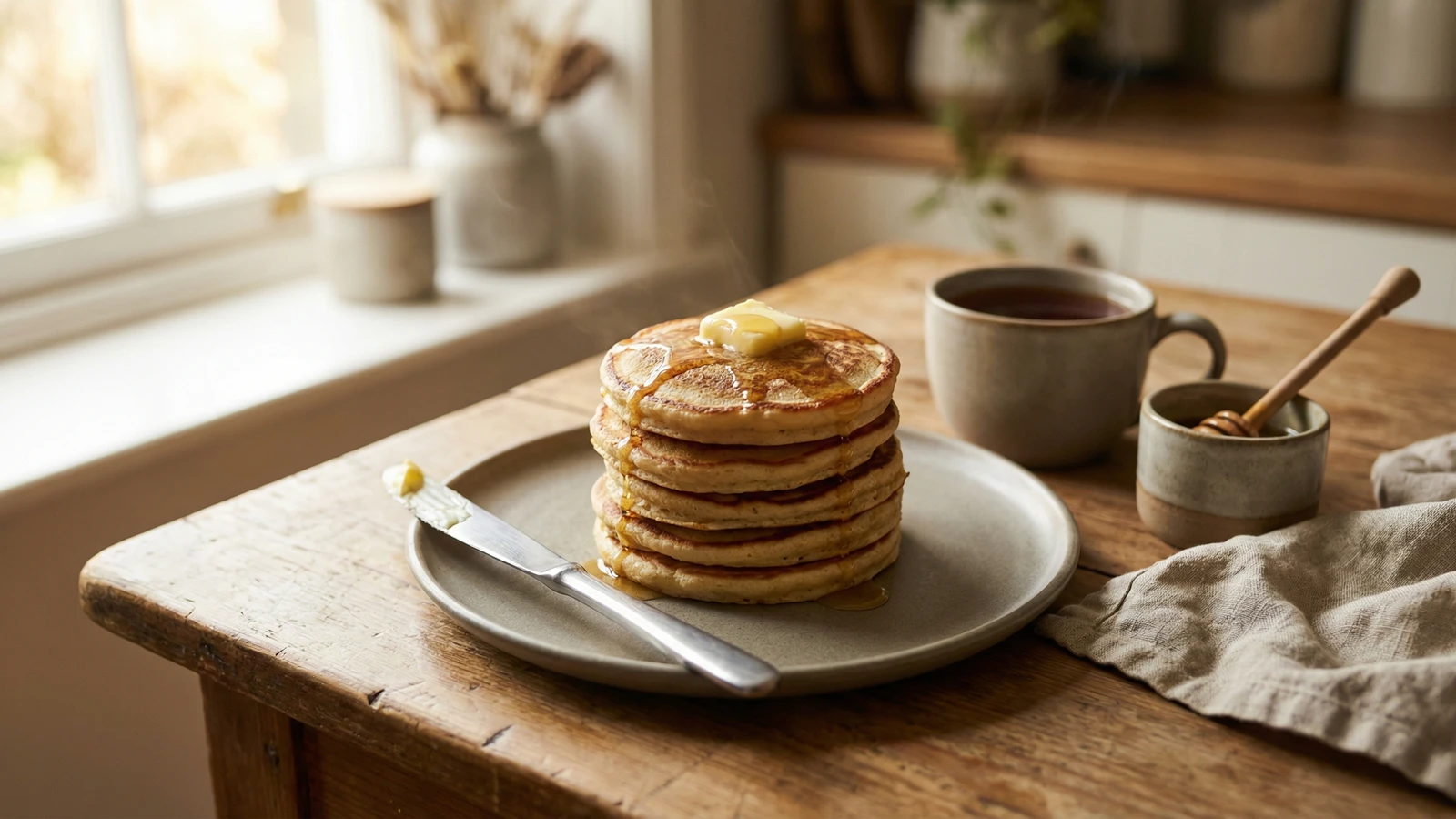
Thick little drop scones, golden from the griddle and soft in the middle, stacked on a warm plate with butter melting between them. A morning made slower and better on purpose.
Saturday morning. The kitchen is cold because nobody has been in it yet. The kettle goes on first, then the pan. By the time the tea is made, the batter is mixed, and by the time the first cup is half drunk, there are pancakes.
Scotch pancakes are not American pancakes. They're smaller, thicker, closer to a drop scone than a diner stack. They don't need syrup or a production. They need butter, a smear of honey if you like, and a cup of tea strong enough to hold the spoon upright. The batter is the work of three minutes. The cooking is the work of ten. We're only making breakfast.
I make these on the mornings when I have no plan and no hurry. There's a rhythm to it that I like: the spoon of batter onto the hot pan, the wait for the bubbles, the flip, the stack. The kitchen warms up around you while you work. The notebook says, more than once, "Pancakes. Saturday. Quiet." That's all there is to say about them, really. They're a small, warm thing to put in front of someone, and there are few better feelings than that.
Quantity
175g
Quantity
1 tablespoon
Quantity
pinch
Quantity
1
Quantity
150ml
Quantity
knob
melted, plus extra for the pan
Quantity
to serve
Quantity
to serve
| Ingredient | Quantity |
|---|---|
| self-raising flour | 175g |
| caster sugar | 1 tablespoon |
| fine sea salt | pinch |
| large egg | 1 |
| whole milk | 150ml |
| unsalted buttermelted, plus extra for the pan | knob |
| butter | to serve |
| honey or jam (optional) | to serve |
Tip the flour, sugar, and salt into a mixing bowl. Make a well in the centre. Crack in the egg and pour in about half the milk. Whisk from the middle outward, pulling in flour from the edges as you go, until you have a thick, smooth paste. Add the rest of the milk gradually and whisk until the batter is the consistency of very thick cream. It should drop reluctantly from the spoon, not pour. Stir in the melted butter last. Let it sit for five minutes while you heat the pan. The resting isn't fussiness. It lets the flour hydrate and the bubbles settle, and you'll get a better rise for it.
Set a heavy frying pan or flat griddle over a medium heat. Not high. Medium. Give it a few minutes to come up to temperature evenly, then rub it with a small piece of butter on a scrap of kitchen paper. The pan should be hot enough that a tiny drop of batter sizzles on contact and sets immediately, but not so hot that it browns before the inside has cooked. If the first pancake scorches, turn the heat down and wait a minute. The pan is telling you something. Listen to it.
Drop generous tablespoons of batter onto the pan, spacing them apart so they don't run into each other. They should spread into neat circles about seven or eight centimetres across. Leave them alone. After a minute or so, small bubbles will appear on the surface and begin to pop, leaving tiny craters. When most of the bubbles have burst and the edges look set and dry, flip them. This is the only moment that requires your full attention. The underside should be a deep, even golden brown. Cook the second side for another minute, until it too is golden and the pancake feels springy when you press it gently with your finger.
Stack the cooked pancakes on a warm plate and cover loosely with a clean tea towel while you finish the batch. Re-butter the pan lightly between rounds. Serve them warm, not hot, with good butter and whatever you like alongside: honey, jam, a squeeze of lemon. They want to be eaten quickly, while they're still soft and giving. A scotch pancake left to go cold is a different, lesser thing entirely.
1 serving (about 32g)
Culinary guides, cultural storytelling, and the editorial depth that makes cooking meaningful.
Discover Culinary ExplorerChef Thomas
Back bacon in a hot pan, good white bread, soft salted butter. Ten minutes between waking up and the first bite of something that makes the morning make sense.

Chef Thomas
Tinned beans warmed with butter and Worcestershire, spooned over thick toast and topped with a fried egg. The meal that half the country falls back on when the day asks nothing more of them.

Chef Thomas
Oats soaked overnight in milk and cream with grated apple and lemon, then spooned into bowls and buried under whatever the orchard and the hedgerow are offering this week.

Chef Thomas
Thick slices of black pudding fried crisp in butter, served alongside sharp apple wedges softened in the same pan. A cold-morning breakfast that smells like someone is paying attention.