Culinary Explorer

A cooking platform built around craft, culture, and the stories behind what we eat.
Discover Culinary Explorer
Schwammerlcremesuppe

Schwammerlcremesuppe

Created by

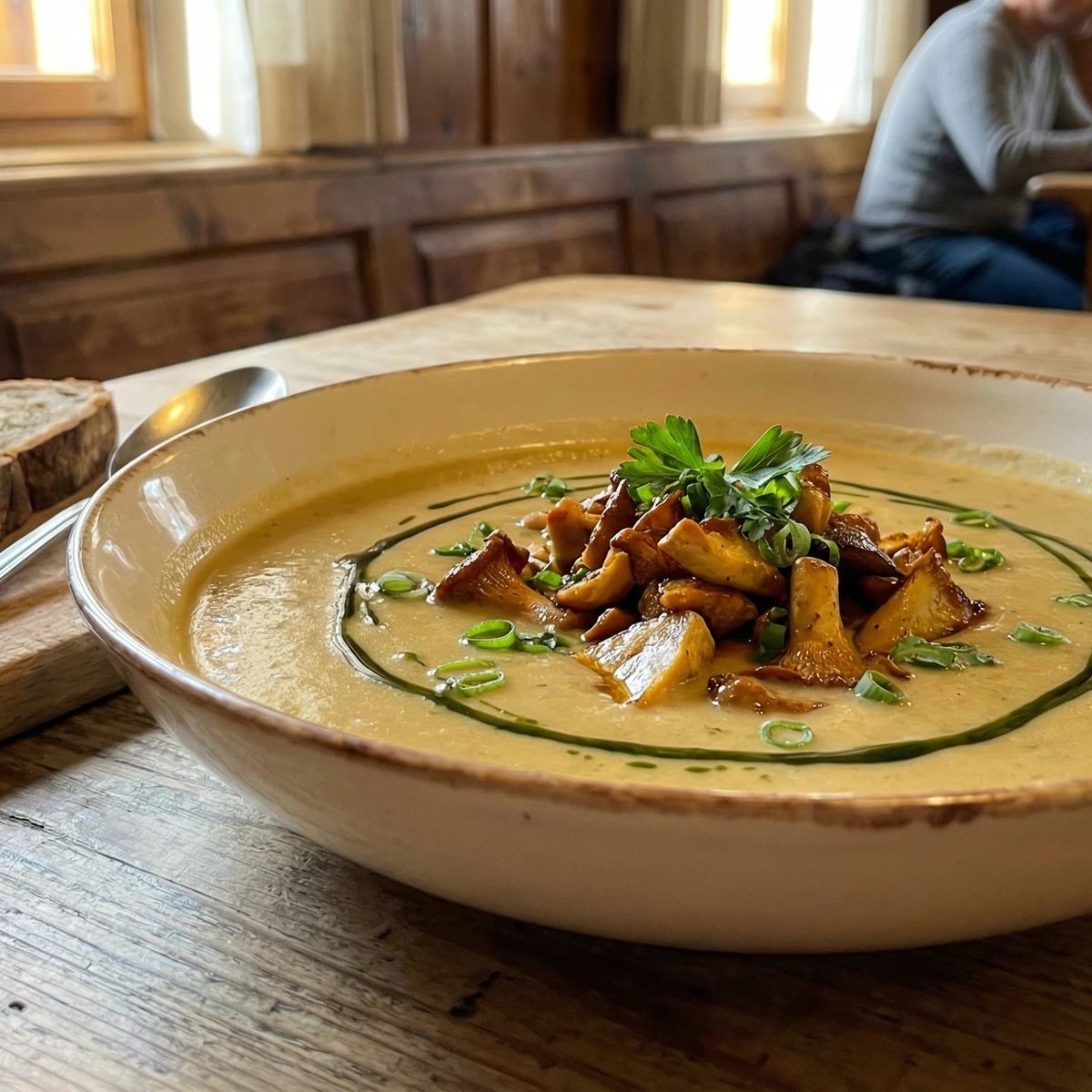
A rich Austrian forest mushroom soup, golden with butter and thickened with cream, the kind of bowlful that makes you understand why Austrians take their soup course so seriously.

Soups & Stews
Austrian
Dinner Party
Comfort Food
25 min
Active Time
35 min cook1 hr total
Yield4 servings

Every autumn in Salzburg, the Grünmarkt fills up with Schwammerl. Wooden crates of Eierschwammerl glowing that impossible egg-yolk gold, Steinpilze with caps the size of your fist, Parasol mushrooms fanning out like little umbrellas. The vendors know their forests the way a fisherman knows his stretch of river. You point, they tell you where it grew and how to cook it.

Gretel always said that a proper Austrian soup tells you the season before you taste it. Schwammerlcremesuppe is autumn in a bowl. You cook the mushrooms hard in butter until they give up their water and start to brown, then you build the soup around them with a light roux, good stock, and enough cream to make the whole thing feel like velvet. The flavor should be deep and earthy, not delicate. This is forest food dressed up just enough for the dining table.

I make this soup at my restaurant from late August through November, when the wild mushrooms are at their peak. Outside of season, I don't make it at all. Good cultivated mushrooms will give you a decent version in winter, and I'll tell you how, but the real thing depends on what the woods provide. If you can get your hands on fresh Eierschwammerl or Steinpilze, even a small handful mixed with ordinary mushrooms, you'll taste the difference in every spoonful.

The technique is not complicated, but two things matter: cook the mushrooms properly and don't drown them in cream. The mushrooms are the voice of this soup. The cream is there to carry them, not to take over.

Schwammerl is the Austrian dialect word for mushrooms, from the old German Schwamm, meaning sponge. Wild mushroom foraging has been part of Alpine food culture for centuries, and Austrian forest law still grants public foraging rights for personal use in most woodlands. Cream soups built on a roux base, called eingebrannte Suppen, are one of the oldest soup families in Austrian home cooking, dating to at least the 18th century when the Bürgerlich kitchen codified many of the techniques still used today.

The technique, the tradition, and the story behind every dish.

Discover Culinary Explorer

Ingredients

mixed wild mushrooms (Eierschwammerl, Steinpilze, or Parasol)

Quantity

500g

cleaned and roughly chopped

unsalted butter

Quantity

50g

onion

Quantity

1 medium

finely diced

garlic

Quantity

2 cloves

finely sliced

plain flour

Quantity

30g

dry white wine (Grüner Veltliner or similar)

Quantity

150ml

beef or vegetable stock

Quantity

750ml

Schlagobers (heavy cream)

Quantity

200ml

fresh lemon juice

Quantity

1 tablespoon

salt

Quantity

to taste

white pepper

Quantity

to taste

freshly ground

nutmeg

Quantity

pinch

freshly grated

fresh flat-leaf parsley

Quantity

2 tablespoons

finely chopped

fresh chives

Quantity

1 tablespoon

finely cut

unsalted butter (for finishing)

Quantity

small knob

crusty bread

Quantity

for serving

Equipment Needed

  • Wide heavy-bottomed pan or Dutch oven (28cm or larger)
  • Stick blender or countertop blender
  • Small sauté pan for garnish
  • Fine-mesh sieve (optional, for perfectly smooth soup)

Instructions

  1. 1

    Clean and prepare the mushrooms

    Brush the mushrooms clean with a dry cloth or soft brush. Don't wash them under running water. Wild mushrooms are sponges and they'll soak up liquid you'll spend the rest of the recipe trying to cook back out. If they're very dirty, a quick damp wipe is fine, but dry them immediately on a clean towel. Roughly chop the larger ones, leave small Eierschwammerl whole or halved. Set aside a generous handful of the best-looking pieces for the garnish.

    If you're using Steinpilze, check the underside of the caps. The spongy pores should be firm and pale. If they've turned dark green and soft, scrape them off with a spoon. They won't hurt you, but they'll make your soup gritty.
  2. 2

    Sear the mushrooms

    Melt half the butter in a wide, heavy pan over high heat. When it foams and the foam begins to subside, add the mushrooms in a single layer. Don't crowd the pan. This is the most important step in the entire recipe. Mushrooms packed too tightly will steam instead of fry, and steamed mushrooms taste like wet cardboard. You want them sizzling hard, browning at the edges, concentrating their flavor. Cook without stirring for two to three minutes, then toss and let them brown on the other side. They'll release liquid first, then reabsorb it, then finally start to caramelize. Season with salt only after they've browned. Salt draws out moisture, and you want that moisture gone.

    If your pan isn't big enough for all the mushrooms in one layer, cook them in two batches. Crowding is the single most common mistake people make with mushrooms, and it's the difference between a soup with deep flavor and one that tastes like nothing much.
  3. 3

    Build the base

    Remove the seared mushrooms from the pan and set them aside. In the same pan, melt the remaining butter over medium heat. Add the diced onion and cook gently until soft and translucent, about five minutes. You don't want color on the onions here. Add the garlic and cook for one minute more, just until you can smell it. Sprinkle the flour over the onions and stir it in. Cook this roux for two minutes, stirring constantly. The flour needs to lose its raw taste, but it should stay pale. A blonde roux, the Austrians call it. It thickens without muddying the mushroom flavor.

  4. 4

    Deglaze and simmer

    Pour in the white wine and stir vigorously. The roux will seize up for a moment, then relax into a smooth paste as the wine works through it. Let the wine bubble for a minute to cook off the raw alcohol. Now add the stock in a steady stream, whisking as you go to prevent lumps. Bring to a gentle simmer. Return the seared mushrooms to the pot, keeping your garnish portion aside. Let the soup simmer for fifteen to twenty minutes. The flavors need time to come together and the roux needs time to do its work as a thickener.

    Grüner Veltliner is the natural choice here. It's Austria's white wine grape and it has a peppery, mineral quality that loves mushrooms. If you can't find it, any crisp dry white will do. Just avoid anything oaky or sweet.
  5. 5

    Blend to your texture

    This is where you decide what kind of soup you want. For a smooth, velvety cream soup, blend everything with a stick blender until completely smooth. For a more rustic version with texture and bite, blend only half the soup and stir it back into the chunky half. I prefer the rustic way. You can taste what you're eating, and those pieces of browned mushroom give every spoonful something to find. Either way, pass the blended soup through a sieve if you want it perfectly smooth. At my restaurant I don't bother. This is Gasthaus food, not Haubenküche.

  6. 6

    Finish with cream

    Return the soup to a gentle heat. Stir in the cream and let it warm through for two or three minutes. Don't boil it after the cream goes in or it may break. Add the lemon juice, a grating of nutmeg, and season with salt and white pepper. The lemon juice is quiet but essential. It lifts the earthiness of the mushrooms and keeps the cream from feeling heavy. Taste it now. Adjust. The soup should taste like a forest floor in the best possible way: deep, earthy, rich, with just enough brightness to keep you reaching for the spoon.

  7. 7

    Sauté the garnish

    While the soup warms, take that handful of reserved mushrooms and sauté them quickly in a small knob of butter over high heat until golden and slightly crisp at the edges. Season with a pinch of salt. These go on top of the soup at the table. The contrast between the silky soup and the seared garnish is what turns a good bowl into a memorable one.

  8. 8

    Serve the soup

    Ladle the soup into warm bowls. Pile the sautéed mushroom garnish in the center of each bowl. Scatter parsley and chives over the top. Serve immediately with good crusty bread for mopping up what the spoon can't reach. Mahlzeit!

Chef Tips

  • If you can't find fresh wild mushrooms, use 400g of good cultivated mushrooms (a mix of chestnut, oyster, and shiitake works well) plus 15g of dried Steinpilze soaked in warm water for twenty minutes. Strain the soaking liquid through a paper towel and use it as part of your stock. The dried mushrooms carry more concentrated flavor than fresh cultivated ones ever will.
  • White pepper, not black. Black pepper leaves dark specks in cream soups that look like dirt. Viennese cooks use white pepper in any pale or creamy dish, and they're right to.
  • The soup thickens as it sits. If you're reheating leftovers the next day, thin it with a splash of stock and check the seasoning again. Cream soups always need more salt after they've been in the fridge.
  • A tablespoon of good Kürbiskernöl (Styrian pumpkin seed oil) drizzled over each bowl just before serving is a beautiful Austrian finishing touch. The dark green oil and its nutty flavor against the pale cream soup is pure Steiermark. Only add it at the table, never cook with it.

Advance Preparation

  • The soup can be made up to two days ahead and refrigerated. Add the cream only when reheating, not before storing. The roux base reheats beautifully.
  • Sauté the mushroom garnish fresh just before serving. It loses its texture if it sits.
  • Dried Steinpilze can be soaked up to a day ahead and stored in their strained liquid in the fridge.

Frequently Asked Questions

Nutrition Information

1 serving (about 375g)

Calories
410 calories
Total Fat
31 g
Saturated Fat
19 g
Trans Fat
0 g
Unsaturated Fat
12 g
Cholesterol
100 mg
Sodium
780 mg
Total Carbohydrates
17 g
Dietary Fiber
2 g
Sugars
5 g
Protein
9 g

Note: Chef personas and recipes are created with AI assistance. Cook with care: follow safe food-handling practices, check doneness with a thermometer when needed, and adapt for allergies and your kitchen.

Where cooking meets culture.

Culinary guides, cultural storytelling, and the editorial depth that makes cooking meaningful.

Discover Culinary Explorer

More from Austrian Soups & Suppeneinlagen

Browse the full collection