
Chef Klaus
Allgäuer Krautkrapfen
The Allgäu pan dish that makes a meal from noodle dough, winter kraut, onion, and fat: brown the cut sides first, then cook gently so the rolls hold.
A cooking platform built around craft, culture, and the stories behind what we eat.
Created by
The Swabian Lent pocket that hides meat and spinach inside pasta dough, good in broth on Sunday and even better fried with onions the next day.
Maultaschen belong to Swabia first, especially around Lent and Easter, when the old joke says the meat was hidden from heaven inside the dough. Herrgottsbscheißerle, the little God-cheaters. A good one isn't a ravioli with a German hat on it. It's a broad, soft pasta pocket with a filling that tastes of meat, spinach, bread, onion, parsley, and nutmeg, all held together without turning heavy.
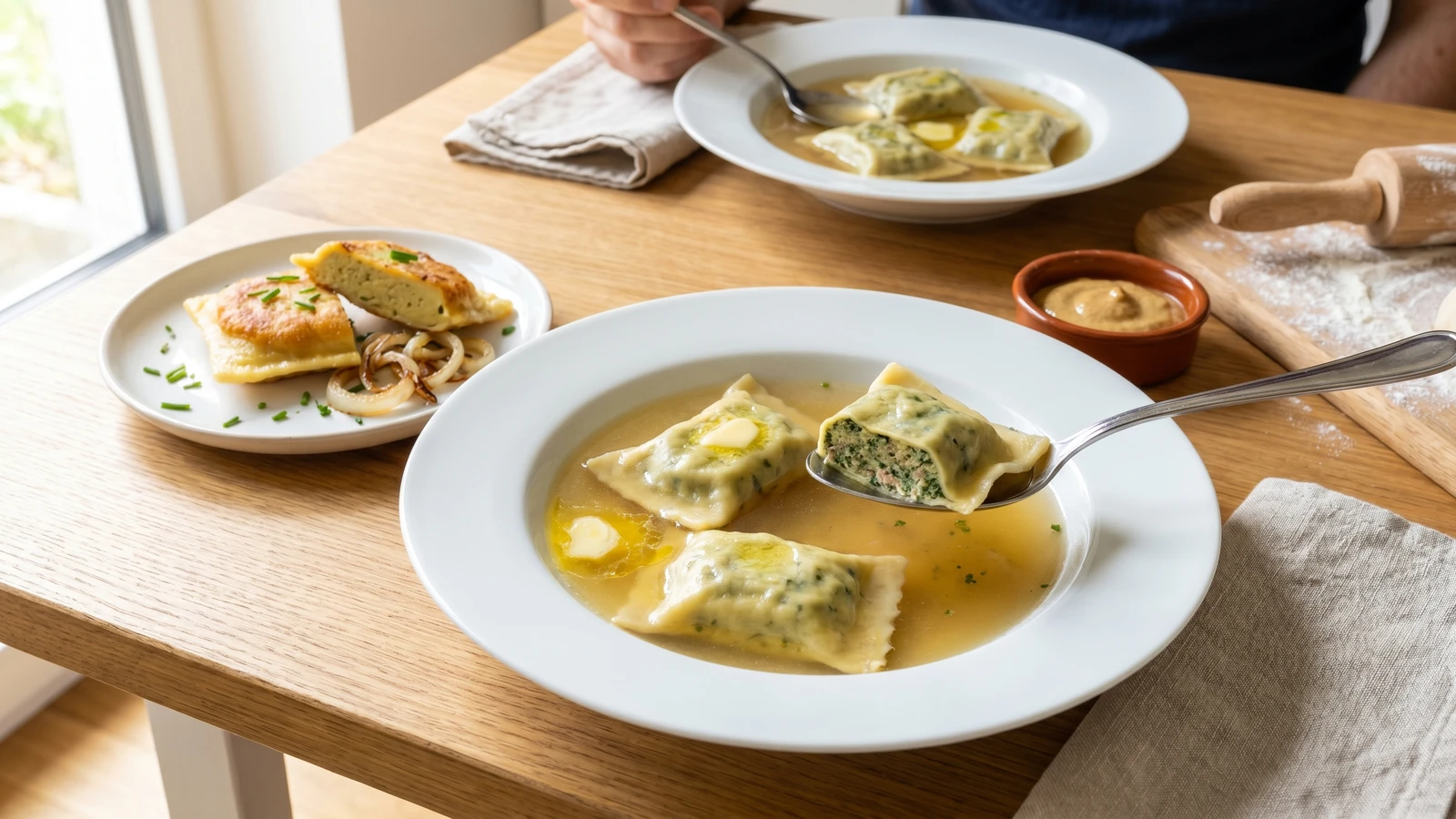
Swabia argues about the serving more than the pocket. In broth is the clean Sunday way, sliced and fried with egg and onion is the next-day way, and some tables dress them with browned onions and potato salad. Im Norden anders, im Süden anders, and here the south is speaking plainly. This is not a beer tent.
The one technique that decides it is the filling texture. Mince it fine enough to bind, but don't make paste, because paste cooks tight and dull while a chopped filling stays tender inside the noodle. The bread must be soaked and squeezed dry, the spinach must be cooked and squeezed harder, and the sealed edges must hold because water will find every lazy fold. Erst verstehen, dann kochen.
Maultaschen are tied to Swabian fasting kitchens, especially the legend of Maulbronn monastery, where meat was chopped with spinach and hidden inside pasta dough during Lent. The nickname Herrgottsbscheißerle, little God-cheaters, preserves that joke better than any archive does, though the monastery origin is legend rather than firm record. Since 2009, Schwäbische Maultaschen have held protected geographical status in the European Union, which fixes the dish firmly to Swabia rather than to a vague national idea of German cooking.
Quantity
400g
plus more for dusting
Quantity
4
Quantity
1 tablespoon
Quantity
1 teaspoon
Quantity
2 to 4 tablespoons
as needed
Quantity
250g
washed
Quantity
1, about 60g
Quantity
100ml
Quantity
1 tablespoon
Quantity
1
finely chopped
Quantity
1 small
finely chopped
Quantity
250g
Quantity
150g
Quantity
80g
finely chopped
Quantity
1
Quantity
1 small bunch
finely chopped
Quantity
1 teaspoon
Quantity
1/2 teaspoon
Quantity
1 teaspoon
plus more for cooking water
Quantity
to taste
freshly ground
Quantity
2 litres
Quantity
2 tablespoons
Quantity
2
thinly sliced
| Ingredient | Quantity |
|---|---|
| plain flourplus more for dusting | 400g |
| large eggs | 4 |
| neutral oil | 1 tablespoon |
| fine salt | 1 teaspoon |
| wateras needed | 2 to 4 tablespoons |
| fresh spinachwashed | 250g |
| stale white bread roll | 1, about 60g |
| milk | 100ml |
| butter | 1 tablespoon |
| onionfinely chopped | 1 |
| leekfinely chopped | 1 small |
| mixed minced beef and pork | 250g |
| Brät or fine sausage meat | 150g |
| smoked ham or baconfinely chopped | 80g |
| large egg | 1 |
| flat-leaf parsleyfinely chopped | 1 small bunch |
| Dijon or German medium mustard | 1 teaspoon |
| freshly grated nutmeg | 1/2 teaspoon |
| fine saltplus more for cooking water | 1 teaspoon |
| black pepperfreshly ground | to taste |
| strong beef or vegetable broth | 2 litres |
| butter, for serving | 2 tablespoons |
| onions, for servingthinly sliced | 2 |
Mix the flour, eggs, oil, and salt into a firm pasta dough, adding water only if the flour stays dry in the bowl. Knead it for 8 to 10 minutes, until smooth and tight, because a lazy dough tears when the filling swells in the pot. Wrap it and rest it 30 minutes; rested dough rolls thin without fighting you.
Wilt the spinach in a covered pan with only the water clinging to its leaves, then rinse it cold, squeeze it hard, and chop it fine. Water left in spinach makes the filling loose, and loose filling leaks. Soak the bread roll in milk for 10 minutes, then squeeze it dry as well; the bread binds the meat, but only after the spare milk is gone.
Melt the butter and cook the chopped onion and leek gently until soft and sweet, about 8 minutes, without browning them hard. Raw onion tastes sharp inside a closed pocket, and burnt onion turns the whole filling bitter. Let the mixture cool before it meets the meat, because warm onion starts softening the fat too soon.
Combine the minced meat, Brät or sausage meat, smoked ham, squeezed spinach, squeezed bread, cooled onion mixture, egg, parsley, mustard, nutmeg, salt, and pepper. Mix with your hand until it just holds together and looks speckled green and pink, not smeared grey. Fine enough to bind, rough enough to stay tender. Das braucht seine Zeit, but not a beating.
Roll the dough into long sheets about 1.5mm thick, dusting lightly so it doesn't stick. Lay spoonfuls of filling in a line along one half, leaving space between them, then brush the edges and gaps with water. Fold the dough over and press firmly around each mound, pushing out trapped air because air expands in the broth and opens the seam.
Cut the pockets into rectangles, about 8 by 10cm, and press the edges with the side of your hand or a fork. Don't make them tiny. Maultaschen are broad Swabian pockets, not fiddly restaurant parcels. Set them on a floured board and cover them while you finish the batch, because dry edges crack instead of sealing.
Bring the broth to a bare simmer, not a rolling boil, and slide in the Maultaschen in batches. Poach 10 to 12 minutes, until the dough is tender and the pockets feel firm but not tight. Boiling batters the edges open; simmering lets the filling cook through while the dough stays whole. Runter mit der Temperatur.
Serve them whole in the hot broth with parsley, or lift them out, slice thick, and brown them in butter with the sliced onions until the cut faces turn golden. In broth is clean and Sunday-like; fried is what you want the next day with potato salad. Weggeworfen wird nichts, and leftover Maultaschen are not a problem.
1 serving (about 330g)
Culinary guides, cultural storytelling, and the editorial depth that makes cooking meaningful.
Discover Culinary ExplorerChef Klaus
The Allgäu pan dish that makes a meal from noodle dough, winter kraut, onion, and fat: brown the cut sides first, then cook gently so the rolls hold.

Chef Klaus
Swabian egg pasta turned toward the apple cellar: fresh Spätzle tossed with browned butter, tart apples, cinnamon, and enough restraint to stay supper, not cake.

Chef Klaus
Hesse's pork goulash belongs to Apfelwein country: shoulder, onions, and tart cider cooked low until the cheap cut turns soft and the sauce lands sweet-sour, not sour-sweet.

Chef Klaus
The old sweet supper that saves yesterday's loaf: stale bread drinks eggy milk, the pan stays moderate, and butter browns the outside only after the centre has set.