Chef Joost
Aardappelgratin
A French name, a Dutch potato, and a Sunday table: aardappelgratin is what happens when a frugal kitchen borrows richness and behaves as if it had always belonged.
A cooking platform built around craft, culture, and the stories behind what we eat.
Created by
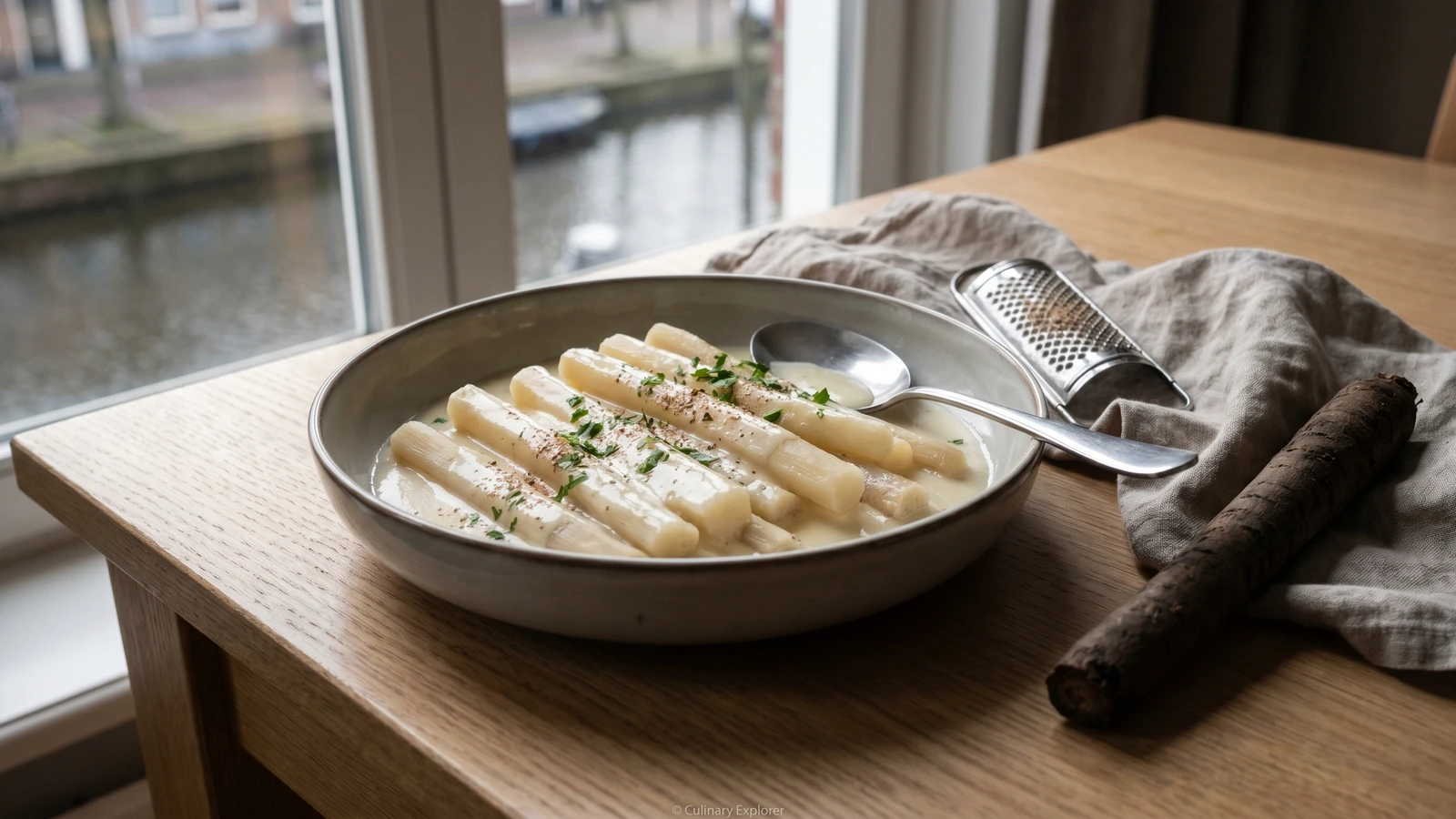
The root Dutch cooks called kitchen-maid's sorrow becomes winter asparagus at the table: black salsify, patient peeling, white sauce, nutmeg, and one forgotten vegetable refusing to be forgotten.
In my grandmother's second notebook, schorseneren appear with a little warning in the margin: hands eerst invetten, grease your hands first. That is not poetry. Black salsify bleeds a sticky white milk when you peel it, and the old Dutch nickname was keukenmeidenverdriet, kitchen-maid's sorrow, for obvious reasons. A root that punishes the impatient has always been a very Dutch sort of vegetable.
But let me tell you a secret. The thing hidden under that muddy black skin is pale, gentle, and almost elegant, though I don't use that word at my own table without supervision. The name schorseneer comes through French from scorzonera, tied to old Mediterranean names for the plant and its supposed power against snakebite. The Dutch, being practical, ignored the snake and noticed dinner. They called it winterasperge, winter asparagus, because when the fields were bare and proper asparagus was months away, this root gave the same long pale tenderness in a colder season.
The method is the lesson. Acidulated water keeps the peeled roots from browning, a quiet simmer keeps them intact, and the witte saus, white sauce, must be simple enough to let the vegetable speak. Butter, flour, milk, a little cooking liquid, nutmeg. Hou het altijd simpel. If you make the sauce too rich, you bury the root after rescuing it from the earth. That would be bad manners.
Black salsify, Scorzonera hispanica, entered northern European kitchen gardens widely in the seventeenth and eighteenth centuries, after earlier medicinal fame in southern Europe for its supposed use against venomous bites. In the Netherlands it became a winter root vegetable, often served with witte saus and nutmeg, and acquired household nicknames such as keukenmeidenverdriet because its latex stains hands and knives during peeling. Its modern label as a vergeten groente, forgotten vegetable, says more about twentieth-century shopping habits than about Dutch memory; older home kitchens never entirely let it go.
Quantity
1kg
Quantity
1
halved
Quantity
2 tablespoons
Quantity
1 teaspoon, plus more to taste
Quantity
40g
Quantity
40g
Quantity
300ml
warmed
Quantity
150ml
Quantity
1/4 teaspoon
Quantity
to taste
freshly ground
Quantity
1 tablespoon
chopped
| Ingredient | Quantity |
|---|---|
| black salsify (schorseneren) | 1kg |
| lemonhalved | 1 |
| vinegar or extra lemon juice | 2 tablespoons |
| salt | 1 teaspoon, plus more to taste |
| butter | 40g |
| plain flour | 40g |
| whole milkwarmed | 300ml |
| salsify cooking liquid | 150ml |
| freshly grated nutmeg | 1/4 teaspoon |
| white pepperfreshly ground | to taste |
| parsley (optional)chopped | 1 tablespoon |
Fill a large bowl with cold water and squeeze in the lemon halves, then add the vinegar or extra lemon juice. Keep another pan of salted water ready for cooking. The acid is not decoration; peeled salsify browns quickly in the air, and this bath keeps it pale enough to deserve its winter-asparagus nickname.
Rub a little oil on your hands or wear gloves, then scrub the salsify under cold water. Peel each root, cut it into lengths of about 6cm, and drop the pieces straight into the acidulated water. The sticky milk will cling to knife and fingers. Accept this calmly. Keukenmeidenverdriet was not invented by people with clean cuffs.
Lift the salsify from its soaking water and place it in the pan of salted water. Bring to a gentle boil, then lower to a steady simmer for 15 to 20 minutes, until a knife enters easily but the pieces still hold their shape. Save 150ml of the cooking liquid before draining; it carries the root's quiet sweetness into the sauce.
Melt the butter in a saucepan over medium heat, stir in the flour, and cook for two minutes until it smells faintly nutty but has not browned. Whisk in the warm milk little by little, then whisk in the reserved cooking liquid. Simmer for 5 minutes, stirring, until the sauce coats the back of a spoon.
Season the sauce with nutmeg, white pepper, and salt. Fold in the drained salsify gently, so the pale pieces stay whole under their white coat. Let everything sit over low heat for two minutes, just long enough for root and sauce to agree with each other.
Spoon the schorseneren into a warm shallow dish and scatter with parsley if you use it. Serve beside boiled potatoes, ham, roast chicken, or a plain omelette. I prefer it most with something modest, because the root has done enough work getting here.
1 serving (about 320g)
Culinary guides, cultural storytelling, and the editorial depth that makes cooking meaningful.
Discover Culinary ExplorerChef Joost
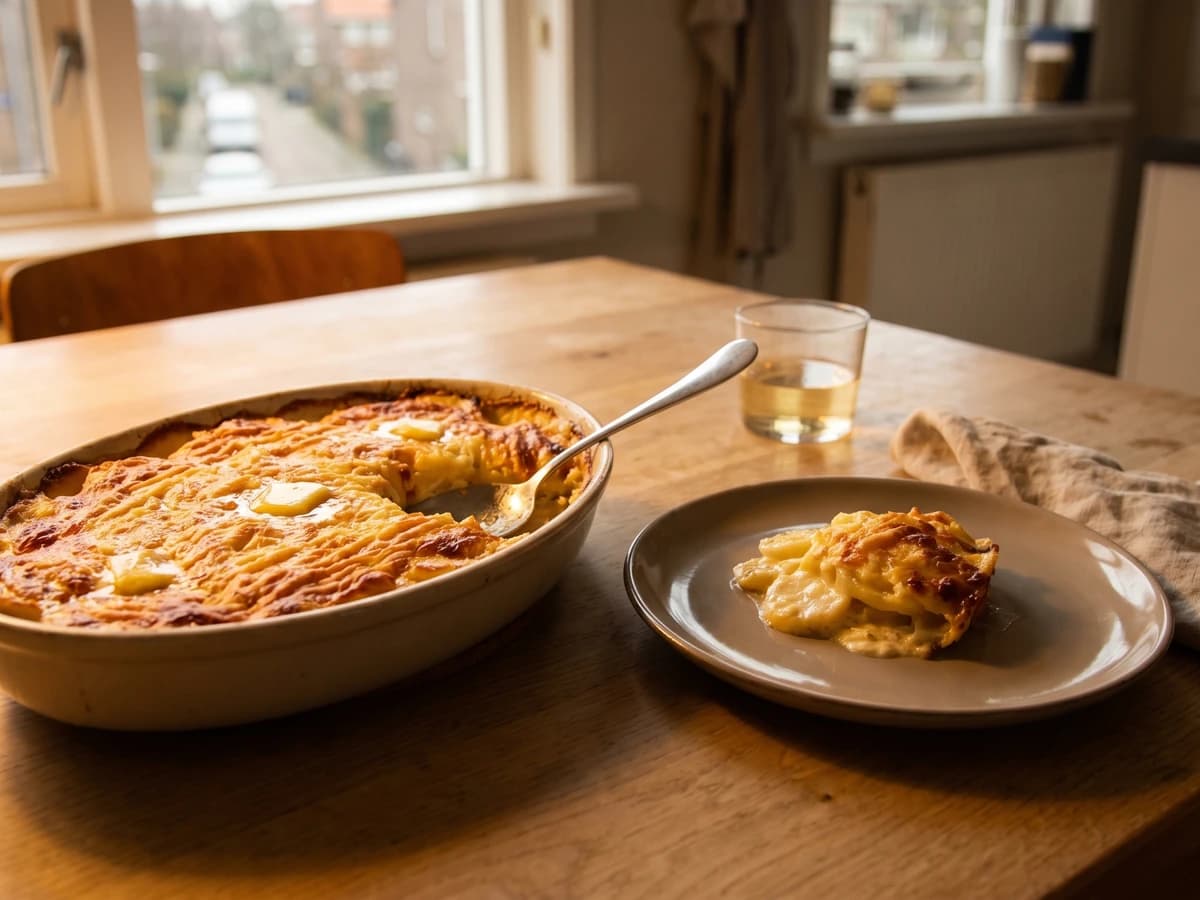
A French name, a Dutch potato, and a Sunday table: aardappelgratin is what happens when a frugal kitchen borrows richness and behaves as if it had always belonged.
Chef Joost
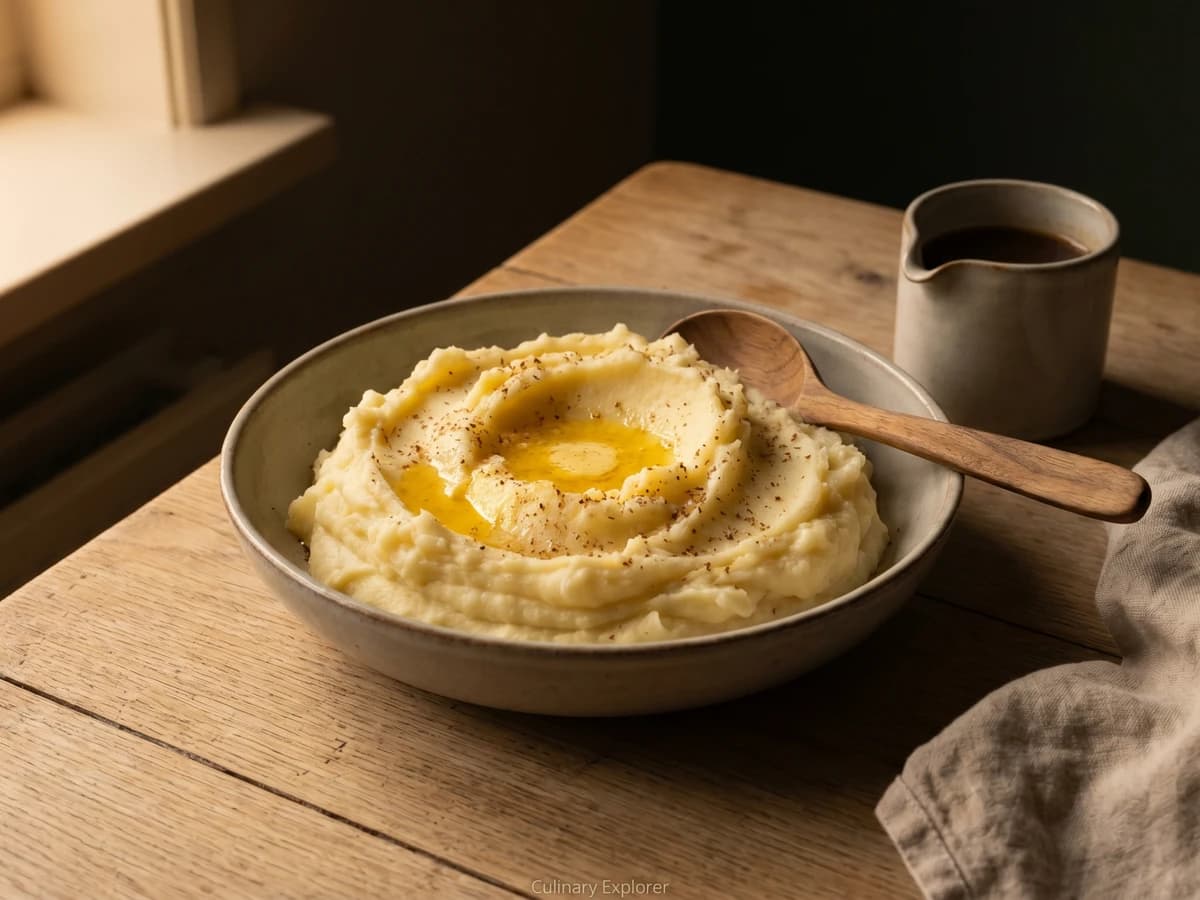
Aardappelpuree is the quiet heart of the Dutch AVG'tje: floury potatoes, warm milk, butter, nutmeg, and a small kuiltje, little well, built for the jus.

Chef Joost
Flower cabbage under old Gouda sauce: the quiet Dutch side dish that turns one boiled vegetable into the reason everyone reaches for the spoon twice.

Chef Joost
White beans peeking through green snijbonen give this old Dutch side its nursery-table joke: bare little children in the grass, sweet garden thrift with butter, nutmeg, and no apology.