
Chef Klaus
Ähzezupp (Kölsche Erbsensuppe)
The Cologne pea pot earns its depth from soaked peas and cured pork bone, simmered slowly until the soup thickens itself and the meat falls clean from the knuckle.
A cooking platform built around craft, culture, and the stories behind what we eat.
Created by
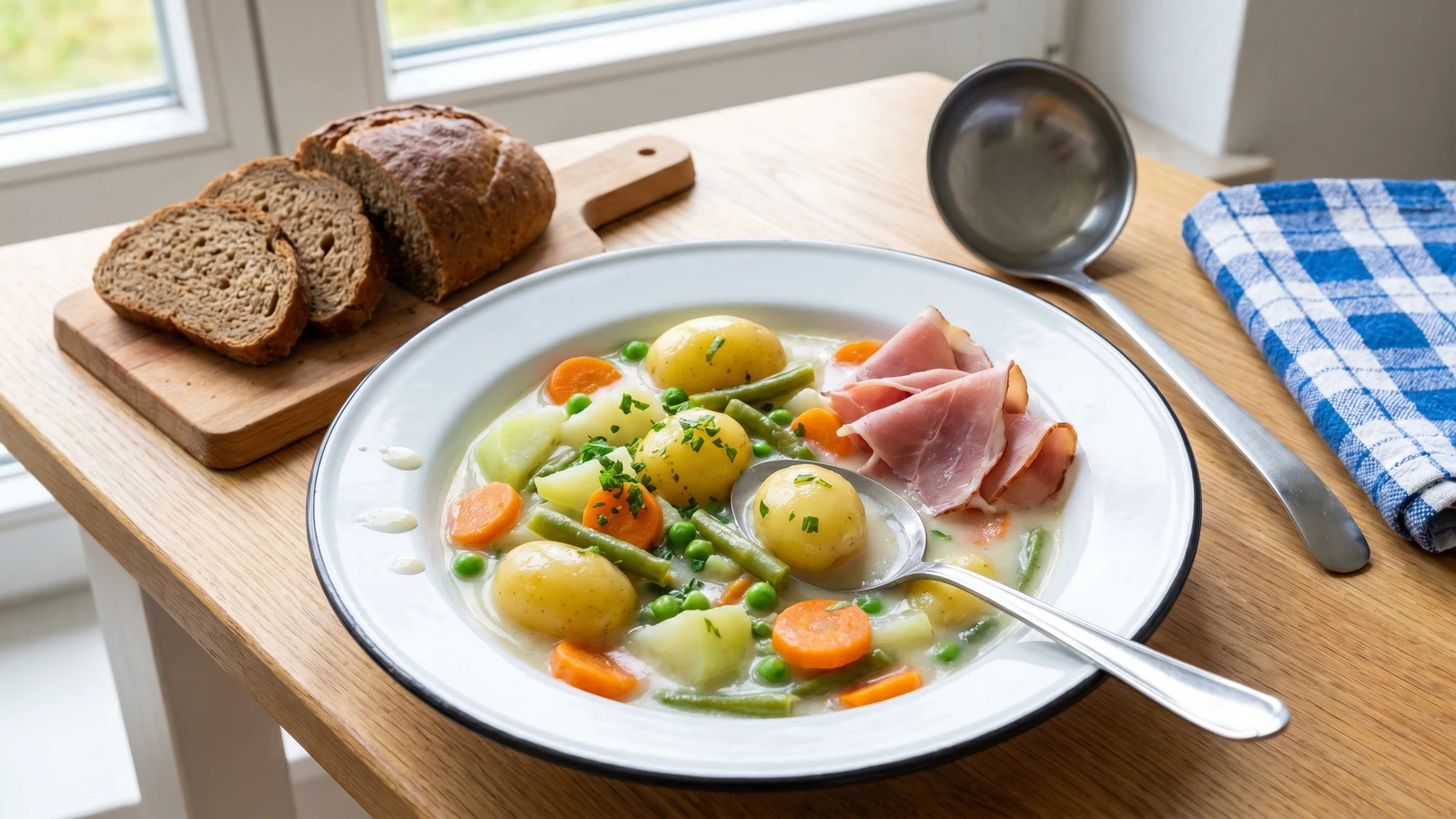
A northern garden stew for the first good vegetables, milk-pale and clean, with potatoes for body and the tender green things kept alive at the end.
Schnüsch belongs to Schleswig-Holstein and to summer, when the garden gives you a little of everything and none of it needs bullying. New potatoes, carrots, kohlrabi, peas, beans, milk, butter. Pale food, not brown food. Das ist kein Bierzelt.
In Angeln and around Flensburg you see it as a milk stew, sometimes with Katenschinken, smoked ham, served beside it or laid over the bowl. Farther north, across the Danish line, the related snysk can be looser and more soup-like. Im Norden anders, im Süden anders, and here the north is speaking softly.
The technique is simple and easy to ruin: add the vegetables in order of stubbornness. Potatoes and carrots go first because they need time to soften and give the broth body. Kohlrabi follows. Beans need enough cooking to lose their raw squeak. Peas go last because they turn dull and tired if you make them wait. The milk must never boil hard, because a rolling boil splits the sauce and turns a clean garden stew into curds and apology.
Keep the trimmings honest. Pea pods, parsley stems, kohlrabi leaves if they're fresh, they can scent the first water and then leave the pot. Weggeworfen wird nichts, but the bowl stays tidy. Schön ist, was schmeckt.
Schnüsch is recorded as a regional summer dish of Schleswig-Holstein, especially Angeln, the peninsula between the Schlei and Flensburg Fjord where German and Danish food words have long crossed the border. Its Danish relative, snysk, points to that shared border kitchen: garden vegetables, milk, and a little smoked pork when the larder allowed it. The dish belongs to the season of early vegetables, after the potato had become ordinary in northern German kitchens in the eighteenth and nineteenth centuries, not to the winter kraut pot.
Quantity
600g
peeled if needed and cut into bite-size pieces
Quantity
250g
sliced thickly
Quantity
250g
peeled and diced
Quantity
200g
trimmed and cut into short lengths
Quantity
150g
Quantity
750ml
Quantity
250ml
Quantity
100ml
Quantity
40g
Quantity
1 tablespoon
Quantity
1 small bunch
leaves chopped and stems reserved
Quantity
to taste
Quantity
150g
thinly sliced
| Ingredient | Quantity |
|---|---|
| new potatoes or waxy potatoespeeled if needed and cut into bite-size pieces | 600g |
| carrotssliced thickly | 250g |
| kohlrabipeeled and diced | 250g |
| green beanstrimmed and cut into short lengths | 200g |
| fresh or frozen peas | 150g |
| vegetable stock or light ham stock | 750ml |
| whole milk | 250ml |
| cream | 100ml |
| butter | 40g |
| plain flour | 1 tablespoon |
| parsleyleaves chopped and stems reserved | 1 small bunch |
| salt, white pepper, and freshly grated nutmeg | to taste |
| Katenschinken or other German smoked ham (optional)thinly sliced | 150g |
Bring the stock to a gentle simmer with the parsley stems and any clean pea pods or fresh kohlrabi leaves you have. Ten minutes is enough; you want a green garden note, not a swamp. Strain it, because the trimmings have done their work and the stew should stay clean.
Add the potatoes and carrots to the simmering stock with a good pinch of salt and cook for about 10 minutes. They go first because they are the slow ones, and the potato starch begins to give the broth body before the milk arrives.
Stir in the kohlrabi and cook for 6 minutes, then add the green beans and cook until the potatoes are just tender and the beans no longer taste raw, about 7 to 8 minutes more. Don't throw everything in at once. A carrot and a pea do not keep the same clock.
Mash the butter and flour together in a small bowl, then whisk it into the pot in small pieces so it thickens without lumps. Lower the heat, stir in the milk and cream, and keep the stew below a boil. Runter mit der Temperatur. Milk boiled hard splits, and Schnüsch should be pale and smooth, not grainy.
Add the peas and simmer gently for 2 to 3 minutes, only until they are bright and tender. Peas go last because their sweetness is quick to cook away. Season with white pepper, nutmeg, and salt at the end, because the stock and ham decide how much salt the pot already has.
Stir in most of the chopped parsley and ladle the Schnüsch into warm bowls. Lay the Katenschinken over the top or serve it beside the bowl, where its smoke stays clear instead of taking over the milk. Finish with the last parsley. Nicht aus dem Glas, and no packet sauce. The vegetables made the sauce already.
1 serving (about 650g)
Culinary guides, cultural storytelling, and the editorial depth that makes cooking meaningful.
Discover Culinary ExplorerChef Klaus
The Cologne pea pot earns its depth from soaked peas and cured pork bone, simmered slowly until the soup thickens itself and the meat falls clean from the knuckle.

Chef Klaus
The Allgäu's Alpine cheese soup works only if the Bergkäse melts gently off the heat, where it turns smooth instead of stringy.

Chef Klaus
A firm egg dough, grated into tiny crumbs and cooked in clear broth: Allgäu kitchen thrift, warm in the bowl, and finished only when the Riebele keep their bite.

Chef Klaus
The Altmark wedding broth is a clear soup with no tricks: bones for depth, patient skimming for clarity, and small semolina dumplings that make it festive.