Culinary Explorer
A cooking platform built around craft, culture, and the stories behind what we eat.
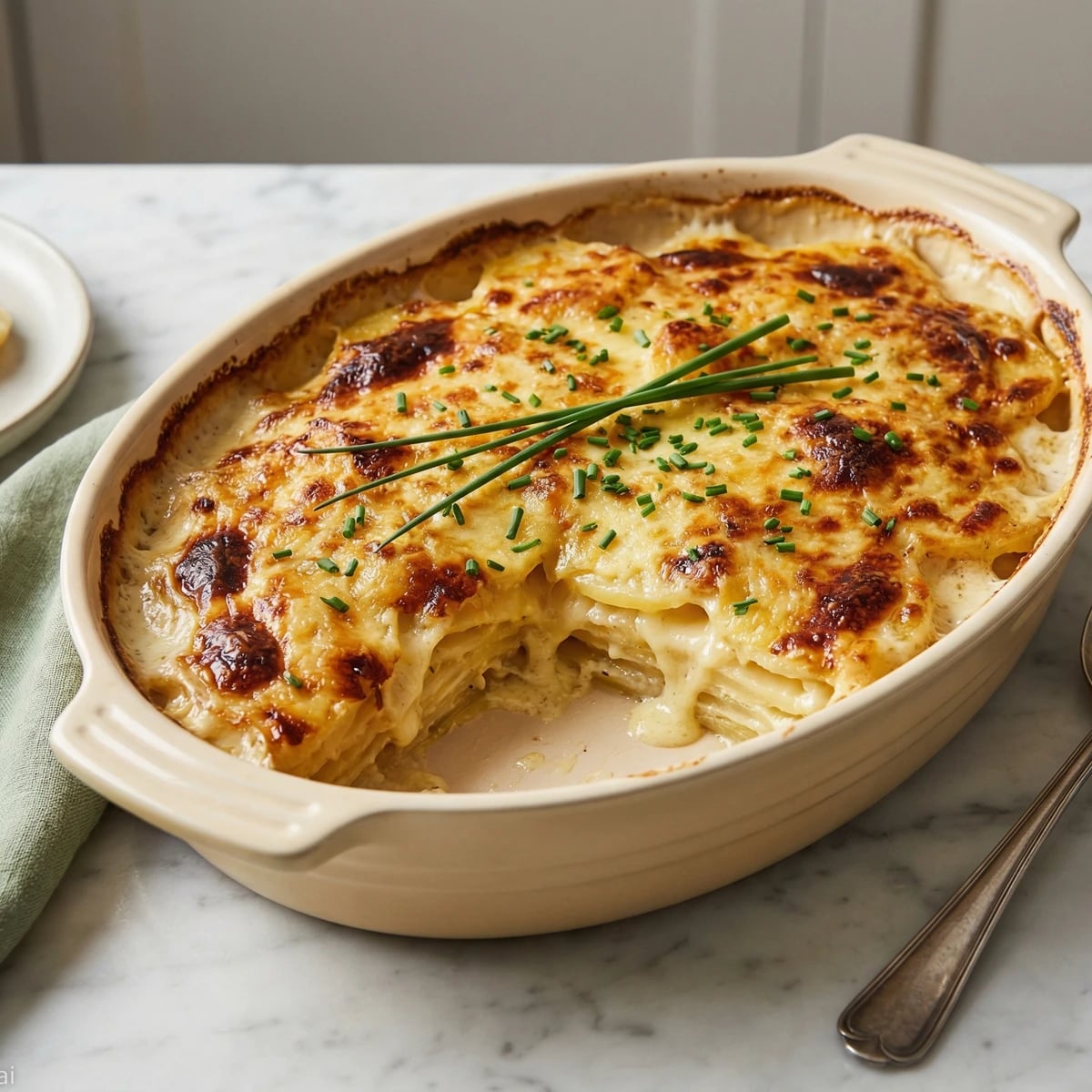
Scalloped Potatoes au Gratin
Created by Chef Dean
Silky layers of tender potato swimming in cream and nutty Gruyère, crowned with a burnished crust that shatters under your spoon. This is the dish that makes people ask for seconds before they've finished their firsts.
The French call it gratin dauphinois. American tables know it as scalloped potatoes. Both traditions share the same truth: when you combine thinly sliced potatoes, good cream, and patient heat, something transformative happens. The starches release and mingle with the dairy. The layers fuse into a silky mass while the top develops that amber crust everyone fights over.
This dish arrived in America with French settlers and found a permanent home on our holiday tables. Easter dinner wouldn't feel complete without it in many households, and for good reason. It's the kind of side that makes roasted lamb or glazed ham feel like an event. The preparation is simple. The result is spectacular.
I've taught this recipe to nervous home cooks who thought gratins required culinary school training. They don't. What they require is a sharp knife or mandoline, decent potatoes, and the willingness to stand at the stove long enough to infuse your cream properly. That's where the flavor lives. Skip the infusion and you'll produce something edible. Take the extra fifteen minutes and you'll produce something memorable.
For large gatherings, this gratin offers a gift: it improves when made ahead. Assemble it the night before Easter. Refrigerate it overnight. The flavors deepen while you sleep. Bake it the next day while your roast rests, and you'll serve something that tastes like you spent twice the effort.
Ingredients
Yukon Gold potatoes
Quantity
4 pounds
peeled
heavy cream
Quantity
3 cups
whole milk
Quantity
1 cup
| Ingredient | Quantity |
|---|---|
| Yukon Gold potatoespeeled | 4 pounds |
| heavy cream | 3 cups |
| whole milk | 1 cup |
Where cooking meets culture.
Culinary guides, cultural storytelling, and the editorial depth that makes cooking meaningful.
Discover Culinary Explorer