
Chef Dean
Classic Potato Latkes
Shatteringly crisp potato pancakes with lacy golden edges and tender, onion-flecked centers. This is the latke your grandmother made if she knew her way around a box grater and a heavy skillet.
A cooking platform built around craft, culture, and the stories behind what we eat.

Created by
Golden-crusted potato casserole with crispy edges and a tender, onion-laced interior. This is the kugel that silences a table of relatives, the one they'll ask you to bring every year.
Potato kugel belongs to the grand tradition of Jewish comfort food, born from necessity and perfected through generations of cooks who understood that humble ingredients, treated with respect, become extraordinary. The dish traces its roots to Eastern European shtetls where potatoes were plentiful and schmaltz was the cooking fat that made everything taste like home. During Hanukkah, kugel takes on special meaning. The holiday commemorates the miracle of oil, and this casserole, glistening with rendered chicken fat, honors that connection in the most delicious way possible.
The secret to exceptional kugel lives in three places: properly drained potatoes, a screaming-hot pan, and the courage to let it bake until the top turns deeply golden. Too many cooks pull their kugel early, afraid of burning. Don't be one of them. That crust is the prize. It should shatter when your serving spoon breaks through, giving way to a creamy, savory interior threaded with sweet onion.
I've watched home cooks approach this recipe with unnecessary anxiety. They worry about oxidation, about texture, about timing. Let me calm those fears. Yes, the potatoes will turn slightly pink as you work. It doesn't matter. Yes, the batter looks loose. It's supposed to. Yes, it takes over an hour in the oven. That's the whole point. This is a dish that rewards patience and punishes fussing. Make it once, trust the process, and you'll make it every year thereafter.
Quantity
5 pounds
peeled
Quantity
2 large
Quantity
6
beaten
Quantity
1/3 cup, plus 3 tablespoons for the pan
Quantity
1/4 cup
Quantity
2 teaspoons
Quantity
1 teaspoon
Quantity
1/2 teaspoon
| Ingredient | Quantity |
|---|---|
| russet potatoespeeled | 5 pounds |
| yellow onions | 2 large |
| large eggsbeaten | 6 |
| schmaltz (rendered chicken fat) | 1/3 cup, plus 3 tablespoons for the pan |
| matzo meal or all-purpose flour | 1/4 cup |
| kosher salt | 2 teaspoons |
| freshly ground black pepper | 1 teaspoon |
| baking powder | 1/2 teaspoon |
Position a rack in the center of your oven and preheat to 400°F. Add 3 tablespoons of schmaltz to a 9x13 inch baking dish or large cast iron skillet. Place the pan in the oven while it preheats. The fat must be rippling hot when the batter hits it. This is non-negotiable. A cold pan produces a soggy bottom, and nobody wants that.
Using the large holes of a box grater or the shredding disc of a food processor, grate all the potatoes into a large bowl. Work quickly but don't panic about discoloration. The onion and eggs will minimize oxidation, and any gray tinges disappear during baking. If using a food processor, you'll finish in about five minutes. By hand, expect fifteen. Either method produces excellent results.
Grate the onions using the same method, letting them fall directly into the potatoes. The onion juice helps prevent browning and adds moisture that keeps the interior creamy. Toss the potatoes and onions together immediately. Your eyes may water. This is the price of honest cooking.
Transfer the potato-onion mixture to a clean kitchen towel or several layers of cheesecloth. Gather the corners and squeeze firmly over the sink. You'll extract a surprising amount of starchy liquid, perhaps a full cup. Wring until the mixture feels merely damp rather than wet. This step determines whether your kugel emerges crispy or waterlogged. Don't skip it, and don't be gentle.
Return the drained potato mixture to a large bowl. Add the beaten eggs, 1/3 cup schmaltz, matzo meal, salt, pepper, and baking powder. Stir vigorously until everything is evenly distributed. The batter should look cohesive but loose, more like a thick porridge than a dough. Taste a small bit and adjust seasoning. Remember that potatoes absorb salt during baking, so err toward slightly more rather than less.
Carefully remove the preheated pan from the oven. The schmaltz should be shimmering and fragrant, nearly smoking. Working quickly, pour the batter into the center and spread it evenly with a spatula. You'll hear a satisfying sizzle as the bottom begins to crisp immediately. This sound means you've done it right. Smooth the top and return the pan to the oven without delay.
Bake for 1 hour and 15 minutes, resisting every urge to open the oven door during the first 45 minutes. The kugel is done when the top is a deep golden brown, the edges have pulled away slightly from the pan, and a knife inserted in the center comes out clean. The surface should look almost lacquered, with patches that border on mahogany. If it's merely blonde, give it another 10 to 15 minutes. Pale kugel is timid kugel.
Let the kugel rest for 10 minutes before cutting. This allows the interior to set and makes slicing cleaner. Cut into squares or wedges, making sure each portion includes some of that glorious crust. Serve warm, though kugel holds its appeal at room temperature for hours, which makes it ideal for buffet service.
1 serving (about 285g)
Culinary guides, cultural storytelling, and the editorial depth that makes cooking meaningful.
Discover Culinary ExplorerChef Dean
Shatteringly crisp potato pancakes with lacy golden edges and tender, onion-flecked centers. This is the latke your grandmother made if she knew her way around a box grater and a heavy skillet.

Chef Dean
A golden-topped casserole of tender egg noodles bound in sweet custard, studded with plump raisins, and crowned with a shattering cinnamon streusel that fills the kitchen with warmth.

Chef Dean
Burnished orange latkes with lacey crisp edges and tender centers, honoring the Hanukkah tradition of foods fried in oil while bringing the natural sweetness of American sweet potatoes to the holiday table.
Chef Dean
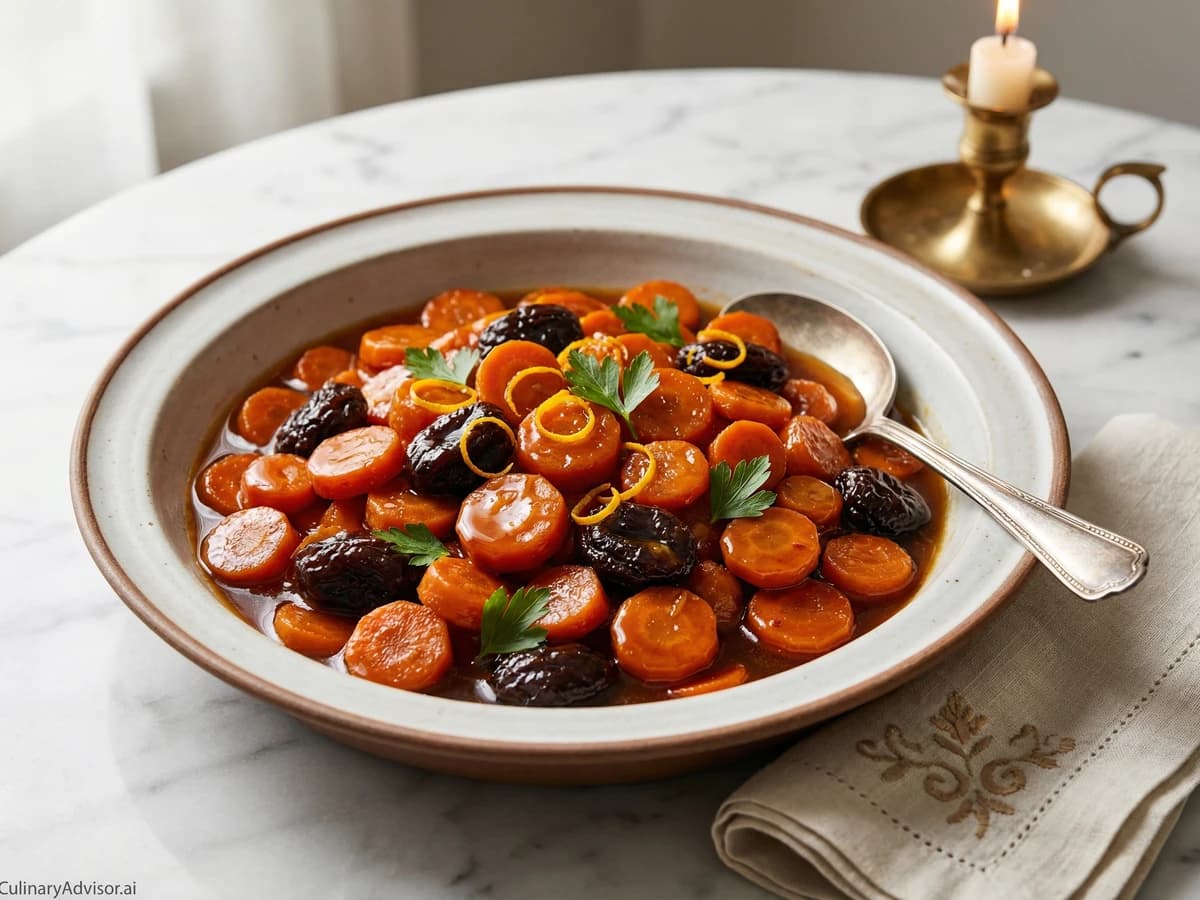
Tender carrots and plump prunes braised low and slow in honey and warm spices, a dish that honors generations of Jewish grandmothers who understood that sweetness is both flavor and blessing.