
Chef Jeong-sun
Agwi-jjim (Braised Monkfish with Bean Sprouts)
Firm monkfish buried under crisp soybean sprouts, minari, and a red gochugaru sauce thickened at the end; Masan's market dish asks for heat, timing, and a steady hand.
A cooking platform built around craft, culture, and the stories behind what we eat.

Created by
The thrifty cook's galbi-jjim: beef shank braised slowly in soy, pear, garlic, and radish until the tough muscle softens and the collagen gives the sauce its gloss.
Beef shank is not poor galbi. It is its own cut, full of work and tendon, and it rewards the cook who doesn't hurry it. Notebook 31 says this plainly: shank forgives a thin wallet, not a short clock.
Satae-jjim sits in the same family as galbi-jjim, with soy, pear, garlic, radish, and a little sweetness, but it asks for a different kind of attention. Short ribs give you richness from fat. Shank gives you body from collagen. That means you blanch it clean, simmer it patiently, and reduce the sauce at the end until it coats the meat instead of pooling weakly in the pot.
Don't bury it under sugar. The pear softens the edge of the soy and helps tenderize; the radish sweetens the broth as it cooks; the chestnuts and jujubes, if you use them, belong as quiet festival touches, not decoration for a photograph. 손맛 is real. I still measure it, so it can be handed on.
Tonight this dish asks for two and a half hours, most of them unattended. Cut the vegetables large, taste before the final reduction, and serve it with rice and something sharp beside it, kimchi or a clean radish salad. A braise this deep needs a fresh voice at the table.
Jjim names a Korean method of moist cooking, originally meaning steaming but now covering many covered braises, from holiday galbi-jjim to everyday fish and vegetable dishes. Satae, beef shank from the working leg, has long been valued in Korean kitchens for soups, suyuk (boiled slices), jangjorim (soy-braised beef), and braises because its connective tissue turns soft and gelatinous with time. As beef became more available in the twentieth century but short ribs remained costly, home cooks used shank to carry the same soy-and-pear seasoning more economically.
Quantity
1.2kg
cut into 4 to 5cm chunks
Quantity
enough to cover
for soaking
Quantity
8 cups
for blanching and braising
Quantity
1/2
peeled and grated
Quantity
1/2 medium
grated
Quantity
7 tablespoons
Quantity
2 tablespoons
Quantity
1 tablespoon
Quantity
1 tablespoon
Quantity
5 cloves
minced
Quantity
1 teaspoon
grated
Quantity
1 tablespoon
Quantity
1/2 teaspoon
freshly ground
Quantity
300g
cut into large 4cm chunks
Quantity
2 medium
cut into large rolling chunks
Quantity
6
soaked, stems removed
Quantity
8
Quantity
4
Quantity
2
cut into 5cm lengths
Quantity
1 tablespoon
Quantity
1 thin sheet
cut into strips
| Ingredient | Quantity |
|---|---|
| beef shank (satae)cut into 4 to 5cm chunks | 1.2kg |
| cold waterfor soaking | enough to cover |
| waterfor blanching and braising | 8 cups |
| Korean pearpeeled and grated | 1/2 |
| oniongrated | 1/2 medium |
| soy sauce | 7 tablespoons |
| rice wine or mirin | 2 tablespoons |
| sugar | 1 tablespoon |
| honey or maesil-cheong (green plum syrup) (optional) | 1 tablespoon |
| garlicminced | 5 cloves |
| fresh gingergrated | 1 teaspoon |
| toasted sesame oil | 1 tablespoon |
| black pepperfreshly ground | 1/2 teaspoon |
| Korean radish (mu)cut into large 4cm chunks | 300g |
| carrotscut into large rolling chunks | 2 medium |
| dried shiitake mushroomssoaked, stems removed | 6 |
| peeled chestnuts (optional) | 8 |
| dried jujubes (daechu) (optional) | 4 |
| scallionscut into 5cm lengths | 2 |
| toasted sesame seeds | 1 tablespoon |
| egg garnish (jidan) (optional)cut into strips | 1 thin sheet |
Put the beef shank in a bowl, cover with cold water, and soak 30 minutes, changing the water once if it turns dark. This pulls out excess blood so the braising liquid stays clean. Don't soak it for hours; you are cleaning the meat, not washing away its flavor.
Drain the beef and put it in a large heavy pot with enough fresh water to cover. Bring to a boil and cook hard for 5 minutes, until gray foam rises. Drain, rinse each piece under warm running water, and wash the pot. This step looks severe, but it is why the finished sauce tastes clear instead of muddy.
Return the rinsed beef to the clean pot. Add 5 cups water, bring to a gentle boil, then lower to a steady simmer. Cover and cook 1 hour before adding the seasoning. Shank needs this plain head start so the collagen begins to loosen before salt tightens the meat.
While the beef simmers, stir together the grated pear, grated onion, soy sauce, rice wine, sugar, honey or maesil-cheong if using, garlic, ginger, sesame oil, and black pepper. Seven tablespoons soy sauce is enough for this amount of beef because the sauce will reduce later. If you season it like soup now, it will be too salty at the end.
After the beef has simmered 1 hour, skim the surface, then add the sauce. Cover again and simmer 45 to 60 minutes more, turning the pieces once or twice. The meat is ready for vegetables when a chopstick can enter with pressure but the pieces still hold together.
Add the radish, carrots, soaked shiitake mushrooms, chestnuts, and jujubes. Tuck the vegetables down into the liquid without breaking the beef. Simmer covered for 30 to 40 minutes, until the radish is translucent at the edges and the beef yields easily. The vegetables go in late because they should drink the sauce and keep their shape.
Uncover the pot and raise the heat to medium. Simmer 10 to 15 minutes, spooning the sauce over the beef, until the liquid thickens slightly and shines on the meat. Stop when about 1 1/2 cups sauce remain. This is the difference between satae-jjim and boiled beef in soy broth.
Taste the sauce now. If it needs salt, add 1 teaspoon soy sauce at a time; if it tastes too strong, loosen it with 2 tablespoons hot water. Scatter scallions over the pot for the last 2 minutes so they soften but stay green. Serve in a deep dish with sesame seeds and jidan if using, with hot rice and kimchi beside it.
1 serving (about 400g)
Culinary guides, cultural storytelling, and the editorial depth that makes cooking meaningful.
Discover Culinary ExplorerChef Jeong-sun
Firm monkfish buried under crisp soybean sprouts, minari, and a red gochugaru sauce thickened at the end; Masan's market dish asks for heat, timing, and a steady hand.

Chef Jeong-sun
A quick Korean rice bowl built on contrast: warm rice, cold popping flying-fish roe, chopped vegetables, gim, sesame oil, and the crisp rice bottom a hot stone bowl gives you.
Chef Jeong-sun
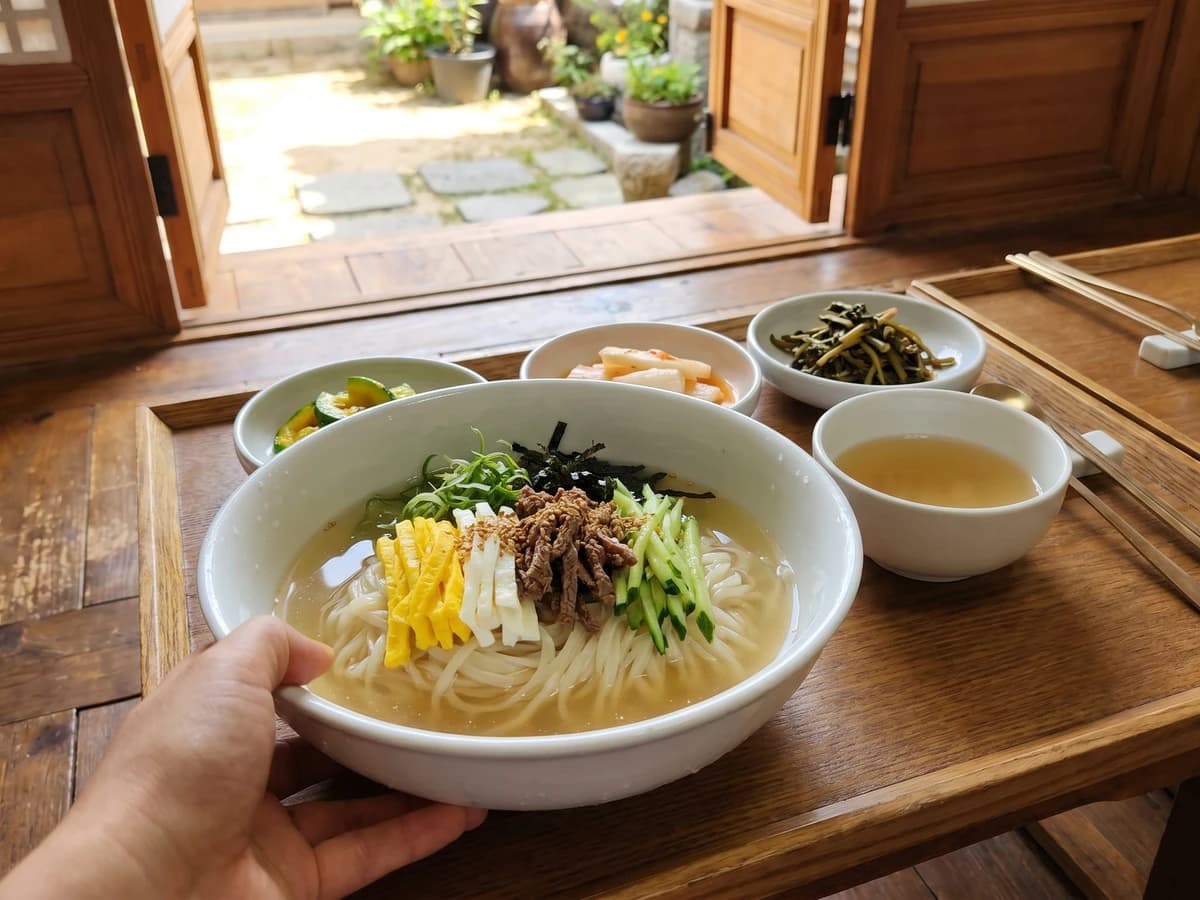
Andong's guest noodles, wheat and roasted soybean flour rolled thin, boiled and rinsed cold, then set in a clear chilled anchovy broth with careful strips of beef, egg, and cucumber.

Chef Jeong-sun
Andong's ritual-table rice served on an ordinary day: separate soy-sesame namul, warm rice, and clear radish soup, mixed without gochujang so every vegetable keeps its own voice.