Chef Graziella
Braciole alla Napoletana
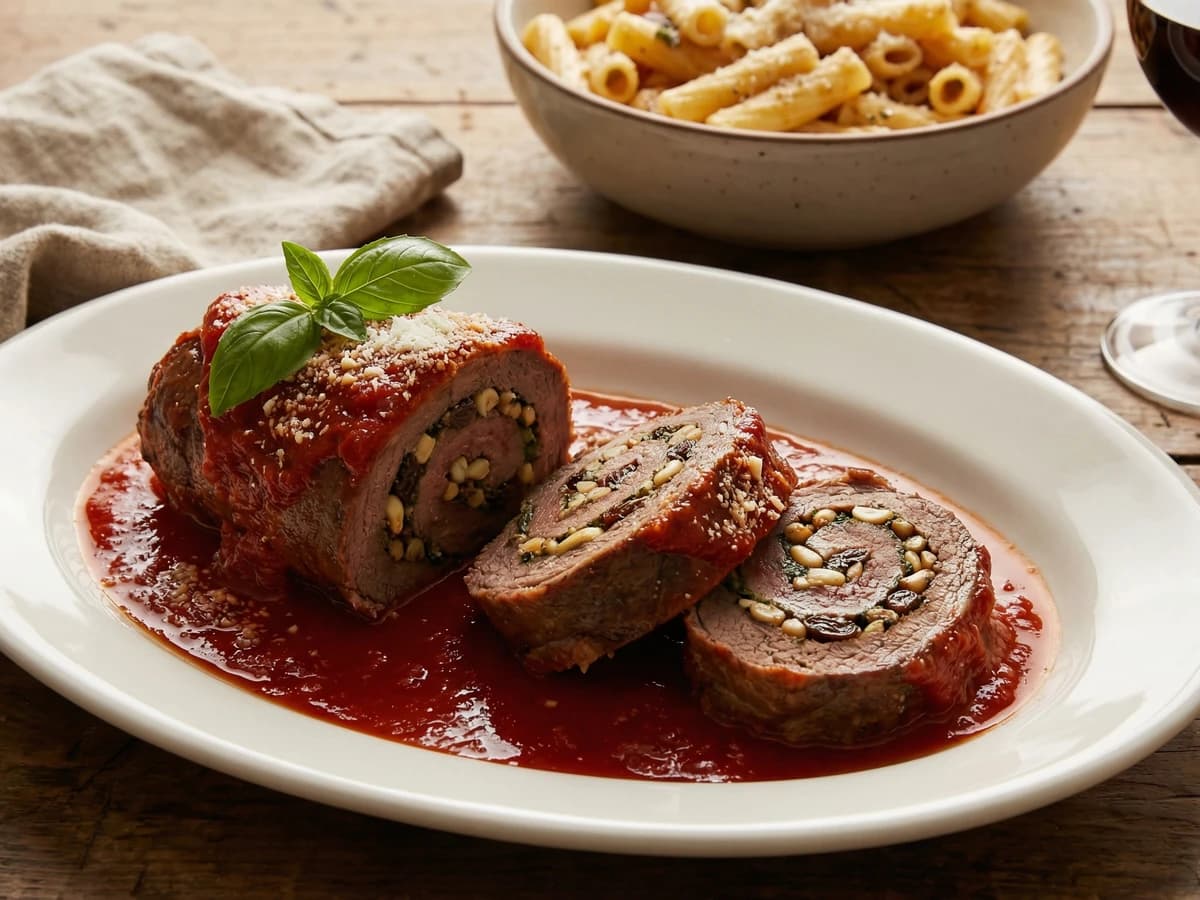
The Sunday ritual of Naples: beef rolls stuffed with pine nuts, raisins, and garlic, braised in tomato sauce until surrendering to tenderness. The sauce goes to the pasta. The meat comes second.
A cooking platform built around craft, culture, and the stories behind what we eat.

Created by
The magnificent rice dome of Naples, where French-trained cooks in Bourbon kitchens created a monument to excess. Golden crust gives way to creamy rice, which gives way to treasures: ragù, meatballs, eggs, molten cheese.
This is not simple food. This is not restrained food. This is Neapolitan baroque, a dish born in the kitchens of nobility where French-trained cooks called monzù transformed humble ingredients into edible architecture. The name comes from 'surtout,' the elaborate French table centerpiece. That tells you everything.
Sartù breaks my usual rule about what you keep out. Here, you keep nothing out. The rice must be creamy with Parmigiano and egg yolks. Inside that rice, you hide ragù napoletano, tiny meatballs no bigger than hazelnuts, sweet peas, wedges of hard-boiled egg, cubes of mozzarella that melt into strings when you cut the first slice. It is excessive by design.
I teach restraint. I teach simplicity. But I also teach honesty about what Italian cooking actually is, and Italian cooking includes this: the food of feast days, of celebrations, of showing off. Neapolitan grandmothers make sartù for Christmas and Easter. They make it when someone gets married or graduates. They make it to prove what they can do.
This is a project. You will spend half a day in the kitchen. The ragù alone takes hours. The meatballs must be rolled by hand, each one uniform. The rice must be cooked properly, enriched, cooled just enough to handle. Then you build: rice lining the mold, filling in the center, more rice to seal it. When you unmold this golden dome and cut the first wedge, revealing all those hidden treasures, you will understand why Neapolitan cooks have made this for three hundred years.
Sartù emerged from the kitchens of Bourbon Naples in the 18th century, created by monzù, the French-trained chefs who served noble households. The name derives from the French 'surtout,' an ornate table centerpiece, reflecting the dish's role as the spectacular crown of feast-day tables. It remains the defining celebration dish of Neapolitan home cooking.
Quantity
3 tablespoons
Quantity
1 medium
diced fine
Quantity
1 pound
cut into 2-inch pieces
Quantity
1/2 cup
Quantity
2 cans (28 ounces each)
passed through food mill
Quantity
8 ounces
Quantity
4 ounces
Quantity
1/3 cup, plus more for mold
Quantity
1 1/4 cups total
freshly grated
Quantity
4 for meatballs and rice, 4 for hard-boiling
Quantity
2 tablespoons
Quantity
1 tablespoon
minced
Quantity
2 cups
Quantity
8 tablespoons total
Quantity
5 cups
warmed
Quantity
8 ounces
cut into 1/2-inch cubes
Quantity
1 cup
thawed
Quantity
4 ounces
cut into 1/2-inch cubes
Quantity
to taste
Quantity
to taste
freshly ground
| Ingredient | Quantity |
|---|---|
| extra virgin olive oil | 3 tablespoons |
| yellow oniondiced fine | 1 medium |
| pork ribs or shouldercut into 2-inch pieces | 1 pound |
| dry red wine | 1/2 cup |
| San Marzano tomatoespassed through food mill | 2 cans (28 ounces each) |
| ground beef | 8 ounces |
| ground pork | 4 ounces |
| fine dry breadcrumbs | 1/3 cup, plus more for mold |
| Parmigiano-Reggianofreshly grated | 1 1/4 cups total |
| large eggs | 4 for meatballs and rice, 4 for hard-boiling |
| whole milk | 2 tablespoons |
| fresh flat-leaf parsleyminced | 1 tablespoon |
| Arborio or Carnaroli rice | 2 cups |
| unsalted butter | 8 tablespoons total |
| chicken or meat brothwarmed | 5 cups |
| fresh mozzarellacut into 1/2-inch cubes | 8 ounces |
| frozen peasthawed | 1 cup |
| provola or scamorza (optional)cut into 1/2-inch cubes | 4 ounces |
| kosher salt | to taste |
| black pepperfreshly ground | to taste |
In a heavy pot, heat the olive oil over medium heat. Add the onion and cook until soft and golden, about 10 minutes. Add the pork pieces and brown well on all sides, turning occasionally, about 15 minutes. Pour in the wine and let it evaporate completely, scraping any browned bits from the bottom.
Add the passed tomatoes and season with salt and pepper. Bring to a gentle simmer, then reduce heat to the lowest setting. Cover partially and cook for at least 2 hours, preferably 3, stirring occasionally. The sauce should reduce and concentrate, the fat rising in golden pools to the surface. Remove the meat pieces and set aside for another use. You need about 2 cups of sauce for the sartù.
While the ragù simmers, combine the ground beef, ground pork, breadcrumbs, Parmigiano, egg, milk, parsley, and salt in a bowl. Mix with your hands until just combined. Do not overwork. Roll into tiny meatballs the size of hazelnuts, about 3/4 inch in diameter. You should have 40 to 50 meatballs. Uniformity matters here.
Heat 1/4 inch of olive oil in a skillet over medium-high heat. When the oil shimmers, fry the meatballs in batches, turning frequently, until golden brown on all sides, about 4 minutes per batch. Transfer to paper towels to drain. They will finish cooking inside the timballo.
In a wide, heavy pot, melt the 4 tablespoons butter over medium heat. Add the rice and stir to coat every grain, about 2 minutes. Begin adding the warm broth one ladleful at a time, stirring frequently and waiting until each addition is nearly absorbed before adding the next. Continue until the rice is tender but still has pleasant resistance, about 18 minutes. The rice should be slightly looser than finished risotto.
Remove the rice from heat. Stir in the cup of Parmigiano. Let the rice cool for 10 minutes, stirring occasionally. Beat the 3 egg yolks in a small bowl, then stir them vigorously into the rice. The residual heat will cook them slightly, creating a creamy binding. Season with salt. The rice should be rich, cohesive, and spreadable, not stiff or gluey.
Generously butter a 10-inch springform pan or a 3-quart dome mold, using all 4 tablespoons of softened butter. Coat the butter thoroughly with fine breadcrumbs, tilting and rotating to cover the bottom and sides completely. Shake out any excess. The breadcrumb layer creates the golden crust.
Spoon about two-thirds of the rice into the prepared mold. Using wet hands or the back of a wet spoon, press the rice firmly against the bottom and up the sides, creating a shell about 3/4 inch thick. The shell must be uniform with no thin spots, or the filling will break through during baking. Leave rice reserved for the top.
Spread half the ragù over the bottom of the rice shell. Scatter half the meatballs, half the mozzarella cubes, half the peas, and half the hard-boiled egg quarters over the ragù. Add the remaining ragù, then the remaining meatballs, cheese, peas, and eggs. If using provola, add it now. Do not press down. The filling should mound slightly in the center.
Spread the remaining rice over the filling, pressing gently to seal it completely to the rice walls. The dome should be fully enclosed with no filling visible. Smooth the top with wet hands. Sprinkle a thin layer of breadcrumbs over the top and dot with small pieces of butter.
Heat the oven to 375°F. Bake the sartù until the top is deeply golden and the sides have begun to pull away from the pan slightly, about 50 to 60 minutes. The internal temperature should reach 165°F. If the top browns too quickly, tent loosely with foil. Remove from the oven and let rest for at least 15 minutes before unmolding. This rest is essential. The cheese must set slightly or the filling will spill when cut.
Run a thin knife around the edges. If using a springform, release the sides carefully. Place a large serving platter over the top and invert confidently in one motion. Lift away the pan. The sartù should stand as a golden dome. Let it rest another 5 minutes. Cut into wedges with a sharp knife, revealing the layers within. Serve immediately, while the mozzarella still stretches.
1 serving (about 425g)
Culinary guides, cultural storytelling, and the editorial depth that makes cooking meaningful.
Discover Culinary ExplorerChef Graziella
The Sunday ritual of Naples: beef rolls stuffed with pine nuts, raisins, and garlic, braised in tomato sauce until surrendering to tenderness. The sauce goes to the pasta. The meat comes second.

Chef Graziella
Pork rolls stuffed with pine nuts, raisins, and prosciutto, then braised slowly in tomato sauce until fork-tender. In Naples, the sauce dresses pasta for the first course, and the meat follows as the second.
Chef Graziella
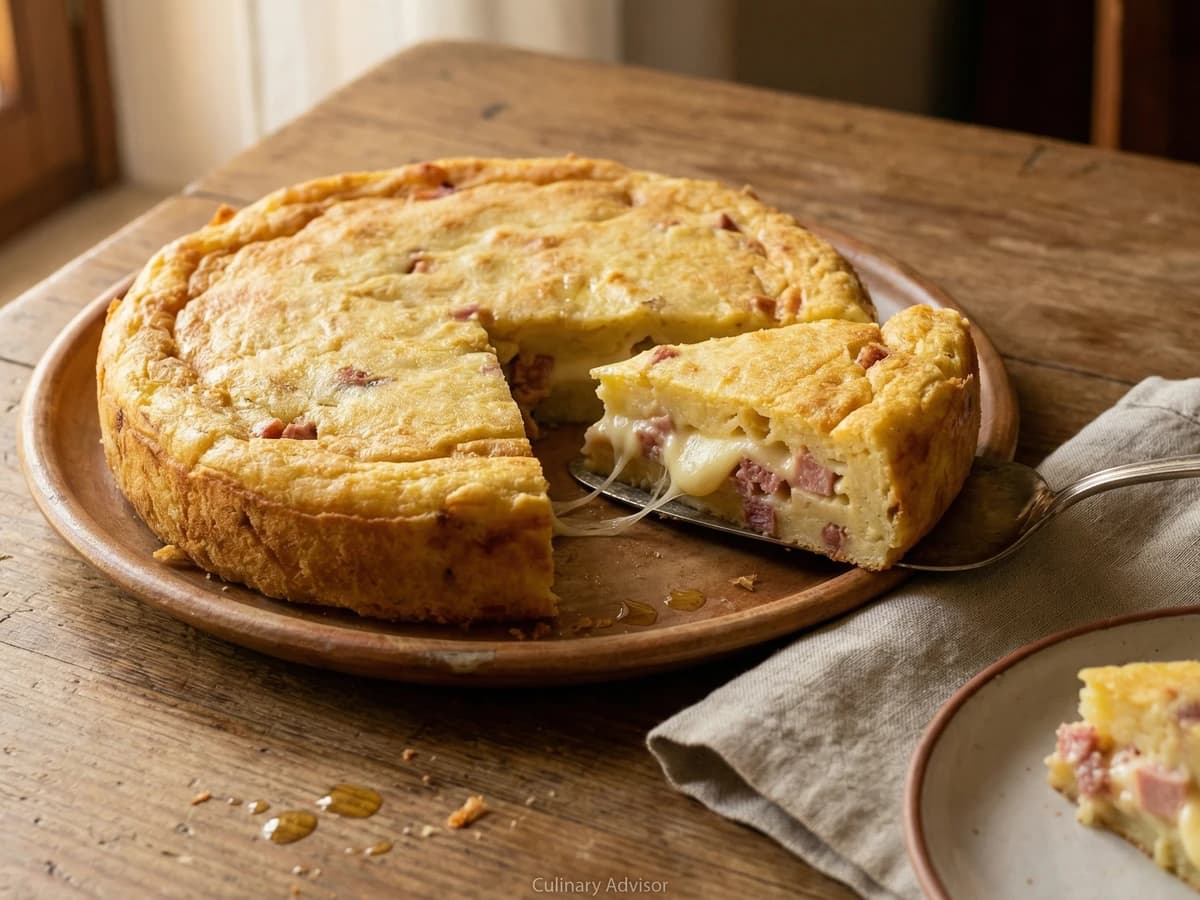
The baroque potato cake of Naples, where silky mashed potatoes enfold a hidden treasure of cheeses and cured meats, then bake until a golden crust gives way to molten richness within.
Chef Graziella
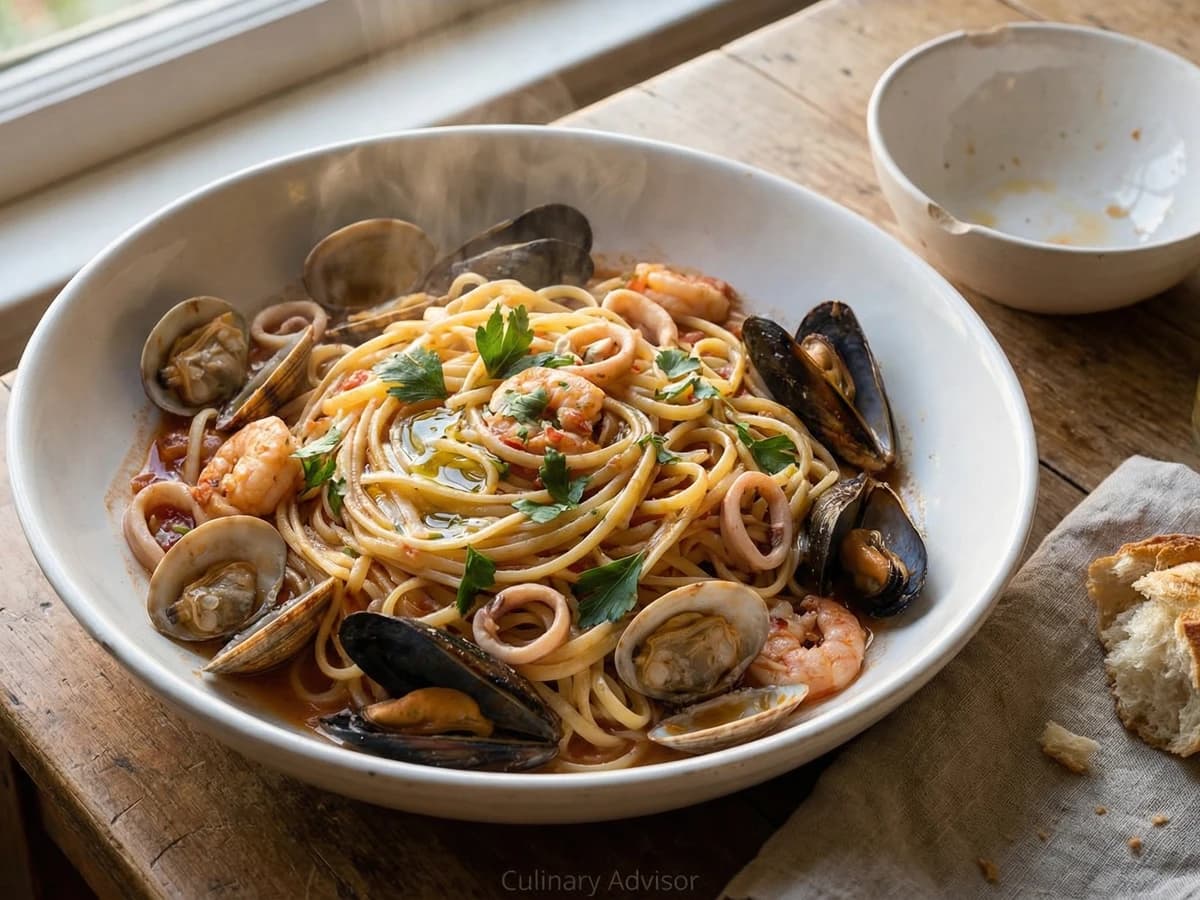
A tumble of clams, mussels, shrimp, and squid over linguine, bright with tomato and white wine. The fishermen's pasta of the Amalfi coast, where the rocks meet the sea.