
Chef Dimitra
Aegean Island Chtapodi me Kritharaki (Χταπόδι με Κριθαράκι)
Aegean island octopus, tomato, red wine, and toasted kritharaki share one pot, so the pasta drinks the briny sauce and stays glossy instead of turning heavy.
A cooking platform built around craft, culture, and the stories behind what we eat.
Created by
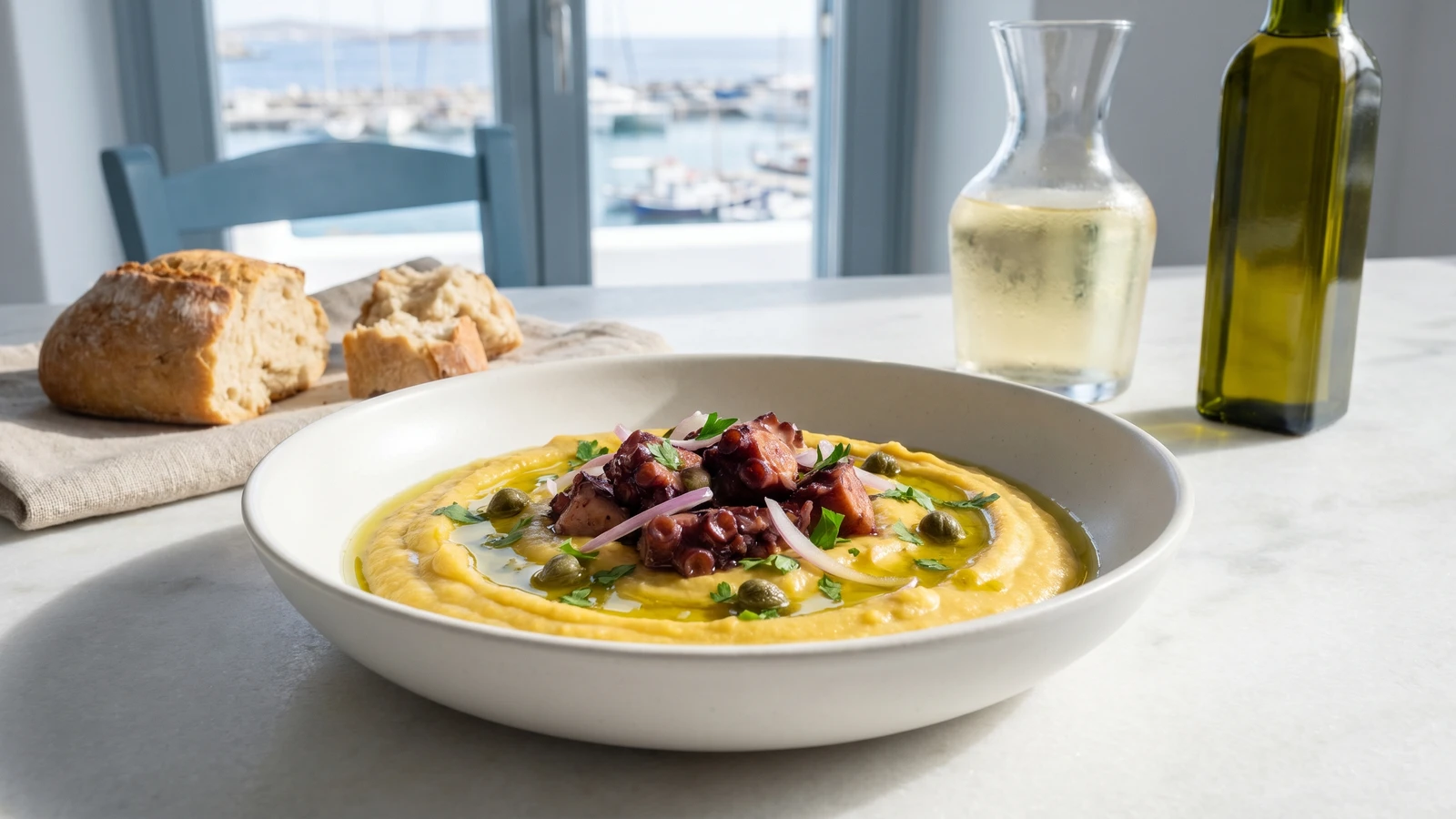
Santorini fava is soft yellow split peas under wine-braised octopus, capers, red onion, and good olive oil, a Cycladic fasting plate where the island field meets the sea.
Santorini fava me chtapodi is the island's yellow split-pea puree, not broad beans, with wine-braised octopus laid over it. The fava is the soft floor, sweet from onion and the island's volcanic soil; the octopus brings the sea, the wine, and a little chew. The region is the dish's surname here, because Santorini's fava is its own thing.
The fava must be cooked with only onion. No carrot, no garlic, no stock. Those make a busier pot, and I want the pea's sweetness clear so the octopus can sit on it without fighting. Simmer gently, skim the foam, and beat in the olive oil at the end. Good olive oil, and patience.
The octopus doesn't need bullying. Let it give its own liquor first, then add wine and vinegar and cook it low until a knife slides into the thickest part. Spoon the dark juices over the yellow fava and finish with capers, red onion, and green-gold oil. In my notebook this one is marked nistisimo, fasting food, and nobody at the table feels punished.
Santorini fava is made from Lathyrus clymenum, a yellow legume cultivated on the island for millennia; archaeobotanical finds at Bronze Age Akrotiri show the crop was already part of the island's food. It received EU PDO status in 2010, separating it from ordinary yellow split peas sold elsewhere as fava. Pairing it with octopus belongs to the Cycladic fasting table: on many Orthodox fast days, especially those permitting wine and oil, mollusks such as octopus remained allowed when meat, dairy, and fish with backbone were not.
Quantity
1kg
thawed if frozen
Quantity
150ml
Quantity
30ml
Quantity
120ml
divided
Quantity
1 small, 100g
half thinly sliced and half shaved for serving
Quantity
2
Quantity
6
Quantity
1 teaspoon
Quantity
350g
picked over and rinsed
Quantity
1 medium, 150g
chopped
Quantity
1.2L
plus hot water as needed
Quantity
1 1/4 teaspoons
divided
Quantity
15ml
Quantity
2 tablespoons
rinsed
Quantity
2 tablespoons
chopped
Quantity
as needed
for serving
| Ingredient | Quantity |
|---|---|
| cleaned octopus (chtapodi)thawed if frozen | 1kg |
| dry red wine | 150ml |
| red wine vinegar | 30ml |
| extra virgin Koroneiki olive oildivided | 120ml |
| red onionhalf thinly sliced and half shaved for serving | 1 small, 100g |
| bay leaves | 2 |
| black peppercorns | 6 |
| dried Greek oregano | 1 teaspoon |
| Fava Santorinis PDO (split yellow lathyrus peas)picked over and rinsed | 350g |
| yellow onionchopped | 1 medium, 150g |
| waterplus hot water as needed | 1.2L |
| fine sea saltdivided | 1 1/4 teaspoons |
| fresh lemon juice | 15ml |
| Santorini capersrinsed | 2 tablespoons |
| flat-leaf parsleychopped | 2 tablespoons |
| lemon wedges (optional)for serving | as needed |
Rinse the octopus well, especially inside the head cavity. Remove the beak if the fishmonger left it, then pat it dry. Keep the tentacles whole for now; they cut more cleanly after they have softened.
Set the octopus in a heavy lidded pot with the bay leaves and peppercorns. Do not add salt or water. Cover and cook over medium-low heat for 15 to 20 minutes, until it curls and gives a deep rose-colored liquor. Add the wine, vinegar, 30ml of the olive oil, and the sliced half of the red onion. Cover again and simmer gently for 40 to 55 minutes, turning once, until a small knife slides into the thickest part of a tentacle. If the liquid falls below 1cm, add a small splash of hot water.
While the octopus cooks, put the rinsed fava, chopped yellow onion, and 1.2L water in a heavy saucepan. Bring to a steady simmer and skim the gray foam for the first 10 minutes. Lower the heat and cook, partly covered, for 35 to 45 minutes, stirring now and then at the bottom, until the peas collapse and the pot looks thick and yellow. Cook it with only onion. Garlic, carrot, bay, and stock make a louder pot, and Santorini fava should stay sweet enough to hold the octopus without fighting it.
Take the fava off the heat and let it stand for 5 minutes. Beat it hard with a wooden spoon or use an immersion blender just until smooth. Stir in 60ml olive oil, the lemon juice, and 1 teaspoon of the salt. It should fall from the spoon in soft ribbons, a little looser than you want on the plate, because fava firms as it rests. Add hot water by the tablespoon if it looks stiff.
Lift the octopus to a board. Discard the bay leaves and peppercorns. Cut the tentacles into 4 to 5cm pieces and slice the head if it is tender. Boil the braising liquid uncovered for 5 to 8 minutes, until it turns glossy and coats a spoon. Return the octopus to the pot with the oregano and toss it through the dark wine juices. Taste, then add the remaining 1/4 teaspoon salt only if the capers will not do the work.
Spoon the warm fava onto a wide shallow platter. Lay the wine-braised octopus over it and spoon a little of the reduced sauce across the top. Scatter with capers, shaved red onion, parsley, and the remaining 30ml olive oil. Serve warm or at room temperature with lemon wedges and country bread.
1 serving (about 570g)
Culinary guides, cultural storytelling, and the editorial depth that makes cooking meaningful.
Discover Culinary ExplorerChef Dimitra
Aegean island octopus, tomato, red wine, and toasted kritharaki share one pot, so the pasta drinks the briny sauce and stays glossy instead of turning heavy.

Chef Dimitra
Aegean coast psari plaki is the quiet whole-fish bake: onions and tomato softened first, fish laid on top, and olive oil doing its slow work until the bones release cleanly.

Chef Dimitra
Astakomakaronada is the Aegean islands' celebration pasta: spiny lobster, tomato, olive oil, and long noodles cooked in the shell broth, never drowned in cream or cheese.

Chef Dimitra
Aegean Easter goat on the spit, lean and full-flavored, turned slowly over charcoal and basted with lemon, oregano, garlic, and good olive oil.