
Chef Zohra
Batbout Farci (بطبوط)
Small semolina breads cooked in a pan until they puff, then split and filled generously. Batbout farci is the sandwich you make for picnics, school bags, and one more guest.
A cooking platform built around craft, culture, and the stories behind what we eat.
Created by
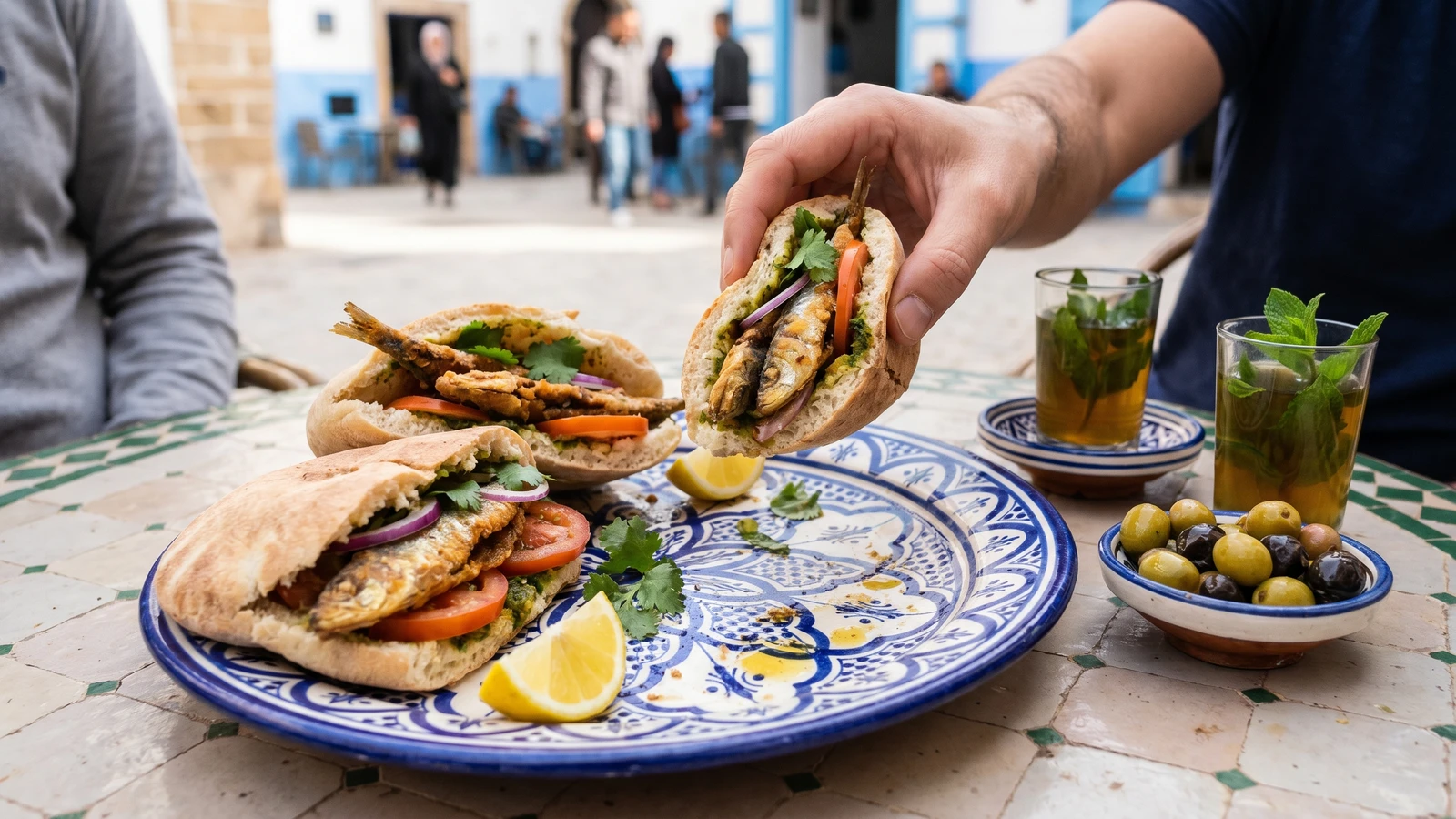
Silver sardines married in pairs around chermoula, floured and fried until crisp at the edges, then tucked into warm khobz. A coastal sandwich, quick enough for a weeknight and generous enough for one more plate.
Buy the sardines the day their eyes are still clear and their bellies still firm. This sandwich begins at the fish stall, not at the stove. No spice paste rescues a tired sardine; it only perfumes the disappointment. When the fish is honest, a little chermoula and hot oil can feed a whole table for very little money.
Here is the gesture: two butterflied sardines are married flesh to flesh around chermoula, skin outside, then given only a thin veil of flour. The chermoula stays inside because the herbs and garlic should season the fish, not burn black in the pan. Shake off the extra flour. The coating should whisper, not make armor.
On the coast you eat them tucked into bread with tomato, onion, lemon, sometimes a little harissa if your table likes heat. In Marrakech, they often roll the sardines first before frying. Il n'y a pas une cuisine marocaine, mais des cuisines marocaines, not one Moroccan cuisine, but many. Make enough for the person who walks in as the oil is hot. Une table, c'est une porte qu'on laisse ouverte, a table is a door you leave open.
Fried chermoula sardines belong to Morocco's Atlantic belt, especially Essaouira, Safi, El Jadida, and Casablanca; the cold Canary Current made sardines a daily fish, and Safi's canneries grew in the early 20th century. Paprika entered Moroccan kitchens after the 16th-century Atlantic exchange, while coriander, cumin, garlic, and acid belong to an older Maghrebi fish grammar shared around ports and inland markets. Hout quari as a named sandwich is not tied to an Almohad or Marinid court text; it belongs to 20th-century street and market cooking, with coastal cooks often pairing the sardines flat and Marrakech known for rolling them before frying.
Quantity
800g
scaled, heads removed, butterflied, and boned
Quantity
1 packed cup
finely chopped
Quantity
1/2 packed cup
finely chopped
Quantity
4
grated or pounded
Quantity
2 tsp
toasted and ground, or use ground cumin
Quantity
2 tsp
Quantity
1/2 tsp
Quantity
1/2
pulp discarded, rinsed and finely chopped
Quantity
1 tbsp
Quantity
3 tbsp
Quantity
1 tsp, plus more for finishing
Quantity
1/2 tsp
Quantity
120g
Quantity
as needed for 1cm shallow frying
Quantity
4
split
Quantity
2
sliced
Quantity
1 small
thinly sliced
Quantity
1 small handful
Quantity
to taste
Quantity
for serving
Quantity
for serving
| Ingredient | Quantity |
|---|---|
| fresh small sardinesscaled, heads removed, butterflied, and boned | 800g |
| fresh coriander (cilantro)finely chopped | 1 packed cup |
| flat-leaf parsleyfinely chopped | 1/2 packed cup |
| garlic clovesgrated or pounded | 4 |
| cumin seedstoasted and ground, or use ground cumin | 2 tsp |
| sweet paprika | 2 tsp |
| hot paprika or cayenne (optional) | 1/2 tsp |
| preserved lemon rindpulp discarded, rinsed and finely chopped | 1/2 |
| lemon juice or white vinegar | 1 tbsp |
| olive oil | 3 tbsp |
| fine sea salt | 1 tsp, plus more for finishing |
| black pepper | 1/2 tsp |
| all-purpose flour | 120g |
| sunflower or neutral oil | as needed for 1cm shallow frying |
| small khobz, batbout, or Moroccan sandwich rollssplit | 4 |
| ripe tomatoessliced | 2 |
| red onionthinly sliced | 1 small |
| lettuce leaves (optional) | 1 small handful |
| harissa (optional) | to taste |
| lemon wedges | for serving |
| fresh coriander leaves | for serving |
Choose sardines that smell clean, with bright eyes and firm bellies. Rinse them quickly only if needed, then pat them very dry inside and out. This decides the frying: wet fish throws off the flour, spits in the pan, and keeps the edges from crisping. If you are cleaning them yourself, pull away the head and innards, open each fish like a book, lift out the backbone, and leave the two fillets joined at the skin.
Pound the garlic with the salt until it softens, then stir in the coriander, parsley, cumin, sweet paprika, hot paprika if using, preserved lemon, lemon juice or vinegar, olive oil, and black pepper. The chermoula should be thick enough to cling to a spoon, green-red and sharp, not soupy. Taste it before it touches the fish. La balance est dans les yeux, the scale is in the eyes, but the mouth must agree: salty, lemony, warm with cumin.
Lay half the sardines skin side down, flesh up. Spread about 1 teaspoon chermoula over each one, keeping the edges mostly clean, then cover with another sardine flesh side down so the skin is outside. Press gently. The chermoula stays inside because the herbs and garlic should season the fish, not burn black in the oil. If you want extra chermoula for the bread, set it aside before touching the raw sardines.
Put the flour in a shallow dish and season it with a small pinch of salt. Coat each sardine pair on both sides, then shake off the extra until only a thin dusty veil remains. Flour them just before frying. If they sit too long, the flour hydrates and turns gummy.
Heat 1cm oil in a wide frying pan over medium-high heat, to about 175 to 180C if you use a thermometer. A pinch of flour should sizzle at once without darkening too fast. Fry the sardine pairs in batches for 2 to 3 minutes per side, turning gently, until golden at the edges and opaque through the center. Drain on a rack or paper, and salt them while they are still hot.
Warm the bread in a dry pan or oven until the outside wakes up. Spread a little harissa if your table likes heat, then tuck in tomato, onion, lettuce if using, and two sardine pairs per sandwich. Add coriander leaves and a squeeze of lemon. Close the bread gently, not like you're trying to punish it, and serve at once.
1 serving (about 400g)
Culinary guides, cultural storytelling, and the editorial depth that makes cooking meaningful.
Discover Culinary ExplorerChef Zohra
Small semolina breads cooked in a pan until they puff, then split and filled generously. Batbout farci is the sandwich you make for picnics, school bags, and one more guest.
Chef Zohra
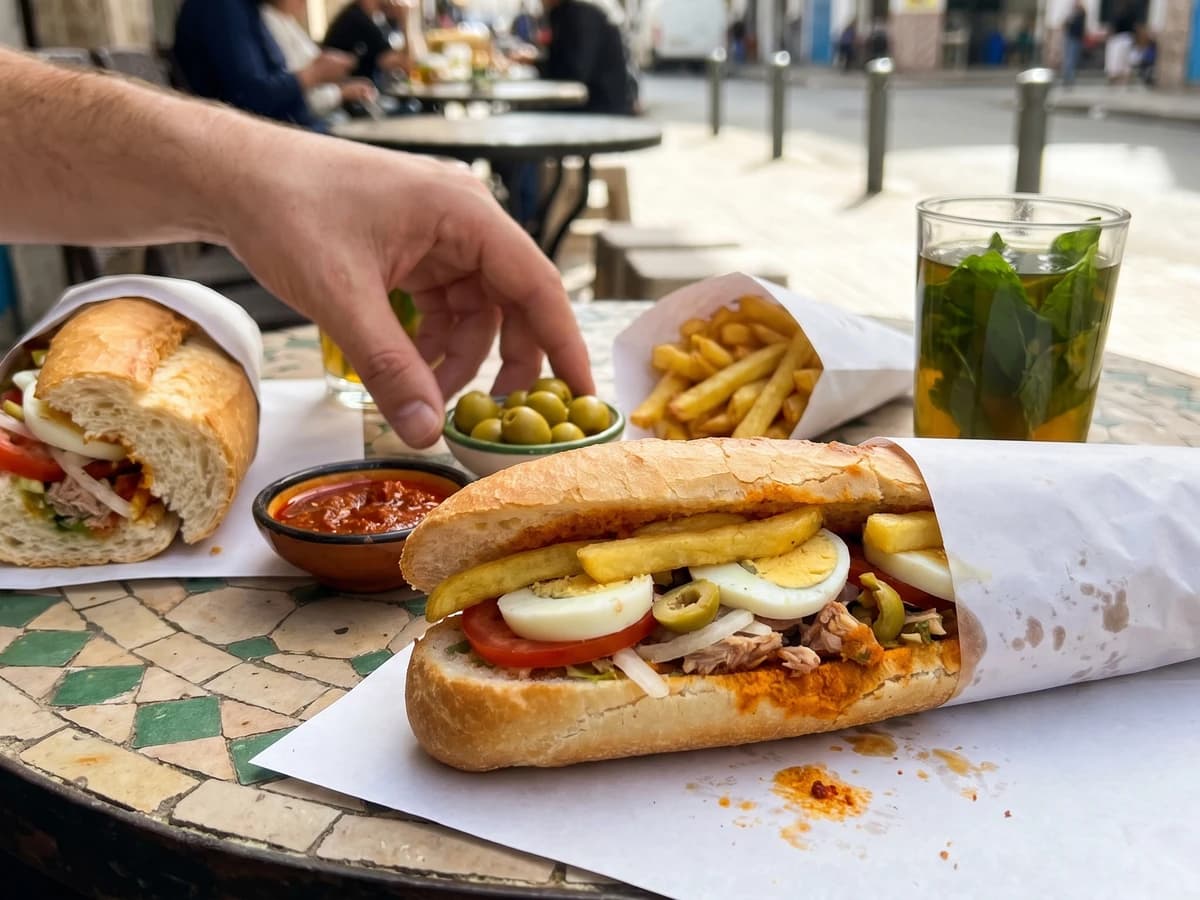
The northern street sandwich: crisp bread opened wide, harissa rubbed into the crumb, tuna or kefta, egg, olives, and hot fries pushed right in so supper can travel in one hand.

Chef Zohra
A northern street sandwich with a Spanish name and a Moroccan hand: harissa, tuna or kefta, sliced egg, olives, salad, and hot fries pressed into one generous baguette.

Chef Zohra
From Rissani comes a buried bread for guests: thin dough sealed around spiced meat, onions, herbs, and almonds, baked hot so the crust browns while the filling stays generous.