Chef Margarida
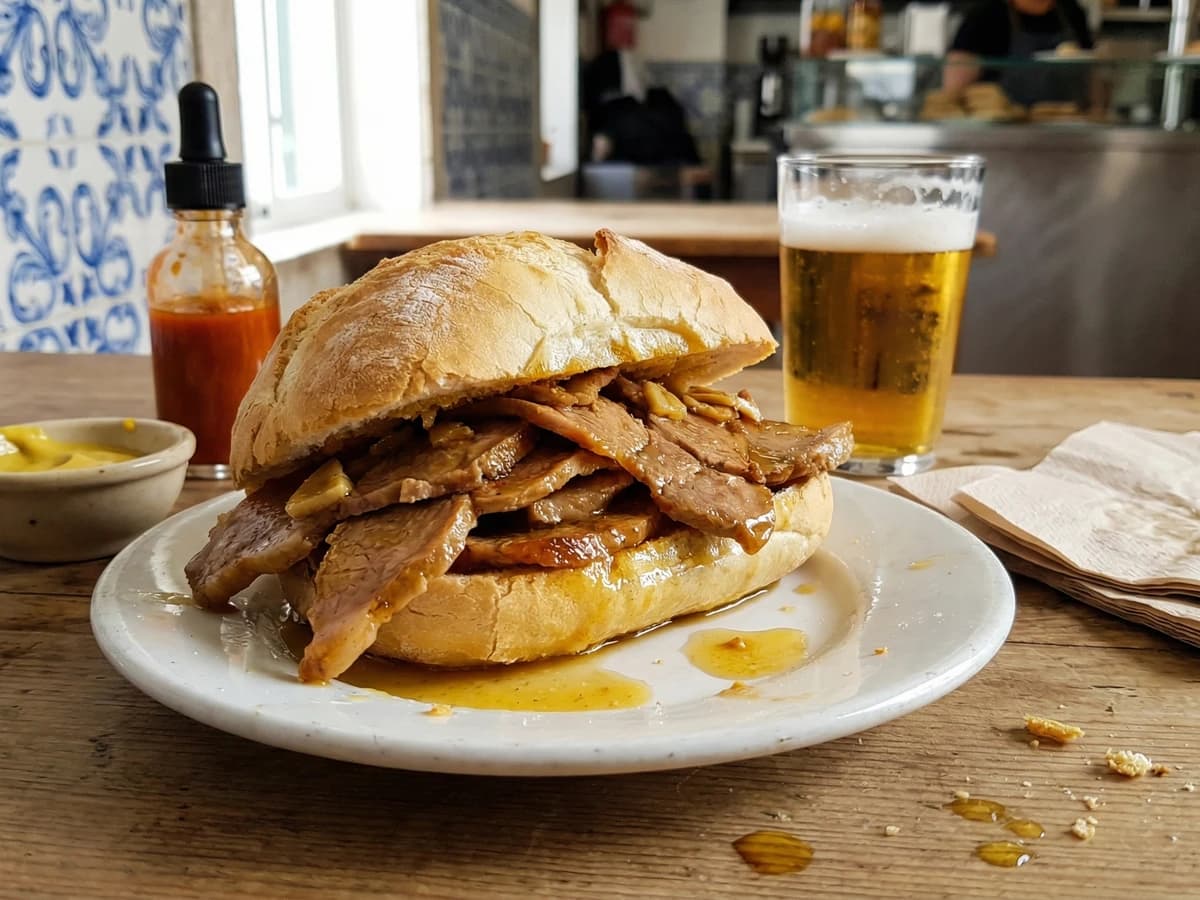
Bifana
Alentejo's gift to late nights and hungry workers: thin pork bathed in garlic and white wine, stuffed into a crusty roll. Mustard or piri-piri, that's the only question.
A cooking platform built around craft, culture, and the stories behind what we eat.

Created by
Bairrada's most famous sandwich: slow-roasted pork with skin that shatters like glass, piled onto crusty bread and baptized with roasting juices. Festival food, pilgrimage food, the reason people drive hours for a sandwich.
There's a stretch of road in Bairrada where the air smells like roasting pig. You can roll down your windows in Mealhada and follow your nose to a dozen restaurants, each one claiming to make the best leitão in Portugal. This is pilgrimage territory. People drive from Lisbon, from Porto, from across the border, just for this sandwich.
I first tasted proper sandes de leitão at a feira in Coimbra when I was maybe seven years old. My father bought one from a stall where an entire pig rotated over coals, its skin glistening and crackling. He handed me the sandwich wrapped in paper, juices already soaking through. The first bite was revelation: tender meat, rich fat, and that skin. That impossibly crispy skin that shattered between my teeth. I've been chasing that bite ever since.
The women I've documented in Bairrada take their leitão seriously. Dona Emília in Mealhada told me the secret is patience. The pig must roast slowly, the skin must dry properly, the oven must be just so. "Não há pressa para leitão bom," she said. There's no hurry for good suckling pig. She's been making it for sixty years. She knows.
For home cooks without access to a whole suckling pig or a wood-fired oven, pork belly with its thick skin is your path to that same crispy magic. The technique matters more than the cut. Dry the skin. Score it well. Roast it slow, then blast it hot. The sandwich comes together in the final moments: crusty bread, warm meat, a cascade of pan juices. This is what we eat when we celebrate. This is Portugal's street food at its finest.
Leitão da Bairrada has been a regional specialty since at least the 18th century, when the area's wine production created demand for hearty food to accompany tastings. The town of Mealhada became the epicenter, with restaurants dedicated solely to roasting suckling pigs in traditional wood-fired ovens. In 2011, leitão da Bairrada received Protected Geographical Indication status from the European Union, cementing its place as one of Portugal's most treasured culinary traditions.
Quantity
2 kg
scored in a crosshatch pattern
Quantity
1 tablespoon
Quantity
1 teaspoon
freshly ground
Quantity
4 cloves
minced to a paste
Quantity
2 tablespoons
Quantity
1 tablespoon
Quantity
1/2 teaspoon
Quantity
2
Quantity
1 cup
Quantity
8
Quantity
for serving
| Ingredient | Quantity |
|---|---|
| bone-in pork belly with skinscored in a crosshatch pattern | 2 kg |
| coarse sea salt | 1 tablespoon |
| black pepperfreshly ground | 1 teaspoon |
| garlicminced to a paste | 4 cloves |
| white wine vinegar | 2 tablespoons |
| pimentão doce (sweet paprika) | 1 tablespoon |
| piri-piri powder | 1/2 teaspoon |
| bay leaves | 2 |
| dry white wine | 1 cup |
| papo seco rolls | 8 |
| molho de leitão (spicy pepper sauce) (optional) | for serving |
Using a very sharp knife, score the pork skin in a tight crosshatch pattern, cutting through the skin and into the fat but not into the meat. This is essential for crispy skin. Mix the garlic paste with the salt, pepper, paprika, piri-piri, and vinegar to form a wet rub. Massage this mixture into the flesh side of the pork belly, getting into every crevice. Don't put any on the skin side. Leave the skin clean and dry.
Place the pork on a wire rack set over a baking sheet, skin side up. Refrigerate uncovered for at least 8 hours, preferably 24. The cold dry air of the refrigerator will draw moisture from the skin. Dry skin equals crispy skin. There are no shortcuts here. The grandmothers in Bairrada know this. The pigs hang in cool rooms before roasting. We're replicating that wisdom.
Remove the pork from the refrigerator 1 hour before cooking. Pat the skin completely dry with paper towels. It should feel almost papery. If it's still damp, you'll get rubbery skin instead of crackling. Preheat your oven to 150°C (300°F).
Place the pork skin-side up on a rack in a roasting pan. Pour the white wine into the bottom of the pan with the bay leaves. The wine will keep the meat moist and create the precious cooking juices. Roast at 150°C for 3 hours. Don't open the oven. Don't peek. Let the low heat work slowly, rendering the fat and tenderizing the meat while keeping the skin from burning.
After 3 hours, increase the oven temperature to 230°C (450°F). Roast for another 30 to 45 minutes, watching carefully, until the skin puffs and crackles into golden shards. You'll hear it. The crackling sound of the skin blistering is the sound of Bairrada. If spots are browning unevenly, rotate the pan. Remove when the skin is deeply golden and shatteringly crisp.
Transfer the pork to a cutting board and let it rest for 15 minutes. The skin will stay crisp. Meanwhile, strain the pan juices into a small pot, pressing on the bay leaves. Skim off excess fat but leave some. This is your molho, your liquid gold. Taste it. Season if needed. Keep it warm.
Using a sharp knife, cut through the crackling and slice the pork into pieces. Each portion should have meat, fat, and a generous shard of crispy skin. The skin should shatter as you cut. If it bends, something went wrong. It should break like glass.
Split the papo seco rolls horizontally but don't cut all the way through. Pile warm pork and crackling onto each roll. Drizzle generously with the warm pan juices. The bread should drink some of that liquid. Close the sandwich just enough to hold it, but let the filling show. Serve with molho de leitão on the side if you like heat. Eat immediately, standing up if necessary, napkin in hand. This is how it's done.
1 serving (about 200g)
Culinary guides, cultural storytelling, and the editorial depth that makes cooking meaningful.
Discover Culinary ExplorerChef Margarida
Alentejo's gift to late nights and hungry workers: thin pork bathed in garlic and white wine, stuffed into a crusty roll. Mustard or piri-piri, that's the only question.

Chef Margarida
The northern answer to Portugal's beloved pork sandwich, where beer replaces wine and the sauce runs down your arms. This is late-night Porto food, tasca food, the kind you eat standing at zinc counters with an imperial in the other hand.
Chef Margarida
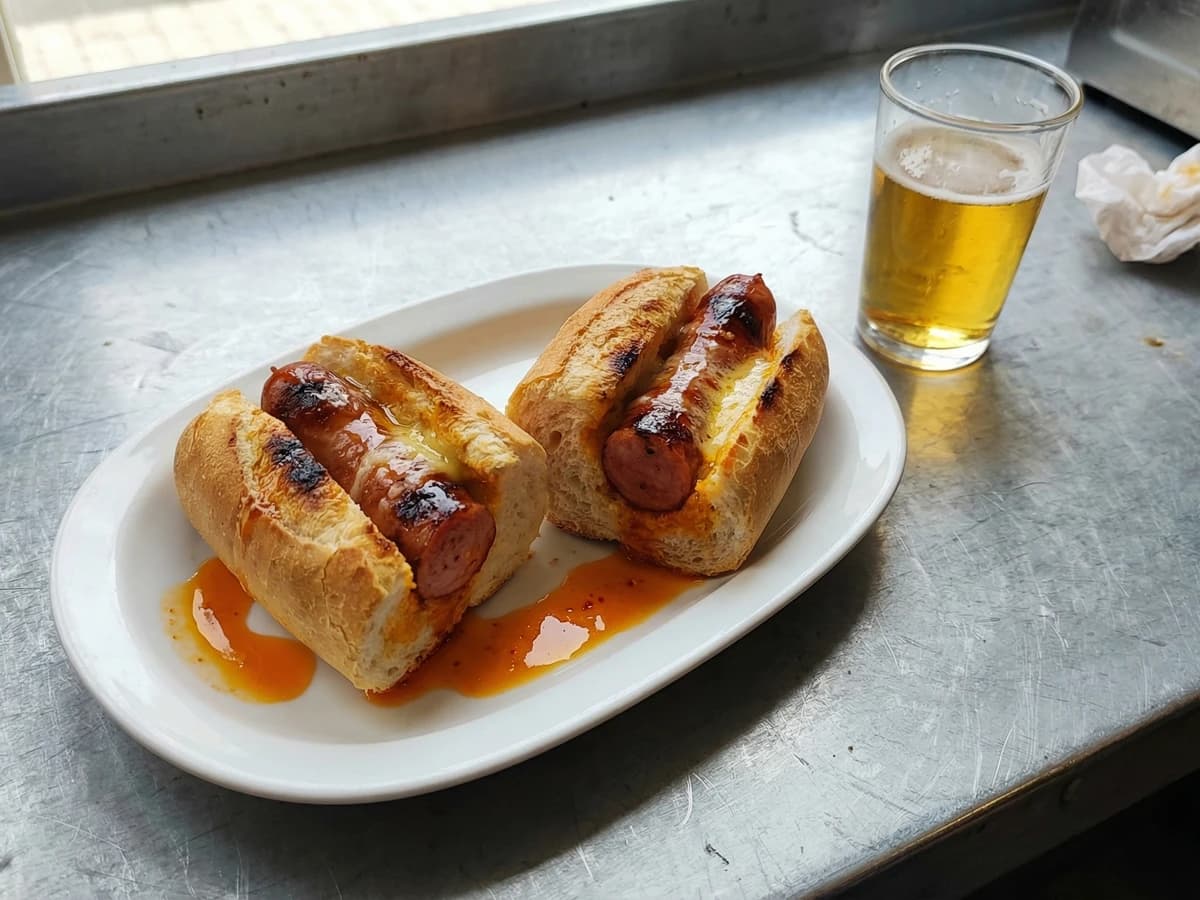
The late-night sandwich of Porto, where fresh sausage meets crusty bread and a generous slap of piri piri butter. This is what you eat standing at the counter with a cold imperial, surrounded by strangers who feel like friends.

Chef Margarida
Porto's answer to the hot dog: grilled chouriço in a crusty roll, smothered in melted cheese with a runny fried egg on top. This is what you eat at 2am and remember forever.