
Chef Lesia
Gombovtsi (ґомбовці, plum-stuffed steamed dumplings)
The first cut is the whole argument: pale potato dough, toasted butter crumbs, then a hot purple plum collapsing into syrup at the center.
A cooking platform built around craft, culture, and the stories behind what we eat.
Created by
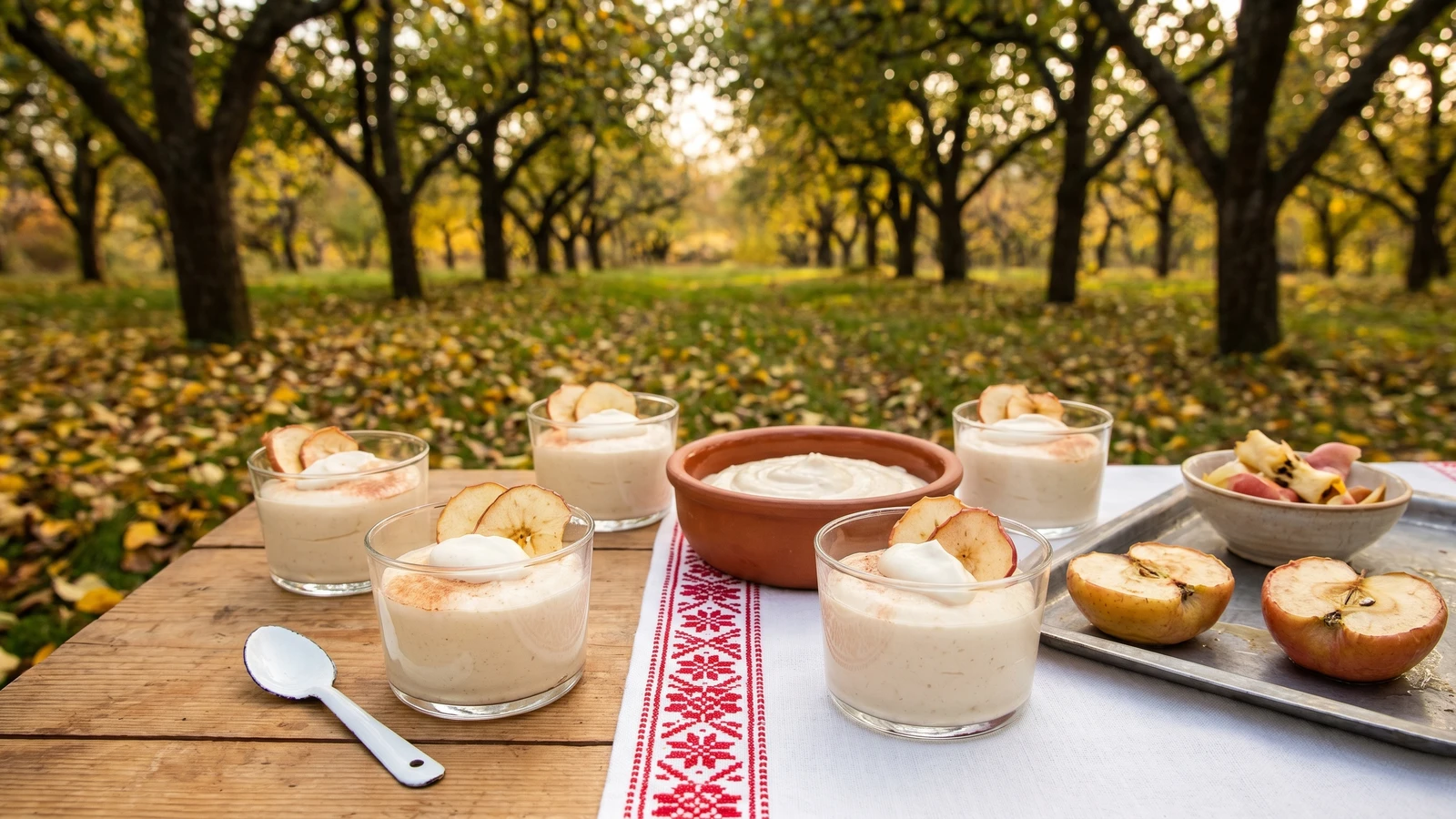
Apple sambuk looks like it should be rich, then the spoon goes in and finds mostly air: baked apple, egg white, sugar, and just enough gelatin to hold the cloud.
The strange little miracle is that a tray of collapsed baked apples becomes a bowl of pale air. You scrape the soft flesh from the skins, whip it with sugar and egg white until it shines, then fold in just enough gelatin to teach it how to stand. Not rubber. Not jelly. A mousse with a backbone.
This is an old-fashioned Ukrainian dessert for the end of a crowded table, when the holubtsi have done their work and nobody wants cake but everyone still wants something sweet. Apples are the sensible fruit here: cheap, generous, available through winter, and better once baked until their smell changes from sharp cellar fruit to honey and peel. Aunt Nadia wrote only "good sour apples, bake soft, beat well," which is exactly useful and also not enough, so I learned the rest with a mixer screaming on the counter and a bowl too small for my optimism.
The one thing that decides the dish is the apple puree. It must be thick, not watery, because water gives you foam that weeps by morning. Bake the apples instead of boiling them; the oven drives off moisture and deepens the flavor while you do almost nothing.
Serve it cold, in little glass cups or one generous bowl, with a spoonful of smetana if you like that sour edge. It should tremble when you move it. Then it should vanish.
Sambuk appears in twentieth-century Ukrainian and Soviet domestic cookbooks as a fruit puree dessert whipped with egg white and stabilized with gelatin, most often made with apples, plums, or apricots. The apple version belongs naturally to Ukraine's orchard regions, especially Podillia and central Ukraine, where winter apples stored in cellars made a light festive sweet possible long after fresh berries were gone. Its canteen reputation made it seem plain, but the home version is closer to an apple snow: seasonal fruit, preserved eggs, and a little gelatin doing quiet work.
Quantity
1.2 kg
washed, left whole for baking
Quantity
120g, plus more to taste
Quantity
2
Quantity
10g
Quantity
60ml
Quantity
1 tablespoon
Quantity
1/2 teaspoon or a few drops
Quantity
pinch
Quantity
to serve
| Ingredient | Quantity |
|---|---|
| tart appleswashed, left whole for baking | 1.2 kg |
| caster sugar | 120g, plus more to taste |
| large egg whites | 2 |
| powdered gelatin | 10g |
| cold water | 60ml |
| lemon juice (optional) | 1 tablespoon |
| vanilla sugar or vanilla extract (optional) | 1/2 teaspoon or a few drops |
| fine sea salt | pinch |
| smetana or softly whipped cream (optional) | to serve |
Heat the oven to 190C. Put the apples in a baking dish and bake until the skins split, the flesh slumps, and the kitchen smells rounded and honeyed instead of sharp. If juice collects in the dish, leave it behind for tea or porridge; sambuk wants the thick apple flesh, not the watery tears.
When the apples are cool enough to handle, scrape the flesh from the skins and cores. Push it through a sieve or blitz it smooth, then measure about 500g thick puree. It should mound softly on a spoon. If it runs like sauce, cook it in a pan for a few minutes, stirring, until it thickens and the spoon leaves a brief path.
Sprinkle the gelatin over the cold water in a small bowl and let it swell until it looks like wet sand. Warm it gently over a pan of hot water or in short microwave bursts until fully liquid, never boiling. Boiled gelatin loses its manners.
Put the apple puree in a large bowl with the sugar, egg whites, salt, and vanilla if using. Whip until the mixture grows pale, glossy, and much larger than you expected, with soft peaks that hold for a breath before folding over. Taste it now; if your apples were gentle rather than sour, add the lemon juice.
With the mixer running on low, pour in the warm liquid gelatin in a thin stream. Beat just until it disappears into the mousse and the bowl looks even from edge to edge. Spoon into glass cups or one serving bowl, smooth the top without fussing, and chill until set, at least three hours. It should tremble, not bounce.
Serve straight from the fridge, with smetana or softly whipped cream if you want a richer plate. A few spoonfuls of baked apple juices over the top are lovely if they are syrupy, not thin. This is dessert after the big table: light, cold, and gone before anyone admits they wanted seconds.
1 serving (about 140g)
Culinary guides, cultural storytelling, and the editorial depth that makes cooking meaningful.
Discover Culinary ExplorerChef Lesia
The first cut is the whole argument: pale potato dough, toasted butter crumbs, then a hot purple plum collapsing into syrup at the center.

Chef Lesia
The first spoonful of Christmas Eve is dark wheat, white poppy milk, honey, nuts, and memory. Kutia comes before everything else because grain must speak first.

Chef Lesia
Two dry, crackling hazelnut meringues hold a whole city's pride between them, with cocoa buttercream, pale cream flowers, and the sound of a knife breaking through sugar.

Chef Lesia
A cake made from white curd goes to the table wearing black: dense, lemon-scented syr under dark chocolate glaze, sliced cold and proud from the west.