
Chef Lupita
Aceite de Chiltepin Bajacaliforniano
Baja California's wild chiltepin steeped in olive oil with garlic, orejon, and lime peel, until the oil turns ruby-amber and carries the slow, sneaky burn of the desert coast.
A cooking platform built around craft, culture, and the stories behind what we eat.
Created by
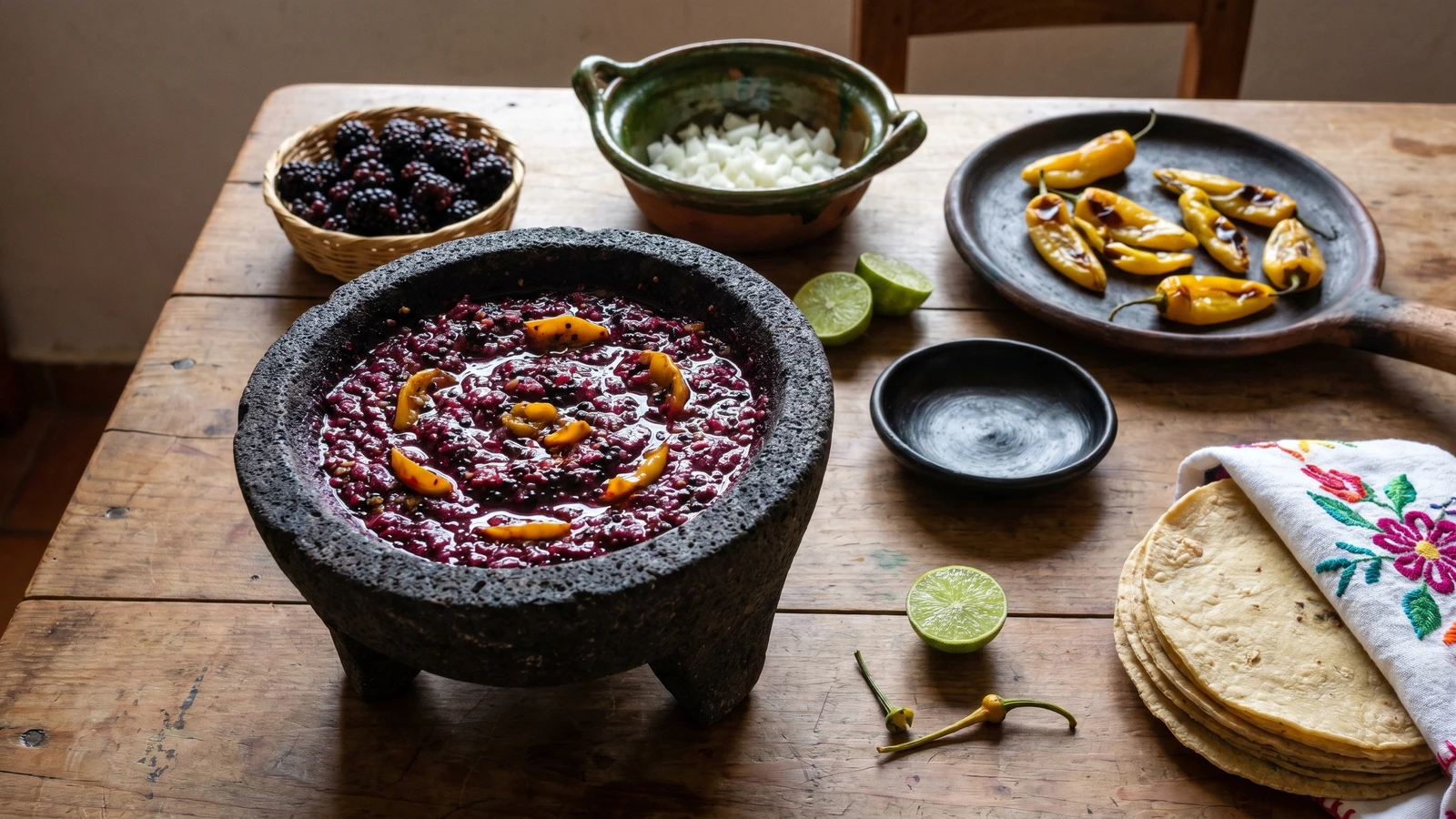
Michoacán's Lake Pátzcuaro salsa, zarzamoras crushed in a molcajete with roasted chile manzano or chile perón until sweet fruit and floral fire hold the same spoon.
This comes from Michoacán, from San Jerónimo Purenchécuaro on the Lake Pátzcuaro shore, where P'urhépecha cooks understand fruit, chile, fire, and stone better than most recipe writers understand salt. Rosalba Morales Bartolo made this salsa famous because she knew exactly what she had in her hands: zarzamoras from Michoacán and the floral bite of chile manzano, martajada, not blended into purple baby food.
The chile matters. In the Meseta and around Pátzcuaro, chile perón, a local Capsicum pubescens, grows with a perfume that jalapeño and serrano do not have. It is citrusy, hot, and almost floral. The black seeds tell you what family it belongs to. Use chile manzano amarillo if that is what your market has. Use chile perón if you are lucky. But do not pretend a green serrano gives the same salsa. A substitution is a compromise, not an upgrade.
The molcajete is also part of the recipe. The berries must be martajadas, crushed enough to release juice but not so much that they disappear. The roasted chile stays in little pieces. The garlic becomes paste. The salsa should look alive in the stone, dark purple with yellow-orange chile skins showing through. Cada estado, su propia cocina. This one belongs to Michoacán.
San Jerónimo Purenchécuaro is a P'urhépecha community on Lake Pátzcuaro, and cooks from that region were central to the Michoacán foodways used as the reference case when Traditional Mexican Cuisine was inscribed by UNESCO in 2010. Rosalba Morales Bartolo, a traditional cook from the lake region, helped bring dishes like atápakua, corundas, and regional salsas into national culinary discussion without removing them from their home context. Michoacán became Mexico's leading blackberry-producing state in the late 20th and early 21st centuries, especially around Los Reyes, making zarzamora a modern crop that local cooks folded into older molcajete salsa techniques.
Quantity
2 cups
ripe but firm
Quantity
3
roasted and stemmed
Quantity
1 small
roasted
Quantity
2 tablespoons
finely chopped
Quantity
1 tablespoon, plus more to taste
Quantity
1/2 teaspoon, plus more to taste
Quantity
1 teaspoon
grated, only if the berries are sharp
Quantity
1 tablespoon
only if needed to loosen the salsa
| Ingredient | Quantity |
|---|---|
| fresh zarzamoras (blackberries)ripe but firm | 2 cups |
| fresh chile manzano amarillo or chile perónroasted and stemmed | 3 |
| garlic cloveroasted | 1 small |
| white onionfinely chopped | 2 tablespoons |
| fresh lime juice | 1 tablespoon, plus more to taste |
| sea salt | 1/2 teaspoon, plus more to taste |
| piloncillo (optional)grated, only if the berries are sharp | 1 teaspoon |
| cold water (optional)only if needed to loosen the salsa | 1 tablespoon |
Pick over the zarzamoras and remove any soft or leaking berries. You want berries that stain your fingers but still hold their shape. If they taste flat, do not make this salsa today. Cook what the market is selling with pride, not what a recipe is demanding from bad fruit.
Heat a dry comal over medium. Roast the chile manzano or chile perón, turning often, until the skin blisters in dark patches and the flesh softens, 6 to 8 minutes. Roast the garlic clove beside it until spotted and tender. The chile should smell floral and sharp, not burned.
Let the chiles sit for 3 minutes, then rub off only the loose burned skin. Do not wash them. Water steals flavor. Stem the chiles and chop them roughly. Keep the seeds if you want the salsa fierce. Remove some if your table needs mercy.
Put the roasted garlic and salt in a volcanic stone molcajete and grind to a paste. Add the roasted chile and crush it until the flesh breaks into small uneven pieces. Add the zarzamoras a handful at a time and martajar, crush without making a puree. You want skins, seeds, and chile pieces visible. A smooth purple sauce is not the point.
Fold in the white onion and lime juice with a spoon. Taste. If the berries are too sharp, add the grated piloncillo and stir until it disappears. Let the salsa rest 10 minutes so the berry juice, chile, salt, and lime settle into each other. Recetas probadas y garantizadas, but your tongue still has to finish the seasoning.
Serve the salsa in the molcajete or a small cazuelita de barro from Michoacán. Spoon it with carnitas, grilled duck, trout from the lake, requesón, or warm corn tortillas. This salsa is sweet, floral, and fierce. It is not dessert with chile sprinkled on top. Así se hace y punto.
1 serving (about 50g)
Culinary guides, cultural storytelling, and the editorial depth that makes cooking meaningful.
Discover Culinary ExplorerChef Lupita
Baja California's wild chiltepin steeped in olive oil with garlic, orejon, and lime peel, until the oil turns ruby-amber and carries the slow, sneaky burn of the desert coast.

Chef Lupita
Puebla's Lenten convent adobo, a brick-red vinegar chile paste of ancho, guajillo, garlic, oregano, and comino made to dress fish for the meatless calendar.
Chef Lupita
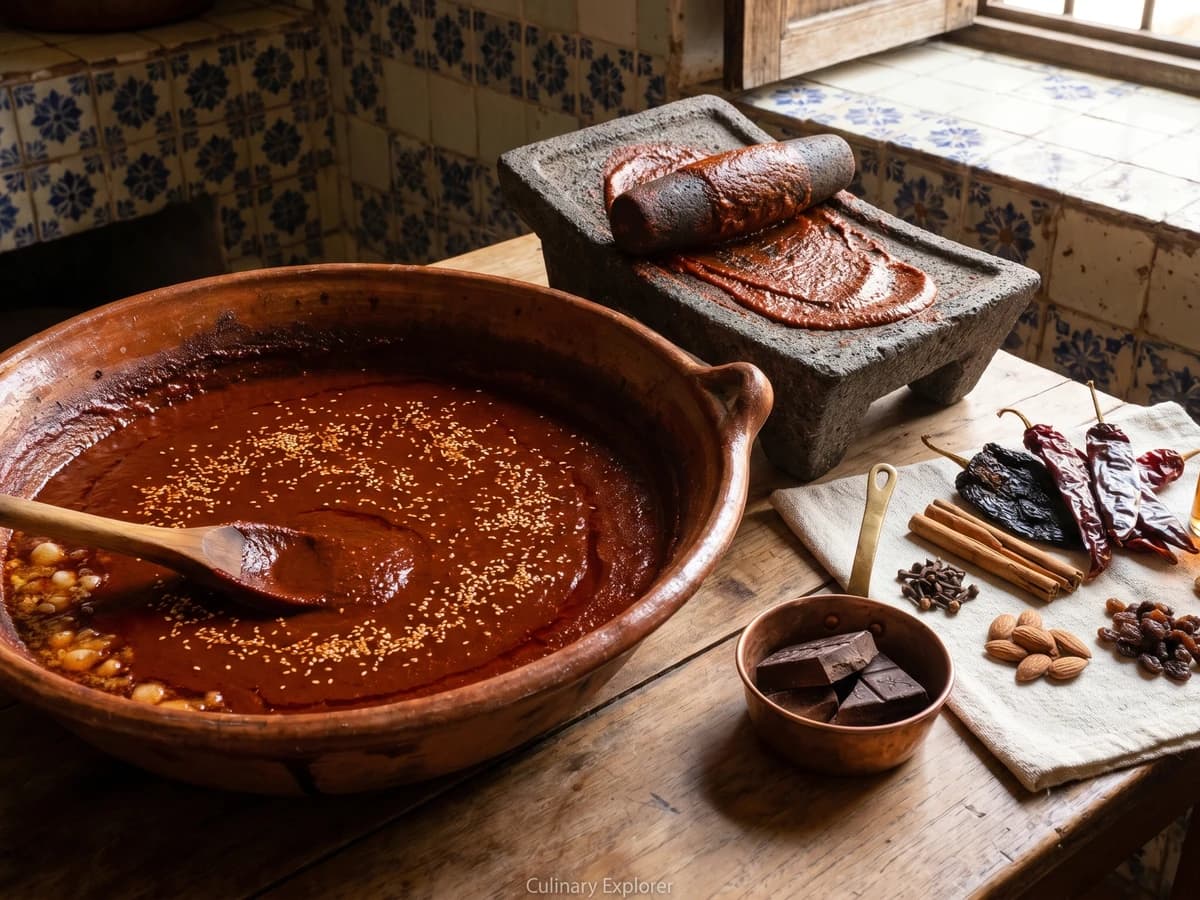
Zacatecas' wedding-table adobo, built from toasted guajillo and ancho, piloncillo, sour orange, chocolate, canela, clavo, almonds, sesame, and lard.

Chef Lupita
Puebla's convent kitchens built this adobo with ancho, guajillo, jerez, almonds, raisins, clove, and lard, a baroque marinade that stains pork loin and finishes as the sauce.