
Chef Lupita
Aceite de Chiltepin Bajacaliforniano
Baja California's wild chiltepin steeped in olive oil with garlic, orejon, and lime peel, until the oil turns ruby-amber and carries the slow, sneaky burn of the desert coast.
A cooking platform built around craft, culture, and the stories behind what we eat.

Created by
Michoacán's Meseta P'urhépecha salsa, built from boiled tomate verde and floral chile perón, martajada in a molcajete until it tastes like Pátzcuaro, Uruapan, and a wood-fire kitchen.
Michoacán, especially the Meseta P'urhépecha and the lake country around Pátzcuaro, owns this salsa. Tomate verde and chile perón grow in a climate that knows cool nights, pine smoke, milpas, and avocado orchards. This is not a generic salsa verde with any green chile thrown in. Cada estado, su propia cocina.
The chile perón is the authority here. Yellow to orange, thick-fleshed, with black seeds and that floral citrus smell that belongs to Capsicum pubescens, it is not jalapeño and it is not serrano. Those chiles will give you heat, yes, but they won't give you the highland perfume of Uruapan and Pátzcuaro. If you substitute them, say what you lost. No me vengas con atajos.
The women who taught me this in Pátzcuaro boiled the tomate verde and chile perón first, then worked them in a molcajete until the salsa stayed rough enough to cling to corundas. One señora served it in black burnished clay from Capula beside uchepos and a pot of beans. She watched my hand on the tejolote and told me, without smiling, that the blender was for people feeding fifty. For the family table, the stone knows better.
This salsa belongs with corundas, uchepos, pescado blanco when you can find it, roasted squash, beans from the olla, and warm tortillas from the comal. It is weeknight food, but do not confuse weeknight with careless. La cocina no es decoración, es trabajo.
Tomate verde, a domesticated Physalis species, has been part of central and western Mexican cooking since pre-Columbian times, long before the Spanish brought onions and garlic into the pot. Chile perón, also called chile manzano in other regions, is Capsicum pubescens, a cool-climate chile with black seeds that adapted strongly to the highland growing zones of Michoacán, including the Uruapan and Pátzcuaro area. The wood-fire cooking practices of the P'urhépecha kitchen were central to the Michoacán paradigm cited when Traditional Mexican Cuisine was inscribed by UNESCO as Intangible Cultural Heritage in 2010.
Quantity
1 pound
husked and rinsed until not sticky
Quantity
2
yellow or orange, stems removed
Quantity
1 small
quartered
Quantity
2
unpeeled
Quantity
1/2 cup
chopped
Quantity
1 teaspoon, plus more to taste
Quantity
2 to 4 tablespoons
reserved from boiling the tomate verde
| Ingredient | Quantity |
|---|---|
| tomate verde (tomatillos)husked and rinsed until not sticky | 1 pound |
| fresh chile perónyellow or orange, stems removed | 2 |
| white onionquartered | 1 small |
| garlic clovesunpeeled | 2 |
| cilantro leaves and tender stemschopped | 1/2 cup |
| kosher salt | 1 teaspoon, plus more to taste |
| cooking liquidreserved from boiling the tomate verde | 2 to 4 tablespoons |
Pull off the papery husks from the tomate verde and rinse them under running water until the sticky film is gone. That film can make the salsa taste muddy. Choose tomatillos that are firm and bright green, not yellow and tired. If the market tomatillos are poor today, make another salsa. Pregúntale a las señoras del mercado.
Put the tomate verde, chile perón, quartered onion, and unpeeled garlic in a small pot. Cover with water by one inch and bring to a gentle boil. Cook 8 to 10 minutes, just until the tomatillos turn olive green and soften. Do not boil them to pieces. You want their acidity alive, not washed out.
Lift everything from the pot with a slotted spoon and save the cooking liquid. Peel the garlic. Let the chile perón sit for one minute so you can handle it, then decide your heat. For a full Meseta salsa, leave the black seeds in. For a calmer table salsa, split the chiles and remove half the seeds. The chile perón is floral and citrusy before it is hot. That is the point.
In a volcanic stone molcajete, grind the salt and peeled garlic first until you have a paste. Add the chile perón and crush it against the stone until the skins tear and the juices run. Add the onion, then the tomate verde, one or two at a time, pounding and dragging the tejolote until the salsa is martajada, rough and spoonable. A smooth green puree is not the goal here.
Stir in the chopped cilantro and 2 tablespoons of the reserved cooking liquid. Taste for salt. Let the salsa rest 10 minutes before serving so the chile perón opens up into the tomate verde. It should taste sharp, green, floral, and direct. Serve from the molcajete or a small cazuelita de barro. Así se hace y punto.
1 serving (about 60g)
Culinary guides, cultural storytelling, and the editorial depth that makes cooking meaningful.
Discover Culinary ExplorerChef Lupita
Baja California's wild chiltepin steeped in olive oil with garlic, orejon, and lime peel, until the oil turns ruby-amber and carries the slow, sneaky burn of the desert coast.

Chef Lupita
Puebla's Lenten convent adobo, a brick-red vinegar chile paste of ancho, guajillo, garlic, oregano, and comino made to dress fish for the meatless calendar.
Chef Lupita
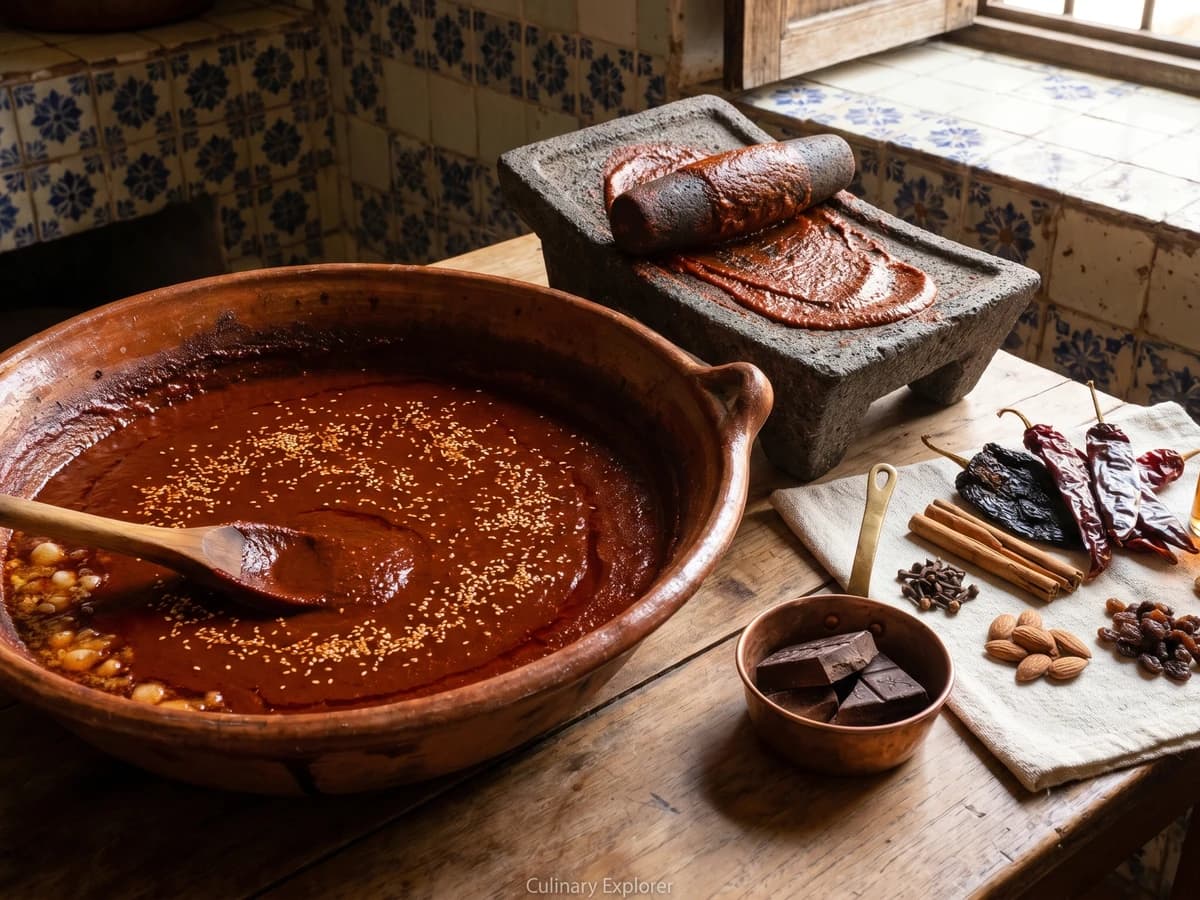
Zacatecas' wedding-table adobo, built from toasted guajillo and ancho, piloncillo, sour orange, chocolate, canela, clavo, almonds, sesame, and lard.

Chef Lupita
Puebla's convent kitchens built this adobo with ancho, guajillo, jerez, almonds, raisins, clove, and lard, a baroque marinade that stains pork loin and finishes as the sauce.