Culinary Explorer

A cooking platform built around craft, culture, and the stories behind what we eat.
Discover Culinary Explorer
Salsa de Tomate Cocido para Corundas

Salsa de Tomate Cocido para Corundas

Created by

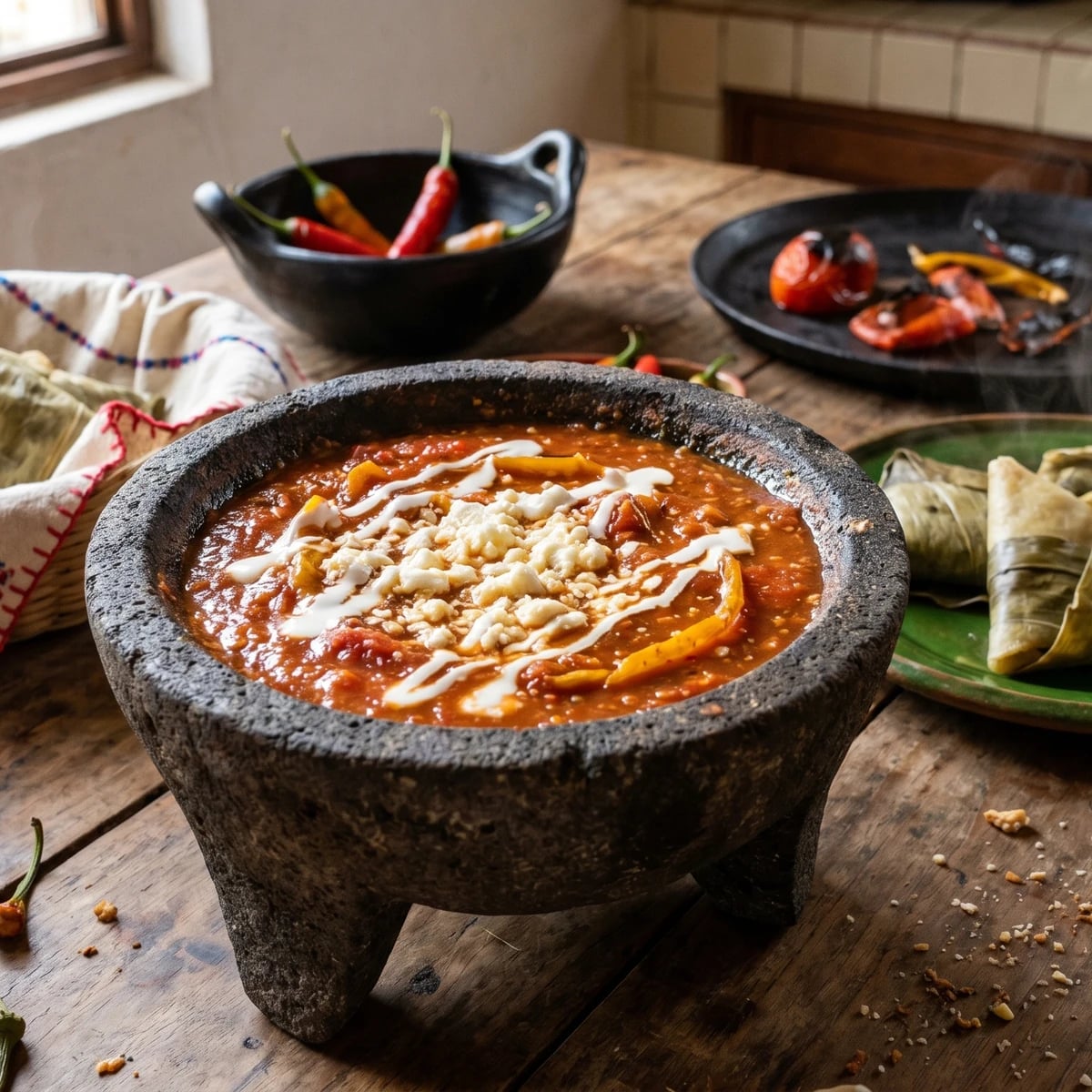
Michoacán's Pátzcuaro table salsa for corundas, built from cooked jitomate, chile perón, garlic, and broth, then finished with crema and queso fresco.

Sauces & Condiments
Mexican
Weeknight
Comfort Food
Make Ahead
15 min
Active Time
25 min cook40 min total
YieldAbout 3 cups, enough for 8 corundas

Michoacán, especially the lake region around Pátzcuaro and the Meseta P'urhépecha, knows what to put over corundas. This salsa de tomate cocido is not a thin table salsa for chips. It is a warm red sauce meant to soak into triangular tamales of fresh corn masa, with crema running into the tomato and queso fresco softening at the edges.

The chile that belongs here is chile perón, also called chile manzano in some markets, but in Michoacán the perón from Uruapan and Pátzcuaro has its own floral, citrus bite. It is Capsicum pubescens, with black seeds and thick flesh. Do not treat it like serrano. If you substitute serrano, the sauce will still be food, but it will lose that Michoacán perfume. A substitution is a compromise, not an upgrade.

I learned this sauce from a señora near the Pátzcuaro market who cooked the jitomates until the skins split, then crushed them in a molcajete with garlic and chile. No drama. No tricks. The broth gives body, the manteca rounds the tomato, and the crema and queso make it belong to the corunda. Cada estado, su propia cocina.

Corundas are one of Michoacán's oldest P'urhépecha corn preparations, traditionally wrapped in long green corn leaves and folded into triangular or many-sided shapes before steaming. Tomato sauces served over corundas and uchepos reflect the colonial-era spread of domesticated jitomate into regional household cooking, but the technique of grinding chile, tomato, and garlic on volcanic stone continues older Mesoamerican practice. In 2010, UNESCO recognized Traditional Mexican Cuisine through the Michoacán paradigm, specifically valuing continuous practices such as nixtamalization, grinding, and cooking over leña in community kitchens.

The technique, the tradition, and the story behind every dish.

Discover Culinary Explorer

Ingredients

ripe jitomate roma or saladette tomatoes

Quantity

1 1/2 pounds

fresh chile perón

Quantity

2

stemmed

garlic cloves

Quantity

2

unpeeled

white onion

Quantity

1/4 medium

manteca de cerdo

Quantity

1 tablespoon

warm chicken broth or pork broth

Quantity

1 cup

kosher salt

Quantity

1 teaspoon, plus more to taste

Mexican crema

Quantity

1/2 cup

for serving

queso fresco

Quantity

1/2 cup

crumbled, for serving

warm corundas or uchepos

Quantity

8

for serving

Equipment Needed

  • Volcanic stone molcajete
  • Comal de barro or cast iron comal
  • Medium clay cazuela
  • Wooden spoon

Instructions

  1. 1

    Cook the tomatoes

    Put the jitomates in a small pot and cover with water. Bring to a steady simmer and cook 8 to 10 minutes, until the skins split and the flesh softens. Do not boil them to death. You want cooked tomato, not watery red pulp.

  2. 2

    Char the chile

    While the tomatoes cook, set the chile perón, garlic, and onion on a hot comal. Turn them until the chile skin blisters, the garlic softens inside its peel, and the onion shows dark spots at the edges. The chile perón has thick flesh, so give it time. Its perfume is part of the sauce.

    Chile perón has black seeds and a bright, floral heat. Remove the seeds if you want less bite, but do not replace it casually with jalapeño. That changes the region on the plate.
  3. 3

    Grind the base

    Peel the garlic. In a molcajete, grind the garlic and salt first until they become a paste. Add the charred onion and chile perón and crush until broken down but not perfectly smooth. Add the cooked jitomates one by one, crushing them into a rough sauce. A molcajete gives you martajada texture. A blender works for a larger batch, but the salsa becomes smoother and less alive.

  4. 4

    Fry the salsa

    Melt the manteca de cerdo in a clay cazuela or heavy saucepan over medium heat. Add the tomato mixture carefully. It will sputter. Cook 6 to 8 minutes, stirring often, until the tomato darkens slightly and the fat shines at the edges. La manteca es el sabor. Oil will cook the sauce, but it will not give the same roundness.

  5. 5

    Loosen with broth

    Pour in the warm broth and stir well, scraping the bottom of the cazuela. Simmer 8 to 10 minutes, until the sauce is loose enough to spoon over corundas but not so thin that it runs off the plate. Taste for salt. The corundas are mild, so the salsa must speak clearly.

  6. 6

    Serve with corundas

    Spoon the hot salsa over warm corundas or uchepos. Finish each serving with Mexican crema and crumbled queso fresco. Serve in barro, not on a cold white restaurant plate. This is Pátzcuaro food, generous and direct. Así se hace y punto.

Chef Tips

  • Buy chile perón when it looks heavy for its size, with taut yellow-orange skin and black seeds inside. In Michoacán markets you see it piled near the avocado country produce. Pregúntale a las señoras del mercado.
  • If chile perón is impossible to find, use one chile manzano. If you must use serrano, use two and understand what is missing: the thick flesh, the floral citrus aroma, and the Michoacán identity.
  • This salsa is for corundas and uchepos, not for nachos, not for flour tortillas, not for pretending every Mexican sauce is the same. This is a 32-state cuisine.

Advance Preparation

  • The salsa can be made 2 days ahead without the crema and queso. Refrigerate it in a covered container and reheat gently in a cazuela before serving.
  • Add the crema and queso fresco only at the table or just before serving. If you simmer the crema hard, it can separate and turn the sauce dull.

Frequently Asked Questions

Nutrition Information

1 serving (about 230g)

Calories
310 calories
Total Fat
14 g
Saturated Fat
7 g
Trans Fat
0 g
Unsaturated Fat
6 g
Cholesterol
25 mg
Sodium
750 mg
Total Carbohydrates
38 g
Dietary Fiber
4 g
Sugars
5 g
Protein
8 g

Note: Chef personas and recipes are created with AI assistance. Cook with care: follow safe food-handling practices, check doneness with a thermometer when needed, and adapt for allergies and your kitchen.

Where cooking meets culture.

Culinary guides, cultural storytelling, and the editorial depth that makes cooking meaningful.

Discover Culinary Explorer

More from Atápakuas, Salsas de Chile Perón & Recados P'urhépechas

Browse the full collection