
Chef Lupita
Aceite de Chiltepin Bajacaliforniano
Baja California's wild chiltepin steeped in olive oil with garlic, orejon, and lime peel, until the oil turns ruby-amber and carries the slow, sneaky burn of the desert coast.
A cooking platform built around craft, culture, and the stories behind what we eat.

Created by
Chiapas' central valleys put chicharron to work in a simmered guajillo-tomato salsa, thickened by pork rind and finished with momo, the hoja santa of the south.
Chiapas gives you this salsa from the central valleys and the highland markets, where a slab of chicharron on the counter means dinner is already halfway solved. In Tuxtla Gutierrez and Chiapa de Corzo, I watched women break the pork rind straight into the cazuela with their hands. No knife. The edges have to be uneven so the salsa can catch.
The base is chile guajillo and roasted tomato, with chile simojovel for the Chiapas heat. Simojovel is not pasilla. It is not piquin. It is its own chile, small and red, and if your vendor knows Chiapas chiles she will tell you that before I have to. The momo leaf, hoja santa in other states, gives the sauce that green anise shadow you find across the south, especially where Chiapas and Tabasco speak to each other through the kitchen.
This is frugal cooking, not poor cooking. There is a difference. The chicharron thickens the salsa, carries the chile, and turns a few tomatoes into something that can feed people with tortillas and beans. La cocina no es decoracion, es trabajo. Put it in clay, set it on the table, and let the tortillas do what they were made to do.
Chicharron entered Mexican regional cooking after Spanish pigs arrived in the 16th century, but the practice of building meals around corn, chile, tomato, and herbs long predates the conquest in Chiapas. The state cuisine carries Maya, Zoque, and Spanish layers, and its local chiles, including chile simojovel from the northern highlands, remain markers of place rather than interchangeable heat. Momo, called hoja santa in much of Mexico, is especially important in Chiapas and Tabasco, where it perfumes tamales, fish, beans, and salsas tied to the Grijalva and Usumacinta basin foodways.
Quantity
5
stemmed and seeded
Quantity
2
stemmed
Quantity
1 1/4 pounds
Quantity
1/2 medium
Quantity
3
unpeeled
Quantity
1 tablespoon
Quantity
1 teaspoon, plus more to taste
Quantity
1/2 cup, plus more as needed
Quantity
1 small
center rib removed and leaf torn
Quantity
5 ounces
broken into rough pieces
Quantity
1 tablespoon
chopped
Quantity
for serving
| Ingredient | Quantity |
|---|---|
| dried chile guajillostemmed and seeded | 5 |
| dried chile simojovelstemmed | 2 |
| ripe Roma tomatoes | 1 1/4 pounds |
| white onion | 1/2 medium |
| garlic clovesunpeeled | 3 |
| manteca de cerdo (pork lard) | 1 tablespoon |
| kosher salt | 1 teaspoon, plus more to taste |
| hot water | 1/2 cup, plus more as needed |
| momo leaf (hoja santa)center rib removed and leaf torn | 1 small |
| chicharron de cerdobroken into rough pieces | 5 ounces |
| fresh cilantro (optional)chopped | 1 tablespoon |
| warm corn tortillas (optional) | for serving |
Break the chicharron with your hands into rough bite-size pieces. Keep a small handful aside if you want a crisp finish on top. Do not cut it into neat squares. The ragged edges drink the salsa and thicken it. That is the whole trick.
Heat a dry comal over medium. Toast the chile guajillo for about 20 seconds per side, just until the skin turns glossy and smells deep. Toast the chile simojovel for only a few seconds. It is small and burns fast. Burned chile makes bitter salsa, and nobody at the mercado will forgive you for pretending otherwise.
Put the toasted chiles in a bowl and cover with hot water. Hot, not boiling. Let them soften for 15 minutes. Boiling water toughens the skins and can pull bitterness into the salsa. Hot water wakes the flesh without punishing it.
On the same comal, roast the tomatoes, onion, and unpeeled garlic until the tomatoes blister and soften, the onion chars at the edges, and the garlic gives under your fingers. Turn everything as it cooks. This is where the salsa gets its body. Raw tomato tastes thin here.
Peel the garlic. Drain the chiles and put them in a blender with the roasted tomatoes, onion, garlic, salt, and 1/2 cup hot water. Blend until smooth. If your blender leaves pieces of guajillo skin, strain the salsa through a fine-mesh sieve. Texture is welcome. Leathery chile skin is not.
Melt the manteca de cerdo in a clay cazuela or heavy skillet over medium heat. Pour in the blended salsa. It will sputter. Cook for 7 to 9 minutes, stirring often, until the red deepens and tiny beads of fat show at the edges. La manteca es el sabor. Oil can fry the salsa, but it will not give you this taste.
Add the torn momo leaf and the chicharron pieces. Stir gently so every piece is coated. Simmer 6 to 8 minutes, adding a splash of hot water if the salsa tightens too much. Some chicharron should soften into the sauce and some should keep shape. That contrast is the point.
Taste for salt. Fold in the cilantro if using. Spoon the salsa into a rough Chiapas clay bowl and scatter the reserved crisp chicharron over the top. Serve warm or at room temperature with corn tortillas, beans, or eggs. This is not a dip for chips. It is a table salsa with work in it. Cada estado, su propia cocina.
1 serving (about 170g)
Culinary guides, cultural storytelling, and the editorial depth that makes cooking meaningful.
Discover Culinary ExplorerChef Lupita
Baja California's wild chiltepin steeped in olive oil with garlic, orejon, and lime peel, until the oil turns ruby-amber and carries the slow, sneaky burn of the desert coast.

Chef Lupita
Puebla's Lenten convent adobo, a brick-red vinegar chile paste of ancho, guajillo, garlic, oregano, and comino made to dress fish for the meatless calendar.
Chef Lupita
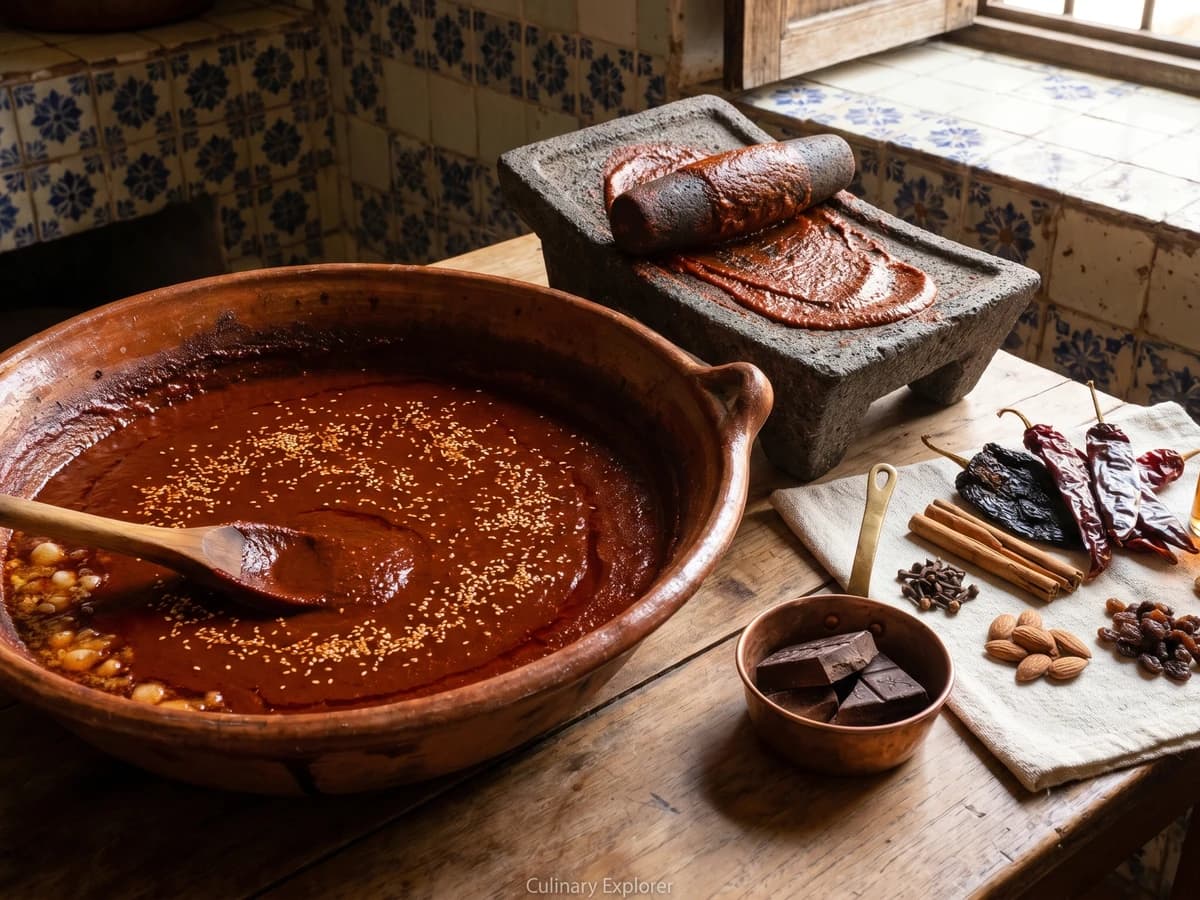
Zacatecas' wedding-table adobo, built from toasted guajillo and ancho, piloncillo, sour orange, chocolate, canela, clavo, almonds, sesame, and lard.

Chef Lupita
Puebla's convent kitchens built this adobo with ancho, guajillo, jerez, almonds, raisins, clove, and lard, a baroque marinade that stains pork loin and finishes as the sauce.