
Chef Lupita
Aceite de Chiltepin Bajacaliforniano
Baja California's wild chiltepin steeped in olive oil with garlic, orejon, and lime peel, until the oil turns ruby-amber and carries the slow, sneaky burn of the desert coast.
A cooking platform built around craft, culture, and the stories behind what we eat.
Created by
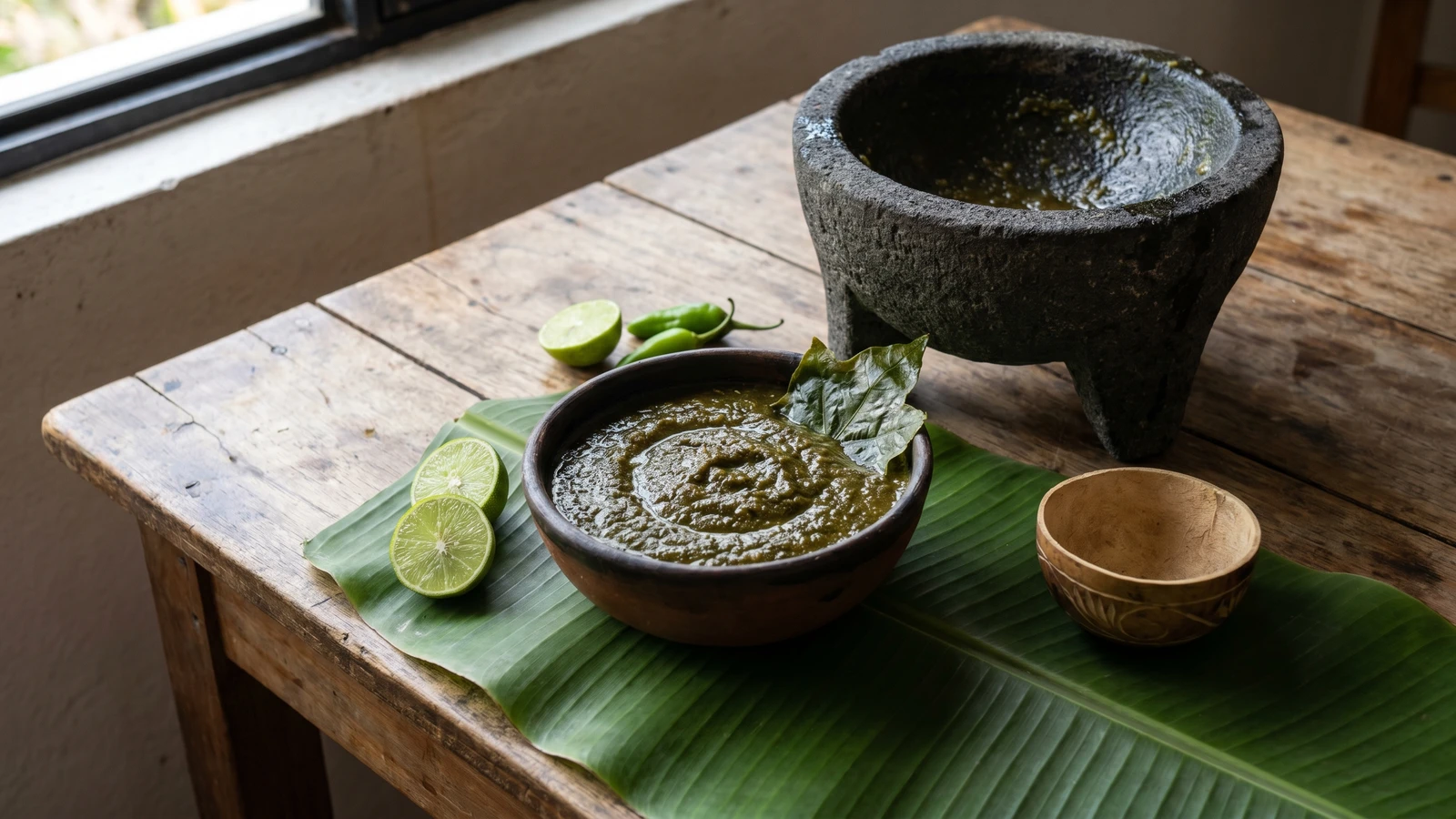
Tabasco's lowland green salsa, made with cooked chaya leaves and tiny chile amashito, sharp with lime and built for rice, plantain, beans, and fried fish.
Tabasco, the Chontal lowlands, the kitchens near the Grijalva and Usumacinta rivers. This salsa lives where chaya grows like a backyard vegetable and chile amashito is sold in tiny green piles at the mercado. This is not a northern salsa, not a Yucatecan recado, not an Oaxacan chile paste. Cada estado, su propia cocina.
Chaya is the ingredient that defines it. The leaves must be cooked before you eat them. Raw chaya can make you sick, and no señora in Tabasco needs a laboratory to tell her that. She knows because her mother knew. Simmer the leaves, drain them well, then grind them with garlic, chile amashito, salt, and lime until the salsa turns dark green and sharp.
The chile amashito is not piquín. It is smaller, greener, and tied to the humid heat of Tabasco. Use it fresh if you can find it. The heat should wake up the rice and the fried fish, not punish the mouth. This salsa is daily food: spooned over arroz blanco, eaten beside plátano macho, dragged through beans with a warm corn tortilla. Saber cocinar es saber vivir.
Chaya, Cnidoscolus aconitifolius, is a domesticated Mesoamerican leafy green long cultivated in the humid lowlands of southeastern Mexico, especially Tabasco, Campeche, Chiapas, and Yucatán. In Tabasco, Chontal and mestizo home cooks use it as a daily vegetable in soups, tamales, rice dishes, and salsas, always cooked because the raw leaves contain cyanogenic compounds that dissipate with proper simmering. Chile amashito is a regional Tabasco chile, often gathered semi-wild or grown in home plots, and it should not be confused with chile piquín from the north.
Quantity
4 cups
stems removed and leaves washed well
Quantity
6
stemmed
Quantity
2
peeled
Quantity
1/2 teaspoon, plus more to taste
Quantity
2 tablespoons, plus more to taste
Quantity
2 to 4 tablespoons
as needed
| Ingredient | Quantity |
|---|---|
| fresh chaya leavesstems removed and leaves washed well | 4 cups |
| fresh chile amashitostemmed | 6 |
| garlic clovespeeled | 2 |
| kosher salt | 1/2 teaspoon, plus more to taste |
| fresh lime juice | 2 tablespoons, plus more to taste |
| chaya cooking water or clean warm wateras needed | 2 to 4 tablespoons |
Pull the chaya leaves from the thick stems and wash the leaves in two changes of water. Dirt hides where the leaf folds. Do not use raw chaya in the salsa. Cook it first. This is not a suggestion.
Bring a medium pot of water to a steady simmer in stainless steel, enamel, or clay. Do not use aluminum for chaya. Add the leaves and cook for 15 minutes, until they turn dark green and tender. Drain well, saving a few tablespoons of the cooking water if you want a looser salsa.
In a molcajete, grind the garlic, chile amashito, and salt into a rough paste. The salt helps tear the chile skin and pull out its juice. The aroma should be sharp, green, and immediate. If you use a blender, pulse only enough to break everything down. A salsa, not a smoothie.
Squeeze the cooked chaya gently to remove extra water, then add it to the molcajete. Grind until the leaves break into a thick, dark green salsa with some texture left. Add 2 tablespoons of cooking water if it is too stiff. The salsa should spoon, not pour.
Stir in the lime juice and taste for salt. Add more lime only if the chaya tastes flat. The flavor should be green, mineral, garlicky, and bright from the citrus, with the chile amashito landing at the back of the tongue.
Spoon the salsa into a small clay bowl and serve at room temperature with arroz blanco, fried fish, boiled yuca, black beans, plátano macho, or warm corn tortillas. This is daily Tabasco cooking. No me vengas con atajos.
1 serving (about 30g)
Culinary guides, cultural storytelling, and the editorial depth that makes cooking meaningful.
Discover Culinary ExplorerChef Lupita
Baja California's wild chiltepin steeped in olive oil with garlic, orejon, and lime peel, until the oil turns ruby-amber and carries the slow, sneaky burn of the desert coast.

Chef Lupita
Puebla's Lenten convent adobo, a brick-red vinegar chile paste of ancho, guajillo, garlic, oregano, and comino made to dress fish for the meatless calendar.
Chef Lupita
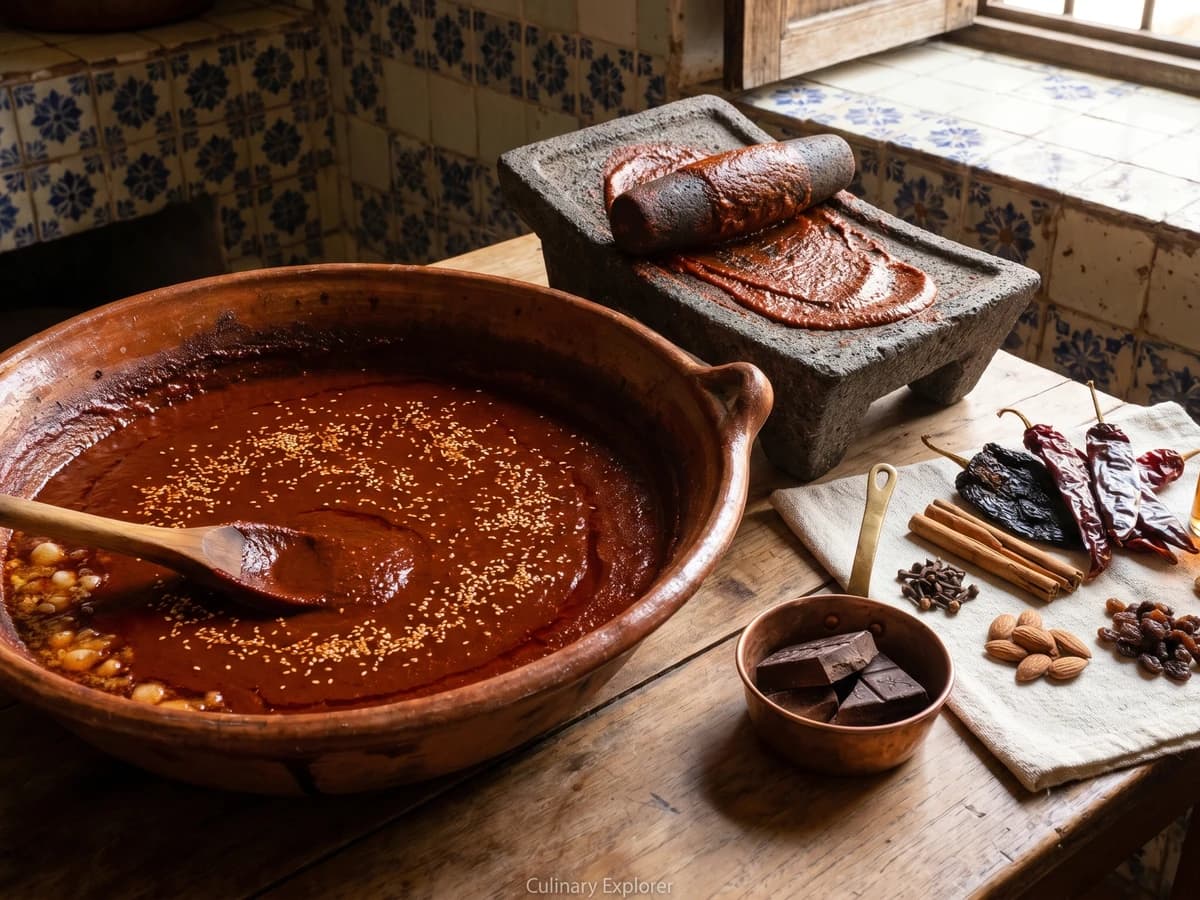
Zacatecas' wedding-table adobo, built from toasted guajillo and ancho, piloncillo, sour orange, chocolate, canela, clavo, almonds, sesame, and lard.

Chef Lupita
Puebla's convent kitchens built this adobo with ancho, guajillo, jerez, almonds, raisins, clove, and lard, a baroque marinade that stains pork loin and finishes as the sauce.