
Chef Lupita
Aceite de Chiltepin Bajacaliforniano
Baja California's wild chiltepin steeped in olive oil with garlic, orejon, and lime peel, until the oil turns ruby-amber and carries the slow, sneaky burn of the desert coast.
A cooking platform built around craft, culture, and the stories behind what we eat.
Created by
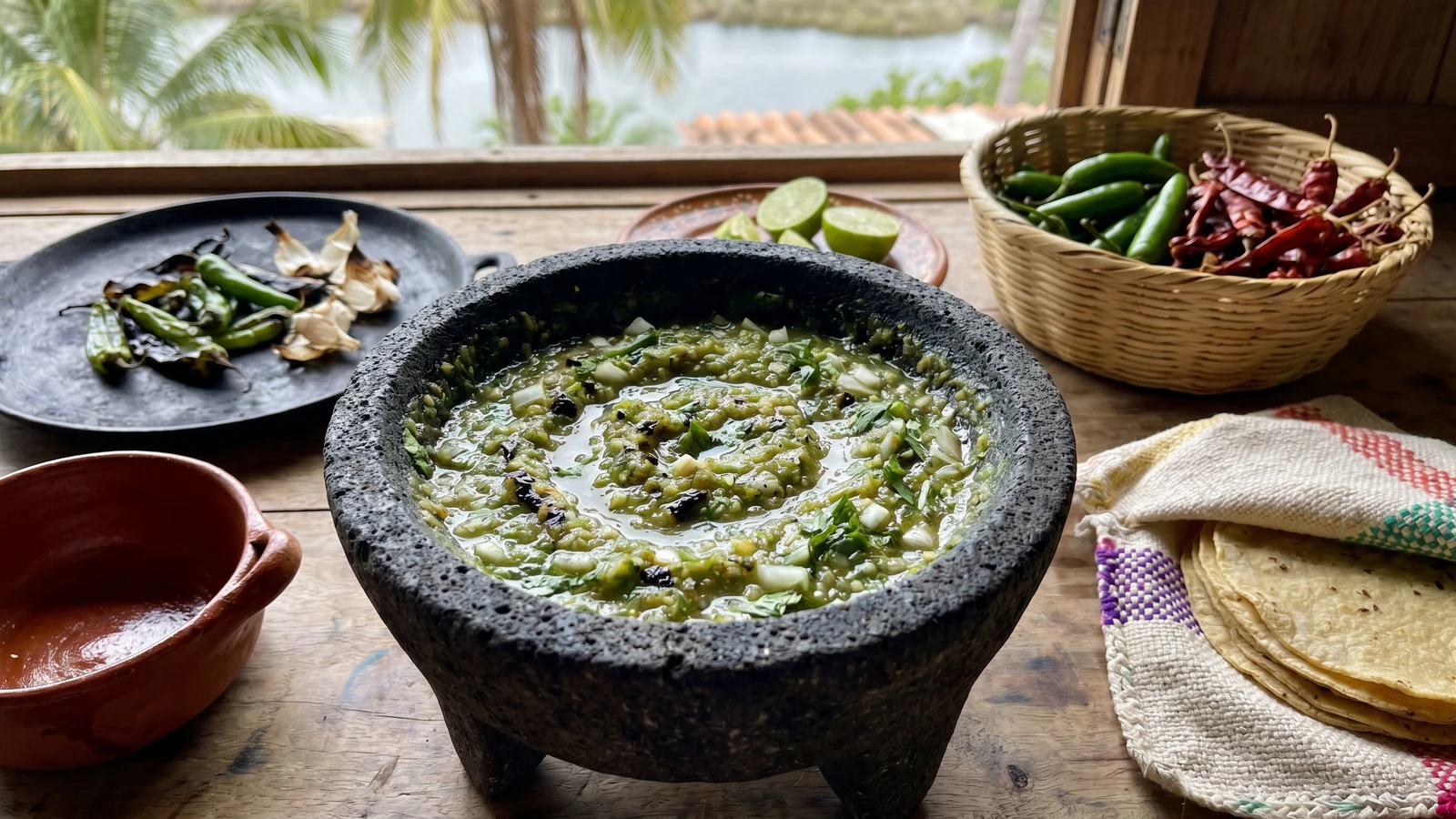
Guerrero's Costa Chica salsa borracha, built from comal-charred serranos, garlic, lime, and mezcal de cupreata, crushed by hand so grilled meat tastes brighter, not buried.
Guerrero's Costa Chica, from Ometepec toward Cuajinicuilapa and the line with Oaxaca, is where this salsa lives. It belongs beside meat coming off the parrilla, pescado a las brasas, cecina costeña, or a stack of corn tortillas wrapped in a servilleta. This is costeño and afromestizo table cooking, not a green salsa emptied of its place.
The chile is fresh serrano, tatemado on a dry comal until blistered black in places. The garlic cooks in its skin. The lime has to be fresh, and the drink is mezcal joven de maguey cupreata from Guerrero if you can find it. No oil. No tomato. No blender. The women who taught me versions of it around Ometepec crushed it in the molcajete, one chile at a time, because the broken skin holds the char and the juice.
Serve it in the molcajete or a low barro rojo cazuelita, with the spoon resting in the salsa and lime halves on the table. It should bite, then brighten, then let the grilled meat taste more like itself. That is the job. Saber cocinar es saber vivir.
The Costa Chica of Guerrero and Oaxaca has been a major Afro-Mexican region since the colonial period, when enslaved Africans and free Black communities worked cattle ranches, coastal farms, and fishing settlements along the Pacific. Mexico's 2020 census counted Afro-Mexican identity nationally for the first time after constitutional recognition in 2019, making visible communities that had long shaped Guerrero's food without being named in national stories. Salsa borracha is a family of alcohol-finished salsas: pulque in central Mexico, beer in some northern tables, and mezcal on Guerrero tables where serrano, lime, and comal char cut through fire-cooked meat and fish.
Quantity
12
stems left on for charring
Quantity
4 large
unpeeled
Quantity
1 teaspoon, plus more to taste
Quantity
3 tablespoons
preferably from limón criollo
Quantity
2 tablespoons
Quantity
1/3 cup
finely chopped
Quantity
2 tablespoons
finely chopped
Quantity
for serving
Quantity
for serving
Quantity
for serving
| Ingredient | Quantity |
|---|---|
| fresh chile serranostems left on for charring | 12 |
| garlic clovesunpeeled | 4 large |
| sal de grano or coarse sea salt | 1 teaspoon, plus more to taste |
| fresh lime juicepreferably from limón criollo | 3 tablespoons |
| mezcal joven de Guerrero made from maguey cupreata | 2 tablespoons |
| white onionfinely chopped | 1/3 cup |
| fresh cilantro leaves and tender stemsfinely chopped | 2 tablespoons |
| extra lime halves (optional) | for serving |
| warm hand-pressed corn tortillas (optional) | for serving |
| grilled beef, pork, or fish (optional) | for serving |
Set a cast iron comal or heavy skillet over medium-high heat for 5 minutes. Dry heat matters. Oil will fry the chiles instead of tatemarlos, and you want blistered skin, not greasiness. There is no fat in this salsa. The shine comes from lime and mezcal.
Lay the chile serrano and unpeeled garlic cloves on the hot comal. Turn them with tongs until the serranos are blackened in spots, softened, and fragrant, 6 to 8 minutes. The garlic takes a little longer, 8 to 10 minutes, and should feel soft inside its papery skin. If a chile turns fully ashy instead of blistered, throw it out. Burned chile makes bitter salsa. Así se hace y punto.
Move the serranos to a bowl and cover with a clean kitchen towel for 5 minutes. This softens the flesh so it crushes properly. Pull off the stems. Peel the garlic. Do not peel the chiles clean. Those black flecks are the comal speaking.
Put the sal de grano in the molcajete with the peeled garlic. Grind until you have a rough paste. Add the serranos one at a time and crush them against the stone until the salsa is coarse, juicy, and uneven. Never blend this salsa. A blender makes a thin green puree and kills the texture the señoras on the coast worked to build.
Stir in the fresh lime juice and mezcal joven. The salsa should loosen enough to spoon but still hold pieces of crushed chile. Let it sit for 5 minutes so the salt, lime, and agave settle into the chile. Taste for salt. You should smell the mezcal after the lime, not before it.
Fold in the finely chopped white onion and cilantro just before serving. Spoon the salsa from the molcajete or a low barro rojo cazuelita onto grilled beef, pork, or fish, with warm corn tortillas nearby. This salsa is made for fat, char, and lime. Cada estado, su propia cocina.
1 serving (about 45g)
Culinary guides, cultural storytelling, and the editorial depth that makes cooking meaningful.
Discover Culinary ExplorerChef Lupita
Baja California's wild chiltepin steeped in olive oil with garlic, orejon, and lime peel, until the oil turns ruby-amber and carries the slow, sneaky burn of the desert coast.

Chef Lupita
Puebla's Lenten convent adobo, a brick-red vinegar chile paste of ancho, guajillo, garlic, oregano, and comino made to dress fish for the meatless calendar.
Chef Lupita
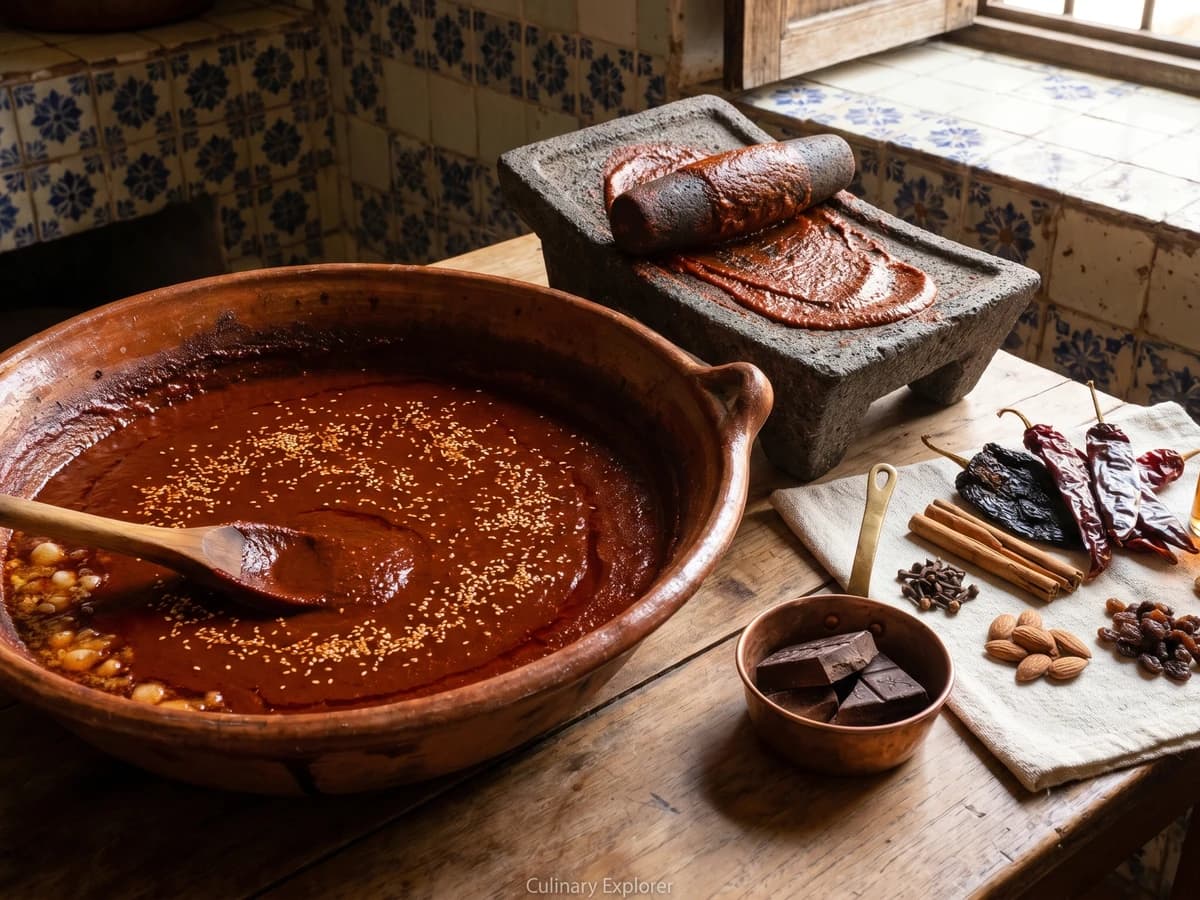
Zacatecas' wedding-table adobo, built from toasted guajillo and ancho, piloncillo, sour orange, chocolate, canela, clavo, almonds, sesame, and lard.

Chef Lupita
Puebla's convent kitchens built this adobo with ancho, guajillo, jerez, almonds, raisins, clove, and lard, a baroque marinade that stains pork loin and finishes as the sauce.