Culinary Explorer
A cooking platform built around craft, culture, and the stories behind what we eat.
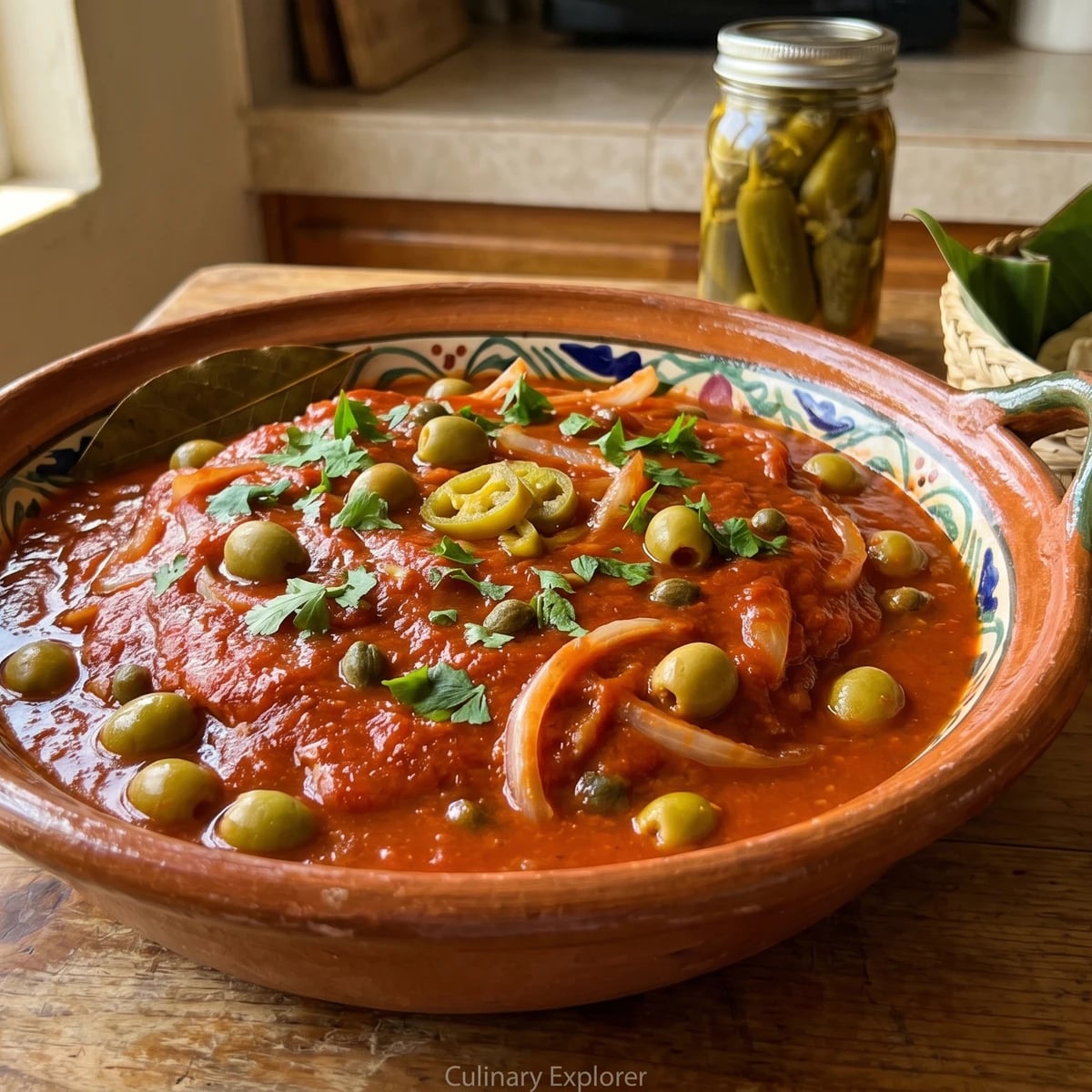
Veracruz Tomato-Olive-Caper Sauce
Created by Chef Lupita
Veracruz's tomato, olive, caper, and chile guero sauce, built in olive oil with bay leaf and oregano, the Gulf coast base that turns fish, eggs, chicken, or rice into comida de puerto.
Veracruz, the Gulf port, owns this sauce. Not the north. Not the center. Veracruz. Salsa a la Veracruzana belongs to the coast where tomatoes, olives, capers, chiles gueros, garlic, onion, and olive oil learned to share the same cazuela without losing their own voices.
This is the sauce most people know because of huachinango a la veracruzana, red snapper laid into a tomato base sharp with capers and olives. But in Veracruz homes it is bigger than one fish. It goes over eggs, chicken, rice, fried plantains, and whatever the market gave you that day. The chile guero is there for perfume and a little bite, not to set your mouth on fire. Not all Mexican food is trying to be hot. Learn that first.
The technique is patient and plain. You soften onion and garlic in olive oil, cook down ripe jitomate until it stops tasting raw, then let the brine from the olives, capers, and pickled chiles enter slowly. A woman in Alvarado taught me to wait until the oil shines at the edges before adding the capers. She tapped the wooden spoon against the cazuela and said, 'Si lo apuras, sabe crudo.' If you rush it, it tastes raw. She was right.
Use good tomatoes. Use real olive oil. Use Mexican oregano, not the dusty Italian jar that has been dead in your cabinet since 2019. This is a 32-state cuisine. Cada estado, su propia cocina.
Ingredients
ripe Roma tomatoes or saladet tomatoes
Quantity
3 pounds
cored and roughly chopped
extra-virgin olive oil
Quantity
1/3 cup
white onion
Quantity
1 large
thinly sliced
| Ingredient | Quantity |
|---|---|
| ripe Roma tomatoes or saladet tomatoescored and roughly chopped | 3 pounds |
| extra-virgin olive oil | 1/3 cup |
| white onionthinly sliced | 1 large |
Where cooking meets culture.
Culinary guides, cultural storytelling, and the editorial depth that makes cooking meaningful.
Discover Culinary Explorer