
Chef Lesia
Buryakovyi Salat (буряковий салат, raw beet salad)
The beet stays raw, so the salad bites back: crimson, garlicky, nutty, slick with green sunflower oil, and ready before the bread is on the table.
A cooking platform built around craft, culture, and the stories behind what we eat.

Created by
Cold sauerkraut, sharp onion, a pinch of sugar and green sunflower oil make a winter salad that wakes the table before the potatoes even arrive.
The winter table needs one bowl that bites back. Kvashena kapusta, fermented cabbage, comes from the crock pale-gold and squeaky under the fork, sharp enough to wake boiled potatoes, with the brine still clinging to every ribbon. Add onion, a little sugar, and unrefined sunflower oil, and suddenly the cheapest bowl in the middle is the loudest thing on the table.
What decides it is balance, not effort. The sugar isn't there to make the cabbage sweet; it knocks the hard edge off the lactic sourness and pulls the onion's juice into the dressing, while the green oil makes everything glossy and nutty. Aunt Nadia would write "until it sounds right" for dishes like this, but here you can hear it plainly: dry cabbage scrapes in the bowl, dressed cabbage slips and shines.
Use what your ferment gives you. If it is fierce, squeeze it and give it more oil; if it is tired, wake it with a spoon of its own brine and more onion. In January we don't pretend cucumbers are summer. We open a jar, and that is not a substitute. That's the actual tradition.
Kvashena kapusta, fermented cabbage, was one of the great winter stores of Ukrainian households: after the autumn harvest, cabbage was salted in barrels or crocks, shredded for salads and sometimes left as whole heads for holubtsi. The salad belongs to the everyday zakusky table, especially in central and southern kitchens where unrefined sunflower oil became the natural dressing as sunflower growing spread across the steppe in the nineteenth century. Twentieth-century canteens often made this bowl look plain, but at home it was vitamin C, sour crunch, onion heat, and the barrel speaking back in winter.
Quantity
700g
drained, with brine reserved
Quantity
3 tablespoons
reserved from the jar or crock
Quantity
1 small
sliced into very thin half-moons
Quantity
1 to 2 teaspoons
to taste
Quantity
3 tablespoons
Quantity
1 small
coarsely grated
Quantity
1 small
cut into matchsticks
Quantity
2 tablespoons
Quantity
small handful
chopped
Quantity
to taste
Quantity
only if needed
| Ingredient | Quantity |
|---|---|
| kvashena kapusta (Ukrainian-style sauerkraut)drained, with brine reserved | 700g |
| sauerkraut brinereserved from the jar or crock | 3 tablespoons |
| yellow onionsliced into very thin half-moons | 1 small |
| sugarto taste | 1 to 2 teaspoons |
| unrefined sunflower oil | 3 tablespoons |
| carrot (optional)coarsely grated | 1 small |
| tart apple (optional)cut into matchsticks | 1 small |
| cranberries (optional) | 2 tablespoons |
| fresh dillchopped | small handful |
| freshly ground black pepper | to taste |
| fine sea salt (optional) | only if needed |
Put a forkful of the sauerkraut in your mouth before you do anything clever. If it is mouth-puckering but pleasant, drain it and keep the brine. If it is brutally salty, give it one quick rinse in cold water and squeeze it hard in your fists. Don't rinse just because it is sour; the sourness is why we are here.
Put the onion into a large bowl with 1 teaspoon sugar and 1 tablespoon of the reserved brine. Scrunch it with your fingers until the slices turn glossy, bend at the edges, and the raw onion smell softens. Aunt Nadia would have written, "until it stops shouting," and for once she would be very clear.
Add the drained cabbage to the onion, then add the carrot, apple, or cranberries if you are using them. Pour over the unrefined sunflower oil and grind in black pepper. Toss with your hands, lifting and loosening the cabbage until it shines green-gold. It should glisten, not swim.
Taste again. If it feels flat, add a spoon of brine. If it bites too hard, add a pinch more sugar or another thread of oil. If it has fallen asleep, give it more onion or pepper. Let it sit until the onion and cabbage begin to smell like one thing, about twenty to thirty minutes if you need a clock, but your nose is better.
Fold in the dill just before serving so it stays green and sharp. Bring the bowl to the table cold or cool, with boiled potatoes, buckwheat, rye bread, roast meat, or nothing at all. This is enough for eight guests or one hungry Ukrainian.
1 serving (about 160g)
Culinary guides, cultural storytelling, and the editorial depth that makes cooking meaningful.
Discover Culinary ExplorerChef Lesia
The beet stays raw, so the salad bites back: crimson, garlicky, nutty, slick with green sunflower oil, and ready before the bread is on the table.

Chef Lesia
The pickle keeps this so-called men's salad honest: beef and beans bring the appetite, fried onion brings sweetness, and cucumber brine cuts through the mayonnaise until the bowl wakes up.
Chef Lesia
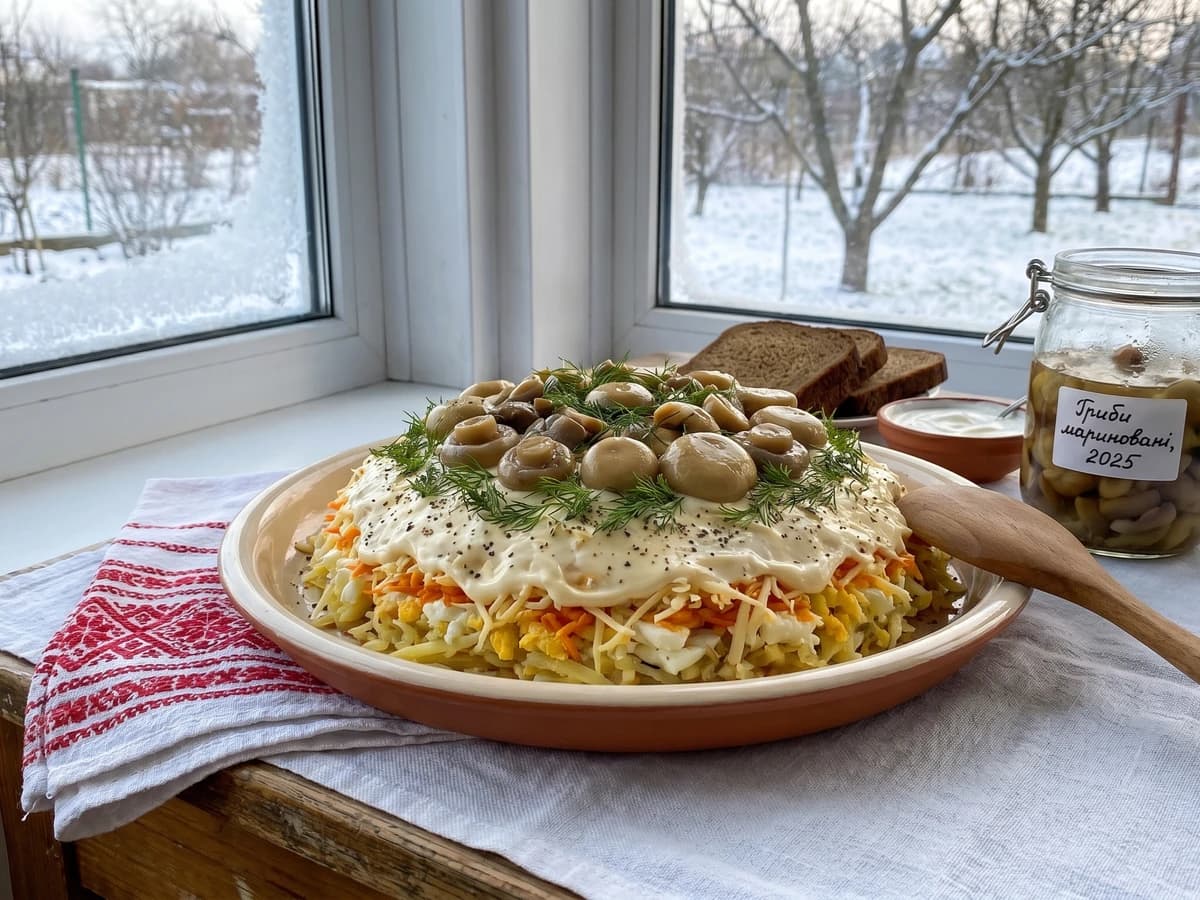
Open the jar and the holiday table smells briefly of the woods: marinated mushrooms, potato, egg, cheese, dill, and just enough mayonnaise to make it hold together.

Chef Lesia
The cabbage changes under your hands: stiff, squeaky ribbons soften into a glossy summer salad with carrot sweetness, dill sharpness, and green sunflower oil catching the light.