
Chef Zohra
Bakoula (بقولة)
Mallow greens cooked soft and dark with garlic, cumin, preserved lemon, and olives, the Moroccan cooked salad that tastes of spring rain and a loaf of khobz shared warm.
A cooking platform built around craft, culture, and the stories behind what we eat.
Created by
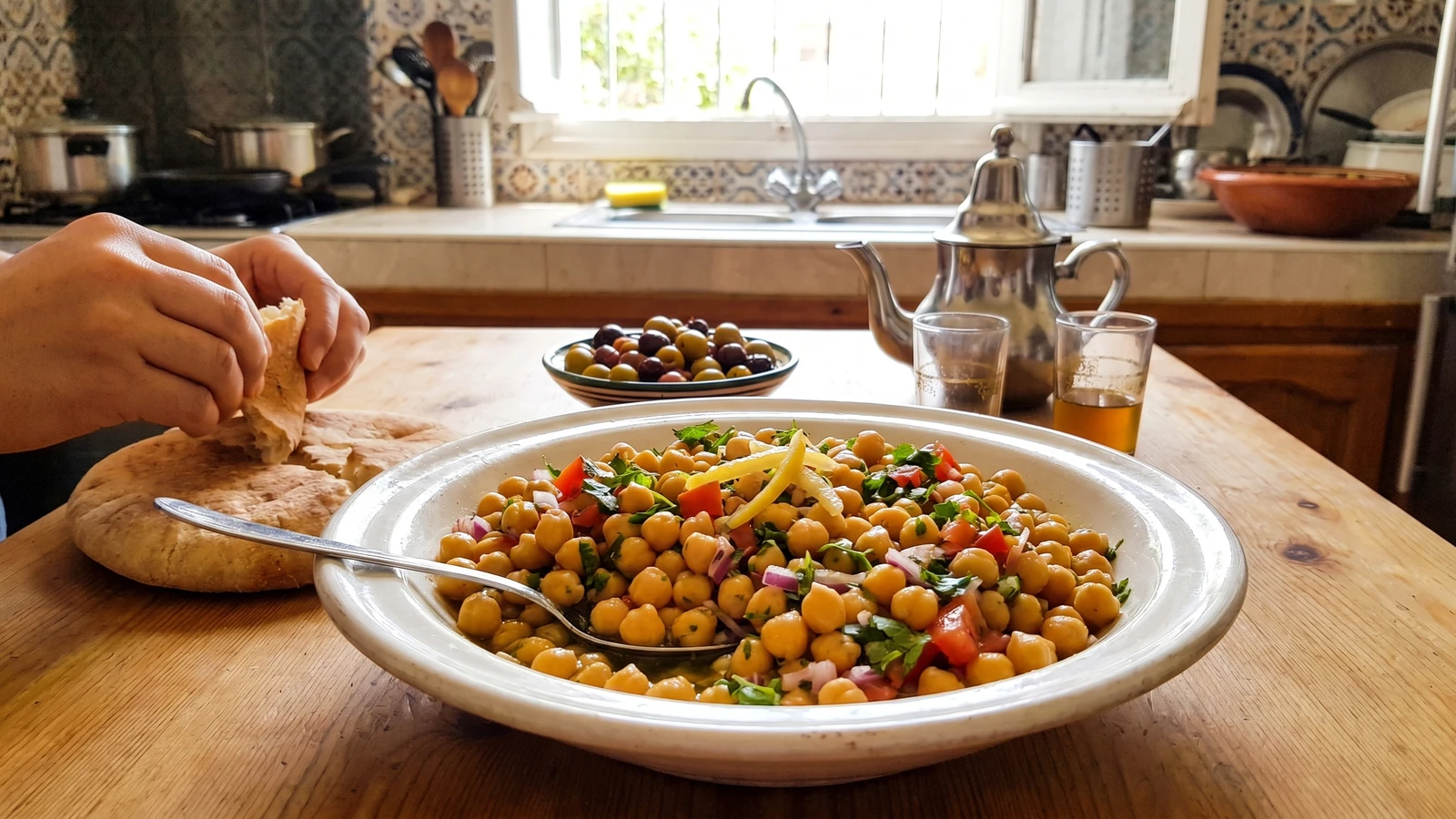
Soft chickpeas dressed warm in chermoula, with cumin, preserved lemon, tomato, onion, and herbs. It sits among the salataat, ready for khobz, ready for one more hand at the table.
The chickpeas have to be warm when they meet the chermoula. Not hot enough to bruise the herbs, not cold from the fridge, just warm and soft, so the garlic, cumin, preserved lemon, tomato, and olive oil can enter instead of sliding off the skins. That little timing is the dish.
This is one of the plates in a Moroccan salataat spread, the small salads set out before a tagine or beside grilled fish, each one asking for bread and fingers. It is budget food only if you think welcome has to be expensive. I don't. A bowl of chickpeas can stretch a table without making anyone feel counted.
Cook the chickpeas until they crush easily between finger and thumb. Canned ones can serve when the day is short, but wake them in warm salted water first. Chop the herbs at the end, taste for salt, acid, and cumin, and remember: la balance est dans les yeux, the scale is in the eyes.
Make it ahead and let it rest. By the time people arrive, the oil will shine on the chickpeas, the tomato will have softened into the dressing, and the bowl will be ready for khobz. This is la cuisine du lien, the cooking of connection, in its most practical clothes.
Chickpeas have been part of North African food since antiquity, moving through Mediterranean agriculture long before the Arab dynasties and becoming common in Andalusi-Maghribi kitchens of the medieval period. Chermoula, the herb, garlic, cumin, oil, and acid dressing used across Morocco, is older in its green spice grammar than its tomato and paprika notes; those arrived after the 16th-century Atlantic exchanges brought New World plants into Moroccan markets. A chickpea chermoula salad is difficult to date as a named dish, because it lives mostly in household salataat, from coastal tables to inland cities, rather than in courtly recipes.
Quantity
250g
soaked overnight
Quantity
1/2 tsp
for soaking older chickpeas
Quantity
1 tsp, plus more to taste
Quantity
2 medium or 1 tbsp
tomatoes seeded and finely diced; use tomato paste in winter
Quantity
1 small
finely diced, rinsed, and drained if sharp
Quantity
2
pounded or finely grated
Quantity
1/2
pulp discarded, peel finely chopped, a few slivers reserved for serving
Quantity
1 small bunch
finely chopped
Quantity
1 small bunch
finely chopped
Quantity
2 tsp
toasted and ground, or 1 1/2 tsp good ground cumin
Quantity
1 tsp
Quantity
1/4 tsp
Quantity
5 tbsp
Quantity
2 tbsp
Quantity
2 to 4 tbsp
as needed
Quantity
to taste
| Ingredient | Quantity |
|---|---|
| dried chickpeassoaked overnight | 250g |
| baking soda (optional)for soaking older chickpeas | 1/2 tsp |
| fine sea salt | 1 tsp, plus more to taste |
| ripe tomatoes or tomato pastetomatoes seeded and finely diced; use tomato paste in winter | 2 medium or 1 tbsp |
| red or white onionfinely diced, rinsed, and drained if sharp | 1 small |
| garlic clovespounded or finely grated | 2 |
| preserved lemonpulp discarded, peel finely chopped, a few slivers reserved for serving | 1/2 |
| fresh corianderfinely chopped | 1 small bunch |
| flat-leaf parsleyfinely chopped | 1 small bunch |
| cumin seedstoasted and ground, or 1 1/2 tsp good ground cumin | 2 tsp |
| sweet paprika | 1 tsp |
| hot paprika or cayenne (optional) | 1/4 tsp |
| extra virgin olive oil | 5 tbsp |
| preserved lemon brine or mild vinegar | 2 tbsp |
| chickpea cooking liquidas needed | 2 to 4 tbsp |
| freshly ground black pepper | to taste |
The night before, rinse the chickpeas and cover them with plenty of cold water, at least three fingers above the beans. Add the baking soda if the chickpeas are old or very dry. In the morning, drain and rinse them well so no soda taste follows you into the pot.
Put the soaked chickpeas in a heavy saucepan and cover with fresh water by about 5 cm. Bring to a boil, skim the foam, then lower to a steady simmer. Cook 60 to 75 minutes, adding the salt once they begin to soften, until a chickpea crushes easily between finger and thumb but still keeps its shape. Save a small cup of the cooking liquid, then drain.
In a mortar, pound the garlic with a pinch of salt until it turns creamy. Stir in the cumin, paprika, hot paprika if using, preserved lemon peel, preserved lemon brine or vinegar, and olive oil. If it looks tight, loosen it with a spoonful or two of warm chickpea cooking liquid. The dressing should smell green, sharp, and round with cumin.
While the chickpeas are still warm, fold them with the chermoula in a wide bowl. This is the one rule that decides the salad: a warm chickpea drinks the oil, acid, and spice; a cold one only wears them. Add the diced tomato, or the tomato paste loosened with a little cooking liquid, then fold in the onion.
Add most of the coriander and parsley, keeping a small handful for the top. Taste with bread, not a bare spoon, because this salad is eaten with khobz. Adjust with salt, cumin, olive oil, or a little more preserved lemon brine until the chickpeas taste awake but not sour.
Let the salad rest at least 30 minutes, or chill it overnight and bring it back to room temperature before serving. Spoon it onto a shallow platter, gloss it with a final thread of olive oil, and scatter over the reserved herbs and preserved lemon slivers. Put bread nearby and let the table do the rest.
1 serving (about 185g)
Culinary guides, cultural storytelling, and the editorial depth that makes cooking meaningful.
Discover Culinary ExplorerChef Zohra
Mallow greens cooked soft and dark with garlic, cumin, preserved lemon, and olives, the Moroccan cooked salad that tastes of spring rain and a loaf of khobz shared warm.

Chef Zohra
Potatoes simmered until tender, then turned while warm through chermoula, garlic, cumin, paprika, coriander, olive oil, and preserved lemon. This is a weeknight Moroccan salad that still opens the table.

Chef Zohra
Fresh fava beans cooked until tender, then folded warm into chermoula of garlic, cumin, paprika, coriander, and preserved lemon. Spring food for a shared bowl, carried to the table with bread.
Chef Zohra
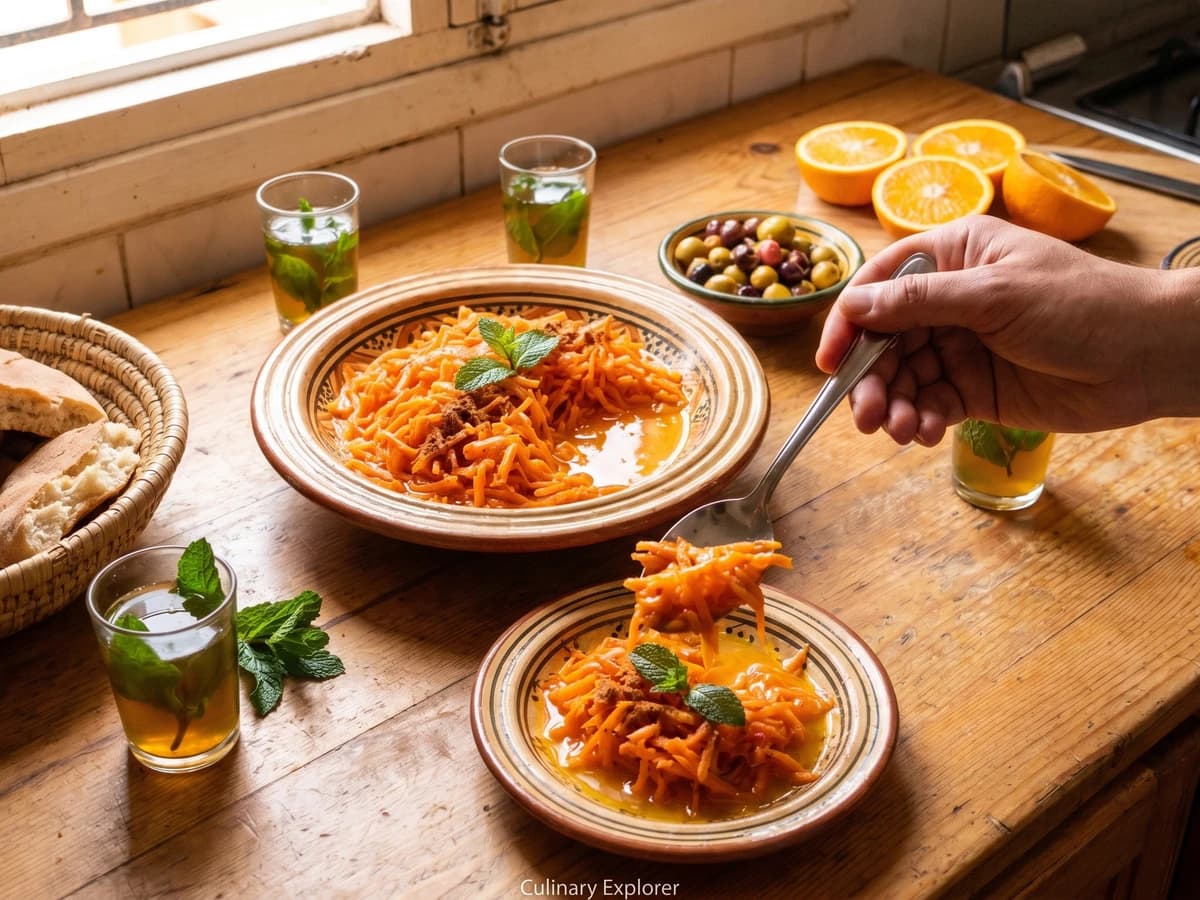
Fine-grated carrot dressed with orange juice, a little sugar, orange-flower water, and cinnamon. Khizou bel limoun is the fresh raw counterpoint that wakes up a Moroccan table.