
Chef Zohra
Bakoula (بقولة)
Mallow greens cooked soft and dark with garlic, cumin, preserved lemon, and olives, the Moroccan cooked salad that tastes of spring rain and a loaf of khobz shared warm.
A cooking platform built around craft, culture, and the stories behind what we eat.
Created by
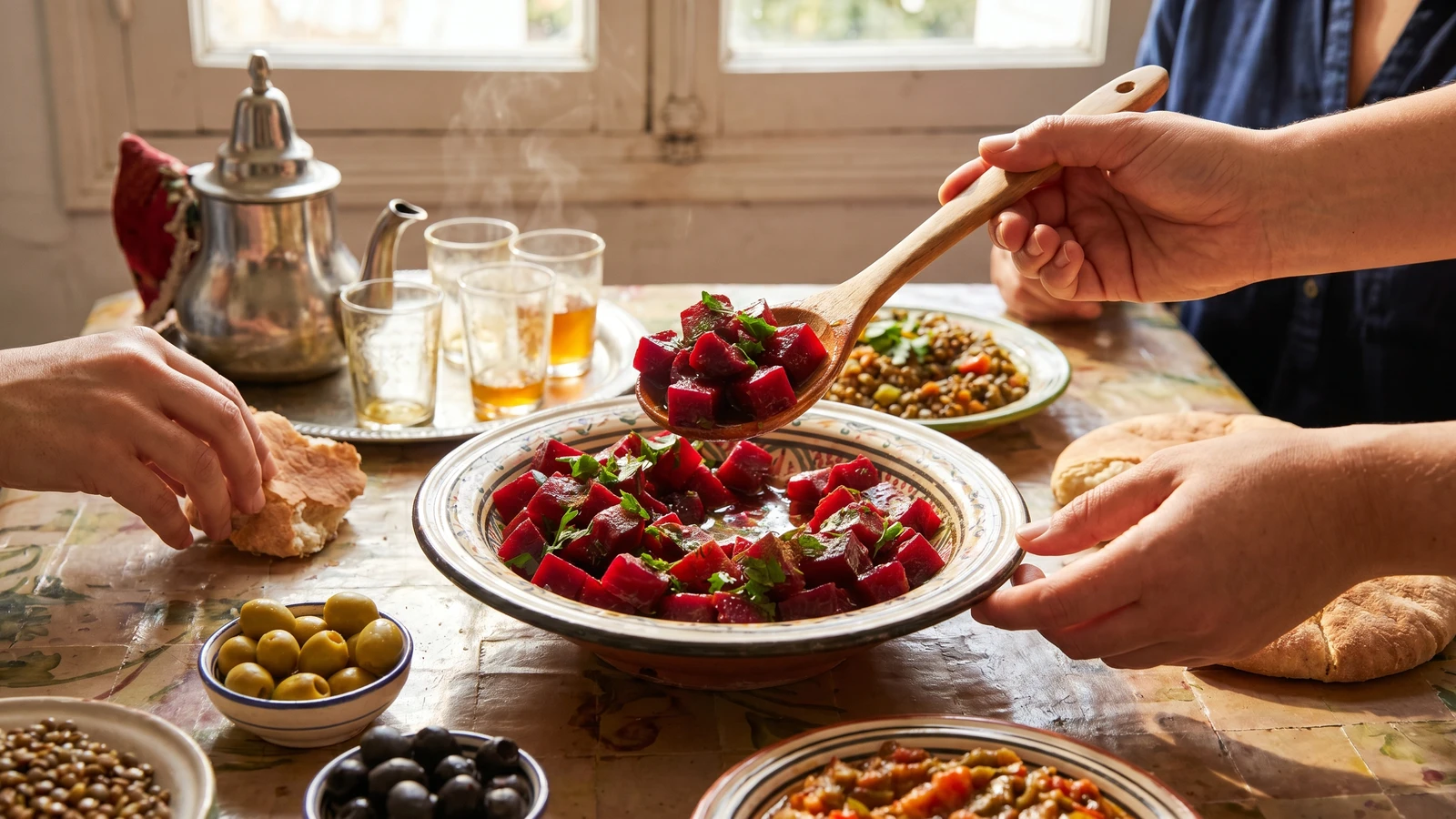
Cooked beets diced and dressed while still faintly warm, with lemon, olive oil, parsley, and cumin. Sweet, earthy, and bright on the Moroccan table.
The beet tells you everything before the knife does. When it's cooked properly, the skin slips away under your thumb and the flesh shines deep red, sweet and earthy, ready to drink lemon and olive oil.
This salad belongs to the spread of salades cuites, the cooked salads that open many Moroccan meals. Zaalouk, taktouka, carrots with cumin, beets like these: small plates, strong flavors, bread moving from one to the next. The beet must be tender all the way through before you dress it, because the seasoning can't rescue a hard center. Cook it whole, peel it, dice it, and dress it while it still has a little warmth so the cumin blooms and the lemon settles in.
Serve it chilled or at room temperature, but never cold enough to taste asleep. Put it in the middle with khobz and let people reach. Une table, c'est une porte qu'on laisse ouverte, and even a bowl of beets can hold it open.
Cooked vegetable salads became part of Moroccan urban home meals and market tables by the 19th and 20th centuries, especially in cities such as Fez, Rabat, Casablanca, and Marrakech where small plates often precede a tagine or couscous. Beetroot itself belongs to the wider Mediterranean history of Beta vulgaris, cultivated around the sea since antiquity, though the exact date it entered Moroccan everyday salad practice is not firmly recorded. Its cumin, lemon, parsley, and olive oil dressing places it within the Moroccan grammar of salades cuites rather than a single regional claim.
Quantity
700g
scrubbed, greens removed
Quantity
3 tbsp
Quantity
2 tbsp, plus more to taste
Quantity
1 small
finely grated or pounded
Quantity
1 tsp
preferably freshly ground
Quantity
1/2 tsp, plus more to taste
Quantity
1/4 tsp
Quantity
3 tbsp
finely chopped
Quantity
1 tbsp
finely chopped
| Ingredient | Quantity |
|---|---|
| medium beetsscrubbed, greens removed | 700g |
| extra-virgin olive oil | 3 tbsp |
| fresh lemon juice | 2 tbsp, plus more to taste |
| garlic clovefinely grated or pounded | 1 small |
| ground cuminpreferably freshly ground | 1 tsp |
| fine sea salt | 1/2 tsp, plus more to taste |
| freshly ground black pepper | 1/4 tsp |
| flat-leaf parsleyfinely chopped | 3 tbsp |
| fresh coriander (optional)finely chopped | 1 tbsp |
Put the whole scrubbed beets in a pot and cover them with cold water by 3 cm. Bring to a boil, then lower to a steady simmer and cook for 40 to 55 minutes, depending on size, until a small knife slides to the center without force. Cook them whole so the color and sweetness stay inside instead of bleeding into the pot.
Drain the beets and let them cool just until you can handle them. Rub off the skins with your fingers or a towel, trim the ends, and dice into small even cubes, about 1.5 cm. Don't wait until they are stone cold; a little warmth helps the dressing enter instead of sitting on the surface.
In a serving bowl, stir together the olive oil, lemon juice, garlic, cumin, salt, and black pepper. Taste it before the beets go in. It should be bright, salty enough to wake the sweetness, and fragrant with cumin. La balance est dans les yeux, and also in the mouth.
Fold the warm diced beets into the dressing until every cube glistens red and glossy. Add the parsley and coriander if using, then let the salad rest at least 20 minutes. That rest matters: the cumin softens, the garlic calms, and the lemon finds its way through the beet.
Taste again before serving and correct with lemon, salt, or a thread of olive oil. Serve at room temperature or lightly chilled, with round khobz for scooping and other cooked salads nearby if you're making a full Moroccan spread.
1 serving (about 140g)
Culinary guides, cultural storytelling, and the editorial depth that makes cooking meaningful.
Discover Culinary ExplorerChef Zohra
Mallow greens cooked soft and dark with garlic, cumin, preserved lemon, and olives, the Moroccan cooked salad that tastes of spring rain and a loaf of khobz shared warm.

Chef Zohra
Potatoes simmered until tender, then turned while warm through chermoula, garlic, cumin, paprika, coriander, olive oil, and preserved lemon. This is a weeknight Moroccan salad that still opens the table.

Chef Zohra
Fresh fava beans cooked until tender, then folded warm into chermoula of garlic, cumin, paprika, coriander, and preserved lemon. Spring food for a shared bowl, carried to the table with bread.
Chef Zohra
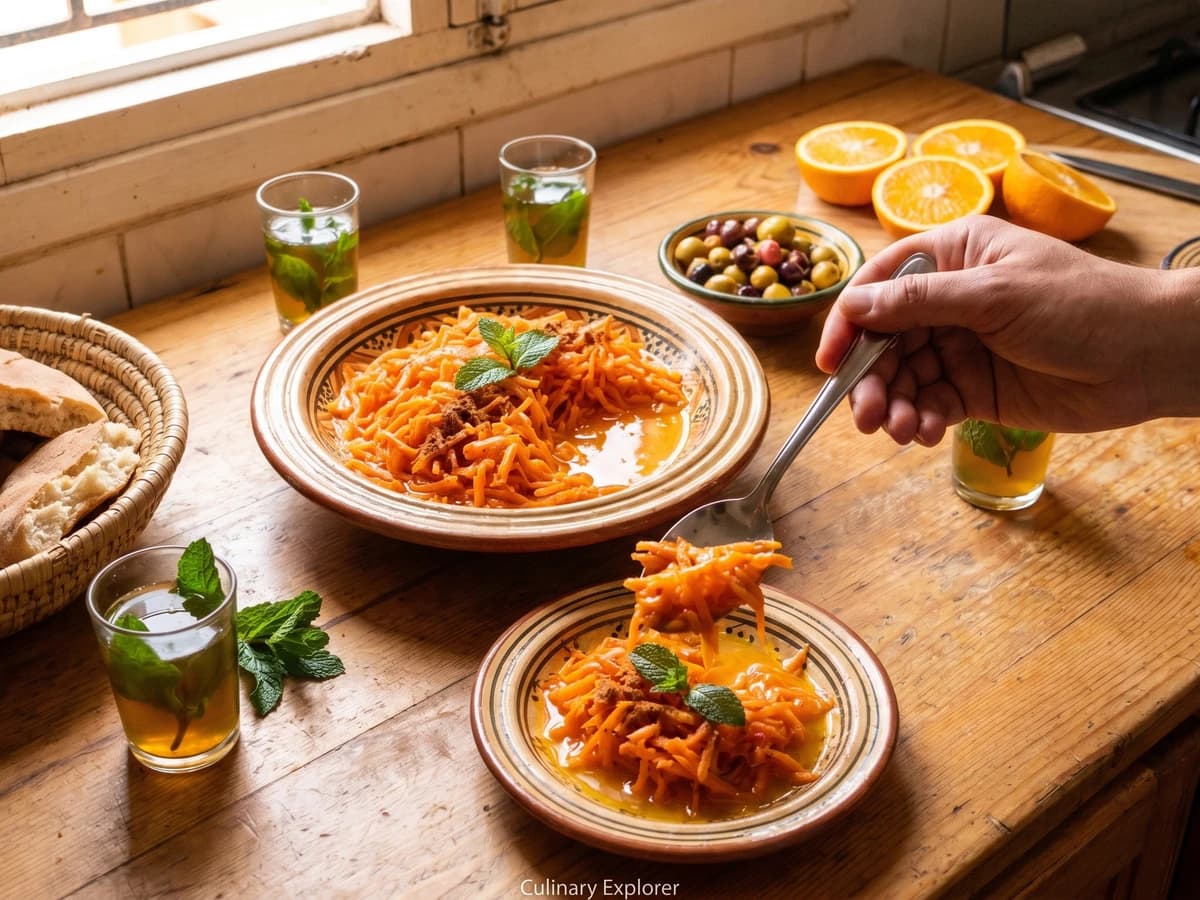
Fine-grated carrot dressed with orange juice, a little sugar, orange-flower water, and cinnamon. Khizou bel limoun is the fresh raw counterpoint that wakes up a Moroccan table.