
Chef Margarida
Cenouras à Algarvia
The marinated carrots of the Algarve, where garlic, paprika, and good azeite transform a humble root into something you'll make every week. Proof that the south knows how to treat vegetables.
A cooking platform built around craft, culture, and the stories behind what we eat.
Created by
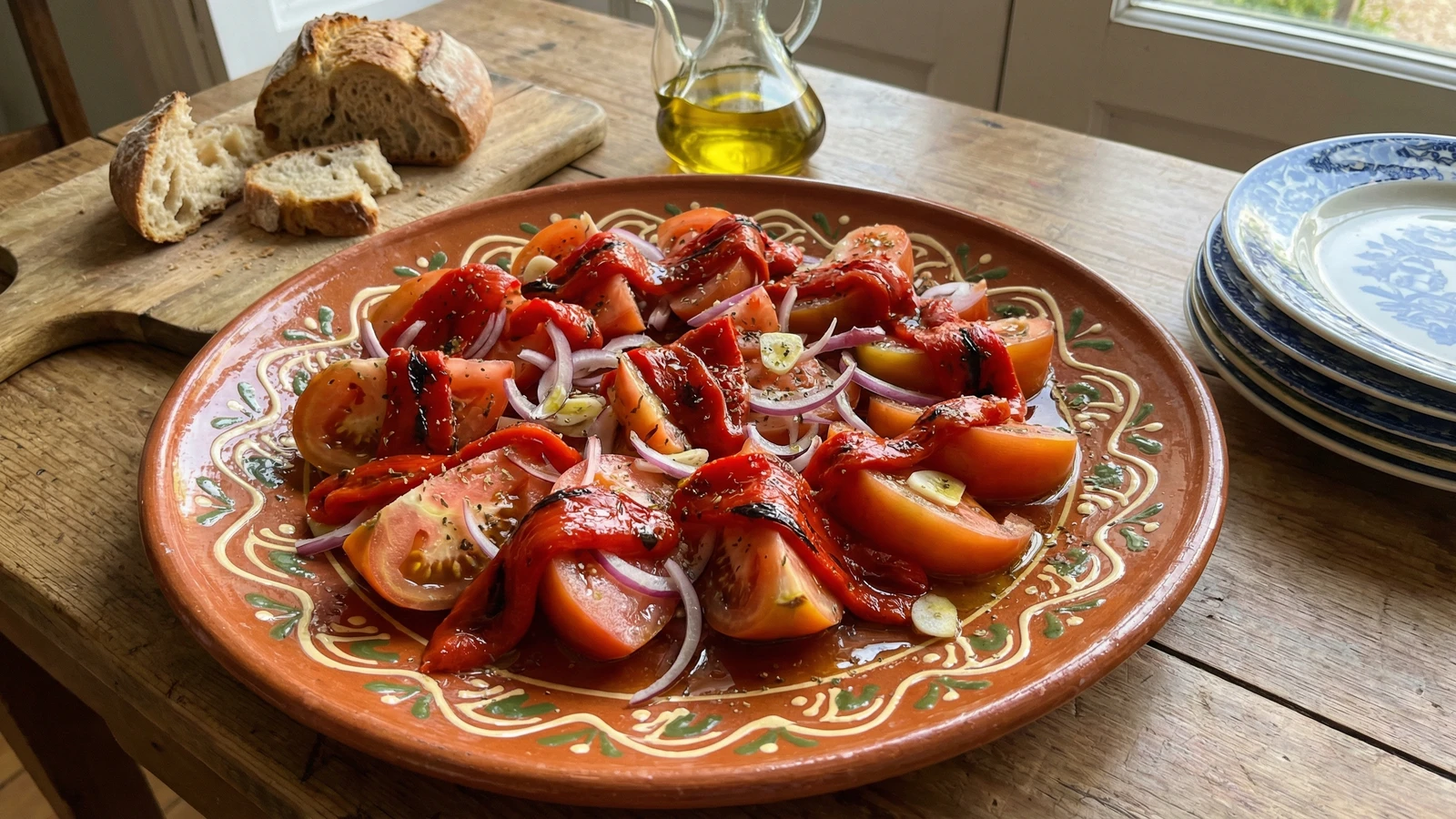
The salad that belongs next to grilled sardines, where smoke-kissed peppers meet ripe tomatoes and good azeite. No fuss, no pretense, just summer in the Algarve on a plate.
This is the salad that appears on every table during sardine season. Walk through any Algarve village in June and you'll smell the charcoal before you see the smoke. The sardines are on the grill. And next to them, always, this salad.
I learned this not from Avó Leonor, who was Alentejana through and through, but from a grandmother in Olhão named Dona Cremilde. She roasted the peppers directly over the gas flame, turning them with her bare fingers until they were black all over. When I flinched, she laughed. "Fifty years of this," she said, holding up her calloused hands. "The fire doesn't bother me anymore."
The peppers must char. Completely. The black skin steams off and what remains is sweet, smoky, impossibly tender. You don't cook them in an oven and call it the same thing. The direct flame matters. The tomatoes stay raw, ripe, juicy. The contrast is everything.
This salad gets better as it sits. The juices from the tomatoes mix with the oil and the pepper liquid, creating a sauce you'll want to mop up with bread. Make it before your guests arrive. Let it rest. When the sardines come off the grill, this is what you serve alongside. Pão, azeite, vinho, sempre.
This salad belongs to the Algarve's sardine culture, where June through September marks the height of the season. The combination of charred peppers with raw tomatoes dates back generations, developed by fishing families who needed simple, make-ahead dishes to accompany the catch. Every coastal tasca in Portugal serves some version during summer months.
Quantity
4 large
Quantity
4 large (about 600g)
Quantity
1 medium
sliced into thin half-moons
Quantity
3 cloves
sliced paper-thin
Quantity
1/3 cup, plus more for drizzling
Quantity
2 tablespoons
Quantity
1 teaspoon
Quantity
to taste
Quantity
to taste
freshly ground
| Ingredient | Quantity |
|---|---|
| red bell peppers (pimentos vermelhos) | 4 large |
| ripe tomatoes | 4 large (about 600g) |
| white onionsliced into thin half-moons | 1 medium |
| garlicsliced paper-thin | 3 cloves |
| extra virgin olive oil (azeite) | 1/3 cup, plus more for drizzling |
| red wine vinegar | 2 tablespoons |
| dried oregano (orégãos) | 1 teaspoon |
| flaky sea salt | to taste |
| black pepperfreshly ground | to taste |
Place the whole peppers directly over a gas flame, on a hot grill, or under a broiler set to high. Turn them as each side blackens completely. You want the skin charred and blistered all over, about 10 to 15 minutes total. The peppers should collapse slightly when done. This is not gentle roasting. This is controlled burning.
Transfer the charred peppers immediately to a bowl and cover tightly with a plate or plastic wrap. Let them steam for 15 minutes. The trapped heat loosens the skin. When cool enough to handle, peel off the blackened skin with your fingers. It should slip off easily. Remove the stems and seeds. Don't rinse the peppers under water. You'll wash away the smoky flavor. A few black flecks remaining are fine. They're beautiful.
Tear or slice the peppers into wide strips, about 2cm wide. Collect any juices that run out and save them. Those juices are liquid gold. Place the pepper strips in a wide serving bowl or platter.
Cut the tomatoes into thick wedges or irregular chunks. They should be substantial, not dainty. Season them lightly with salt and let them sit for 5 minutes to release some juice. Add them to the peppers.
Scatter the sliced onion and garlic over the peppers and tomatoes. The onion should be sliced thin enough to eat raw without overwhelming. The garlic even thinner, almost translucent.
Drizzle the olive oil and vinegar over everything. Add any reserved pepper juices. Sprinkle with oregano, salt, and pepper. Toss gently with your hands, taking care not to break up the tomatoes too much. Let the salad rest at room temperature for at least 30 minutes before serving. An hour is better. The flavors need time to marry.
Give the salad a final drizzle of your best olive oil before bringing it to the table. Serve at room temperature with plenty of crusty bread for soaking up the juices. This belongs next to grilled fish, especially sardines. But honestly, it's perfect with just the bread.
1 serving (about 220g)
Culinary guides, cultural storytelling, and the editorial depth that makes cooking meaningful.
Discover Culinary ExplorerChef Margarida
The marinated carrots of the Algarve, where garlic, paprika, and good azeite transform a humble root into something you'll make every week. Proof that the south knows how to treat vegetables.

Chef Margarida
The dish that taught me Lisbon's tascas were universities of flavor. Salt cod and chickpeas, roughly tossed, never fussed over. The name means 'half undone' because that's exactly how you make it.

Chef Margarida
Pig's ears braised until silky, then dressed in garlic, vinegar, and bright handfuls of coentros. Alentejo's disappearing bar snack that deserves a place at your table.

Chef Margarida
The name comes from the action: vigorous mixing with your fists until raw bacalhau, onion, and olive oil become something silky and unified. Punchy, raw, utterly Portuguese.