
Chef Juliana
Laranja em Gomos para Feijoada
You think cutting orange this way is fussy. It isn't. It's one knife, one bowl, and the reason feijoada tastes like home instead of just heavy.
A cooking platform built around craft, culture, and the stories behind what we eat.
Created by
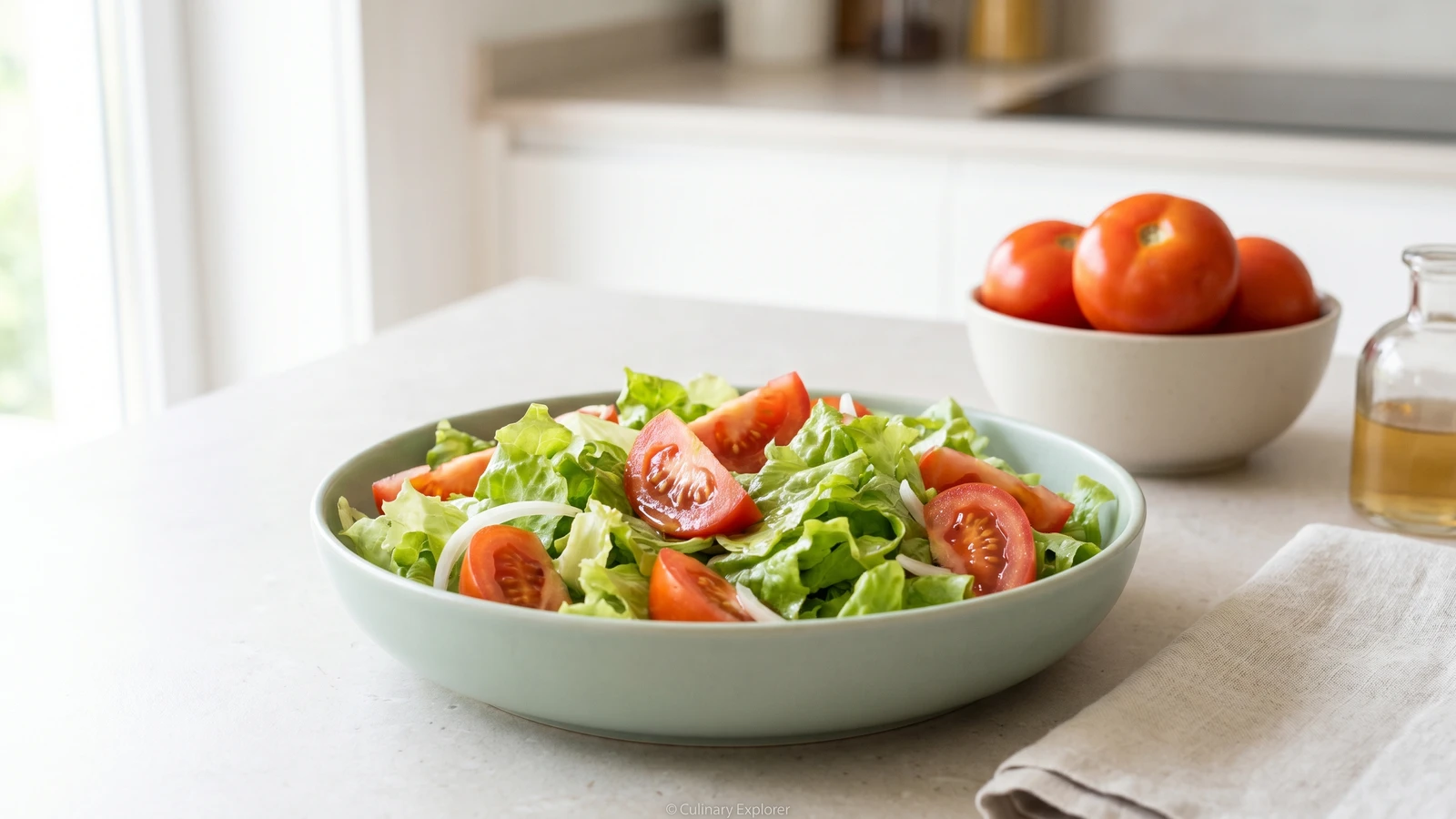
You don't need courage for salad, you need order: dry the leaves, salt the tomatoes, dress at the last minute. That's how the fresh corner of the pê-efe stays crisp.
You know that little voice, isso não é pra mim, even when the task is lettuce and tomato? Good. Let's put it on the counter where we can see it. A sad salad is not proof that you can't cook. It's proof that someone handed you wet leaves, watery tomato, and no method, then called it simple. Very convenient for nonsense.
Cozinhar não é dom, é um aprendizado, and that includes the side dish everyone forgets to teach. You wash the lettuce so it tastes clean, then you dry it well because dressing slides off wet leaves and lands in a puddle. You salt the tomato first so its juice wakes up and becomes part of the dressing. You toss only at the end because acid and salt are bossy little things, and they make lettuce murchar fast.
This is the green corner of the pê-efe, the everyday plate: rice, beans, something from the pan, and something fresh to cut through it all. It isn't decoration. It balances the plate, cools the bite, and makes dinner feel finished without asking you for money, drama, or a packet pretending to be flavor.
Anota aí: real food doesn't have to be complicated. It has to be handled with a little respect. Tonight, that's lettuce dry enough to stay crisp, tomato seasoned enough to taste like tomato, and a bowl that reaches the table at the right minute.
The Portuguese word alface comes through Arabic roots from Iberian agriculture, a small reminder that everyday Brazilian food carries older routes even before it reaches the plate. Tomato, native to the Americas, spread through Portuguese kitchens after the Columbian exchange and became ordinary in Brazilian raw salads as urban markets made it cheap and available. Together, lettuce and tomato became the quick fresh side of the prato feito, served in homes, bars, and self-service restaurants beside rice and beans.
Quantity
1 small head
leaves separated
Quantity
2 medium
cut into wedges or chunks
Quantity
1/4 small
sliced very thin
Quantity
2 tablespoons
Quantity
1 tablespoon
Quantity
1/2 teaspoon
divided
Quantity
to taste
| Ingredient | Quantity |
|---|---|
| crisp lettuceleaves separated | 1 small head |
| ripe tomatoescut into wedges or chunks | 2 medium |
| onion (optional)sliced very thin | 1/4 small |
| olive oil or neutral oil | 2 tablespoons |
| white wine vinegar, apple cider vinegar, or fresh lime juice | 1 tablespoon |
| saltdivided | 1/2 teaspoon |
| black pepper (optional) | to taste |
Separate the lettuce leaves and rinse them well under running water, rubbing away any grit near the base. If you use a produce sanitizer, follow the label exactly, then rinse if the label tells you to. The leaves should feel clean and firm in your hands. Dirt in salad is not rustic, it's just dirt.
Spin the lettuce dry, or roll it gently in a clean kitchen towel until the surface water is gone. Tear the leaves into bite-size pieces and keep them in a wide bowl. Dry leaves are the difference between dressing that clings and dressing that slides to the bottom like it has somewhere better to be.
Put the tomato pieces in a small bowl with 1/4 teaspoon of the salt and let them sit for 5 minutes. They should look glossy and release a little juice. That's not a problem, that's flavor. Salt pulls the tomato awake and gives you the beginning of the molho, instead of bland red wedges pretending to help.
If you're using onion, add the thin slices to the vinegar or lime juice for 5 minutes while the tomato rests. The onion should lose its harsh bite but still stay crisp. This is the honest shortcut: a quick soak makes raw onion kinder. Skip the onion if your Tuesday doesn't have patience for it.
In a small cup or jar, mix the oil, vinegar or lime juice, the remaining 1/4 teaspoon salt, and black pepper if using. Shake or stir until the dressing looks cloudy and joined for a few seconds. Oil and acid separate because that's what they do, so mix right before using and don't make a ceremony out of it.
Add the salted tomatoes and their juices to the lettuce, then pour over the dressing and toss gently with your hands or two spoons. Stop when every leaf has a thin shine and the tomatoes are spread through the bowl. Serve right away. Wait too long and the lettuce murcha, because salt and acid keep working even after you stop paying attention.
1 serving (about 140g)
Culinary guides, cultural storytelling, and the editorial depth that makes cooking meaningful.
Discover Culinary ExplorerChef Juliana
You think cutting orange this way is fussy. It isn't. It's one knife, one bowl, and the reason feijoada tastes like home instead of just heavy.
Chef Juliana
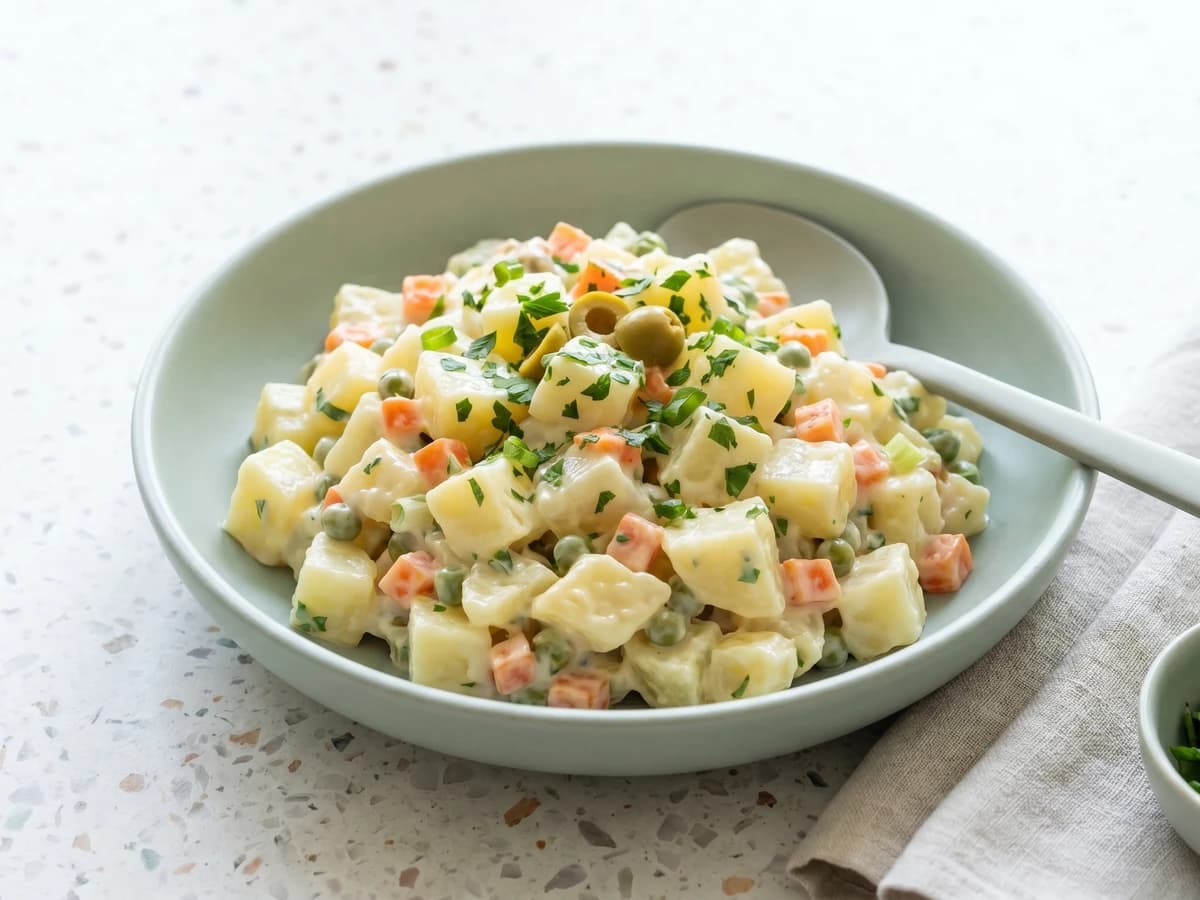
You don't need a family secret. You need potatoes cooked until tender, onion softened by vinegar, and a homemade mayo that holds the salad together without turning it into paste.
Chef Juliana
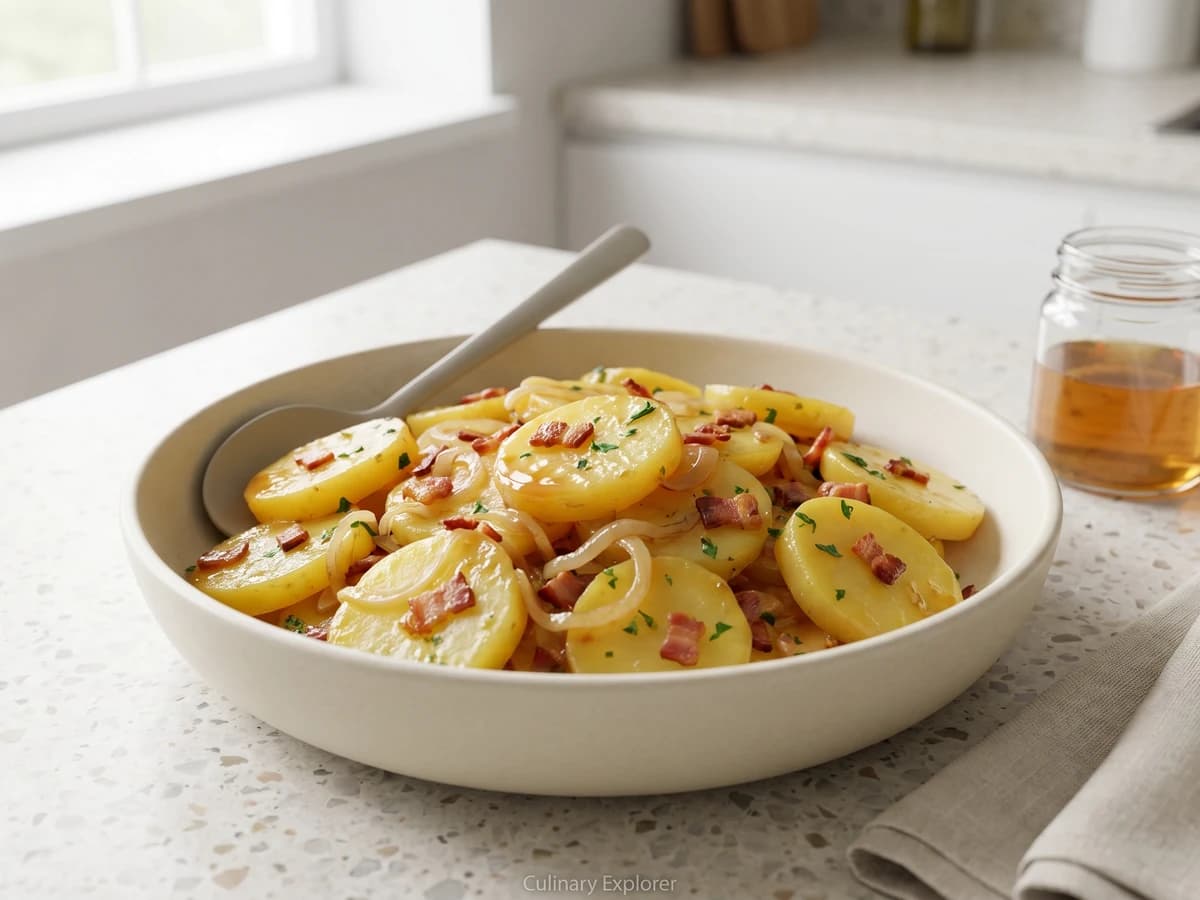
You don't need mayo to make potatoes behave. Dress them warm with vinegar, onion, and bacon fat, and every slice turns sharp, glossy, and ready for the pê-efe.

Chef Juliana
You don't need a secret hand for Christmas maionese. You need potatoes cut evenly, cooked just tender, cooled properly, and folded gently so the salad stays creamy, not smashed.