
Chef Takumi
Autumn Mushroom Rice (きのこの炊き込みご飯, Kinoko Takikomi Gohan)
Autumn mushrooms do most of the work here. Rinse the rice well, season the liquid before cooking, and let the pot rest so every grain comes out separate and fragrant.
A cooking platform built around craft, culture, and the stories behind what we eat.
Created by
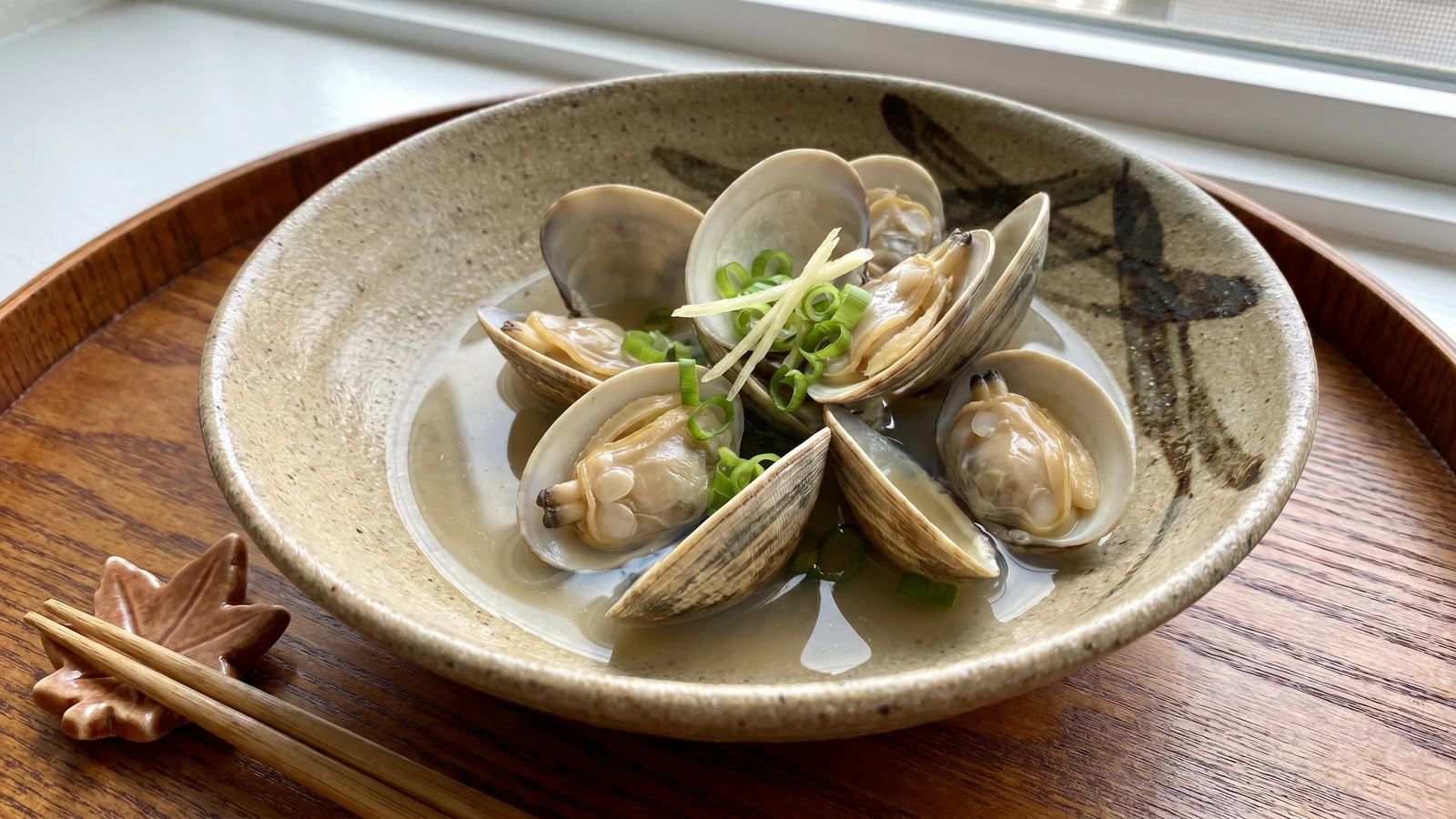
Live clams, a splash of sake, a lid, and a few minutes. The shells open into their own clear broth, and the cook's main task is not to spoil it.
Asari are spring clams. When they're at their prime, shun, the shells feel heavy, the liquor inside is sweet and clean, and you need very little courage to cook them well. This is one of those dishes people make too complicated because the result tastes so complete. It is not complete because you did much. It is complete because the clams did.
The first detail is sand. Let the clams sit in salt water before cooking so they purge what they carried from the flats. Skip that, and you'll remember the dish for the wrong reason. Then rinse the shells, put them in a wide pan with sake, clap on the lid, and wait for the sound to change: hard tapping at first, then the soft clatter of shells opening.
The sake is not there to drown them. It makes a small, fragrant chamber of heat, loosens the shells, and catches the clam liquor as it runs out. That broth is the dish. Taste it before you season. Often it needs only a few drops of usukuchi, light soy sauce, or nothing at all. Honmono can be severe like that, three ingredients staring at you with no sauce to hide behind.
Serve it as a small side beside rice and soup, or as the shellfish note in a quick weeknight meal. Use a shallow bowl, leave it room, and spoon every bit of broth over the clams. We do not waste the part that cooked itself.
Asari, the Manila clam, has long been gathered from Japan's shallow tidal flats, and Edo Bay was especially known for shellfish during the Edo period. The Fukagawa area of Edo became associated with clam dishes such as asari meshi and clam soups, foods tied to the working waterfront rather than formal banquet cooking. Sakamushi simply means steaming with sake, a method that uses rice wine as both heat conductor and seasoning.
Quantity
500g
scrubbed after purging
Quantity
2 cups
for purging
Quantity
1 tablespoon
for purging
Quantity
1/2 cup
Quantity
1 teaspoon
Quantity
1 small
thinly sliced
Quantity
1 small knob
cut into fine threads
| Ingredient | Quantity |
|---|---|
| live asari clams or small Manila clamsscrubbed after purging | 500g |
| waterfor purging | 2 cups |
| sea saltfor purging | 1 tablespoon |
| sake | 1/2 cup |
| usukuchi (light soy sauce) (optional) | 1 teaspoon |
| scallionthinly sliced | 1 small |
| ginger (optional)cut into fine threads | 1 small knob |
Dissolve the salt in the water to make a brine that tastes like the sea, then set the clams in it for 30 minutes in a cool, dim place. The brine lets live clams breathe normally, so they spit out sand instead of tightening shut. Keep them in a single layer if you can, because buried clams do poor work.
Lift the clams out of the brine without pouring the sandy water back over them. Scrub the shells under cold running water, tapping any open clams; discard any that stay open or smell off. Sourcing first, always. No amount of sake will rescue a tired clam.
Put the clams in a wide pan with the sake and ginger, if using. Cover tightly and set over medium-high heat. Shake the pan once or twice as the sake comes to a lively simmer, not to stir but to help the clams heat evenly. In 3 to 5 minutes, the shells should open and their liquor will have made a clear broth with the sake.
As soon as most shells open, take the pan off the heat and move the opened clams to a warm bowl. Give any closed clams another minute under the lid, then discard those that still refuse. Overcooked clams toughen quickly, and this dish has no heavy sauce to apologize for them.
Taste the broth in the pan. If it is already briny and sweet, leave it alone. If it wants a little edge, add the usukuchi a few drops at a time. Pour the broth over the clams, scatter the scallion on top, and serve at once while the shells are glossy and the broth is clear.
1 serving (about 90g)
Culinary guides, cultural storytelling, and the editorial depth that makes cooking meaningful.
Discover Culinary ExplorerChef Takumi
Autumn mushrooms do most of the work here. Rinse the rice well, season the liquid before cooking, and let the pot rest so every grain comes out separate and fragrant.

Chef Takumi
A whole salmon fillet laid on seasoned rice does nearly all the work. Cook it gently, flake it back through, and autumn has found its bowl.

Chef Takumi
Daigakuimo is simple student comfort: sweet potato cut stout, fried until the corners take color, then turned in a soy-sugar syrup that sets shiny instead of sticky.

Chef Takumi
Chawanmushi looks delicate, but the secret is plain: good dashi, strained egg, and quiet heat. Keep the steam soft and the custard sets smooth, tender, and calm.