Culinary Explorer
A cooking platform built around craft, culture, and the stories behind what we eat.
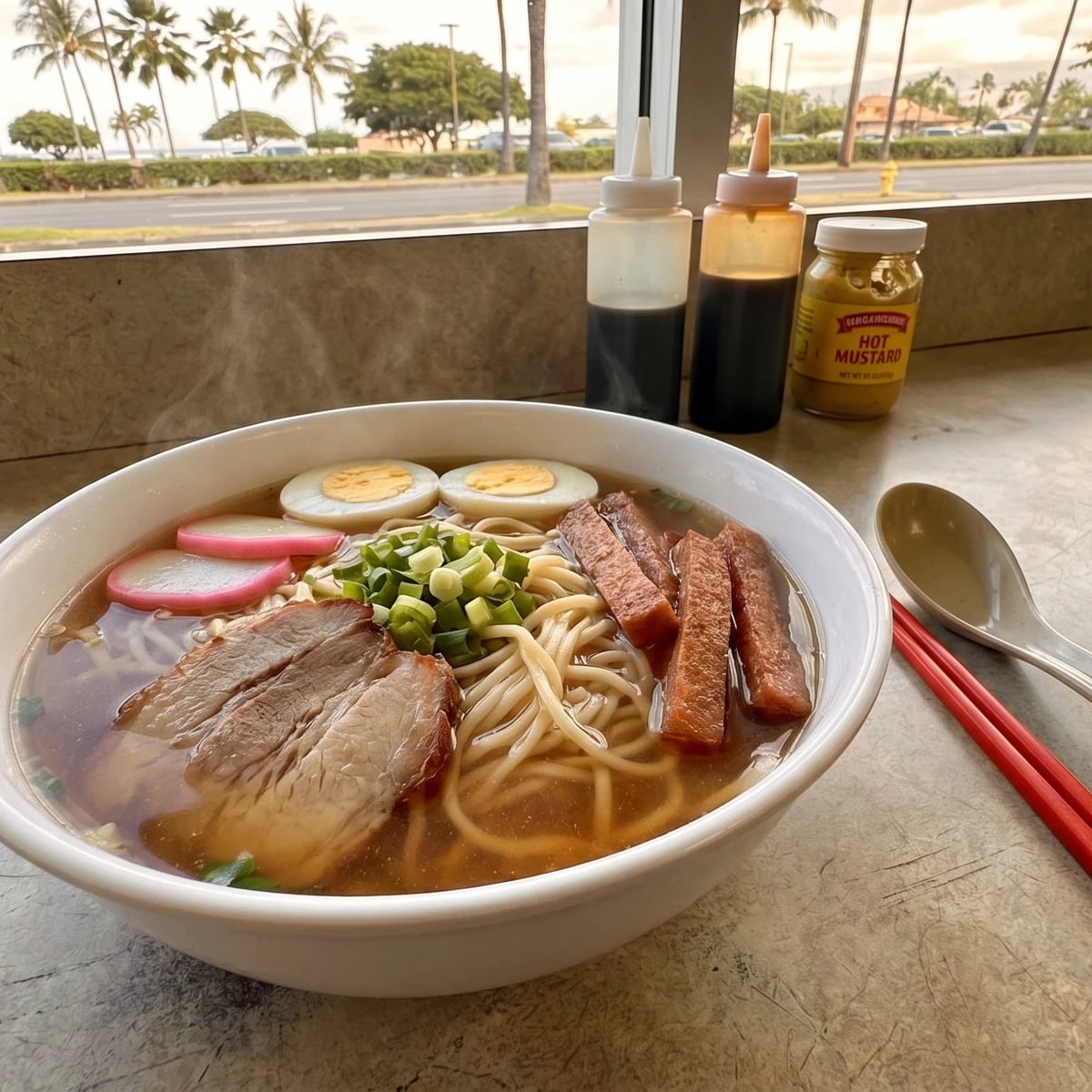
Saimin (Hawaiʻi Local Plantation Noodle Soup)
Created by Chef Makoa
Hawaiʻi's Local noodle bowl from the sugar-camp stove: dashi-shoyu broth, springy wheat noodles, char siu, Spam, kamaboko, and green onion, budget food with everybody's hand in it.
The lunch counter has its own kind of kinship. Not the old genealogy of Hāloa, our elder brother the taro, but the kind made when tired people sit shoulder to shoulder after work and pass the shoyu, the mustard, the chili pepper water. This bowl belongs to Hawaiʻi, and more exactly to Hawaiʻi Local people, the plantation-camp table where Kanaka Maoli, Japanese, Chinese, Filipino, Portuguese, Korean, Puerto Rican, and other working hands had to make food stretch and still make it taste like home.
Saimin is not pre-contact Hawaiian deep food, and no need pretend it is. It's Hawaiʻi food, born after the sugar economy pulled many peoples into one hard place. Japanese dashi, Chinese mein, Filipino noodle memory, a slice of kamaboko, char siu, Spam from the modern pantry, all of it sitting in one clear broth. The islands eat like this too. No blame the plate for being humble.
Across the Triangle, the cousins did their own everyday making from what history pushed into the pantry: Sāmoan sapasui, Tongan corned beef with talo, Māori boil-up in Aotearoa. Each one has its own hand, its own story, its own people to tell the deeper parts. This one is Hawaiʻi Local. Keep the broth clean, the noodles springy, the toppings generous, and feed whoever walked in hungry.
Ingredients
water
Quantity
8 cups
kombu
Quantity
1 piece, about 4 inches
dried shrimp (ebi)
Quantity
2 tablespoons
rinsed
| Ingredient | Quantity |
|---|---|
| water | 8 cups |
| kombu | 1 piece, about 4 inches |
| dried shrimp (ebi)rinsed | 2 tablespoons |
Where cooking meets culture.
Culinary guides, cultural storytelling, and the editorial depth that makes cooking meaningful.
Discover Culinary Explorer