
Chef Juliana
Ambrosia Baiana
You think curdled milk means you ruined dessert. Good. Tonight you'll do it on purpose, with lemon, yolks, cravo, and sugar, until the pot turns into golden gruminhos.
A cooking platform built around craft, culture, and the stories behind what we eat.
Created by
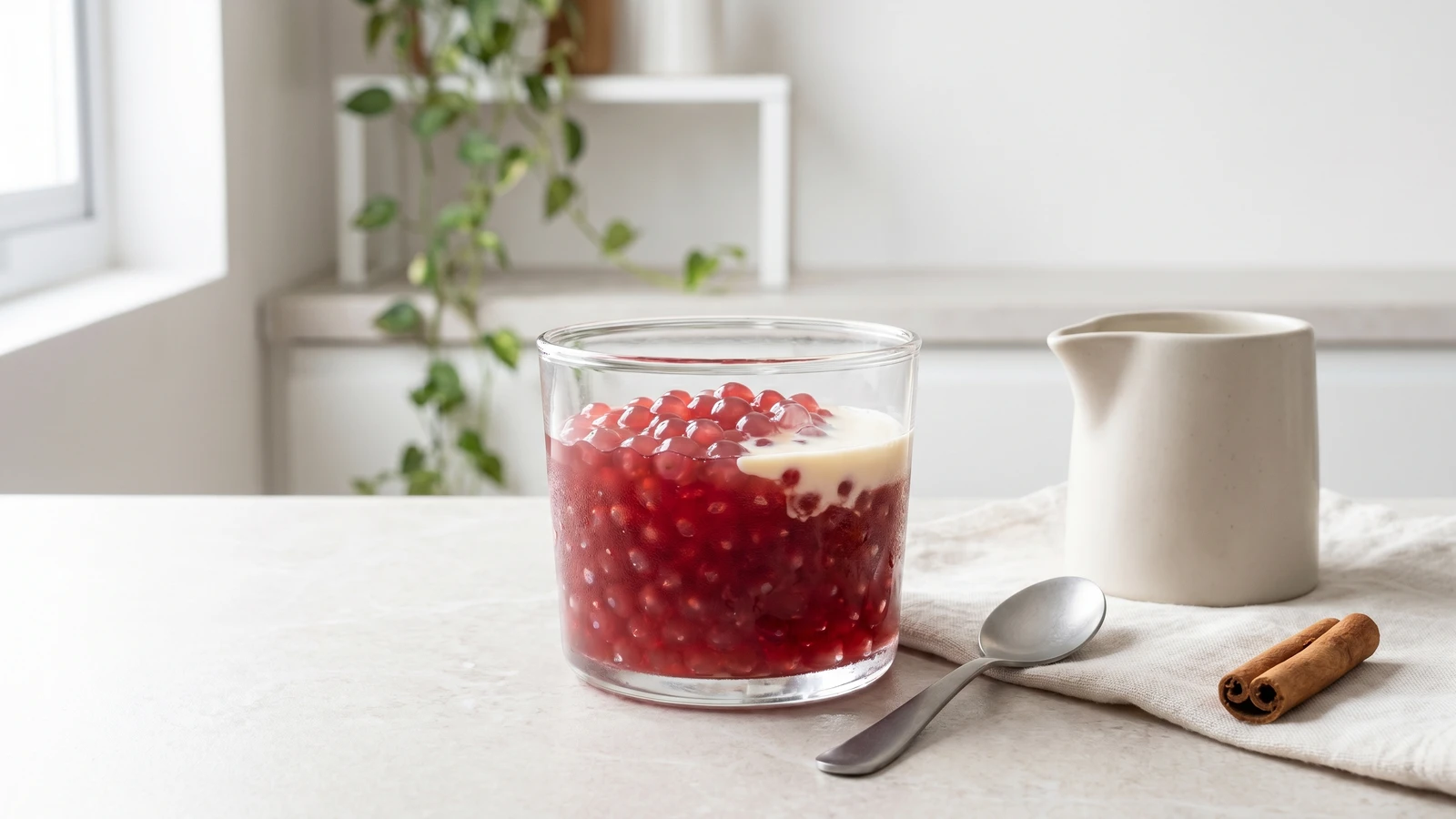
You watch the pearls, not your fear. When they turn clear, the dessert is telling you it's done. Red wine, cassava, spice, and patience. That's a recipe, not a miracle.
You might be looking at those tiny white pearls and thinking, quietly, isso não é pra mim. Good. Let's catch that thought by the collar. Cooking isn't a gift, it's something you learn, and sagu is generous with the beginner because it shows you everything: white pearls become clear, thin liquid becomes glossy, sharp wine becomes a sweet spoonful that tastes like someone's December table.
I love a dessert that doesn't ask you to perform. A gente spends so much energy defending rice, beans, a piece of meat or an egg, and something green, the pê-efe that quietly keeps Brazil itself, that people forget real food never gave up dessert. Comida de verdade includes the sweet at the end, especially when it's made from cassava, wine, sugar, and spice instead of a packet pretending to be tradition.
The method is plain. Soak the pearls so the centers hydrate and don't stay hard. Simmer them gently so they turn clear without breaking into paste. Stir often because starch likes to sit on the bottom and cause drama. Then chill the whole thing until it sets into a soft, spoonable pudding. Serve with cream, because the wine is bright and the cream rounds it out. Anota aí: watch for clear pearls with one tiny white dot left in the middle. That's the ponto.
Sagu de vinho is especially tied to southern Brazilian tables, particularly Rio Grande do Sul and Santa Catarina, where Italian immigrant families helped turn local cassava pearls and household wine into a cold dessert for Sundays and holidays. The word sagu originally referred to starch from the sago palm in Asia, but in Brazil the dish is usually made with cassava pearls, which tells you something useful: recipes travel, land somewhere new, and start speaking with the pantry they find.
Quantity
1 cup
Quantity
4 cups
divided
Quantity
2 cups
Quantity
3/4 cup, plus more to taste
Quantity
1
Quantity
4
Quantity
1 strip
Quantity
1 pinch
Quantity
1 cup
for serving
| Ingredient | Quantity |
|---|---|
| small cassava pearls or small tapioca pearls | 1 cup |
| waterdivided | 4 cups |
| dry red wine | 2 cups |
| sugar | 3/4 cup, plus more to taste |
| cinnamon stick | 1 |
| whole cloves | 4 |
| orange peel (optional) | 1 strip |
| salt | 1 pinch |
| cold heavy cream or plain table creamfor serving | 1 cup |
Put the cassava pearls in a bowl with 2 cups of the water and let them soak for 30 minutes. They won't look dramatic, and that's fine. This little rest hydrates the centers so they cook evenly instead of giving you clear edges with a stubborn hard dot inside.
In a heavy medium pot, combine the remaining 2 cups water, the wine, sugar, cinnamon, cloves, orange peel if using, and salt. Bring it to a gentle boil over medium heat, stirring until the sugar dissolves. Taste the liquid. It should be sweet and spiced, because the pearls bring starch and softness, not flavor of their own.
Drain the soaked pearls and stir them into the wine mixture. Lower the heat so the pot bubbles calmly, not angrily, and cook for 25 to 30 minutes, stirring often and scraping the bottom. Starch likes to settle and stick. If you ignore it, the bottom thickens first and you get lumps instead of a glossy pudding.
When the pearls are mostly clear and the liquid looks shiny and lightly thickened, turn off the heat. If it looks too thick in the pot, stir in 2 to 4 tablespoons hot water. Sagu firms as it chills, so a pudding that looks perfect hot can become too stiff cold. We want spoonable, not brick.
Remove the cinnamon stick, cloves, and orange peel. Spoon the sagu into one bowl or six small cups, cool for 20 minutes, then refrigerate until cold, at least 2 hours. Serve with a pour of cold cream. The cream softens the wine's edge and makes each spoonful rounder, which is why it belongs there.
1 serving (about 280g)
Culinary guides, cultural storytelling, and the editorial depth that makes cooking meaningful.
Discover Culinary ExplorerChef Juliana
You think curdled milk means you ruined dessert. Good. Tonight you'll do it on purpose, with lemon, yolks, cravo, and sugar, until the pot turns into golden gruminhos.

Chef Juliana
You are not ruining the milk. You're curdling it on purpose, slowly, until sugar, eggs, cinnamon, and patience turn cheap ingredients into dessert.

Chef Juliana
You think curdled milk means failure. Not here. Milk, yolks, sugar, and lemon cook into golden curds in amber whey, a Minas sweet where the ponto teaches the whole recipe.

Chef Juliana
You already trust rice for dinner. Trust it for dessert: cook it gently with milk, coconut, and canela until each grain turns soft, creamy, and impossible to blame on lack of talent.