
Chef Jeong-sun
Aehobak-guk (애호박국, Korean Zucchini Soup)
A clean summer soup of Korean zucchini and salted shrimp, built on quick anchovy-kelp broth and finished before the half-moons lose their shape on a weeknight table.
A cooking platform built around craft, culture, and the stories behind what we eat.

Created by
The mother broth of the Korean kitchen: leg bones soaked, scrubbed, and boiled hard until the pot turns milky, then drawn off and boiled again for rice, noodles, and soup.
Sagol-guk lives or dies in the washing and the boil. People think the long hours are the hard part. They aren't. Time is patient. Blood left in the bones, a lazy blanch, and a timid simmer are what ruin the pot.
My teacher Master Seong-nyeo made us scrub the bones twice, then look at the rinse water before we were allowed near the stove. 눈동냥, 귀동냥, borrowing with the eyes and ears. I learned the color first: not gray, not greasy, but a steady ivory broth that clings lightly to the lips. The bones give that only after you soak them, blanch them, rinse them clean, and then boil them with real force.
This is not a soup you season in the pot. Sagol-guk is a mother broth, plain on purpose, kept for rice, mandu, tteokguk, noodles, or a bowl of seolleongtang-style soup with scallion and salt at the table. Salt the bowl, not the batch, because tomorrow's use may ask for something different. That is how one pot feeds many meals without growing tired.
I won't tell you this is quick. It asks for a day at home and a freezer with room. In return, you get several meals of broth that tastes like care, not complication. Write it down. Memory is a borrowed bowl.
Sagol means cattle leg bone, especially the marrow and joint bones valued for a white, collagen-rich broth, and sagol-guk belongs to Korea's practical nose-to-tail home and market cooking rather than palace display. It is closely related to seolleongtang, the Seoul ox-bone soup with debated origin stories tied by some writers to the Joseon-era Seonnongdan rites, though the restaurant bowl familiar today took shape in modern urban soup houses. Home cooks made sagol-guk especially useful in the age of refrigeration and freezers, when one long boil could become a stored base for many plain soups.
Quantity
2.5kg
cross-cut, with marrow
Quantity
700g
rinsed
Quantity
450g
left whole
Quantity
as needed
for soaking, blanching, and boiling
Quantity
1 medium
halved
Quantity
6 large
peeled
Quantity
2
trimmed
Quantity
to taste at the table
Quantity
to taste at the table
freshly ground
Quantity
4
thinly sliced
Quantity
to serve
| Ingredient | Quantity |
|---|---|
| beef leg bones (sagol)cross-cut, with marrow | 2.5kg |
| beef knee bones, knuckle bones, or oxtail bones (optional)rinsed | 700g |
| beef brisket or shank (optional)left whole | 450g |
| cold waterfor soaking, blanching, and boiling | as needed |
| onion (optional)halved | 1 medium |
| garlic cloves (optional)peeled | 6 large |
| scallion whites (optional)trimmed | 2 |
| fine sea salt | to taste at the table |
| black pepperfreshly ground | to taste at the table |
| scallionsthinly sliced | 4 |
| cooked short-grain rice, somyeon noodles, or sliced rice cakes (optional) | to serve |
Put the bones in your largest pot or a deep basin and cover with cold water by at least 5cm. Soak 8 to 12 hours in the refrigerator, changing the water 3 times. This pulls out blood that would muddy the broth and leave a heavy smell. If your kitchen is cold and you are home to change the water, the counter is acceptable for the first 2 hours, but after that use the refrigerator.
Drain the soaked bones, put them in a large stockpot, and cover with fresh cold water by 5cm. Bring to a rolling boil and boil hard for 10 minutes. The water will turn gray and foamy. That is not broth; that is what you are removing.
Drain the bones and discard the blanching water. Rinse each bone under running water, rubbing away clots and dark bits from the cut faces. Wash the pot too, because residue stuck to the sides will go straight back into the broth. This is the step that makes the difference between clean ivory and dull gray.
Return the clean bones to the clean pot and add 6 liters cold water. Bring to a strong boil, then keep it between a lively boil and a hard simmer for 5 to 6 hours, adding boiling water as needed to keep the bones covered. Do not baby this broth over a low flame. The movement of the boil helps fat, collagen, and minerals emulsify into that milky body sagol-guk is known for.
If using brisket or shank for serving, add it during the last 90 minutes of the first boil. Simmer until tender but sliceable, then lift it out, cool it, and refrigerate it separately. If you leave the meat in for the whole day, it gives everything to the broth and becomes tired in the bowl.
Ladle or strain the first broth into a large heatproof container. You should have about 3 liters. Let it cool, then refrigerate so the fat rises and firms. Do not throw the bones away. Notebook 41 says the second pull is softer but sweeter, and blended with the first it gives the broth a rounder body.
Return the bones to the pot and add 5 liters fresh water. Boil again for 4 to 5 hours, keeping the bones covered with boiling water as needed. For a gentle onion-garlic note, add the onion, garlic, and scallion whites only during the final 2 hours. Add them from the beginning and they turn muddy. Leave them out if you want a perfectly plain freezer broth.
Strain the second broth and combine it with the first. Chill until the fat sets on top, then lift off most of it, leaving 2 to 3 tablespoons if you like a richer mouthfeel. The broth should be milky ivory and lightly gelatinous when cold. If it is thin, boil it uncovered until reduced by one quarter, then chill again.
Reheat only the amount you need. For each serving, use 2 cups broth and season at the table with about 1/4 teaspoon fine sea salt, a pinch of black pepper, and 1 tablespoon sliced scallion. Add rice, somyeon noodles, sliced rice cakes, or the chilled brisket sliced thin. The batch stays unsalted so it can become many meals, not only one soup.
1 serving (about 630g)
Culinary guides, cultural storytelling, and the editorial depth that makes cooking meaningful.
Discover Culinary ExplorerChef Jeong-sun
A clean summer soup of Korean zucchini and salted shrimp, built on quick anchovy-kelp broth and finished before the half-moons lose their shape on a weeknight table.
Chef Jeong-sun
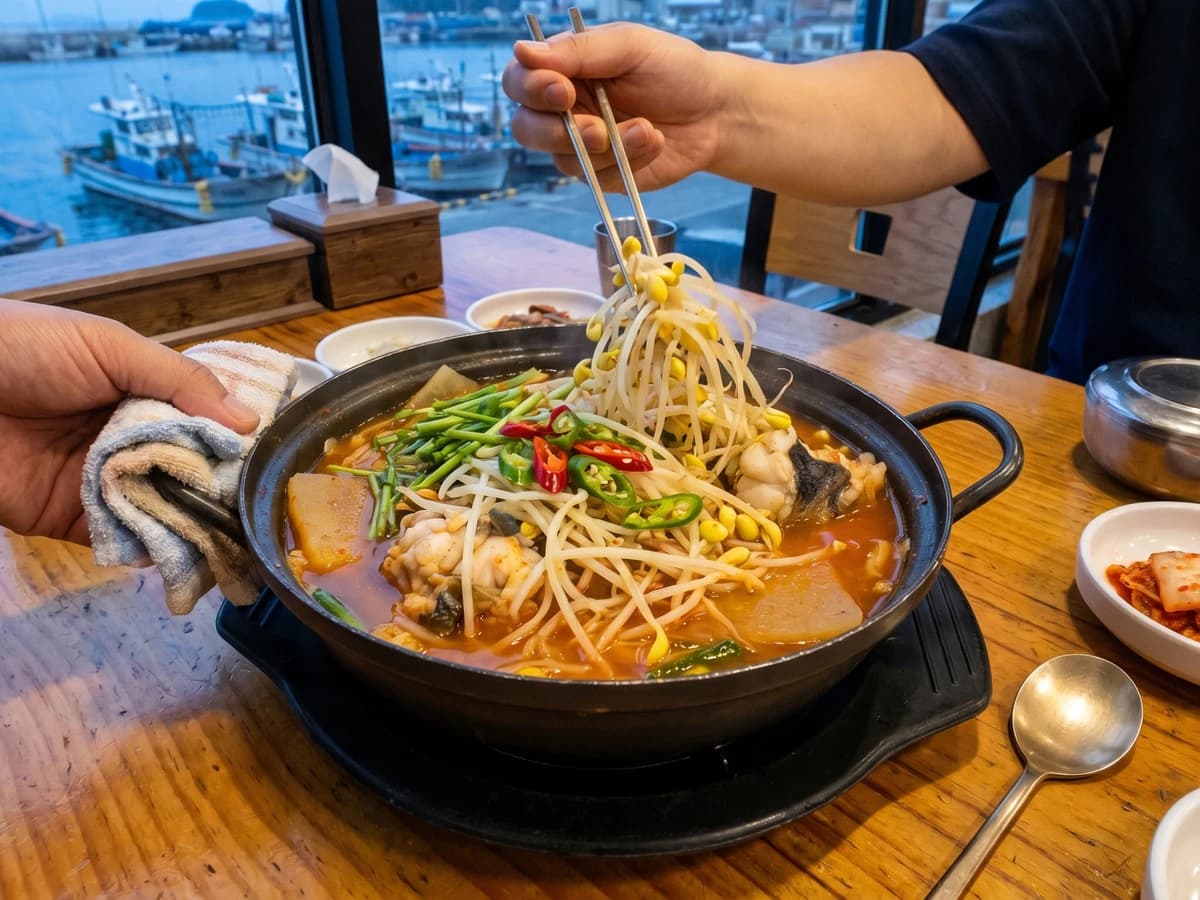
A Masan coast monkfish stew with firm white meat, gelatin at the bones, soybean sprouts for crunch, and a red broth seasoned to carry the fish, not bury it.

Chef Jeong-sun
A weeknight fish roe stew with radish and crown daisy in a clean spicy broth, where the whole success depends on adding the roe late enough that it sets tender, not chalky.

Chef Jeong-sun
Late-summer mallow leaves rubbed with salt until the bitter green water runs off, then simmered in a clean doenjang broth with dried shrimp, the quiet soup a Korean weeknight deserves.