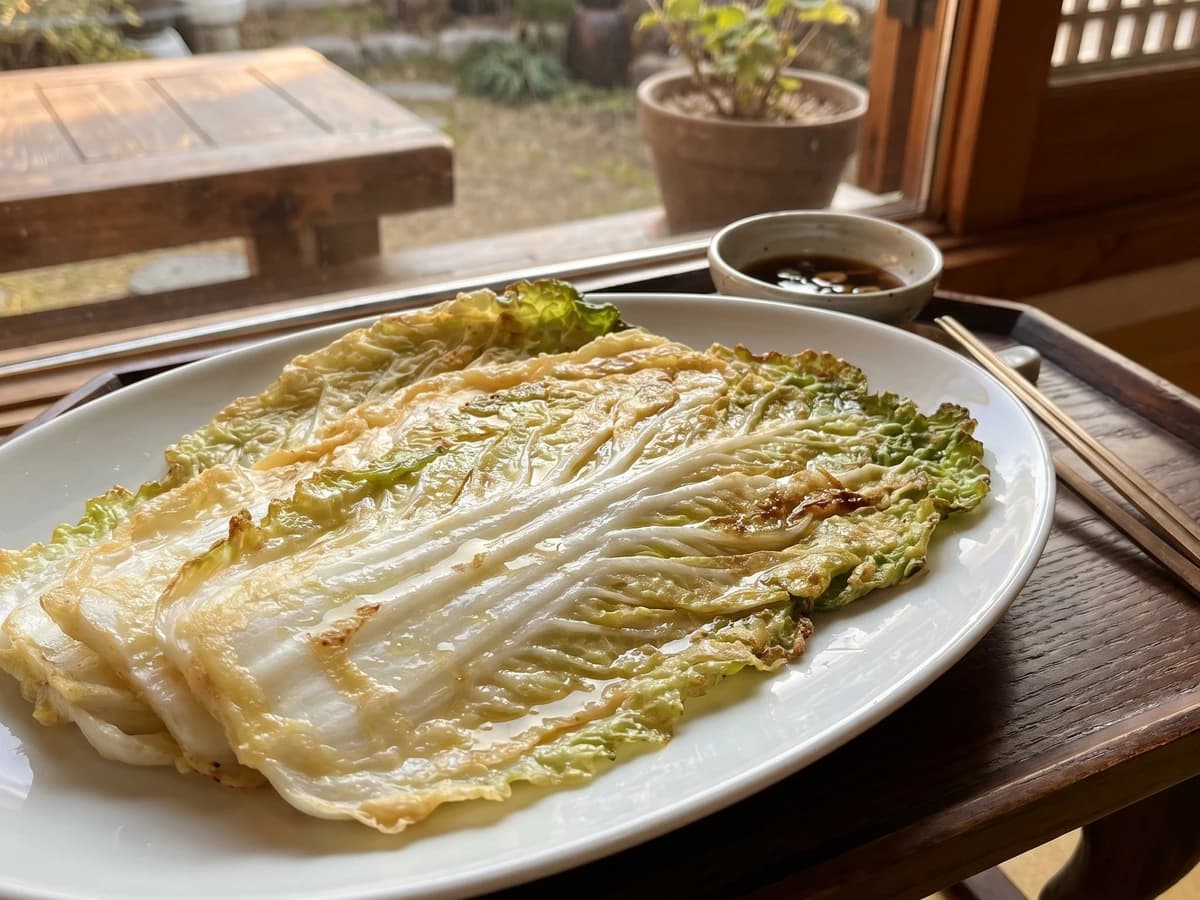
Chef Jeong-sun
Baechu-jeon (배추전, Napa Cabbage Pancake)
A Gyeongsang home pancake made from one whole napa cabbage leaf at a time, flattened at the rib, brushed in thin salted batter, and fried until sweet, tender, and quietly crisp at the edges.
A cooking platform built around craft, culture, and the stories behind what we eat.
Created by
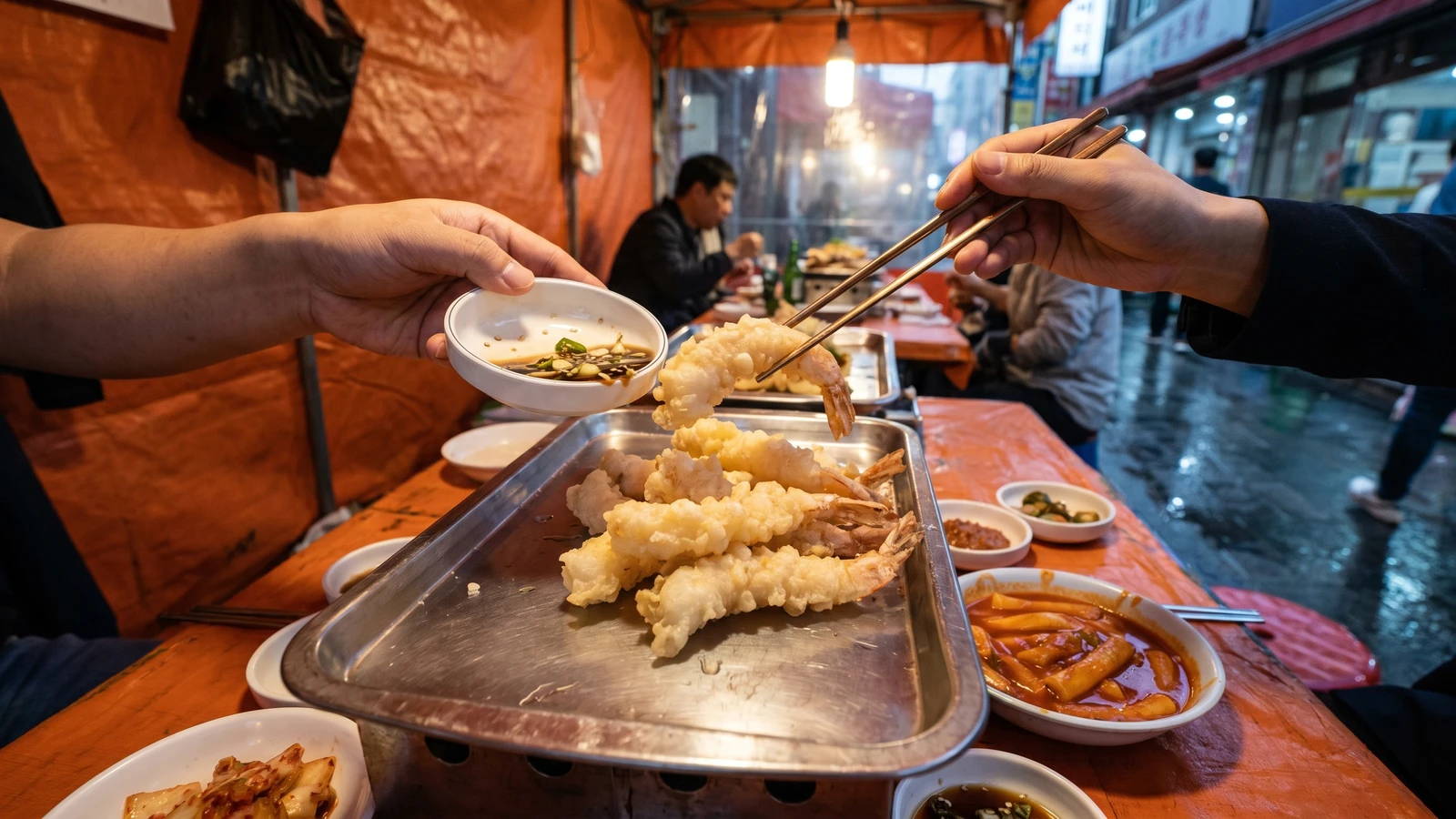
Whole shrimp fried light and straight, the market-stall way: scored underneath, dried well, dipped in cold batter, and served with a clean soy-vinegar sauce.
Saeu-twigim lives or dies before it ever reaches the oil. Score the underside, press the shrimp straight, dry it well, and keep the batter cold. Skip those four things and the shrimp curls tight, sheds its coating, and comes out heavy. I won't scold the shrimp. It only did what your hands allowed.
This is the fried snack you see beside tteokbokki at a bunsik shop, and the anju (drinking food) that disappears first when friends gather around a small table at night. It asks for attention, not grandeur. The shrimp should taste like shrimp, sweet and clean, with a thin crisp shell around it. No gochujang in the batter. No sugar hiding the seafood. Let it taste like itself.
Notebook 41 says the batter must look a little under-mixed, with small lumps, because a smooth batter fries bready. Use cold sparkling water if you have it, plain ice water if you don't. The corner you may cut is the vessel: a heavy pot is enough, no special fryer needed. The corner you may not cut is the temperature. Oil too cool makes greasy twigim; oil too hot browns the coat before the shrimp cooks. Write it down. Memory is a borrowed bowl.
Twigim (fried foods) existed in Korea before modern street stalls, but deep-frying was limited in many homes because oil was costly. The wide street-food form grew in the twentieth century, especially as wheat flour and cooking oil became common after the Korean War and bunsik shops built trays of fried shrimp, squid, vegetables, and gim-mari beside tteokbokki. Saeu-twigim now belongs as much to a night market or pojangmacha table as to a home dinner party.
Quantity
16
shell removed except tails, deveined
Quantity
1/2 teaspoon, divided
Quantity
1/4 teaspoon
freshly ground
Quantity
1 teaspoon
Quantity
1/2 cup
for dusting
Quantity
1 cup
Quantity
2 tablespoons
Quantity
1/2 teaspoon
Quantity
1
cold
Quantity
3/4 cup
Quantity
4 cups
grapeseed, canola, or rice bran oil
Quantity
2 tablespoons
Quantity
1 tablespoon
Quantity
1 tablespoon
Quantity
1/2 teaspoon
Quantity
1 teaspoon
finely chopped
Quantity
1/2 teaspoon
| Ingredient | Quantity |
|---|---|
| large raw shrimpshell removed except tails, deveined | 16 |
| kosher salt | 1/2 teaspoon, divided |
| black pepperfreshly ground | 1/4 teaspoon |
| cheongju or dry rice wine | 1 teaspoon |
| potato starch or cornstarchfor dusting | 1/2 cup |
| all-purpose flour | 1 cup |
| potato starch | 2 tablespoons |
| baking powder | 1/2 teaspoon |
| large eggcold | 1 |
| ice-cold sparkling water or ice water | 3/4 cup |
| neutral frying oilgrapeseed, canola, or rice bran oil | 4 cups |
| soy sauce | 2 tablespoons |
| rice vinegar | 1 tablespoon |
| water | 1 tablespoon |
| sugar | 1/2 teaspoon |
| scallionfinely chopped | 1 teaspoon |
| toasted sesame seeds (optional) | 1/2 teaspoon |
Peel the shrimp, leaving the tails on, and remove the dark vein. Pat them dry with paper towels. Water on the shrimp turns to sputtering in the oil and pushes the coating away, so be more careful here than feels necessary.
Lay each shrimp belly-side up. Make 4 shallow crosswise cuts along the underside, just deep enough to relax the muscle, then turn it over and press gently along the back until it lengthens. This is why saeu-twigim fries straight instead of curling tight. Season with 1/4 teaspoon salt, the pepper, and cheongju, then rest 10 minutes.
Stir together the soy sauce, rice vinegar, water, sugar, scallion, and sesame seeds if using. The sauce should be salty and sharp, not sweet. Fried shrimp needs a clean edge beside it, not another heavy thing.
Pour the oil into a heavy pot so it is at least 2 inches deep. Heat to 340 degrees F, or 170 degrees C. If you don't have a thermometer, a drip of batter should sink halfway, rise, and bubble steadily, not brown at once. A thermometer is better. Guessing with oil is how dinner becomes an argument.
Whisk the flour, 2 tablespoons potato starch, baking powder, and remaining 1/4 teaspoon salt in a bowl. In a second bowl, beat the cold egg with the ice-cold sparkling water. Pour the wet mixture into the dry and stir 8 to 10 times with chopsticks or a fork. Stop while small lumps remain. Smooth batter makes a thick coat; lumpy cold batter fries light.
Put the 1/2 cup starch on a plate. Dust each shrimp lightly, especially where you scored it, then shake off the extra. Hold the tail and dip the shrimp into the batter, leaving the tail clean. The starch gives the batter something dry to grip, which is why the crust stays attached.
Slide 4 shrimp into the oil at a time, laying them away from you. Fry 2 to 3 minutes, turning once, until the coating is pale gold and crisp and the shrimp is just cooked through. Do not crowd the pot. Too many shrimp drop the temperature, and then you are boiling batter in oil instead of frying it.
Lift the shrimp to a wire rack, not a paper-towel pile, and let them stand 1 minute so the crust stays crisp. Serve at once with the soy-vinegar sauce. Twigim waits for no one politely; call people to the table before the last batch comes out.
1 serving (about 155g)
Culinary guides, cultural storytelling, and the editorial depth that makes cooking meaningful.
Discover Culinary ExplorerChef Jeong-sun
A Gyeongsang home pancake made from one whole napa cabbage leaf at a time, flattened at the rib, brushed in thin salted batter, and fried until sweet, tender, and quietly crisp at the edges.

Chef Jeong-sun
A holiday jeon of fresh shiitake or oyster mushrooms, salted lightly, dusted thinly, and carried through egg in a quiet pan until the mushroom stays earthy and the coating stays tender.

Chef Jeong-sun
Soaked mung beans ground coarse, folded with pork, bracken, sprouts, and kimchi, then fried thick until the edges crisp and the center stays tender enough for a shared table.

Chef Jeong-sun
A summer garlic chive pancake fried thin, crisp at the edges and chewy in the center, with just enough batter to hold the green pile together and a sharp soy-vinegar dip.