
Chef Lesia
Buzhenyna (буженина, garlic-studded roast pork)
A whole pork neck takes garlic into little knife pockets, roasts until the crust goes dark and fragrant, then rests overnight so every cold slice tastes better than shop ham.
A cooking platform built around craft, culture, and the stories behind what we eat.
Created by
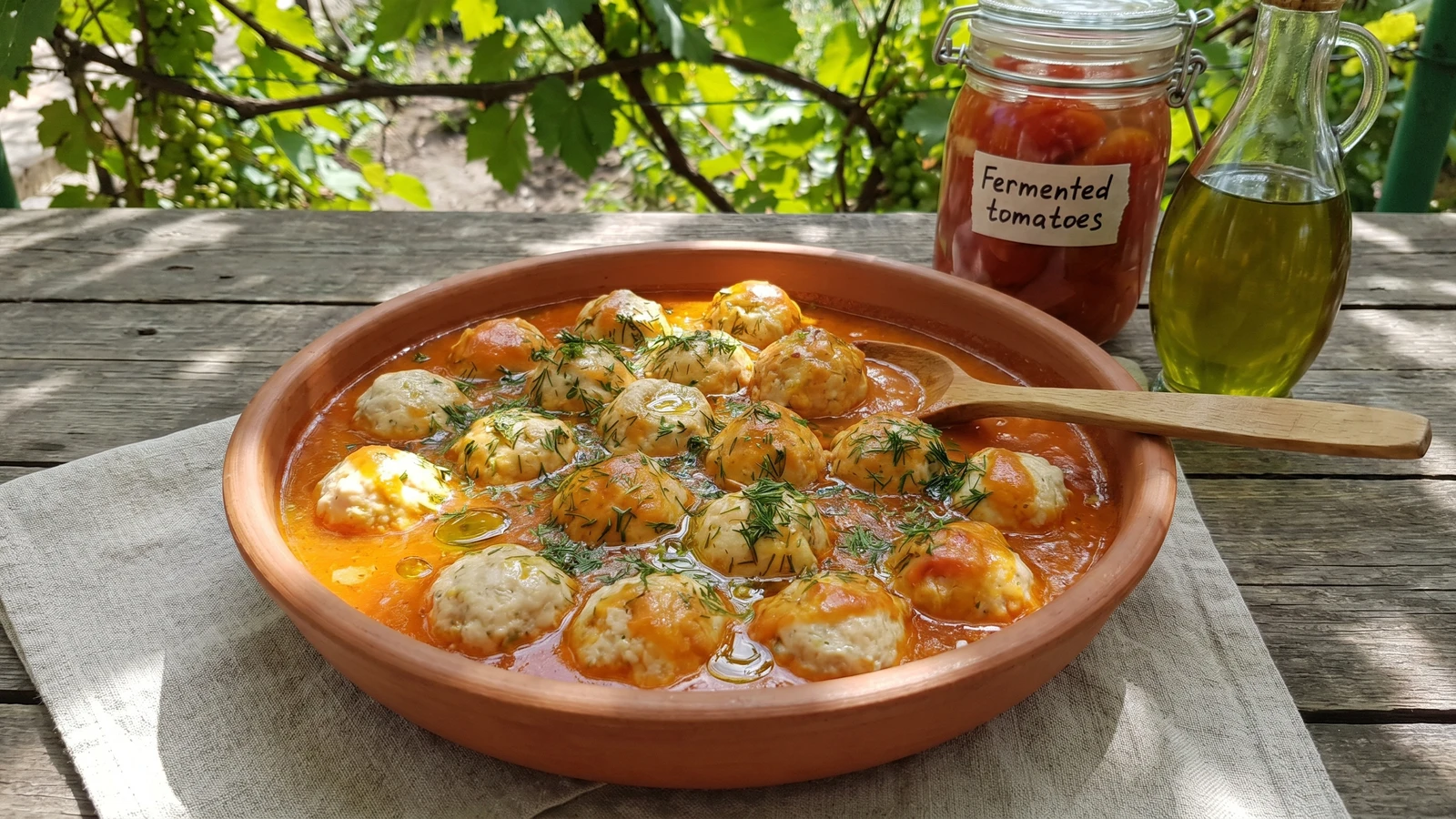
The sauce tells you when supper is ready: tomato turns orange with smetana, dill lifts the pot, and the fish balls go tender enough to split with a spoon.
The sauce tells you first. It goes into the pot red and sharp, then the smetana softens it to orange, the sunflower oil beads at the edges, and the fish balls swell quietly until they look less boiled than tucked in. This is the kind of southern supper that takes a modest catch, or a bag of frozen hake from the shop, and turns it into enough for eight guests or one hungry Ukrainian.
What decides the dish is gentleness. Fish tightens if you let the pot shout, so the tefteli barely murmur in the sauce while the rice and bread inside drink tomato, onion sweetness, and dill. Aunt Nadia would have written "until it sounds right," and for once she was exactly practical: the right sound is a sleepy blip at the edge of the pan, not a rolling boil.
The zasmazhka here is the sauce's backbone, onion and carrot sweated in green sunflower oil until the smell changes from raw cellar to sweet garden. Then tomato joins it, smetana rounds it, and the fish has somewhere kind to land. Serve with buckwheat, potatoes, or just bread for wiping the bowl; the point is not a perfect fillet, the point is a full table.
Fish tefteli sit at the meeting point of Ukrainian river cooking and the wider Black Sea meatball family; the word tefteli is kin to Turkic kofte, but the tomato, dill, carrot, and smetana make this pot recognizably Ukrainian. In the lower Dnipro, Dniester, Danube Delta, and Black Sea towns, mincing fish was practical before boneless fillets were normal: pike, carp, zander, or small catch could be stretched with bread or rice and fed to a family. Soviet canteens later standardized meat tefteli with rice, but home fish versions kept their regional logic, sauce enough for potatoes, buckwheat, and second helpings.
Quantity
700g
hake, pollock, cod, zander, or pike, thawed if frozen
Quantity
120g
crusts removed
Quantity
80ml
for soaking the bread
Quantity
120g
cooled
Quantity
1
finely grated
Quantity
1
Quantity
2 cloves
finely grated
Quantity
1/2 bunch
finely chopped, plus more to serve
Quantity
1 teaspoon
plus more to taste
Quantity
1/2 teaspoon
Quantity
2 tablespoons
for shaping if needed
Quantity
3 tablespoons
Quantity
2 medium
finely diced
Quantity
2 medium
coarsely grated
Quantity
2 tablespoons
Quantity
500ml
Quantity
250ml
Quantity
1
Quantity
150g
Quantity
1 to 2 tablespoons
Quantity
pinch
only if the tomatoes are sharp
Quantity
to serve
| Ingredient | Quantity |
|---|---|
| skinless boneless white fish filletshake, pollock, cod, zander, or pike, thawed if frozen | 700g |
| day-old white breadcrusts removed | 120g |
| milk or waterfor soaking the bread | 80ml |
| cooked white ricecooled | 120g |
| small onionfinely grated | 1 |
| egg | 1 |
| garlicfinely grated | 2 cloves |
| dillfinely chopped, plus more to serve | 1/2 bunch |
| fine sea saltplus more to taste | 1 teaspoon |
| black pepper | 1/2 teaspoon |
| fine breadcrumbs or flour (optional)for shaping if needed | 2 tablespoons |
| unrefined sunflower oil | 3 tablespoons |
| onionsfinely diced | 2 medium |
| carrotscoarsely grated | 2 medium |
| tomato paste | 2 tablespoons |
| passata or crushed tomatoes | 500ml |
| fish stock or water | 250ml |
| bay leaf | 1 |
| full-fat smetana or sour cream | 150g |
| fermented tomato brine (optional) | 1 to 2 tablespoons |
| sugar (optional)only if the tomatoes are sharp | pinch |
| extra smetana (optional) | to serve |
Put the bread in a bowl with the milk or water and let it soften until it collapses under your fingers. Squeeze it gently, not dry as sawdust, just enough that it will bind the fish instead of flooding it. This is what keeps the tefteli soft.
Pat the fish dry, then chop it very finely with a knife or pulse it briefly in a food processor. Stop while it still looks like minced fish, not paste. If it smears against the blade, it has gone too far; scrape it into a bowl and leave it alone.
Add the soaked bread, cooked rice, grated onion, egg, garlic, dill, salt, and pepper to the fish. Mix with your hand just until it holds together. Wet your palms and shape balls a little smaller than a walnut; if the mixture feels nervous and loose, dust your hands with breadcrumbs or flour and chill the shaped tefteli while you start the sauce.
Warm the sunflower oil in a wide heavy pot and add the diced onions with a pinch of salt. Let them go translucent and sweet before the carrots join. Cook until the raw smell changes from cellar to garden and the oil turns orange. Stir in the tomato paste and let it darken slightly, then add the passata, stock or water, bay leaf, and a pinch of sugar only if the tomatoes bite too sharply.
Bring the sauce to a quiet bubble, then lower in the fish balls in one layer, spooning sauce over their shoulders. Cover the pot and keep it at a sleepy murmur, the sound Aunt Nadia would have called right. A hard boil makes fish springy; a low simmer lets the rice and bread drink the tomato. Split one open to check: the center should be opaque and juicy, not glossy raw.
Scoop a ladle of hot tomato sauce into a bowl and whisk it into the smetana, then pour that back into the pot. Keep the heat low so the sauce turns orange and glossy instead of grainy. Add fermented tomato brine if the sauce needs lifting, taste for salt and pepper, then pull the pot off the heat and shower with dill.
Let the tefteli sit off the heat until the sauce clings instead of running thin. Serve with buckwheat, mashed potatoes, or bread for wiping the bowl. Make a big pot; the sauce is half the supper.
1 serving (about 315g)
Culinary guides, cultural storytelling, and the editorial depth that makes cooking meaningful.
Discover Culinary ExplorerChef Lesia
A whole pork neck takes garlic into little knife pockets, roasts until the crust goes dark and fragrant, then rests overnight so every cold slice tastes better than shop ham.
Chef Lesia
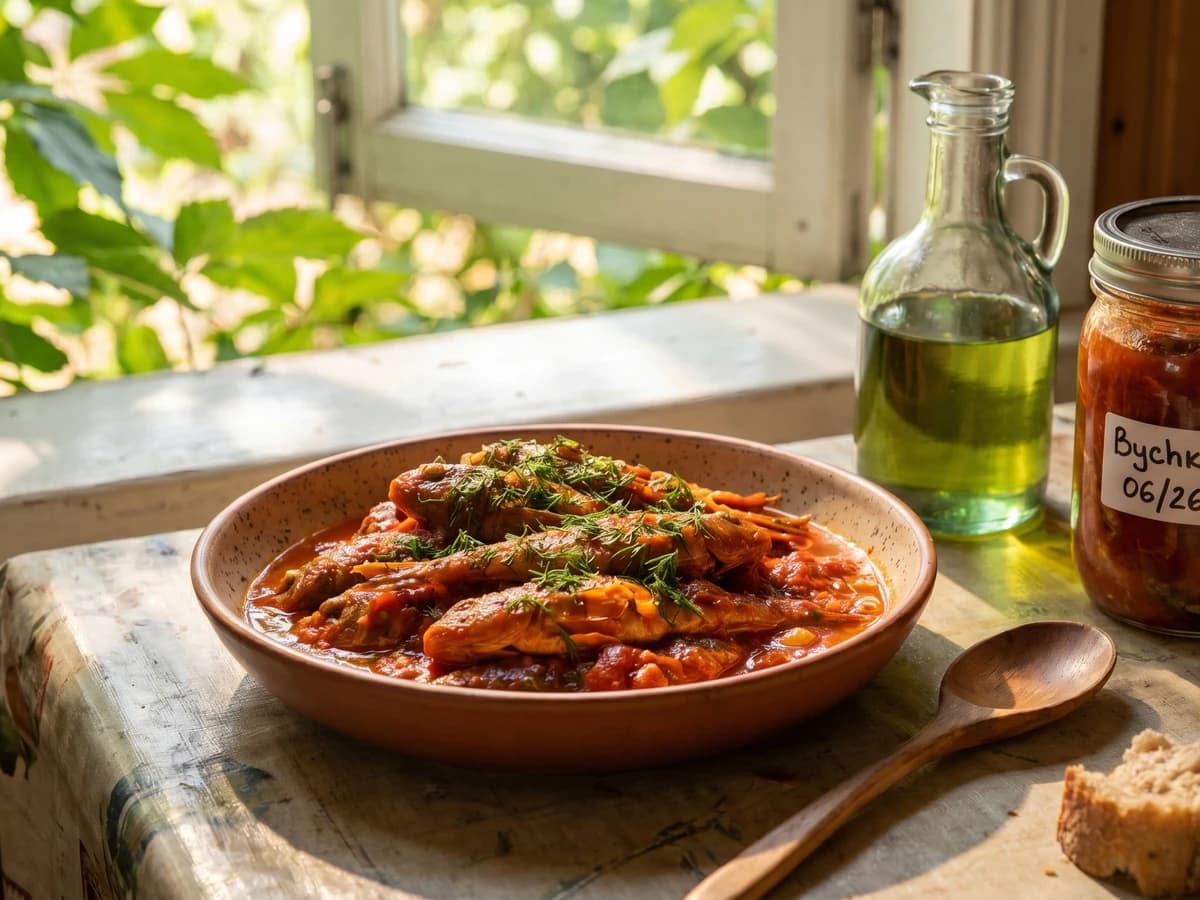
Small Azov gobies go into tomato bright as market cloth and come out soft enough that the bones give up. This is Mariupol food: cheap, red, generous, and better tomorrow.

Chef Lesia
The first sound is the meat against the board: flat, sharp, changing as the fibres loosen. Fry the cutlets fast, then let onion gravy do the soft finishing.

Chef Lesia
A heap of tiny silver fish becomes supper by the oldest Odesa trick: clean them, press them together, fry until the edges crackle, and let lemon and dill do the talking.