
Chef Lesia
Buzhenyna (буженина, garlic-studded roast pork)
A whole pork neck takes garlic into little knife pockets, roasts until the crust goes dark and fragrant, then rests overnight so every cold slice tastes better than shop ham.
A cooking platform built around craft, culture, and the stories behind what we eat.

Created by
A pork knuckle looks like a hard, cheap thing until the skin tightens into amber glass and the meat underneath gives up with a sigh.
Apork knuckle looks like a hard, cheap thing until the skin tightens into amber glass and the meat underneath gives up with a sigh. That is the trick of rulka: you take the joint everyone thinks needs force, give it time in a fragrant broth, then roast it until the outside crackles under the knife and the inside falls apart in soft ropes.
This is not a dish from my southern litnya kuhnia, the summer kitchen, by birth. It belongs more naturally to western Ukrainian celebration tables, to Lviv and Volhynian Sundays, to places where pork, beer, garlic, mustard, and sour cabbage know each other well. Still, every kitchen pulls a dish toward itself. Mine gets black pepper, bay, garlic, a spoon of mustard, and a little honey, not enough to make it sweet, just enough to help the skin go dark and lacquered.
The one thing that decides the dish is the two-stage cooking. Simmer first, roast second. If you roast the knuckle from raw, the skin may brown before the connective tissue has melted; if you only boil it, you get supper but not celebration. Aunt Nadia wrote, very unhelpfully, "cook until it sounds right," and she was right: when the knife taps the finished skin, it should answer back, crisp and hollow. Then bring it to the table whole. Let people see what patience did.
Rulka, a roasted pork knuckle or shank, is especially at home in western Ukrainian cooking, where Galician, Volhynian, Polish, Czech, German, and Austro-Hungarian border histories all left their mark on festive pork dishes. Ukrainian versions usually soften the joint first in an aromatic broth, then roast it with garlic, mustard, honey, beer, or kvass, and serve it beside sour cabbage, horseradish, pickles, or potatoes. The dish shows how Ukrainian regional cooking absorbs border influence without disappearing into it: the table is local, practical, and generous.
Quantity
2, about 1.2 to 1.5 kg each
skin on
Quantity
2
halved
Quantity
2
cut into chunks
Quantity
1 head
halved crosswise
Quantity
3
Quantity
1 tablespoon
Quantity
1 teaspoon
Quantity
1 tablespoon
Quantity
2 teaspoons, plus more
for the broth and skin
Quantity
500ml
Quantity
enough to cover
Quantity
2 tablespoons
Quantity
1 tablespoon
Quantity
2 tablespoons
Quantity
4 cloves
finely grated
Quantity
1 teaspoon
Quantity
1/2 teaspoon
Quantity
1 tablespoon
for sharpening the glaze
Quantity
to serve
Quantity
small handful
chopped, to serve
Quantity
to serve
| Ingredient | Quantity |
|---|---|
| pork knucklesskin on | 2, about 1.2 to 1.5 kg each |
| onionshalved | 2 |
| carrotscut into chunks | 2 |
| garlichalved crosswise | 1 head |
| bay leaves | 3 |
| black peppercorns | 1 tablespoon |
| allspice berries | 1 teaspoon |
| coriander seeds | 1 tablespoon |
| sea saltfor the broth and skin | 2 teaspoons, plus more |
| dark beer, light beer, or unsweetened kvass | 500ml |
| water | enough to cover |
| mustard | 2 tablespoons |
| honey | 1 tablespoon |
| unrefined sunflower oil | 2 tablespoons |
| garlicfinely grated | 4 cloves |
| sweet paprika | 1 teaspoon |
| freshly ground black pepper | 1/2 teaspoon |
| apple or sauerkraut brine (optional)for sharpening the glaze | 1 tablespoon |
| sauerkraut or braised sour cabbage | to serve |
| fresh dillchopped, to serve | small handful |
| prepared horseradish or mustard | to serve |
Put the pork knuckles into a wide heavy pot with the onions, carrots, halved garlic head, bay, peppercorns, allspice, coriander, salt, and beer or kvass. Add enough water to cover. Bring it slowly to a bare simmer, skimming the foam as it rises, then keep it gentle. Not a hard boil. You want the broth murmuring around the meat, not knocking it about.
Cook the knuckles until a small knife slides into the thickest part with almost no resistance and the meat has begun to pull back from the bone. This usually takes about two and a half hours, but listen to the pot more than the clock. The smell will change from raw pork and spice to something round, garlicky, and settled.
Lift the knuckles carefully onto a rack set over a tray. Let them drain until the surface stops looking wet, then pat the skin very dry with kitchen paper. Salt the skin lightly. Dry skin is the difference between a good roast and a sulking one, so give it a few minutes of attention here.
Stir the mustard, honey, sunflower oil, grated garlic, paprika, black pepper, and the spoon of brine if you're using it. The brine is a bit more modern, but I like the way it cuts through the pork. Brush the glaze over the meaty parts and into any folds, leaving some skin only lightly coated so it can blister.
Roast at 220C until the skin tightens, darkens, and crackles when tapped with the back of a knife, then lower to 190C if the glaze is racing ahead. Turn the tray once or twice and brush with a little more glaze where the meat is exposed. You're looking for amber skin, sticky edges, and meat that trembles when you move the bone.
Rest the rulka for at least fifteen minutes before cutting. Bring it to the table whole if you can, with sour cabbage, horseradish or mustard, chopped dill, and something to catch the juices. Slice through the skin first, then pull the meat away in generous pieces. This is enough for eight guests or one hungry Ukrainian.
1 serving (about 320g)
Culinary guides, cultural storytelling, and the editorial depth that makes cooking meaningful.
Discover Culinary ExplorerChef Lesia
A whole pork neck takes garlic into little knife pockets, roasts until the crust goes dark and fragrant, then rests overnight so every cold slice tastes better than shop ham.
Chef Lesia
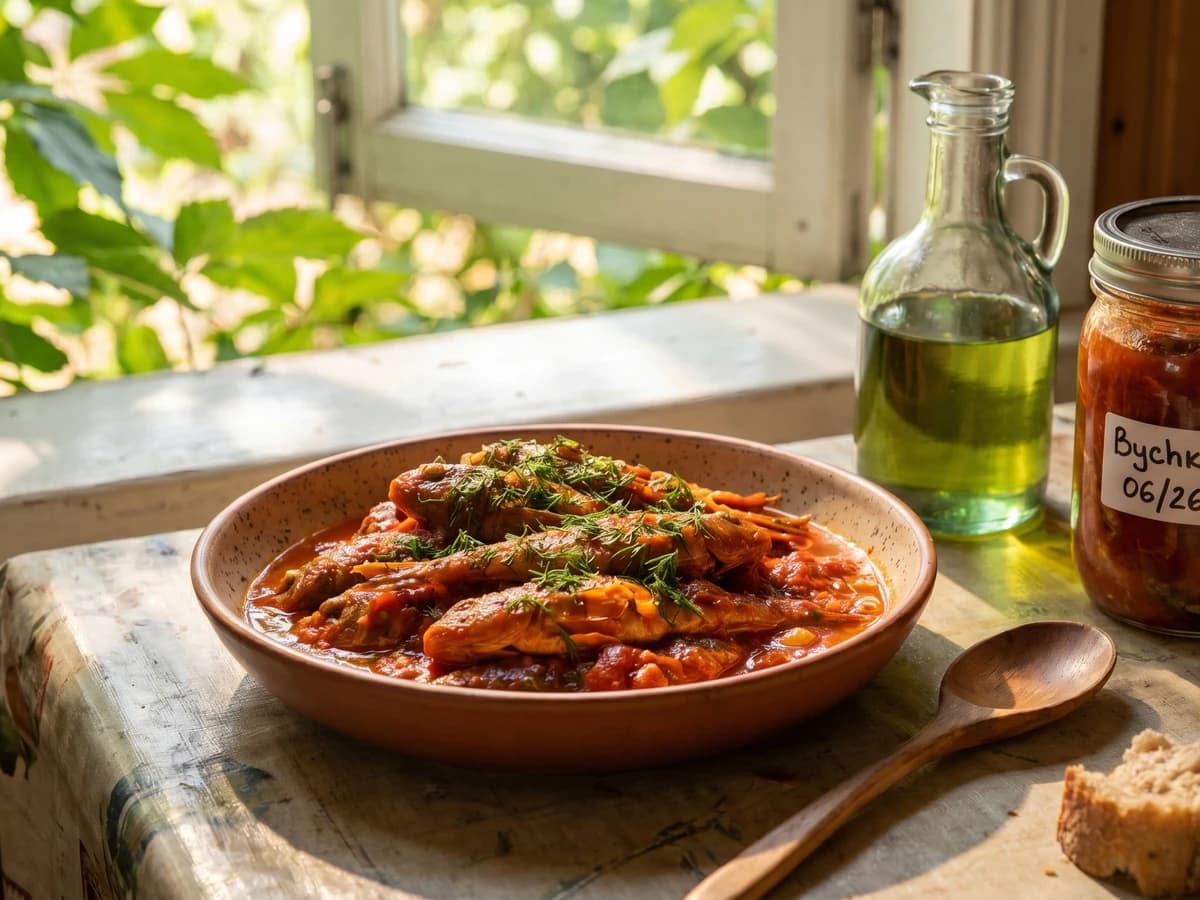
Small Azov gobies go into tomato bright as market cloth and come out soft enough that the bones give up. This is Mariupol food: cheap, red, generous, and better tomorrow.

Chef Lesia
The first sound is the meat against the board: flat, sharp, changing as the fibres loosen. Fry the cutlets fast, then let onion gravy do the soft finishing.

Chef Lesia
A heap of tiny silver fish becomes supper by the oldest Odesa trick: clean them, press them together, fry until the edges crackle, and let lemon and dill do the talking.