
Chef Klaus
Ähzezupp (Kölsche Erbsensuppe)
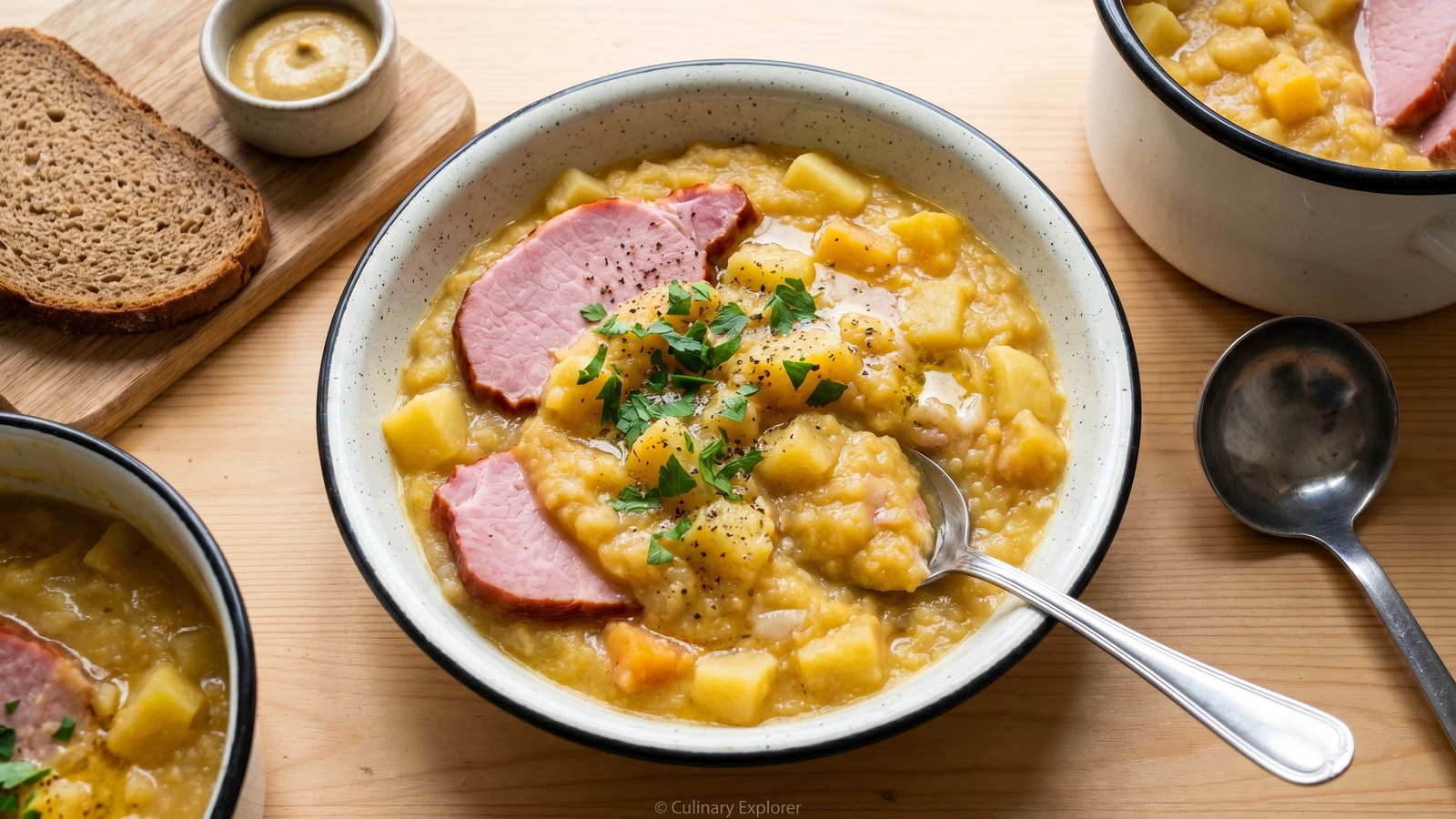
The Cologne pea pot earns its depth from soaked peas and cured pork bone, simmered slowly until the soup thickens itself and the meat falls clean from the knuckle.
A cooking platform built around craft, culture, and the stories behind what we eat.
Created by
The northern swede pot that turns a stored winter root, floury potatoes, and smoked pork into a thick spoon dish, sweet-sour at the end and never from a packet.
Rübenmus is northern winter cooking, strongest in Schleswig-Holstein, Hamburg, and the old lowland kitchens where a swede in the cellar meant supper was still possible. This is Hausmannskost, honest home cooking: stored roots, potatoes, smoked pork, one pot, no apology. It belongs to cold months and to the larder, not to a feast table with ribbons on it.
Every north German kitchen argues a little. Around Hamburg you hear Hamburger National when carrots join the pot; in Schleswig-Holstein the dish is often thicker and rougher, Rübenmus, part stew and part mash. Mecklenburg and Pomerania have their Wruken, their word for swedes, and cook them looser or cleaner. Im Norden anders, im Süden anders. The south has plenty of good root dishes, but this smoky, söötsuur, sweet-sour pot is northern work.
The rule that decides it is the mash. Cook the smoked pork first so the broth carries salt, fat, and smoke before the vegetables go in, then cook the swede until it gives up its hard edge and the potato begins to fall apart. Mash only part of the pot. The floury potato thickens the broth, the swede stays in soft pieces, and the spoon finds both. Blend it smooth and you've made baby food. Don't.
Sugar and vinegar go in at the end. Acid too early slows the roots, and salt too early is foolish when Kasseler or smoked belly is already seasoning the pot. Würzen, Fett, Salz zum Schluss. Taste it sweet against sour, never one without the other. Schön ist, was schmeckt.
Kohlrüben carried a hard memory after the Steckrübenwinter of 1916 to 1917, when wartime Germany suffered potato failure, blockade shortages, and rationing, and swedes were stretched into bread, jam, soup, and worse. In northern Germany the older larder dishes survived that reputation because smoked pork, potatoes, and a proper sweet-sour finish made the root into supper rather than emergency food. The regional names tell the map: Steckrübe or Kohlrübe in standard German, Wruke in parts of the north-east, and Rübenmus in Schleswig-Holstein kitchens.
Quantity
800g
in one piece
Quantity
200g
with rind if possible
Quantity
1.2kg
peeled and cut into 2cm cubes
Quantity
800g
peeled and cut into 3cm chunks
Quantity
2
diced
Quantity
2
finely chopped
Quantity
1
washed and sliced
Quantity
2
Quantity
6
Quantity
1 teaspoon
lightly crushed
Quantity
1.5 litres
Quantity
2 tablespoons
Quantity
1 tablespoon
Quantity
1 to 2 tablespoons
Quantity
1 teaspoon
Quantity
to taste
Quantity
2 tablespoons
chopped
| Ingredient | Quantity |
|---|---|
| smoked pork neck or Kasselerin one piece | 800g |
| smoked pork bellywith rind if possible | 200g |
| swede (Kohlrübe or Steckrübe)peeled and cut into 2cm cubes | 1.2kg |
| floury potatoespeeled and cut into 3cm chunks | 800g |
| carrotsdiced | 2 |
| onionsfinely chopped | 2 |
| leekwashed and sliced | 1 |
| bay leaves | 2 |
| black peppercorns | 6 |
| caraway seedslightly crushed | 1 teaspoon |
| cold water | 1.5 litres |
| butter or pork dripping | 2 tablespoons |
| sugar | 1 tablespoon |
| cider vinegar or white wine vinegar | 1 to 2 tablespoons |
| marjoram | 1 teaspoon |
| salt and black pepper | to taste |
| flat-leaf parsley (optional)chopped | 2 tablespoons |
Put the Kasseler, smoked belly, bay leaves, peppercorns, and cold water in a heavy pot and bring it slowly to a quiet simmer. Start cold because the meat gives its salt and smoke to the water as it warms; drop it into boiling water and the outside tightens before the broth has taken anything useful. Skim once, then simmer gently for 40 minutes.
While the meat simmers, peel the swede thickly enough to remove the tough outer layer, then cut it smaller than the potatoes. Swede is denser and slower to soften, so 2cm cubes cook through at the same time that larger floury potato chunks begin to break down and thicken the pot.
Lift the meats to a plate and strain the broth if peppercorns bother you. In the same pot, melt the butter or dripping and sweat the onions, leek, carrots, caraway, and marjoram for 5 minutes without browning. This wakes the fat-soluble flavour in the caraway and softens the onion, so the stew tastes rounded instead of boiled.
Add the swede and potatoes, then pour the smoked broth back in until the vegetables are just covered. Bring it up, then runter mit der Temperatur, down with the temperature, and simmer uncovered for 35 to 45 minutes. The pot is ready when the swede crushes under a spoon and the potato edges are beginning to fall into the broth.
Take out a ladle of clear broth and keep it aside, then mash the vegetables in the pot with a potato masher until about half is smooth and half is still in soft pieces. The potato starch thickens what the swede cannot, and the pieces keep the dish honest under the spoon. Add back the reserved broth only if it is too stiff.
Slice the Kasseler and dice the belly, then return both to the pot and warm them through gently. Stir in the sugar and 1 tablespoon vinegar, taste, then add more vinegar only if the broth wants it. Söötsuur means sweet-sour, not sweet then sour, and the balance works only at the end because acid earlier would slow the roots and salt from the smoked pork keeps changing the pot.
Taste for salt and black pepper last, because smoked meat lies to you until the pot is finished. Spoon the Rübenmus into deep bowls, set slices of Kasseler on top, and scatter parsley if you use it. A slice of dark rye and mustard on the side are enough. Nicht aus dem Glas, and no packet sauce has business here.
1 serving (about 630g)
Culinary guides, cultural storytelling, and the editorial depth that makes cooking meaningful.
Discover Culinary ExplorerChef Klaus
The Cologne pea pot earns its depth from soaked peas and cured pork bone, simmered slowly until the soup thickens itself and the meat falls clean from the knuckle.

Chef Klaus
The Allgäu's Alpine cheese soup works only if the Bergkäse melts gently off the heat, where it turns smooth instead of stringy.

Chef Klaus
A firm egg dough, grated into tiny crumbs and cooked in clear broth: Allgäu kitchen thrift, warm in the bowl, and finished only when the Riebele keep their bite.

Chef Klaus
The Altmark wedding broth is a clear soup with no tricks: bones for depth, patient skimming for clarity, and small semolina dumplings that make it festive.