Chef Joost
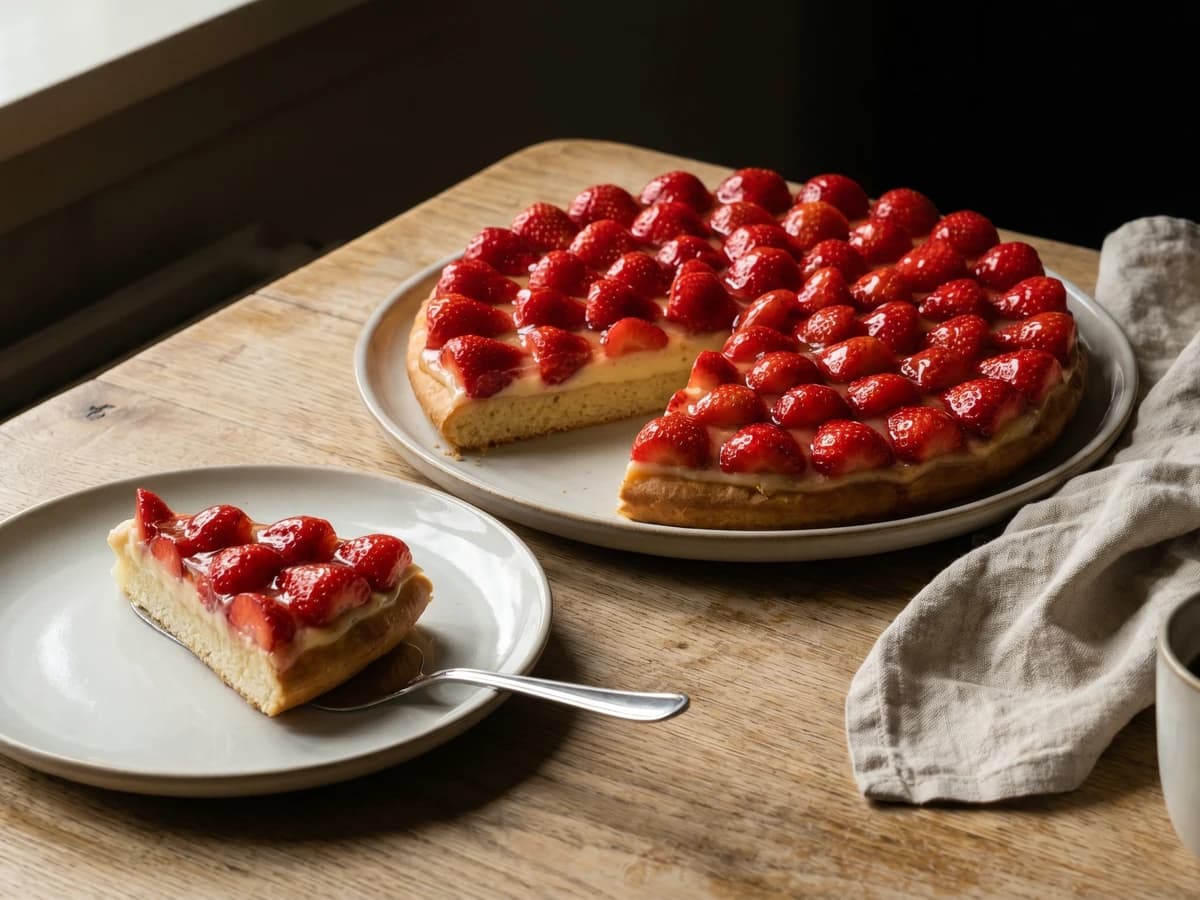
Aardbeienvlaai (Limburg Strawberry Vlaai)
The summer vlaai that politely breaks Limburg's baked-fruit rule: soft gistdeeg, cool pastry cream, and strawberries left fresh because June knows better than the oven.
A cooking platform built around craft, culture, and the stories behind what we eat.
Created by
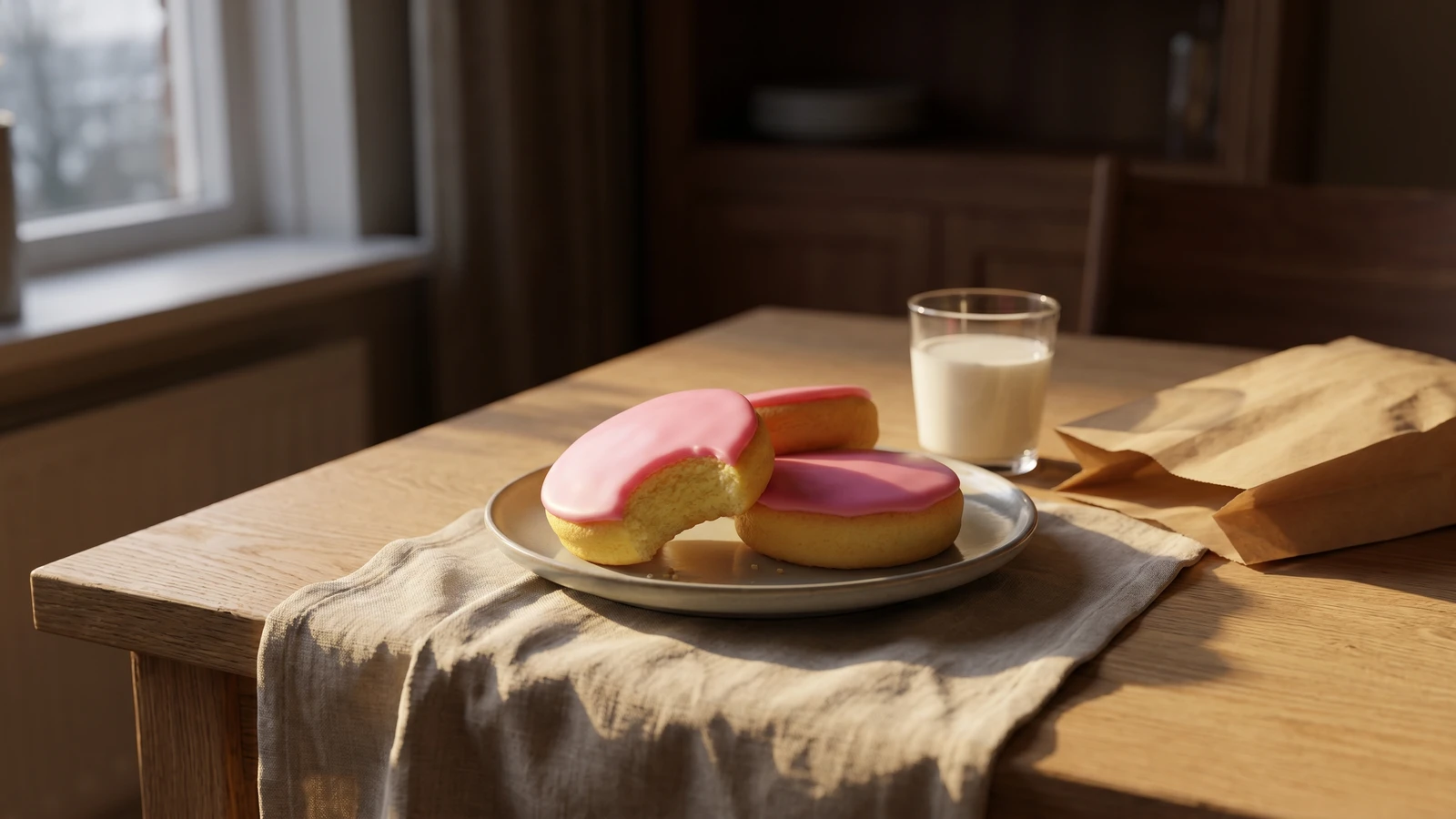
The name says almost everything: a pink cake, plain as a school bell, hiding a soft yellow crumb and the small Dutch genius of making celebration affordable.
Some Dutch cakes arrive wearing history like a brocade coat. Roze koeken arrive in a paper wrapper, slightly stuck to the glaze, eaten over a schoolbook or beside coffee in a railway station. And still, a dish without its story is half a meal. The story here is not royal courts or spice fleets, but the democratic bakery counter: a soft yellow cake under a pink fondant lid, cheap enough for a child and cheerful enough for a birthday.
The name already tells you most of it. Roze koek means pink cake, though koek in Dutch is a generous word. It can mean cookie, cake, little baked thing, the edible category we reach for when precision would only slow down coffee. But let me tell you a secret: the pink is not childish nonsense. In older bakery practice it often came from carmine, the red dye made from cochineal insects, the same serious little colouring that once travelled through global trade into European confectionery. These days beetroot powder or a drop of food colouring does the job without a lecture at the table.
What matters in the kitchen is restraint. The cake must be soft, not showy, with a fine crumb and a little butter in the background. The glaze should sit like a smooth cap, thick enough to bite through, thin enough to settle. Hou het altijd simpel, always keep it simple: bake small sponge rounds, let them cool completely, then cover them with a pink fondant that dries with a gentle satin finish. This is not pastry trying to impress you. It is pastry remembering you were once eight years old.
Roze koeken belong to the Dutch glacékoek tradition, small cakes finished with a smooth sugar fondant, which spread through bakeries and lunch counters in the twentieth century as affordable single-portion treats. Their bright pink colour was traditionally linked to carmine, listed today as E120, a cochineal-based colouring used widely in European confectionery before modern alternatives became common. The cake's fame is national rather than regional: it is the bakery-counter and school-cantine sweet that many Dutch adults remember before they remember who baked the first one.
Quantity
150g
softened, plus extra for greasing
Quantity
150g
Quantity
3
at room temperature
Quantity
1 teaspoon
Quantity
1 teaspoon
finely grated
Quantity
150g
Quantity
1 1/2 teaspoons
Quantity
1/4 teaspoon
Quantity
2 tablespoons
Quantity
250g
sifted
Quantity
2 tablespoons
plus more as needed
Quantity
1 tablespoon
Quantity
1/2 teaspoon or a few drops
| Ingredient | Quantity |
|---|---|
| unsalted buttersoftened, plus extra for greasing | 150g |
| caster sugar | 150g |
| large eggsat room temperature | 3 |
| vanilla extract | 1 teaspoon |
| lemon zestfinely grated | 1 teaspoon |
| plain flour | 150g |
| baking powder | 1 1/2 teaspoons |
| fine salt | 1/4 teaspoon |
| milk | 2 tablespoons |
| icing sugarsifted | 250g |
| hot waterplus more as needed | 2 tablespoons |
| lemon juice | 1 tablespoon |
| beetroot powder or pink food colouring | 1/2 teaspoon or a few drops |
Heat the oven to 180C. Butter a 12-hole shallow bun tin or muffin tin, then dust lightly with flour and tap out the excess. The cakes need to release cleanly, because the pink lid forgives many things but not a torn little shoulder.
Beat the softened butter and caster sugar together for three to four minutes, until pale and soft. Add the eggs one at a time, beating well after each, then mix in the vanilla and lemon zest. If the batter looks a little split, don't panic; the flour will bring it back to its senses.
Whisk the flour, baking powder, and salt together, then fold them into the butter mixture with the milk. Stop as soon as the batter is smooth. Overmixing makes a proud little cake tough, and roze koeken should have the softness of something bought after swimming lessons.
Divide the batter evenly among the tin holes, filling each about two-thirds full. Bake for 15 to 18 minutes, until the tops are pale golden and spring back when touched. Let them cool in the tin for five minutes, then turn them out onto a rack and cool completely.
Stir the sifted icing sugar with the hot water and lemon juice until thick and glossy. Add beetroot powder or pink food colouring a little at a time, until you have that unmistakable Dutch bakery pink. The glaze should fall slowly from a spoon in a ribbon; if it runs like rain, add more icing sugar, and if it sits like mortar, add water by the teaspoon.
Spoon a round cap of pink fondant over each cooled cake, nudging it to the edge with the back of the spoon. Let the cakes stand for 30 minutes, until the glaze sets to a smooth satin surface that gives just a little under your teeth.
1 serving (about 72g)
Culinary guides, cultural storytelling, and the editorial depth that makes cooking meaningful.
Discover Culinary ExplorerChef Joost
The summer vlaai that politely breaks Limburg's baked-fruit rule: soft gistdeeg, cool pastry cream, and strawberries left fresh because June knows better than the oven.

Chef Joost
A Limburg vlaai is not a pie trying to be grand. It is a thin yeast-dough round, fruit-bright and generous, made for birthdays, coffee, and second slices.

Chef Joost
The December bakery counter made small: cold leafed pastry wrapped around lemon-scented amandelspijs, brushed gold, and scattered with almonds so one person gets the whole holiday in both hands.
Chef Joost
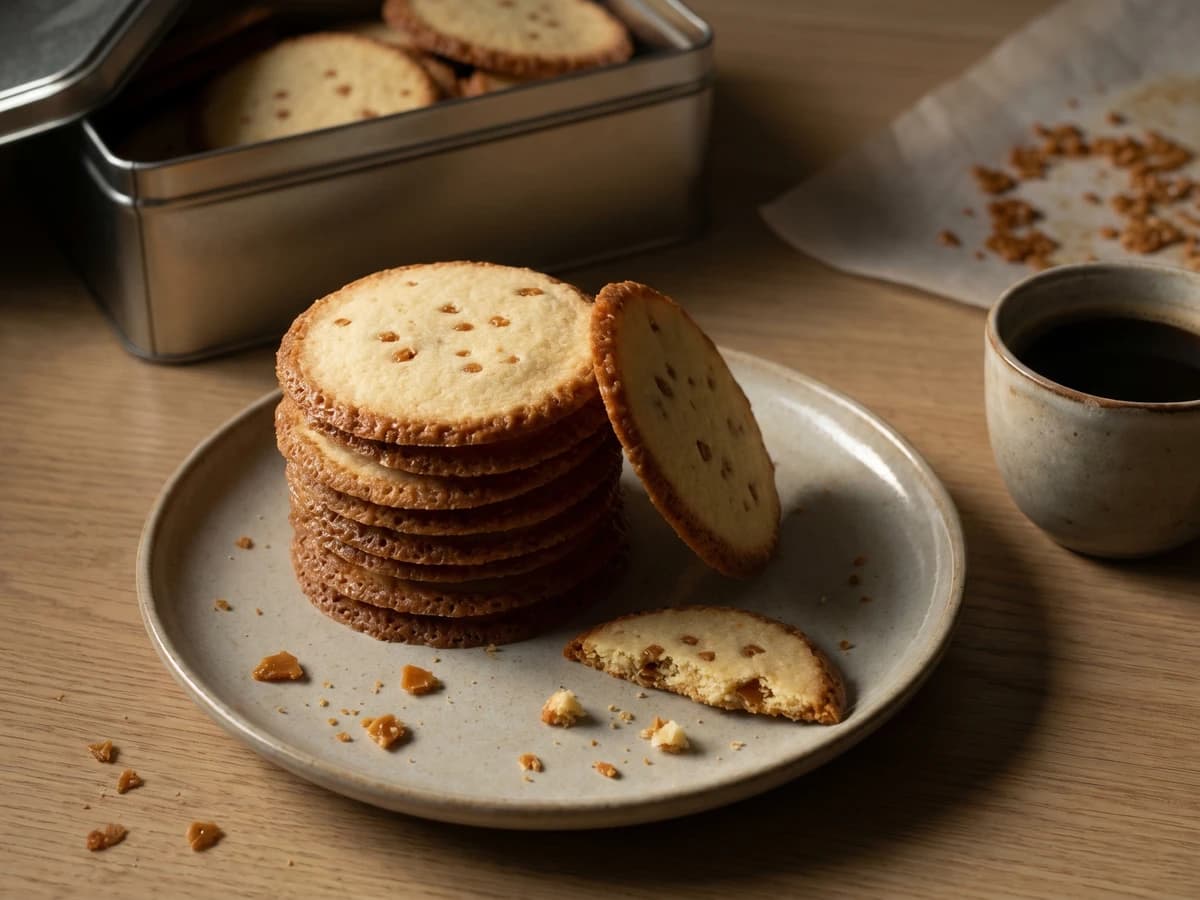
A thin Amsterdam cookie carrying a cog ship in its name: caramelized butter dough, almond nougatine, and a 1934 contest that turned municipal pride into something for coffee.