
Chef Zohra
Amlou (أملو)
A glossy Amazigh almond paste from the Souss, made with toasted almonds, real food-grade argan oil, and honey. Spread it on warm khobz, pass the jar, and make room at the table.
A cooking platform built around craft, culture, and the stories behind what we eat.
Created by
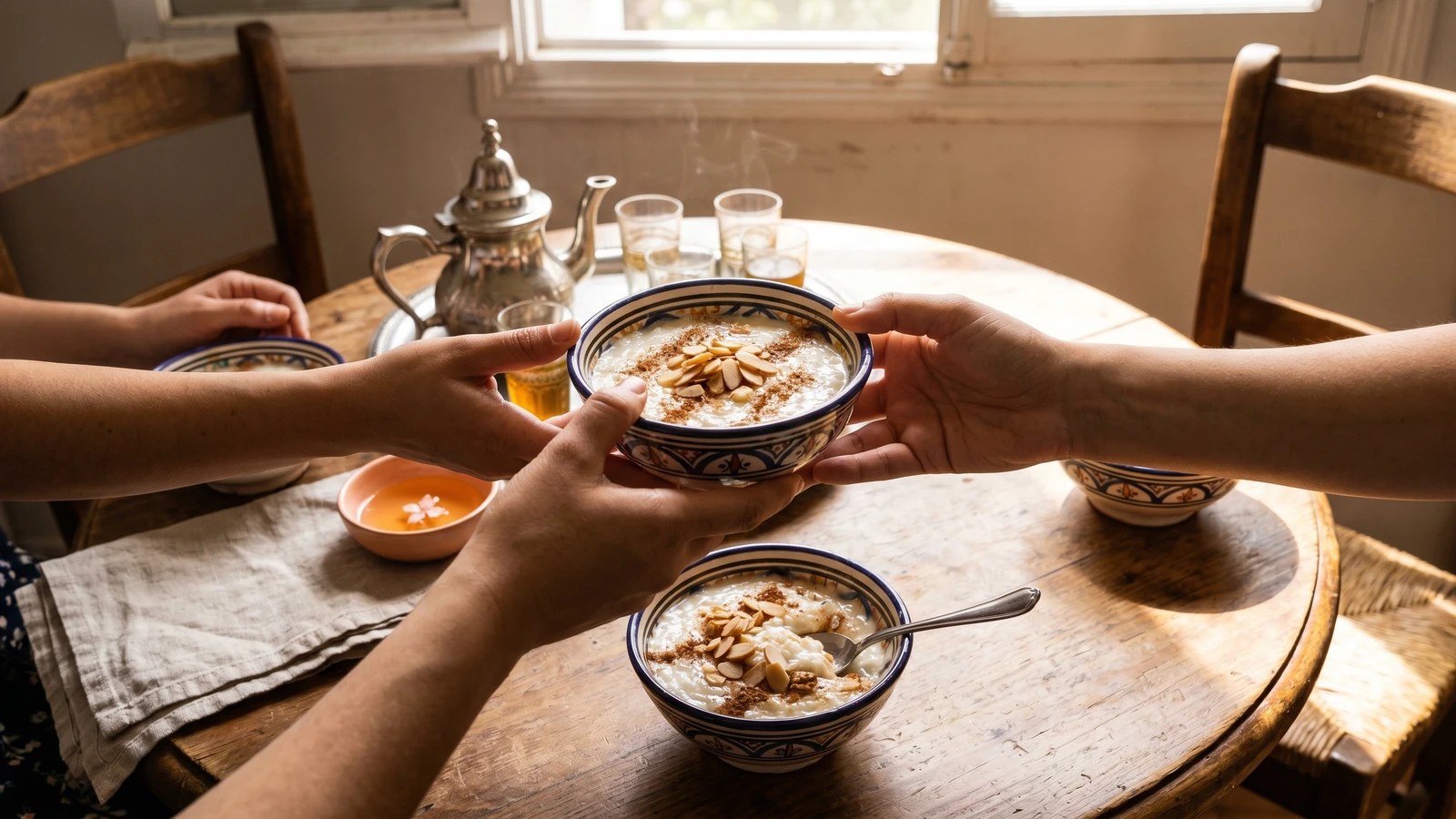
Rice and milk, cooked slowly until the grains turn tender and the pot grows creamy, then finished with orange-blossom water after the flame is off. A spoon dessert for small bowls and full tables.
The milk must never be hurried. It sits with the rice on a low flame, thickening little by little, until the spoon leaves a soft trail and the grains have given their starch to the pot. This is the quiet work of roz bil hlib, rice with milk, a dessert that asks for patience but not ceremony.
Add the sugar only when the rice is tender, and the orange-blossom water only after the heat is off. That is the gesture that decides the dish. Boil the flower water and it turns harsh, almost bitter; stir it in at the end and it stays fragrant, like a courtyard after the orange trees have opened.
Serve it cool in small bowls, with cinnamon over the top and toasted almonds if your table likes them. Make it ahead. Make enough for the child who wants a second bowl and the neighbor who arrives just as you are clearing. Une table, c'est une porte qu'on laisse ouverte, a table is a door you leave open.
Roz bil hlib belongs to a wider family of milk-and-grain sweets found across North Africa, Andalusi kitchens, and the eastern Mediterranean, carried through medieval trade routes where rice, sugar, cinnamon, and flower waters met. In Morocco, it is less a courtly showpiece than a household dessert, especially present in Fassi, northern, and urban family repertoires where orange-blossom water and cinnamon mark festive sweets. Its exact arrival is not fixed, but rice and sugar were established in Moroccan cooking by the medieval Islamic period, with later regional habits shaping the small-bowl pudding known today.
Quantity
120g
Quantity
500ml
Quantity
1 pinch
Quantity
1 liter
Quantity
80g, or to taste
Quantity
1 small piece
pounded with 1 tsp sugar
Quantity
1 tbsp
added off the heat
Quantity
1 tsp
Quantity
to serve
Quantity
2 tbsp
for serving
| Ingredient | Quantity |
|---|---|
| short-grain or medium-grain white rice | 120g |
| water | 500ml |
| fine sea salt | 1 pinch |
| whole milk | 1 liter |
| sugar | 80g, or to taste |
| meska horra (mastic gum) (optional)pounded with 1 tsp sugar | 1 small piece |
| orange-blossom wateradded off the heat | 1 tbsp |
| unsalted butter (optional) | 1 tsp |
| ground cinnamon | to serve |
| toasted sliced almonds (optional)for serving | 2 tbsp |
Put the rice, water, and salt in a heavy saucepan. Bring to a gentle boil, then lower the heat and cook until most of the water is absorbed and the grains have started to open, about 12 minutes. Do not drain it; that starchy water helps the pudding thicken later.
Pour in the milk and stir well, scraping the bottom so no rice settles and catches. Keep the heat low enough that the surface only trembles. Cook 25 to 30 minutes, stirring often, until the rice is tender all the way through and the milk has thickened into a loose cream.
Stir in the sugar and the pounded meska horra, if using. Cook 5 to 8 minutes more, until the sugar has dissolved and the pudding coats the spoon but still flows. It will thicken as it cools, so stop before it looks stiff.
Take the pan off the flame. Stir in the orange-blossom water and the butter, if using. This matters: orange-blossom water keeps its perfume when it meets warmth, not a boil, and that is how the pudding stays soft and floral instead of bitter.
Spoon the pudding into small bowls. Let it cool to room temperature, then chill at least 2 hours if you want it cold. Serve with a dusting of cinnamon and toasted almonds if they belong on your table.
1 serving (about 240g)
Culinary guides, cultural storytelling, and the editorial depth that makes cooking meaningful.
Discover Culinary ExplorerChef Zohra
A glossy Amazigh almond paste from the Souss, made with toasted almonds, real food-grade argan oil, and honey. Spread it on warm khobz, pass the jar, and make room at the table.

Chef Zohra
Soft Medjool dates split and filled with orange-blossom almond paste, the kind of small sweet that waits beside mint tea when the Eid door keeps opening.

Chef Zohra
A Moroccan semolina cake for dawza atay, tender from yogurt, bright with orange, and grainy in the good way, the kind you cut while the tea glasses are already waiting.

Chef Zohra
An everyday Moroccan tea cake, orange-bright and tender from yogurt, mixed in one bowl and baked golden. No icing, no ceremony, just a slice ready when someone knocks.