
Chef Dimitra
Aegean Island Chtapodi me Kritharaki (Χταπόδι με Κριθαράκι)
Aegean island octopus, tomato, red wine, and toasted kritharaki share one pot, so the pasta drinks the briny sauce and stays glossy instead of turning heavy.
A cooking platform built around craft, culture, and the stories behind what we eat.
Created by
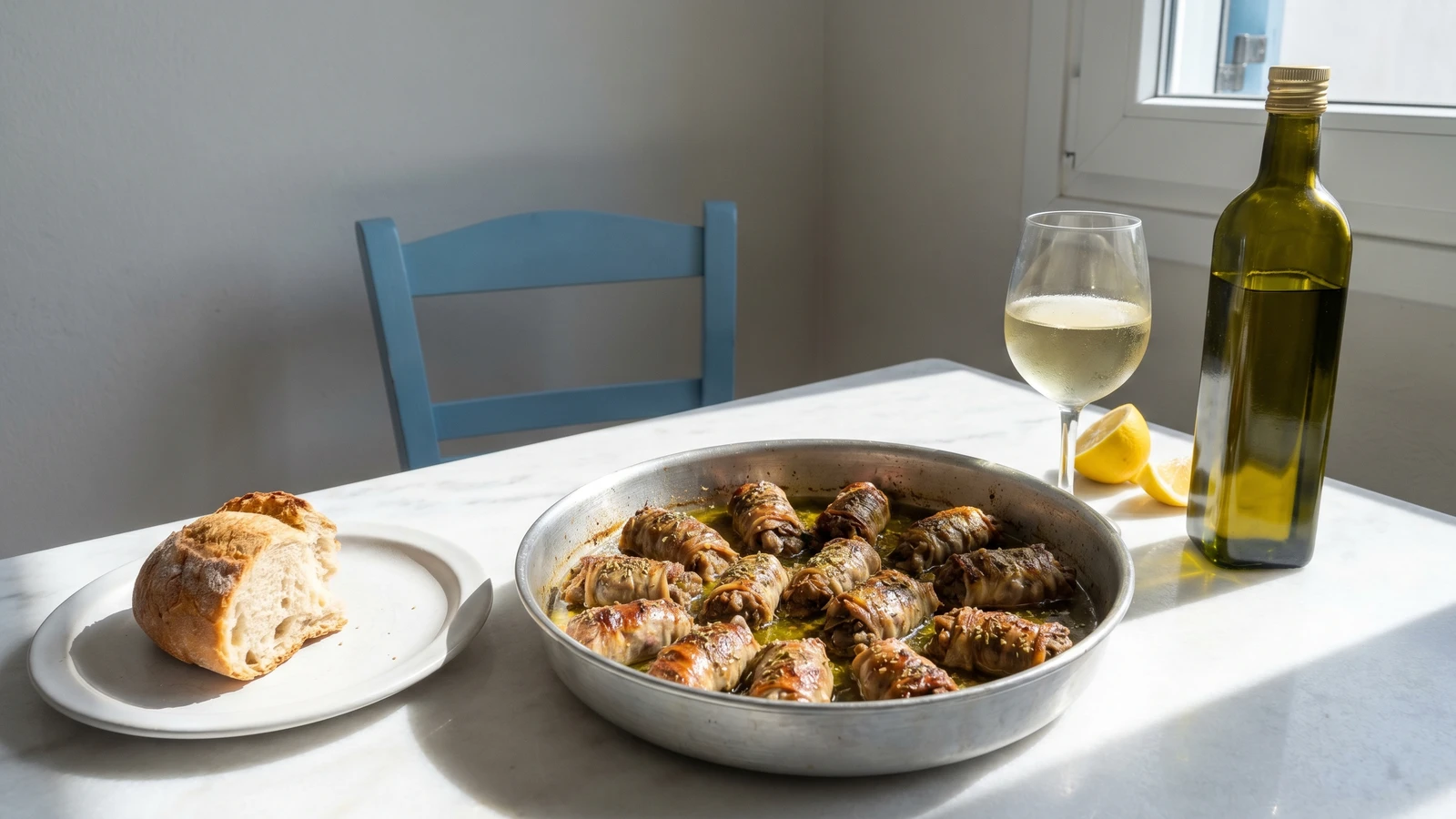
Roumeli gardoumbakia are small Pascha bundles of lamb pluck wrapped in cleaned intestine, baked low with lemon, oregano, and olive oil until the casing turns tender and glossy.
Roumeli gardoumbakia are the little Easter bundles made from lamb sykotaria, the pluck, wrapped in cleaned enterakia, the small intestine. They are the pan cousin of kokoretsi: liver, heart, lung, and sweetbread cut small, tied into parcels, and baked with lemon, oregano, pepper, and olive oil until the casing turns glossy. The region is the dish's surname here. In Roumeli, Easter lamb cooking uses the whole animal, not only the polite cuts.
The method that decides them is the low covered bake. Intestine tightens if it meets fierce heat too early, so I keep the bundles in a shallow bath of lemon, wine, oil, and water until the casing yields under a fork. Only then do I uncover the pan and let the edges brown. Good olive oil, and patience.
Buy the intestines cleaned if you can, then clean them again at home; this is one place where care is not vanity. Once the bundles are tied, the oven does the work, the lemon cuts the richness, and the pan juices ask for bread. I write dishes like this down because offal recipes are the first to vanish when kitchens become shy. A recipe written down is a recipe saved.
Gardoumbakia are found across Roumeli and the Peloponnese in the Easter offal cookery that uses the lamb slaughtered for Pascha from head to intestine. They are the household version of kokoretsi: the same pluck and cleaned intestines, shaped into small bundles that could bake in a tapsi when a family had no outdoor spit. Village versions split two ways, lemon and oregano in the oven, or spring greens and avgolemono in the pot.
Quantity
1 whole, about 1.2kg
liver, heart, lung, and sweetbreads if available, rinsed and trimmed
Quantity
600g
kept cold
Quantity
40g
for cleaning the intestines
Quantity
60ml
for cleaning the intestines
Quantity
90ml
Quantity
1
cut into wedges for serving
Quantity
18g
Quantity
5g
Quantity
2 teaspoons
Quantity
4
thinly sliced
Quantity
100ml
Quantity
120ml
Quantity
150ml
Quantity
2
| Ingredient | Quantity |
|---|---|
| lamb pluck (sykotaria)liver, heart, lung, and sweetbreads if available, rinsed and trimmed | 1 whole, about 1.2kg |
| cleaned lamb small intestines (enterakia)kept cold | 600g |
| coarse saltfor cleaning the intestines | 40g |
| red wine vinegarfor cleaning the intestines | 60ml |
| fresh lemon juice | 90ml |
| lemoncut into wedges for serving | 1 |
| fine sea salt | 18g |
| freshly ground black pepper | 5g |
| dried Greek oregano | 2 teaspoons |
| garlic clovesthinly sliced | 4 |
| extra virgin Koroneiki olive oil | 100ml |
| dry white wine | 120ml |
| water | 150ml |
| bay leaves | 2 |
Place the enterakia in a deep basin and keep them cold while you work. Run cold water through each length until the water runs clear, then turn the length inside out with the help of a thin wooden skewer or chopstick. Rub with the coarse salt, rinse well, then soak 20 minutes in cold water with the vinegar. Rinse again and drain. They should smell clean and faintly sharp from the vinegar; if anything smells rotten, throw it away.
Rinse the sykotaria and trim obvious clots or hard membranes. Bring a large pot of water to a lively simmer, add the offal, and simmer 5 minutes, skimming the gray foam. Drain, rinse briefly, and let it cool until you can handle it. The pieces should be firm enough to cut, not cooked through.
Cut the liver, heart, lung, and sweetbreads into strips about 7cm long and 1.5cm thick, keeping a mix for each bundle. Toss with the fine salt, pepper, oregano, garlic, 30ml of the olive oil, and 30ml of the lemon juice. The seasoning should smell sharp and peppery, not perfumed.
Set 3 or 4 strips of mixed offal into a small log. Wind one length of intestine around the middle, then lengthwise, then across, making an 8cm bundle; tuck the end underneath. Wrap snugly, not hard, because the bundle swells as it cooks. Continue until you have about 12 gardoumbakia.
Heat oven to 160C. Set the bundles seam-side down in a round metal tapsi. Add the wine, water, remaining 60ml lemon juice, remaining 70ml olive oil, and bay leaves. Cover tightly with parchment and foil, or a close-fitting lid, and bake 1 hour 15 minutes, turning and basting once. This low covered bake is the step that decides the dish: hard heat at the start makes the intestine tighten, while gentle moist heat lets it turn tender. If you're using a thermometer, the center of the fattest bundle should be at least 74C.
Uncover the pan, raise the oven to 190C, and bake 25 to 30 minutes more, basting once or twice, until the bundles are browned in spots and the pan juices have reduced to a glossy lemon-oil sauce. If the pan dries before the casing browns, add 2 tablespoons water around the edges, not over the bundles.
Rest the gardoumbakia 10 minutes in the pan. Spoon the juices over them and serve hot or warm with lemon wedges, bitter greens, roast potatoes, and country bread. The bread is not decoration; it is how the pan gets cleaned.
1 serving (about 250g)
Culinary guides, cultural storytelling, and the editorial depth that makes cooking meaningful.
Discover Culinary ExplorerChef Dimitra
Aegean island octopus, tomato, red wine, and toasted kritharaki share one pot, so the pasta drinks the briny sauce and stays glossy instead of turning heavy.

Chef Dimitra
Aegean coast psari plaki is the quiet whole-fish bake: onions and tomato softened first, fish laid on top, and olive oil doing its slow work until the bones release cleanly.

Chef Dimitra
Astakomakaronada is the Aegean islands' celebration pasta: spiny lobster, tomato, olive oil, and long noodles cooked in the shell broth, never drowned in cream or cheese.

Chef Dimitra
Aegean Easter goat on the spit, lean and full-flavored, turned slowly over charcoal and basted with lemon, oregano, garlic, and good olive oil.