
Chef Klaus
Badische Dinnele
The Baden flatbread that keeps its bread body: sour cream, onion, and Speck on a yeast dough baked hard and hot until the edges blister.
A cooking platform built around craft, culture, and the stories behind what we eat.
Created by
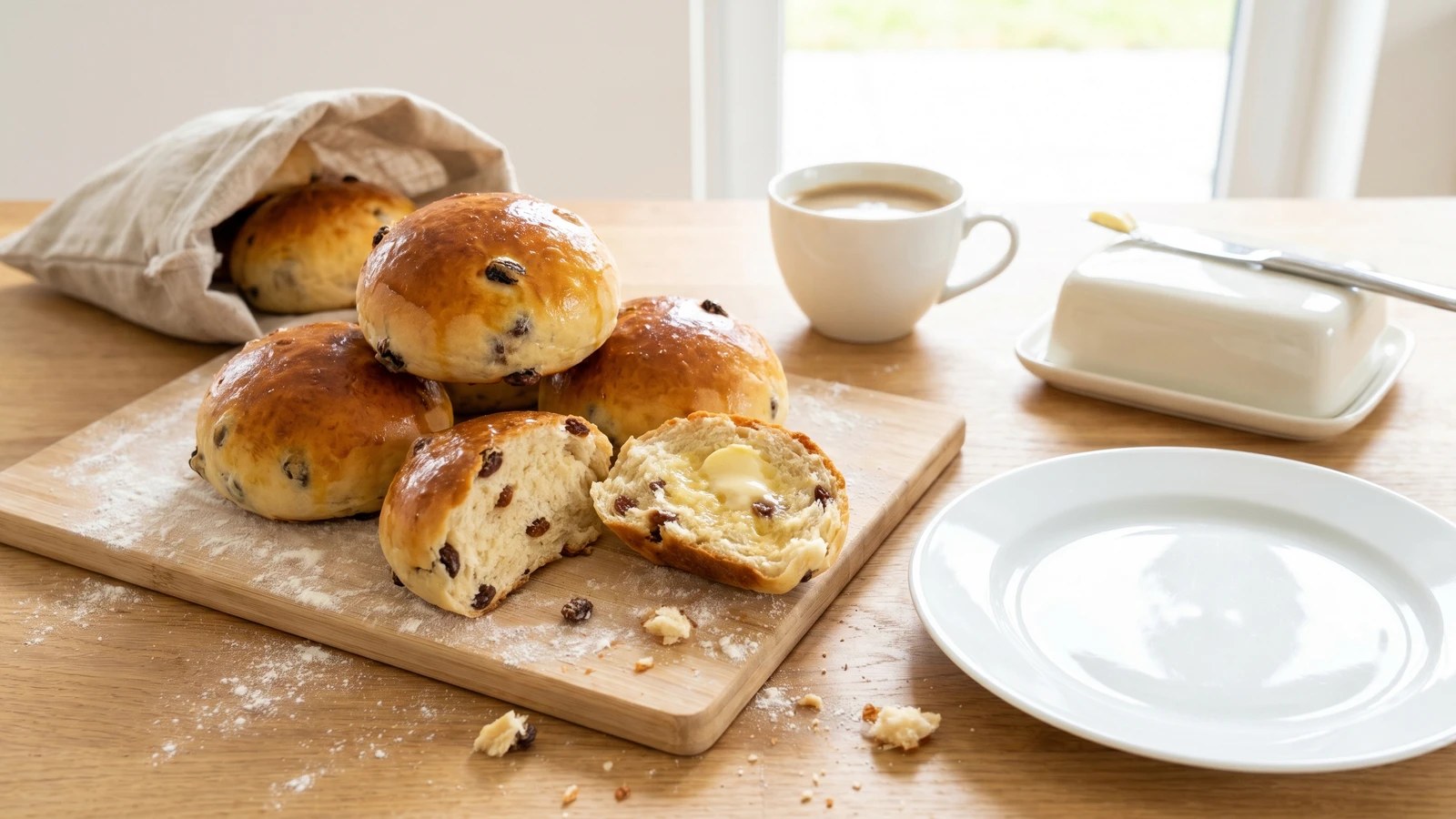
The German bakery raisin roll lives by one small piece of discipline: soak the fruit first, or it steals moisture from the crumb and scorches at the crust.
Rosinenbrötchen are bakery food for breakfast, school bags, and the Sunday coffee table. Not feast food exactly, but the kind of sweet roll that makes a plain morning feel looked after. In the Rhineland and Westphalia you see them as Rosinenbrötchen, in Swabia and Baden more often as Rosinenweckle or Rosinenwecken. Im Norden anders, im Süden anders, and here the argument is usually shape, name, and sweetness, not the soul of the dough.
I make them from a soft milk dough with butter, egg, and enough sugar to tell you it isn't a plain Brötchen. The raisins decide whether the roll works. Soak them first in warm water, tea, or apple juice, then drain them well, because dry raisins pull water out of the dough and turn into hard bitter spots at the surface. Plumped fruit bakes tender inside the crumb. That's the whole lesson.
Keep the dough soft. A stiff dough gives you neat little stones, and nobody needs that on Sunday. Knead until it stretches, let it rise until it looks alive, and add the raisins late so they stay whole instead of being torn into the dough. Das braucht seine Zeit, not a heroic amount, just enough for yeast to do its work.
Brush with egg and milk, bake until pale gold, and let the rolls cool before you split one with butter. Warm butter disappearing into a fresh Rosinenbrötchen is a proper German breakfast. Schön ist, was schmeckt.
Raisins reached German baking through long-distance Mediterranean trade well before they became everyday pantry goods; in the Middle Ages and early modern period they marked richer feast breads, Stollen, and sweet holiday loaves more than weekday rolls. The shift toward ordinary sweet yeast rolls belongs to the nineteenth century, when beet sugar became cheaper after Franz Carl Achard opened the first beet-sugar factory in Silesia in 1801 and commercial baker's yeast made enriched doughs more reliable. Regional names still show the split: Brötchen dominates much of the north and west, while Wecken and Weckle are southern and southwestern words for a small roll.
Quantity
120g
Quantity
150ml
for soaking
Quantity
500g
Quantity
7g instant / 21g fresh
Quantity
220ml
lukewarm
Quantity
70g
Quantity
1
at room temperature
Quantity
75g
softened
Quantity
8g
Quantity
1 teaspoon
finely grated
Quantity
1 egg yolk + 1 tablespoon milk
beaten together for glazing
Quantity
to serve
| Ingredient | Quantity |
|---|---|
| sultanas or raisins | 120g |
| warm water, black tea, or apple juicefor soaking | 150ml |
| plain flour or German Type 550 flour | 500g |
| instant yeast or fresh yeast | 7g instant / 21g fresh |
| whole milklukewarm | 220ml |
| sugar | 70g |
| large eggat room temperature | 1 |
| unsalted buttersoftened | 75g |
| fine salt | 8g |
| lemon zest (optional)finely grated | 1 teaspoon |
| egg yolk and milkbeaten together for glazing | 1 egg yolk + 1 tablespoon milk |
| soft butter (optional) | to serve |
Put the sultanas or raisins in a bowl and cover them with the warm water, tea, or apple juice for 20 minutes. Drain them well and pat them dry. Dry fruit pulls moisture out of the dough and burns where it touches the oven heat; plumped fruit stays tender and sweet inside the crumb.
Put the flour in a bowl with the yeast, sugar, salt, and lemon zest if using. Add the lukewarm milk and egg, then mix until no dry flour remains. Lukewarm means warm to the finger, not hot; too much heat weakens the yeast before it has earned its keep.
Knead the dough for 5 minutes, then work in the softened butter a little at a time and keep kneading until the dough turns smooth, elastic, and slightly tacky, about 8 to 10 minutes by hand or 6 to 8 minutes in a mixer. Butter coats flour and slows gluten if it goes in too early, so build the dough first and enrich it after.
Flatten the dough slightly, scatter over the drained raisins, and fold and knead just until they are evenly spread. Add them late because the fruit tears under a long knead, smears sugar into the dough, and leaves dark streaks instead of clean pockets of raisin.
Cover the bowl and let the dough rise at room temperature until doubled, about 60 to 75 minutes. Don't chase speed with a hot spot. Slow, steady yeast gives a finer crumb, while too much warmth pushes the butter out and leaves the dough greasy.
Turn the dough onto a lightly floured surface and divide it into 10 pieces, about 95g each. Shape each piece into a tight round by pulling the edges underneath, then roll it under your palm until the top is smooth. A taut skin holds the rise upward in the oven; a loose shape spreads flat and sulks.
Set the rolls on a lined baking sheet with space between them, cover loosely, and let them rise until puffy and soft to the touch, 35 to 45 minutes. Brush with the egg yolk and milk glaze just before baking. The glaze gives colour and a soft shine, and it goes on late so it doesn't dry into a skin.
Bake at 190C for 16 to 18 minutes, until the rolls are pale gold, glossy, and sound light when lifted. If exposed raisins darken too fast, tuck them in next time rather than blaming the oven. Cool on a rack for at least 20 minutes before splitting, because the crumb finishes setting as it cools and cuts clean instead of tearing.
1 roll (about 105g)
Culinary guides, cultural storytelling, and the editorial depth that makes cooking meaningful.
Discover Culinary ExplorerChef Klaus
The Baden flatbread that keeps its bread body: sour cream, onion, and Speck on a yeast dough baked hard and hot until the edges blister.

Chef Klaus
The farmhouse loaf that made sense of a weekly oven firing: rye for keeping, wheat for lift, sourdough for the crumb, and a dark crust that earns its crack.

Chef Klaus
The Bavarian pretzel lives by its lye bath: a pale dough goes in, a dark glossy Breze comes out, with thin arms, a proud belly, and salt that bites clean.

Chef Klaus
A Bavarian wheat-rye loaf for the Brotzeit board, mild from ripe sourdough, dark-crusted from a fierce first heat, and firm enough to carry cold cuts without sagging.