
Chef Thomas
A Proper Hot Toddy
A winter glass of whisky, honey, and lemon, stirred together in a warm mug and carried up to bed when the cough won't leave and the evening has asked you politely to stop.
A cooking platform built around craft, culture, and the stories behind what we eat.
Created by Chef Thomas
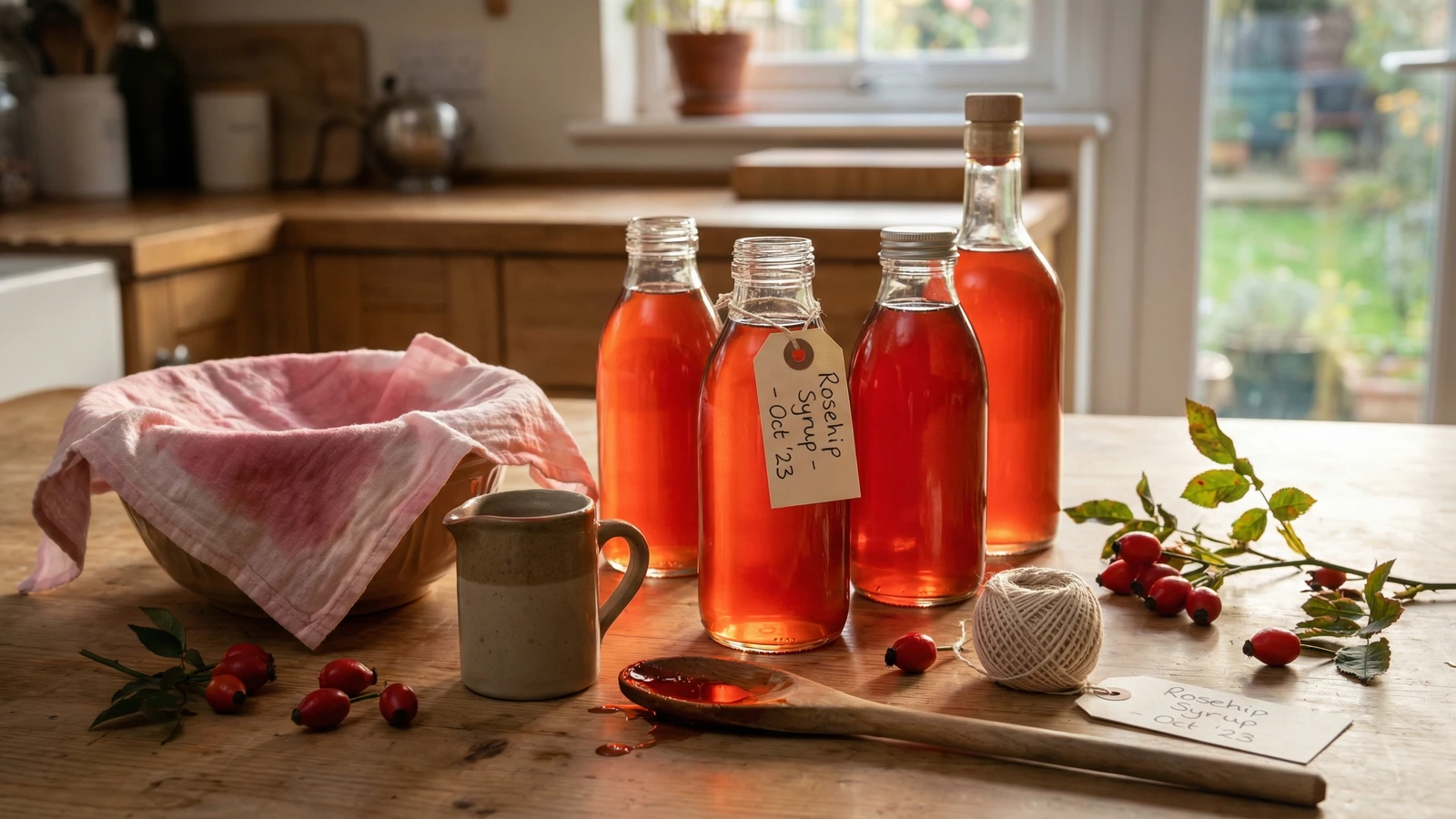
Hedgerow rosehips gathered after the first frost, simmered twice and strained patiently through muslin, bottled with sugar. A glowing coral syrup that tastes of autumn lanes and grandmothers.
There's a particular kind of October afternoon when the air has gone cold enough to see your breath, the hedgerows are hung with red, and the walk to gather a basket of rosehips feels like the only sensible thing to do. This is that recipe. It belongs to the first proper frost, not before. The cold softens the fruit and sweetens it, and the hips that felt stubborn in September give themselves up willingly once the weather has turned.
My grandmother made rosehip syrup every year, as did most grandmothers of her generation. During the war, when oranges disappeared, children were sent out with baskets to strip the hedges, and the syrup that came back was rationed out a spoonful at a time through the long dark months. Grandmother's vitamin C. She never stopped making it, even when shops were full of oranges again, because by then it wasn't about the vitamins. It was about the ritual. The walk. The kitchen smelling faintly of stewed apples and something older. The row of small bottles on the shelf that meant winter was provided for.
The method looks fussier than it is. Two simmers, two strainings, because inside every rosehip is a handful of fine hairs that will itch your throat raw if you let them through. Muslin catches them. Patience does the rest. You're not cooking so much as coaxing, letting the fruit give up its colour and its sharp, floral-fruity sweetness into the water, then reducing it down with sugar until it glows in the jar like something bottled sunlight.
A spoonful over porridge. A spoonful stirred into hot water with a slice of lemon when someone has a cold. A spoonful drizzled over vanilla ice cream or a rice pudding, or swirled into the top of a gin and tonic when you want a drink that tastes of the hedgerow. I wrote it down in the notebook years ago: rosehips, frost, October, worth it. That's still about the shape of it.
Quantity
1kg
gathered after the first frost, stalks and blackened ends removed
Quantity
2 litres
Quantity
500g
Quantity
a squeeze
| Ingredient | Quantity |
|---|---|
| ripe rosehipsgathered after the first frost, stalks and blackened ends removed | 1kg |
| water | 2 litres |
| granulated sugar | 500g |
| lemon juice (optional) | a squeeze |
Pick through the rosehips, pulling off any stalks and the little blackened tufts at the base. Discard anything mouldy or shrivelled. You want fruit that's deep red, soft to the touch, and gives slightly when you press a thumb against it. If you gathered them before the frost, bag them up and leave them in the freezer for a couple of days first. The cold breaks down the flesh and does the work the weather should have done.
Pulse the rosehips in a food processor until they're roughly chopped, or work them over in batches with a heavy knife on a board. You're not making a paste. You're breaking them open so the hot water can get inside. A rough, uneven chop is exactly right.
Bring 1.5 litres of the water to a rolling boil in a large pan. Tip in the chopped rosehips all at once, bring it back to the boil, then take it off the heat and let it stand for fifteen minutes. The kitchen will start to smell faintly of stewed apples and something older, something wilder. That's the rosehips giving themselves up.
Line a sieve with a double layer of muslin or a clean jelly bag and set it over a large bowl. Pour the rosehip mixture in and let it drip through on its own time. Don't press it, don't squeeze it. Just let gravity do the work. Twenty minutes or so, until the dripping slows to almost nothing. This first straining is important: it catches the fine hairs inside the hips that will itch your throat if you let them through.
Return the pulp left in the muslin to the pan. Add the remaining 500ml of water, bring to the boil again, take it off the heat and leave it to stand for another ten minutes. You're extracting everything the hips have left to give. Nothing wasted.
Strain the second batch through a fresh piece of muslin, or rinse the first one well and use it again. Let it drip through without pressing. Combine both lots of strained liquid in a clean pan. You should have somewhere around a litre and a half of clear, deep coral-coloured juice. If there's any cloudiness or sediment, run it through the muslin one more time.
Bring the rosehip liquid back to the boil and let it reduce by about a third. You want it slightly thicker, slightly more concentrated, the colour deepening as the water goes. Add the sugar and stir until completely dissolved. Let it boil for another five minutes, no more. Taste it. It should be sweet but still carry that soft, tart, floral-fruity note underneath. Add the lemon juice if you want to sharpen it up.
Have your bottles ready: sterilised in a low oven or run through a hot dishwasher cycle. Pour the hot syrup carefully into the bottles using a funnel, right up to the neck, and seal immediately. Label them with the date. Store in a cool, dark cupboard. Once a bottle is opened, keep it in the fridge and use it within a few weeks. Unopened, it will see you comfortably through the winter and into spring.
1 serving (about 20g)
Culinary guides, cultural storytelling, and the editorial depth that makes cooking meaningful.
Discover Culinary ExplorerChef Thomas
A winter glass of whisky, honey, and lemon, stirred together in a warm mug and carried up to bed when the cough won't leave and the evening has asked you politely to stop.

Chef Thomas
Hot spiced ale with roasted apples bobbing on the surface, honeyed and fragrant with cinnamon and orange peel, the oldest winter drink in the British kitchen and still the best.

Chef Thomas
A deep, inky cordial made from a glut of August blackcurrants, bottled for the months when summer feels like something you dreamed, and poured over ice when you need proof it happened.
Chef Thomas
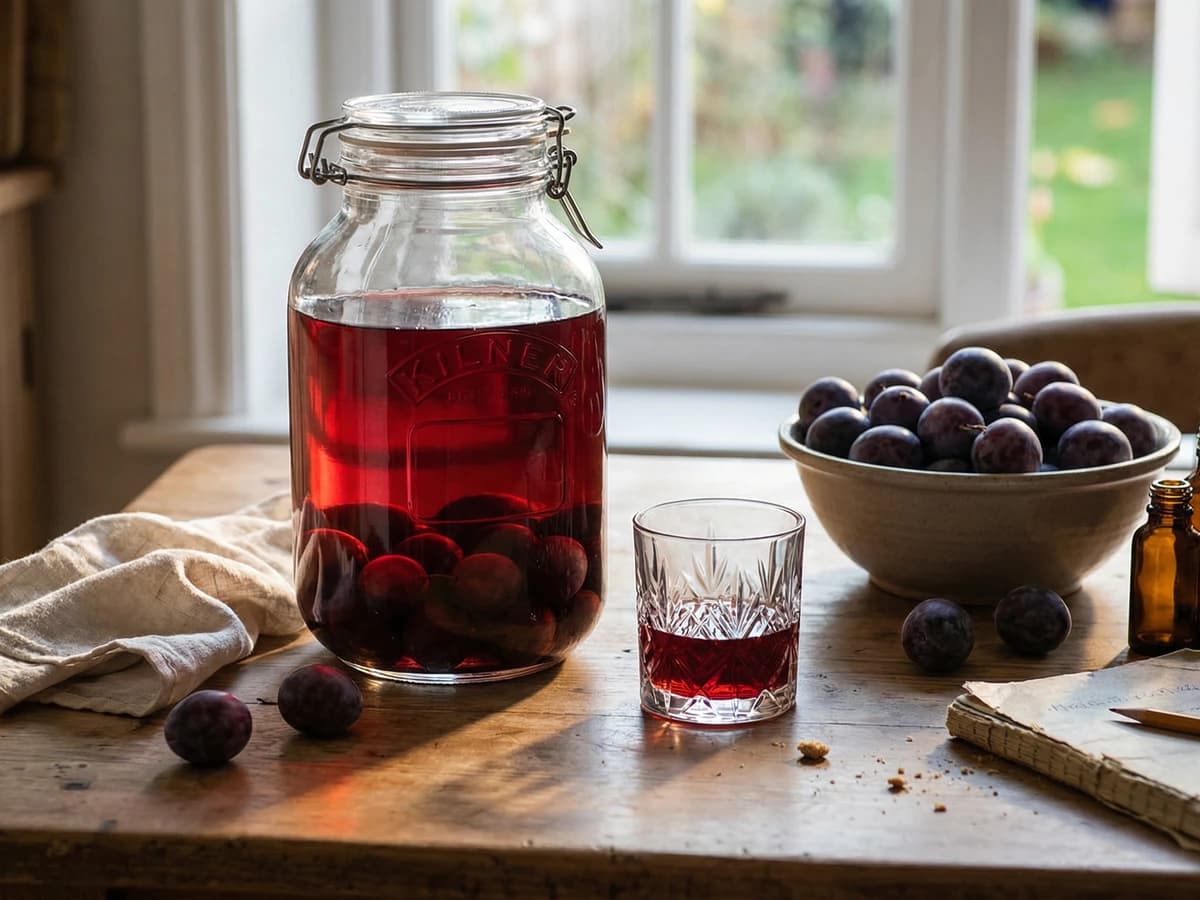
A slow autumn ritual that turns a glut of sharp purple plums into a bottle of ruby warmth, ready to pour on dark December evenings when the kitchen smells of woodsmoke and the year is winding down.