
Chef Lupita
Animalitos de Yema Comitecos
Comitán's pan de yema shaped into little pigs, birds, and rabbits, a Chiapas bakery bread rich with egg yolks, manteca de cerdo, and anís, baked golden on hoja de plátano.
A cooking platform built around craft, culture, and the stories behind what we eat.
Created by
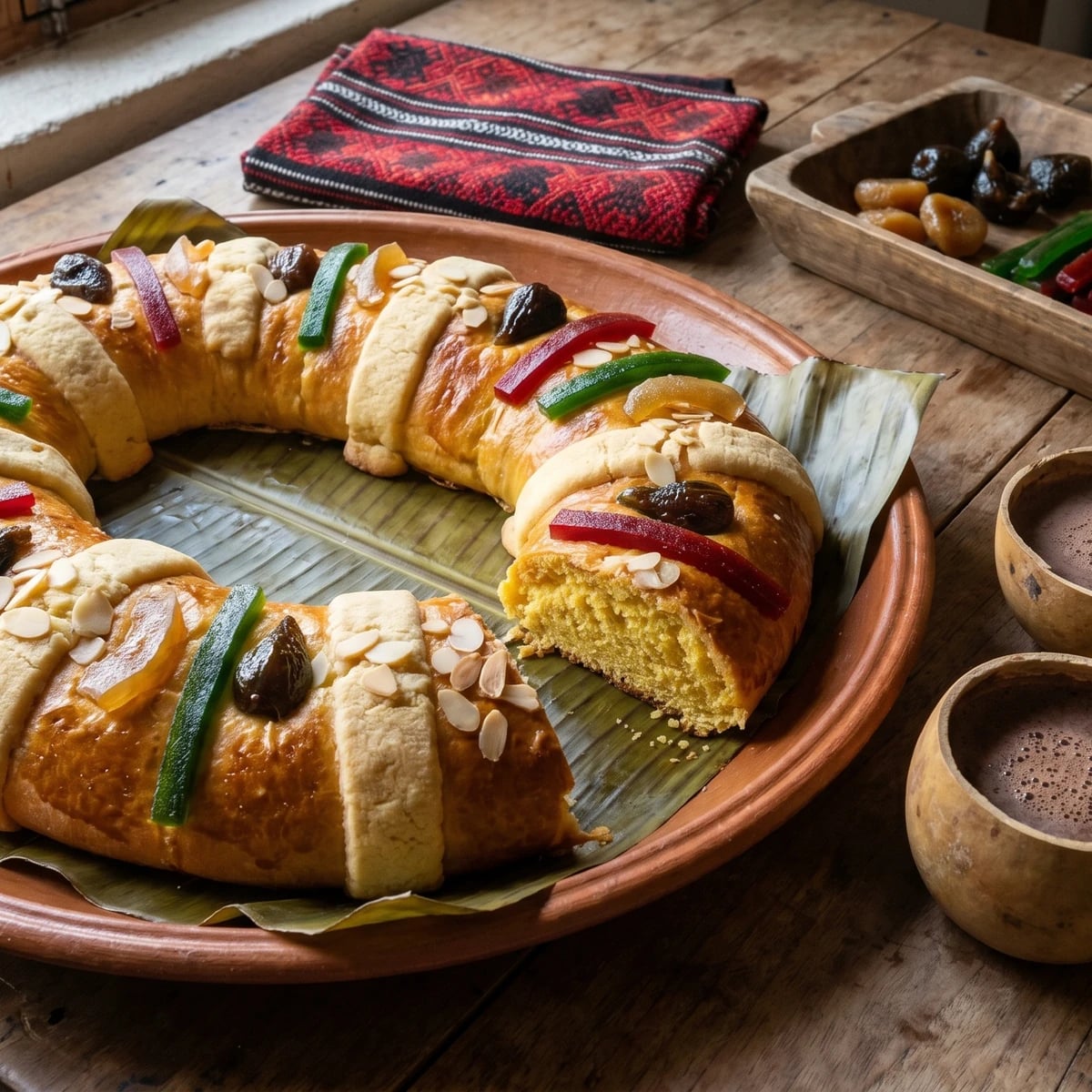
Chiapas' January 5 rosca from the highland panaderías, orange-scented and crowned with ate, figs, and legal acitrón, the bread that sends whoever finds the muñeco to host Candelaria.
Chiapas, especially the highland panaderías of San Cristóbal de Las Casas and Comitán, receives Rosca de Reyes on the cold night of January 5 with bread ovens working late and families already arguing over who will find the muñeco. The rosca did not begin in Chiapas. Say that clearly. But the way Chiapas puts it on the table belongs to Chiapas: citrus perfume, piloncillo warmth, candied fruit in heavy bands, and cups of atole de cacao or tascalate beside the bread.
There is no chile here. Good. The lazy idea that Mexican food always needs heat dies at the panadería. This is pan fino: flour, yeast, eggs, butter, orange zest, and agua de azahar kneaded until the dough turns elastic and patient. Butter is correct here, not manteca de cerdo. La manteca es el sabor when the dish asks for it. This one asks for butter. Cada estado, su propia cocina, and every recipe has its own logic.
The crown matters. Ate de guayaba or membrillo, higos cristalizados, sliced almonds, and acitrón if you can source it legally. If not, use crystallized chilacayote. The old biznaga cactus has been abused enough for someone else's decoration. I learned that correction from market women in Chiapas who could tell you which sweets were worth buying and which ones carried a price the land should not pay.
The panaderas I watched in Los Altos shaped the wreath by hand, pulling the center wider than a beginner thinks is necessary because enriched dough swells as it rests. That is the kind of detail that separates a proper rosca from a decorated loaf. No me vengas con atajos. Let it rise, crown it well, hide the muñeco after baking, and let Candelaria choose its host.
Rosca de Reyes came to New Spain through Spanish Catholic Epiphany breads during the colonial period, tied to the January 6 celebration of the visit of the Magi. In Mexico, the hidden bean or token evolved into the Niño Dios figurine, and the person who finds it became responsible for offering tamales and atole on Día de la Candelaria, February 2. Chiapas' version sits inside the wheat-bread tradition of highland cities such as San Cristóbal de Las Casas and Comitán, where colonial baking, Guatemalan border trade, local cane sugar, and cacao-drinking customs shaped the holiday table.
Quantity
4 1/2 cups
plus more for dusting
Quantity
2 1/4 teaspoons
Quantity
3/4 cup
warmed to about 100F
Quantity
1/2 cup
Quantity
2 tablespoons
finely grated
Quantity
1 1/2 teaspoons
Quantity
3
room temperature
Quantity
2
room temperature
Quantity
10 tablespoons
softened and cut into pieces
Quantity
1 tablespoon
finely grated
Quantity
1 tablespoon
Quantity
1 teaspoon
Quantity
1 large egg beaten with 1 tablespoon milk
Quantity
1/2 cup
Quantity
1/2 cup
Quantity
4 tablespoons
softened
Quantity
1/2 cup
cut into thick strips
Quantity
8
halved
Quantity
1/3 cup
cut into strips
Quantity
1/3 cup
Quantity
2 tablespoons
Quantity
2 to 3
washed and dried, inserted after baking
Quantity
for serving
| Ingredient | Quantity |
|---|---|
| bread flourplus more for dusting | 4 1/2 cups |
| instant yeast | 2 1/4 teaspoons |
| whole milkwarmed to about 100F | 3/4 cup |
| granulated sugar | 1/2 cup |
| piloncillofinely grated | 2 tablespoons |
| fine sea salt | 1 1/2 teaspoons |
| large eggsroom temperature | 3 |
| large egg yolksroom temperature | 2 |
| unsalted buttersoftened and cut into pieces | 10 tablespoons |
| orange zestfinely grated | 1 tablespoon |
| agua de azahar (orange blossom water) | 1 tablespoon |
| Mexican vanilla extract | 1 teaspoon |
| egg wash | 1 large egg beaten with 1 tablespoon milk |
| all-purpose flour for sugar paste | 1/2 cup |
| powdered sugar for sugar paste | 1/2 cup |
| unsalted butter for sugar pastesoftened | 4 tablespoons |
| ate de guayaba or ate de membrillocut into thick strips | 1/2 cup |
| candied figshalved | 8 |
| legally sourced acitrón de biznaga or crystallized chilacayotecut into strips | 1/3 cup |
| sliced almonds | 1/3 cup |
| granulated sugar for sprinkling | 2 tablespoons |
| food-safe plastic muñecoswashed and dried, inserted after baking | 2 to 3 |
| atole de cacao or tascalate (optional) | for serving |
In the bowl of a stand mixer or a large mixing bowl, combine the warm milk, yeast, one tablespoon of the granulated sugar, and 1/2 cup of the bread flour. Stir until thick and smooth. Let it stand for 15 minutes, until it looks foamy and alive. If nothing happens, your yeast is dead. Throw it out and start again. Bread does not forgive dead yeast.
Add the remaining bread flour, the rest of the granulated sugar, the grated piloncillo, salt, eggs, egg yolks, orange zest, agua de azahar, and vanilla. Mix on low speed until a rough dough forms. It will look shaggy at first. That is normal. The piloncillo gives a quiet cane-sugar warmth without turning the rosca into pan de piloncillo. Balance matters.
Knead the dough for 4 minutes, then add the softened butter one piece at a time. Wait for each piece to disappear before adding the next. Knead 10 to 12 minutes more, until the dough is glossy, elastic, and still a little tacky. Do not bury it in flour because you are nervous. Enriched dough needs moisture to bake tender.
Shape the dough into a ball and place it in a lightly buttered bowl. Cover with a clean cotton servilleta or plastic wrap. Let it rise in a warm place for 1 1/2 to 2 hours, until doubled. In San Cristóbal's cold January mornings, this takes longer. The dough decides the clock, not you.
Turn the dough onto a lightly floured table and press out the air with your palms. Roll it into a thick rope about 30 inches long. Join the ends firmly and place the oval on a parchment-lined baking sheet. Open the center wider than you think, at least 6 inches across. The dough grows inward as it rises. A timid hole becomes a fat bun, not a rosca.
Cover the shaped wreath loosely and let it rise 45 to 60 minutes, until puffy and light when touched. Heat the oven to 350F while it rises. Do not hide the muñecos yet. Plastic belongs in the finished bread, inserted from underneath after baking. Common sense is also a kitchen tool.
Mix the all-purpose flour, powdered sugar, and softened butter with your fingers until a soft paste forms. Divide it into 6 small pieces and flatten each into a strip. These pale bands are not decoration for vanity. They give the bite of sandy sugar against the soft bread, the same contrast you know from good pan dulce.
Brush the risen dough with egg wash. Lay the sugar-paste strips across the wreath at intervals. Press the ate strips, candied figs, and legal acitrón or crystallized chilacayote between the bands. Scatter sliced almonds and the final 2 tablespoons of sugar over the top. Work gently so you do not flatten the rise you waited for.
Bake for 25 to 30 minutes, rotating the pan once, until the crust is deep golden and the center of the bread registers 190F. The egg wash should shine, the sugar-paste bands should look pale and set, and the fruit should sit into the dough without burning. If the fruit darkens too fast, tent loosely with foil.
Cool the rosca on the pan for 15 minutes, then move it to a rack and let it cool until warm, not hot. Turn the bread slightly on its side and push the washed muñecos into the underside in different places. Do not announce where they are. The person who finds one owes tamales for Día de la Candelaria on February 2. Así se hace y punto.
Serve the whole wreath on the table the night of January 5 or the morning of January 6, with atole de cacao or tascalate in jícaras if you are serving it the Chiapas way. Slice generously. This is a shared bread, not an individual pastry. Saber cocinar es saber vivir.
1 serving (about 125g)
Culinary guides, cultural storytelling, and the editorial depth that makes cooking meaningful.
Discover Culinary Explorer
Chef Lupita
Comitán's pan de yema shaped into little pigs, birds, and rabbits, a Chiapas bakery bread rich with egg yolks, manteca de cerdo, and anís, baked golden on hoja de plátano.

Chef Lupita
Comitán's cazueleja is Chiapas pan dulce salado, half bread and half quesadilla, baked in clay over banana leaf with queso fresco softening through the tender wheat crumb.

Chef Lupita
Chiapa de Corzo's painted bread of the dead is a soft enriched pan dulce, brushed with lard, egg, and bright altar colors before it is offered to the departed.

Chef Lupita
Chiapas highland tortillas pressed from raza Comiteco native corn, nixtamalized with cal, ground while still fragrant, and cooked until they puff with the quiet authority of real maiz.