
Chef Thomas
A Proper Roast Chicken
A whole bird rubbed with butter, stuffed with lemon and thyme, roasted until the skin crackles and the kitchen smells like the kind of evening you want to sit down and stay in.
A cooking platform built around craft, culture, and the stories behind what we eat.
Created by Chef Thomas
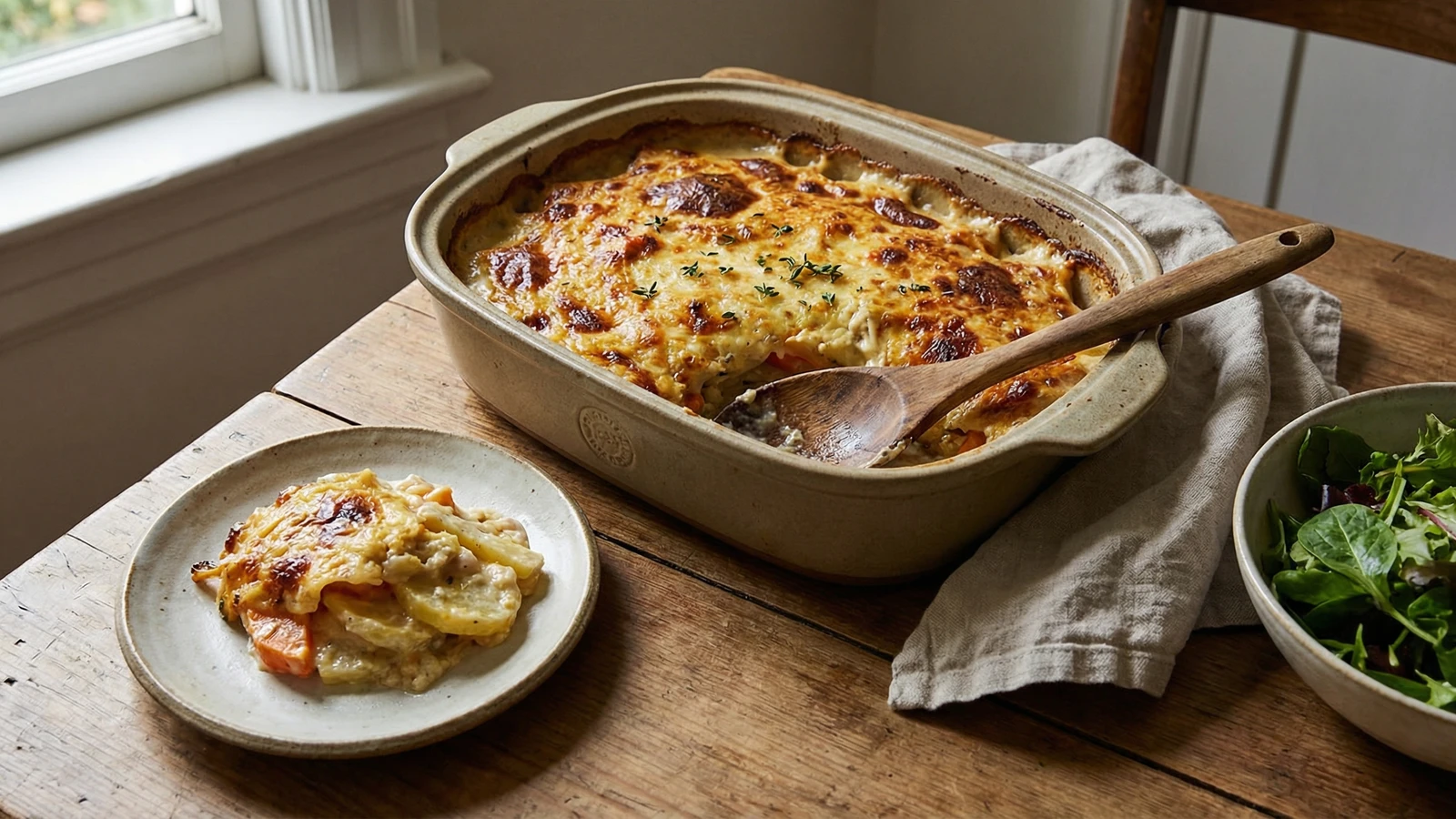
Parsnip, celeriac, and potato layered in garlicky cream and baked under a crust of golden cheese. A winter gratin for the evenings when the cold gets in and you want the oven on.
January. The garden is bare and the light goes by four. The market stalls are down to roots and brassicas, everything earthy and solid, packed in wooden crates with soil still clinging. This is when a gratin makes the most sense.
Celeriac, parsnips, potatoes. None of them glamorous, none of them trying to be. Peeled and sliced thin, layered in a dish with cream that's been warmed through with garlic and thyme and nutmeg, then baked slowly until everything goes soft and the top turns the colour of a good afternoon. The cream thickens as it cooks, binding the layers together so that when you cut into it, the whole thing holds, just, before collapsing slightly on the plate. There are few better feelings than putting a warm plate of this in front of someone on a dark evening.
I make this when I want something that feels generous without being complicated. The roots do the work. The cream holds them together. The cheese on top is just enough to give you that golden crust that makes everyone lean in when the dish comes out of the oven. Right food, right evening. A recipe is a conversation, not a contract: if you want to swap the celeriac for sweet potato or add a layer of leeks softened in butter, do. Your kitchen, your rules. I wrote it down in the notebook last February: roots, cream, dark evening, seconds.
Quantity
1 medium
peeled and thinly sliced
Quantity
2 large
peeled and thinly sliced lengthways
Quantity
3 medium
peeled and thinly sliced
Quantity
400ml
Quantity
2 cloves
crushed to a paste
Quantity
a few sprigs
leaves stripped
Quantity
80g
grated
Quantity
30g, plus extra for the dish
Quantity
for grating
Quantity
to taste
Quantity
to taste
| Ingredient | Quantity |
|---|---|
| celeriacpeeled and thinly sliced | 1 medium |
| parsnipspeeled and thinly sliced lengthways | 2 large |
| waxy potatoespeeled and thinly sliced | 3 medium |
| double cream | 400ml |
| garliccrushed to a paste | 2 cloves |
| thymeleaves stripped | a few sprigs |
| Gruyère or mature Cheddargrated | 80g |
| unsalted butter | 30g, plus extra for the dish |
| whole nutmeg | for grating |
| fine sea salt | to taste |
| black pepper | to taste |
Set the oven to 180C/160C fan. Butter a baking dish generously, the kind that goes straight to the table. Pour the cream into a small saucepan and add the crushed garlic, thyme leaves, a good grating of nutmeg, and a generous pinch of salt. Warm it gently until it just begins to tremble at the edges. Don't let it boil. You want the flavours to open up and the kitchen to start smelling like the sort of evening where you're not going anywhere. Take it off the heat and let it sit while you deal with the vegetables.
Peel the celeriac, parsnips, and potatoes. Slice them all thinly, about the thickness of a coin. A mandoline makes short work of this if you have one, but a sharp knife and some patience will do. The celeriac will oxidise and go brown if you leave it sitting around, so drop the slices into a bowl of cold water as you go. Drain and pat dry before you start layering.
Start with a layer of potato on the bottom of the buttered dish, overlapping the slices slightly like fallen tiles. Season with salt and pepper. Follow with a layer of celeriac, then parsnip, seasoning as you go. Pour a little of the infused cream over each layer, enough to pool between the slices. Repeat until you've used everything, finishing with a layer of potato on top. Pour over the remaining cream. It should come about three-quarters of the way up the dish. Press the top layer down firmly with your palm so everything settles.
Dot the surface with small pieces of butter and cover the dish tightly with foil. Bake for forty-five minutes. The cream should be bubbling gently at the edges and a knife should slide into the centre without any resistance. If the roots still feel firm, give it another ten minutes. They need to be completely soft. This isn't a dish that forgives undercooking.
Remove the foil. Scatter the grated cheese over the top in an even layer. Return to the oven, uncovered, for another twenty to twenty-five minutes, until the top has gone deep gold and the cream is thick and bubbling up through the cheese at the edges. The smell at this point will tell you everything you need to know. Let it rest for ten minutes before you bring it to the table. It needs that time to settle, and you need it to stop being too hot to eat. Serve it straight from the dish.
1 serving (about 400g)
Culinary guides, cultural storytelling, and the editorial depth that makes cooking meaningful.
Discover Culinary ExplorerChef Thomas
A whole bird rubbed with butter, stuffed with lemon and thyme, roasted until the skin crackles and the kitchen smells like the kind of evening you want to sit down and stay in.

Chef Thomas
Eggs bedded into leek-flecked mash under a blanket of sharp cheese sauce, baked until golden and bubbling. A Welsh supper dish that proves the simplest things are usually the best.

Chef Thomas
A cold evening carbonara made with good smoked back bacon, eggs, Parmesan, and more black pepper than seems reasonable, tossed together in the time it takes to boil the pasta.

Chef Thomas
Thick bacon chops, bronzed in butter and slicked with a mustard and honey glaze that catches and caramelises under a hot grill. Twenty minutes, two plates, a very good Tuesday.