Chef Joost
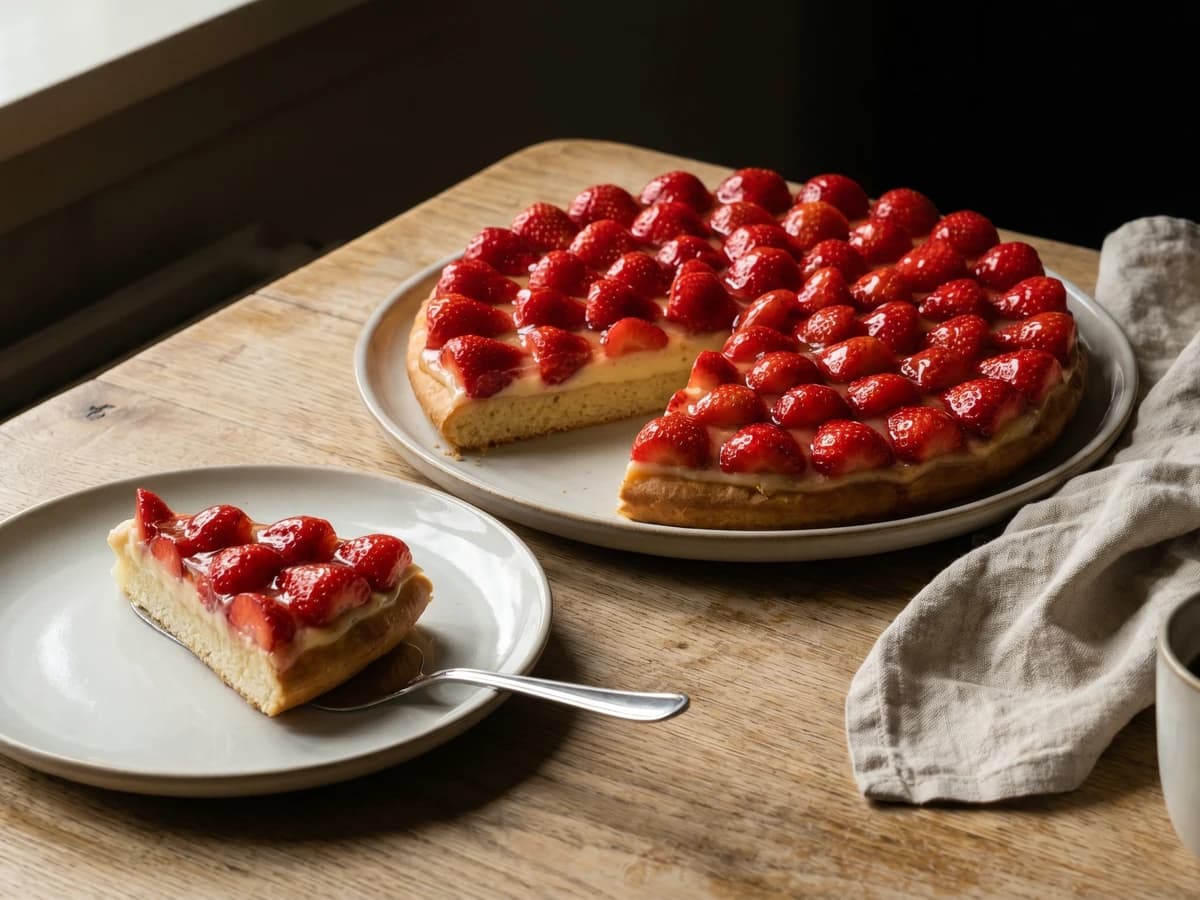
Aardbeienvlaai (Limburg Strawberry Vlaai)
The summer vlaai that politely breaks Limburg's baked-fruit rule: soft gistdeeg, cool pastry cream, and strawberries left fresh because June knows better than the oven.
A cooking platform built around craft, culture, and the stories behind what we eat.
Created by
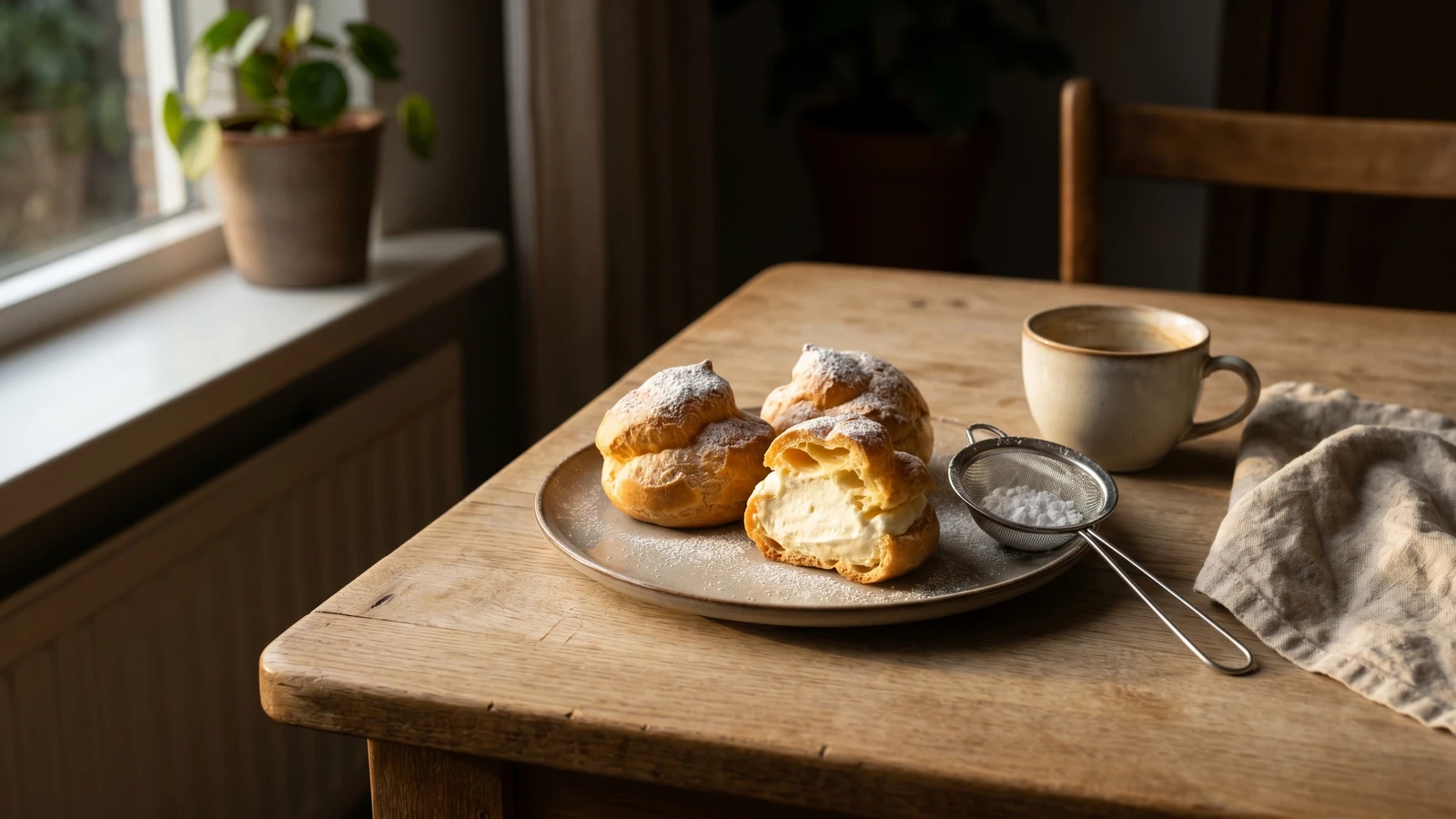
The Dutch cream puff is a birthday lesson in restraint: plain choux baked hollow, split wide, and filled with whipped cream so the table gets sweetness, air, and powdered sugar on every sleeve.
At a Dutch birthday, the first geography a child learns is the circle. Chairs along the wall, coffee moving hand to hand, aunties inspecting the bakery box with the seriousness other nations reserve for elections. A roomsoes has no proper month; its season is the birthday. In my grandmother's second notebook, roomsoezen were marked for feast days when there wasn't time for a cake but there was, for obvious reasons, time for cream.
The name already tells you, without making a fuss. Room is cream; soes is the Dutch child of French choux, cabbages, because a baked puff wrinkles and rounds itself like a small cabbage. The journey is not exotic, only telling: French patisserie walked into Dutch bakkerijen, bakeries, sat down beside filter coffee, and lost every ounce of grandeur. That is how a foreign technique becomes a Dutch birthday.
But let me tell you a secret: the hard part of a roomsoes is leaving it alone. Soezendeeg, choux dough, rises because the wet paste turns its own water into lift; open the door too early and you flatten the little room you meant to fill. Cook the flour properly in the pan, add the eggs only until the dough hangs in a soft V, bake until dry and firm, then split and fill. Hou het altijd simpel. A roomsoes asks for no fruit, no chocolate, no architectural ambition. Cream, sugar, shell, table.
The Dutch soes is borrowed from French choux, plural of chou, cabbage, the name attached to pâte à choux because the baked puffs resemble small cabbages. By the time Antonin Carême published Le Pâtissier royal parisien in 1815, choux pastry was central to French patisserie; nineteenth-century Dutch bakkerijen, bakeries, made the technique domestic in roomsoezen filled with slagroom and dusted with poedersuiker. The useful thing to tell at the table is that this is not province-bound peasant fare but a European pastry technique that became Dutch once it entered the birthday coffee circle.
Quantity
125ml
Quantity
125ml
Quantity
100g
cubed
Quantity
1 teaspoon
Quantity
1/4 teaspoon
Quantity
150g
sifted
Quantity
4
at room temperature and beaten
Quantity
500ml
Quantity
40g
plus more for dusting
Quantity
1 teaspoon or 8g
| Ingredient | Quantity |
|---|---|
| whole milk | 125ml |
| water | 125ml |
| unsalted buttercubed | 100g |
| granulated sugar | 1 teaspoon |
| fine salt | 1/4 teaspoon |
| plain flour (all-purpose flour)sifted | 150g |
| large eggsat room temperature and beaten | 4 |
| cold heavy whipping cream or Dutch slagroom | 500ml |
| poedersuiker (powdered sugar)plus more for dusting | 40g |
| vanilla extract or vanillesuiker (vanilla sugar) | 1 teaspoon or 8g |
Heat the oven to 200C, or 180C fan. Line a baking tray with parchment. If your piping hand is nervous, draw twelve 5cm circles on the paper and turn it over; the pencil stays away from the pastry and the home cook keeps dignity intact.
Put the milk, water, butter, sugar, and salt in a heavy saucepan and bring it to a full boil. Pull the pan off the heat, add the flour all at once, and beat hard with a wooden spoon until no dry flour remains. Return the pan to medium heat and keep stirring for 2 to 3 minutes, until the dough gathers into a ball and a thin film forms on the bottom. That film is not a mistake; it is the dough drying just enough to become hollow later.
Tip the hot dough into a mixing bowl and let it cool for 5 minutes, so the eggs don't scramble. Beat in the eggs a little at a time, waiting until each addition disappears before adding more. Stop when the dough is glossy and falls from the spoon in a soft V; you may not need the final spoonful of egg. Soezendeeg, choux dough, is not batter. It should hold ridges and still look willing to move.
Spoon the dough into a piping bag fitted with a large round or star nozzle. Pipe 12 mounds, each about 5 to 6cm wide, leaving space between them. Smooth any sharp points with a wet fingertip, because those little peaks brown first and then complain about it.
Bake for 20 minutes without opening the door. Lower the heat to 180C, or 160C fan, and bake 10 to 15 minutes more, until puffed, deeply golden, and firm when lifted. Now open the oven, pierce each shell near its base with a skewer or small knife, and set them back in the switched-off oven with the door ajar for 10 minutes. The little cut lets moisture leave; a closed shell sulks into softness.
Move the shells to a rack and let them cool completely before filling. Split them with a serrated knife, keeping lids paired with bottoms if that sort of order pleases you. If the inside has a damp web of dough, pull out only the wet bit; the hollow is the point.
Whip the cold cream with 40g poedersuiker and the vanilla until it stands in soft, generous peaks. Stop before it turns grainy. Butter is a fine Dutch ingredient, but not today.
Pipe or spoon the cream into the cooled bottoms, set the lids on top, and dust with more poedersuiker. Serve within a few hours, ideally with coffee in the verjaardagskring, birthday circle. The pastry should crack gently under the teeth, then give way to cream. That is all it promised, and it keeps the promise.
1 serving (about 85g)
Culinary guides, cultural storytelling, and the editorial depth that makes cooking meaningful.
Discover Culinary ExplorerChef Joost
The summer vlaai that politely breaks Limburg's baked-fruit rule: soft gistdeeg, cool pastry cream, and strawberries left fresh because June knows better than the oven.

Chef Joost
A Limburg vlaai is not a pie trying to be grand. It is a thin yeast-dough round, fruit-bright and generous, made for birthdays, coffee, and second slices.

Chef Joost
The December bakery counter made small: cold leafed pastry wrapped around lemon-scented amandelspijs, brushed gold, and scattered with almonds so one person gets the whole holiday in both hands.
Chef Joost
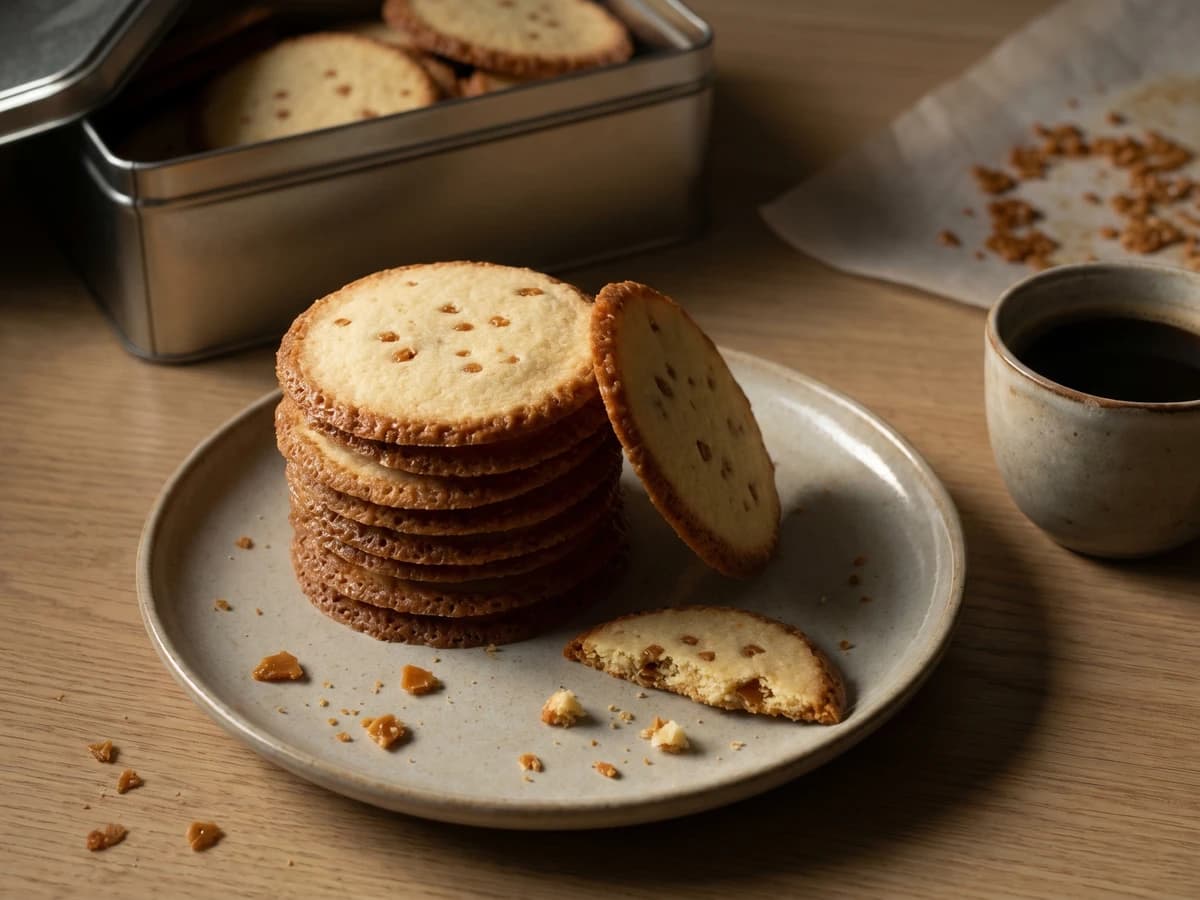
A thin Amsterdam cookie carrying a cog ship in its name: caramelized butter dough, almond nougatine, and a 1934 contest that turned municipal pride into something for coffee.