Chef Joost
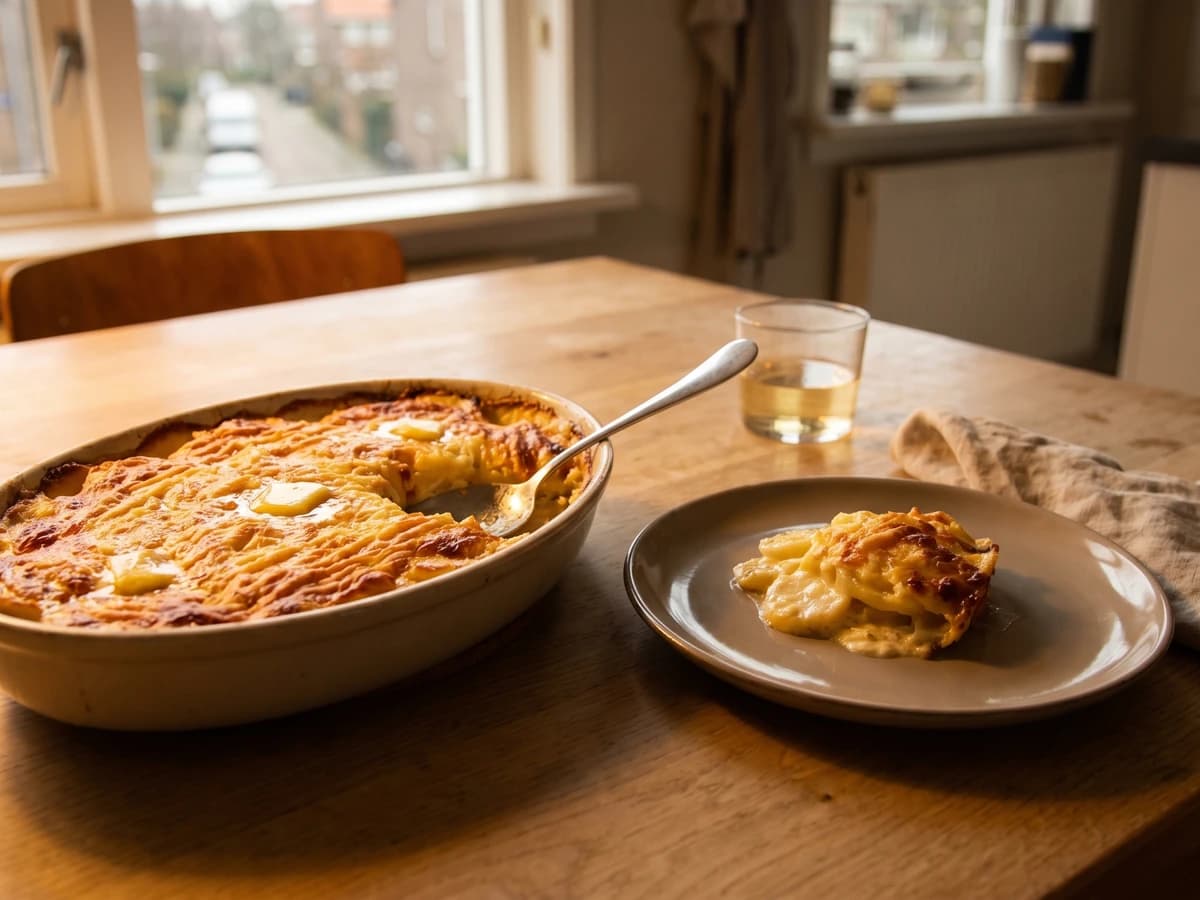
Aardappelgratin
A French name, a Dutch potato, and a Sunday table: aardappelgratin is what happens when a frugal kitchen borrows richness and behaves as if it had always belonged.
A cooking platform built around craft, culture, and the stories behind what we eat.
Created by
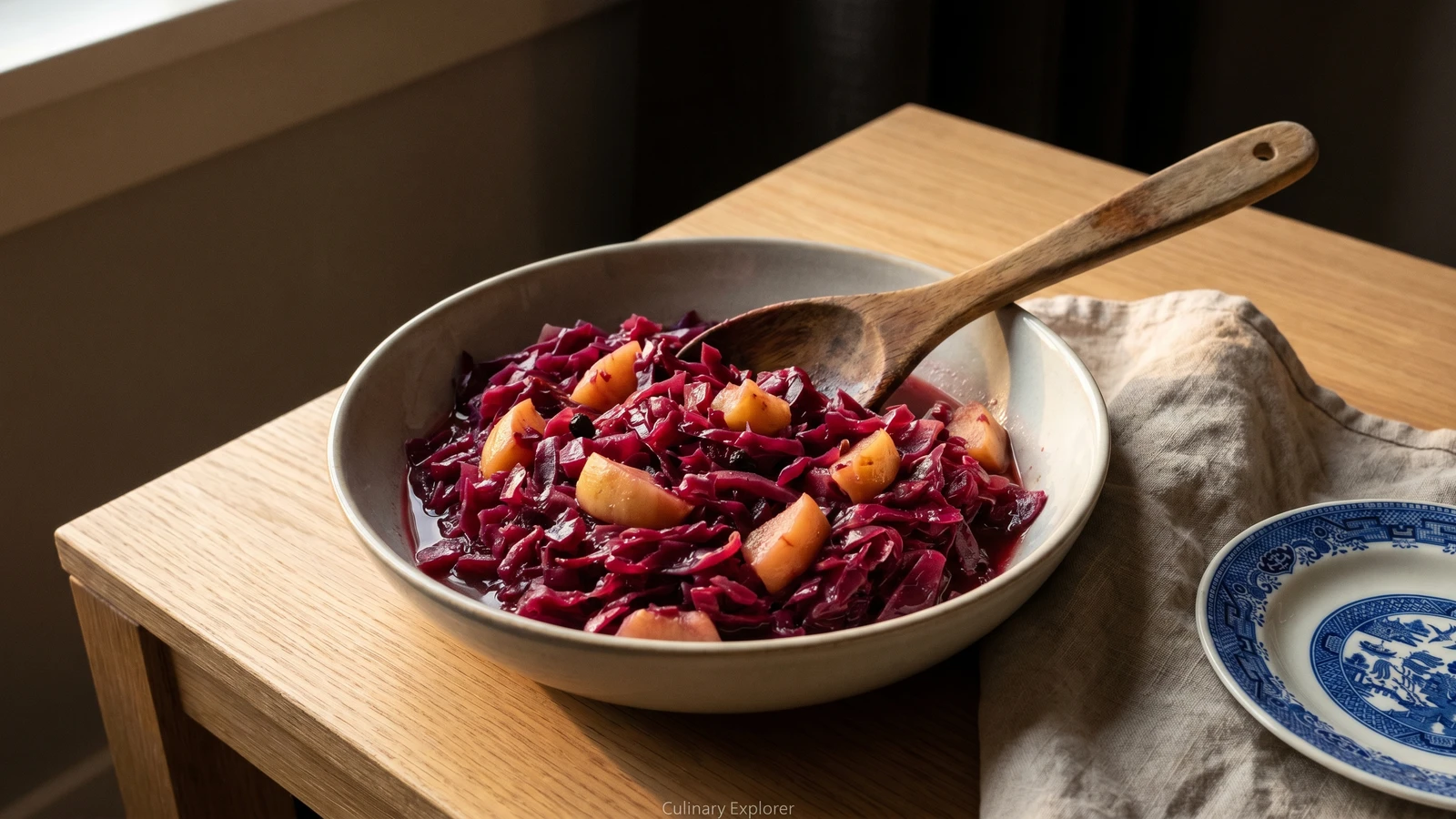
Red cabbage, little apples, vinegar, and clove: the Dutch winter side dish that sits beside the roast quietly, then steals the memory of the meal.
In my grandmother's second notebook, rodekool met appeltjes had no decoration around it. No story written in the margin, no proud title, only the quantities, a stain of vinegar, and the instruction to make it the day before. That tells you almost everything. Some dishes arrive wearing festival clothes. This one arrives in an apron, reliable, sharp-sweet, and better after a night in the cold pantry.
The name already tells you its whole public life: rodekool, red cabbage, with appeltjes, little apples. No hidden Latin staircase today, no Arabic manuscript waiting under the plate. But let me tell you a secret: plain names are where Dutch cookery often hides its nerve. A red cabbage is frugal, yes, but then we darken it with clove and cinnamon, sharpen it with vinegar, soften it with apple, and suddenly the side dish beside the Christmas roast is carrying a small cargo of the world.
The method is old northern wisdom. Cabbage needs time, acid, and a covered pot. The vinegar keeps the colour bright and the apple melts just enough to sweeten the sharp edge without turning the pan into jam. Hou het altijd simpel, always keep it simple: slice the cabbage fine, cook it slowly, and stop when it is tender but still has a little dignity under the tooth. Make it a day ahead if you can. Rodekool is one of those honest dishes that improves when left alone, which is a mercy in any feast-day kitchen.
Red cabbage has long belonged to the Dutch winter larder because it stores well, feeds many, and keeps its colour when cooked with acid such as vinegar or sour apple. The sweet-sour style appears across northern European cookery, but the Dutch version is marked by its use of tart apples and warm spices like clove and cinnamon, everyday heirs of the seventeenth-century spice trade. By the nineteenth and twentieth centuries it was firmly established beside hachee, pork, game, and Christmas roasts, especially as a dish made ahead because the flavour deepens overnight.
Quantity
1 medium, about 900g
cored and finely sliced
Quantity
2
peeled, cored, and diced
Quantity
1 medium
finely sliced
Quantity
30g
Quantity
2 tablespoons
Quantity
2 tablespoons
Quantity
150ml
Quantity
1
Quantity
4
Quantity
1/2 teaspoon
Quantity
1/2 teaspoon, plus more to taste
Quantity
to taste
Quantity
1 tablespoon
| Ingredient | Quantity |
|---|---|
| red cabbagecored and finely sliced | 1 medium, about 900g |
| tart applespeeled, cored, and diced | 2 |
| onionfinely sliced | 1 medium |
| butter | 30g |
| apple cider vinegar | 2 tablespoons |
| brown sugar or Dutch basterdsuiker | 2 tablespoons |
| water | 150ml |
| bay leaf | 1 |
| whole cloves | 4 |
| ground cinnamon | 1/2 teaspoon |
| fine salt | 1/2 teaspoon, plus more to taste |
| freshly ground black pepper | to taste |
| redcurrant jelly (optional) | 1 tablespoon |
Quarter the cabbage, cut away the hard white core, and slice the leaves as finely as you comfortably can. Thin cabbage cooks evenly and gives you that glossy, spoonable texture without becoming a dull purple heap. Peel, core, and dice the apples, then slice the onion.
Melt the butter in a heavy pan over medium heat and cook the onion for five minutes until it softens but does not brown. Browning is not the point here; you want sweetness and roundness, not fried edges shouting over the cabbage.
Add the cabbage, apples, vinegar, brown sugar, water, bay leaf, cloves, cinnamon, salt, and a few grinds of pepper. Stir well, then cover the pan. The vinegar goes in early for a reason: it helps the cabbage keep its deep red colour, so the dish stays handsome instead of sliding into grey-purple melancholy.
Bring the pot to a gentle simmer, then turn the heat low and cook, covered, for about 50 to 60 minutes. Stir every 15 minutes and check that there is still a little liquid at the bottom. The cabbage should slump and turn glossy, the apple should soften into the juices, and the kitchen should smell faintly of Christmas without anyone having announced it.
Remove the bay leaf and all four cloves. Taste the cabbage and adjust with a pinch of salt, a splash more vinegar, or a little redcurrant jelly if your apples were more stern than generous. Let it rest at least 10 minutes before serving, or cool it completely and refrigerate overnight. The second day is not leftovers. It is the dish finishing its sentence.
1 serving (about 190g)
Culinary guides, cultural storytelling, and the editorial depth that makes cooking meaningful.
Discover Culinary ExplorerChef Joost
A French name, a Dutch potato, and a Sunday table: aardappelgratin is what happens when a frugal kitchen borrows richness and behaves as if it had always belonged.
Chef Joost
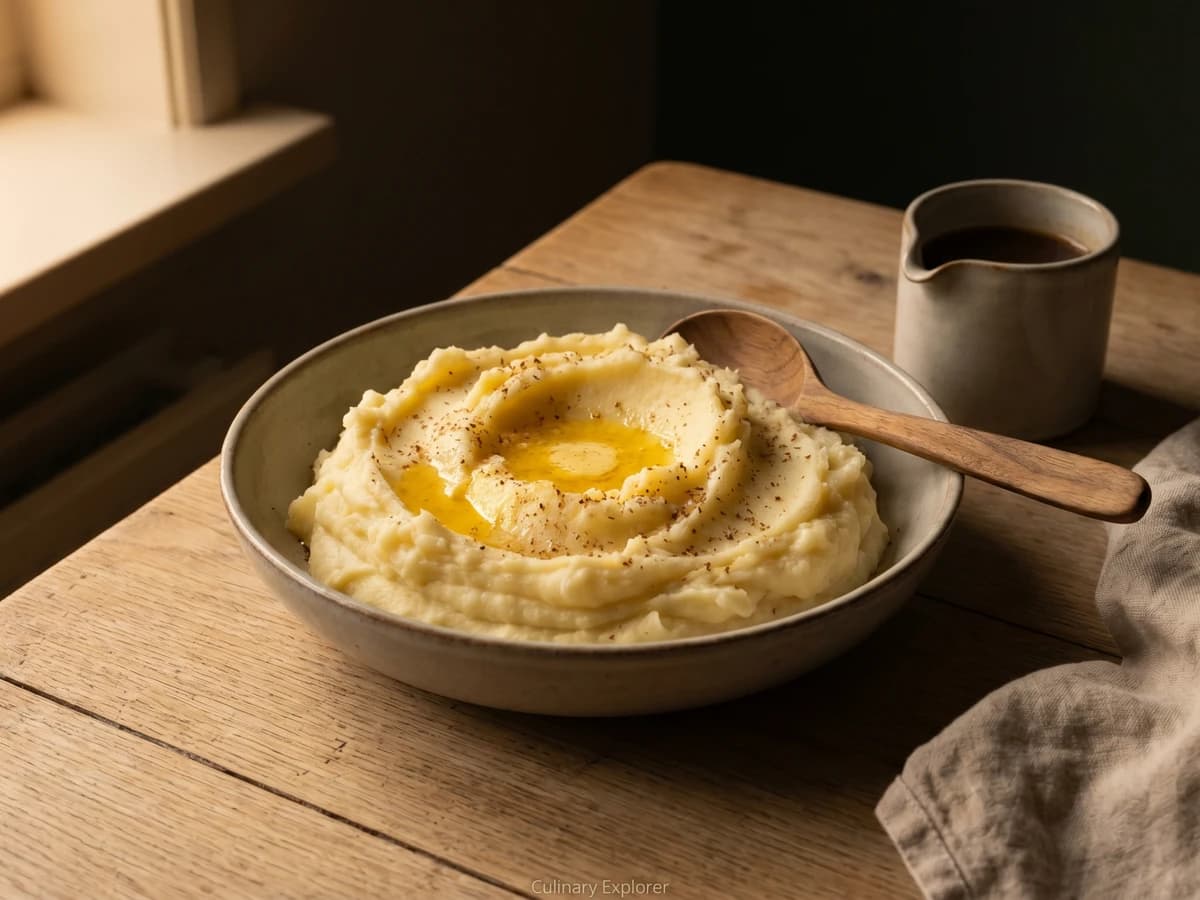
Aardappelpuree is the quiet heart of the Dutch AVG'tje: floury potatoes, warm milk, butter, nutmeg, and a small kuiltje, little well, built for the jus.

Chef Joost
Flower cabbage under old Gouda sauce: the quiet Dutch side dish that turns one boiled vegetable into the reason everyone reaches for the spoon twice.

Chef Joost
White beans peeking through green snijbonen give this old Dutch side its nursery-table joke: bare little children in the grass, sweet garden thrift with butter, nutmeg, and no apology.