
Chef Dean
Amish Buttered Egg Noodles
The humblest side dish in the Pennsylvania Dutch tradition, where wide egg noodles and good butter need nothing more than salt and a warm bowl to become the thing everyone remembers from the church supper.
A cooking platform built around craft, culture, and the stories behind what we eat.

Created by
Sweet half-moons of autumn squash, roasted until their edible skin turns crisp and their flesh melts to cream, dressed in nutty brown butter with sage leaves fried until they shatter.
Delicata is the squash I wait for all year. It arrives at the market in October, striped cream and green like a gift from the season, and it stays until the first hard freeze. Unlike its thick-skinned cousins, delicata offers something rare: skin tender enough to eat. No wrestling with a butternut. No hacking through an acorn. You slice it, roast it, and everything becomes edible.
Look for squash that feel heavy for their size. The skin should be firm and matte, without soft spots or cracks. Those green stripes should be deep and defined. A good farmer will have harvested them after the first cool nights, when the plant moves its sugars into the fruit for storage. This is sweetness you cannot manufacture.
Brown butter and sage are the only companions this squash needs. The butter deepens as it cooks, its milk solids toasting to something nutty and complex. Sage leaves turn crisp in seconds, releasing their earthy perfume into the fat. A squeeze of lemon at the end keeps everything bright. You are not building flavor so much as layering it, letting each element speak.
Quantity
2 medium (about 2 pounds total)
Quantity
3 tablespoons
Quantity
1 teaspoon, plus more to finish
Quantity
1/2 teaspoon
freshly ground
Quantity
4 tablespoons
Quantity
12-16 leaves
Quantity
1 tablespoon
| Ingredient | Quantity |
|---|---|
| delicata squash | 2 medium (about 2 pounds total) |
| extra-virgin olive oil | 3 tablespoons |
| flaky sea salt | 1 teaspoon, plus more to finish |
| black pepperfreshly ground | 1/2 teaspoon |
| unsalted butter | 4 tablespoons |
| fresh sage leaves | 12-16 leaves |
| fresh lemon juice | 1 tablespoon |
Position a rack in the center of the oven and heat to 425°F. The high heat is what transforms the squash, coaxing sugars to the surface and crisping the skin while the flesh turns creamy beneath.
Trim the ends from each squash. Cut them in half lengthwise and scoop out the seeds and stringy pulp with a spoon. Slice crosswise into half-moons about half an inch thick. Uniform pieces cook evenly. Do not peel the skin. This is the whole point of delicata.
Spread the squash pieces on a large rimmed baking sheet. Drizzle with olive oil and sprinkle with salt and pepper. Use your hands to turn each piece, coating them thoroughly. Arrange in a single layer with cut sides down, giving each piece room to breathe. Crowded squash steams instead of roasts.
Slide the pan into the oven. Roast for 15 minutes without disturbing. Flip each piece using a thin spatula. The undersides should be golden and spotted brown. Continue roasting until both sides are deeply caramelized and the flesh yields easily to a fork, another 12 to 15 minutes. The edges will be crisp, nearly lacy in places.
While the squash finishes, cut the butter into pieces and place in a small light-colored saucepan over medium heat. A light pan lets you see the color change. Swirl occasionally as the butter melts and foams. Watch closely. The milk solids will turn from white to tan to a deep amber. You will smell hazelnuts. This happens quickly once it starts. The moment it reaches that toasty brown, pull it from the heat.
Add the sage leaves to the hot brown butter. They will sputter and sizzle as moisture escapes. Let them fry for 20 to 30 seconds until the bubbling subsides and the leaves turn crisp and a shade darker. Remove the pan from heat immediately. Stir in the lemon juice. It will foam up and hiss. This brightness balances the richness.
Transfer the roasted squash to a warm serving platter. Spoon the brown butter over the top, distributing the crispy sage leaves as you go. Finish with another pinch of flaky salt. Serve immediately while the butter is still glossy and the sage still shatters between your teeth.
1 serving (about 200g)
Culinary guides, cultural storytelling, and the editorial depth that makes cooking meaningful.
Discover Culinary ExplorerChef Dean
The humblest side dish in the Pennsylvania Dutch tradition, where wide egg noodles and good butter need nothing more than salt and a warm bowl to become the thing everyone remembers from the church supper.
Chef Dean
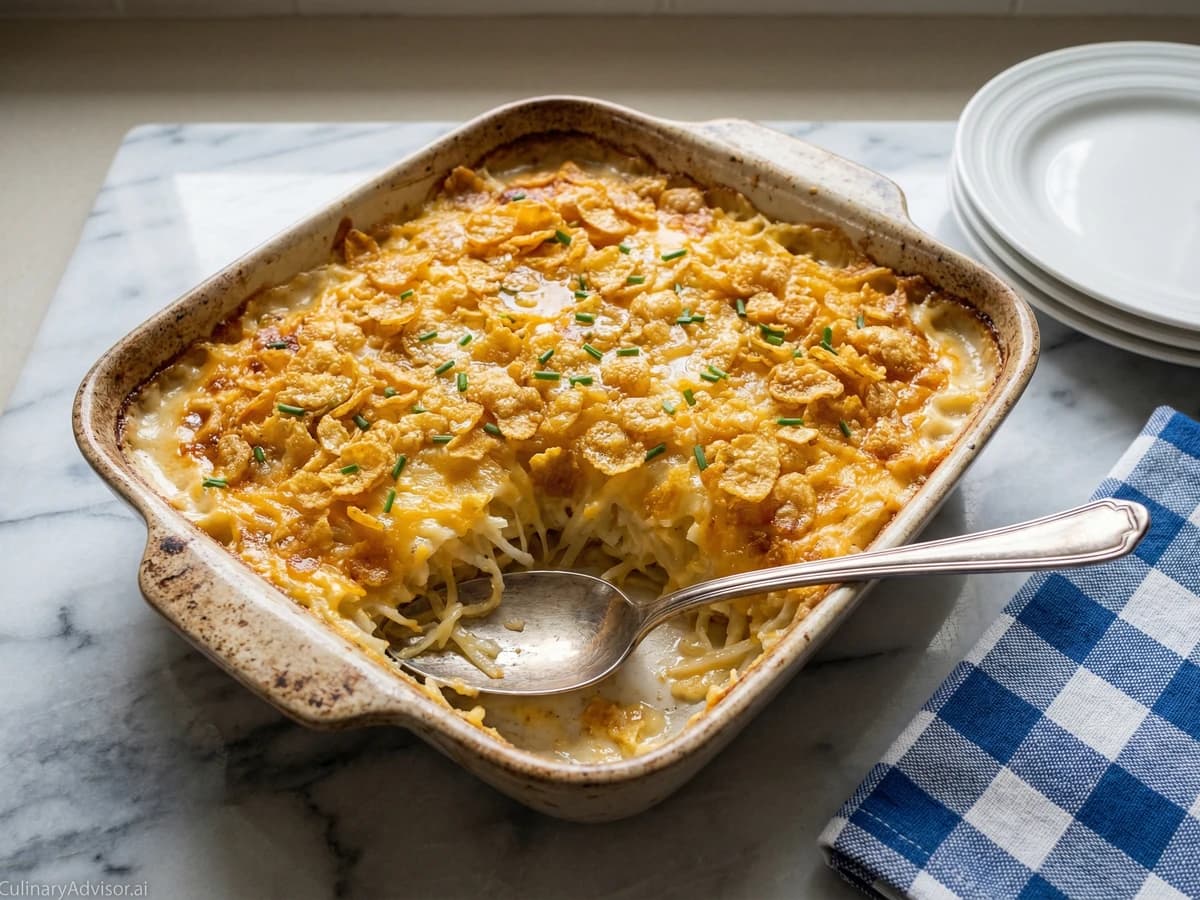
Golden-topped, impossibly creamy shredded potato casserole with a shattering cornflake crust. This is the dish that appears at every church supper, potluck, and time of need across the American heartland.

Chef Dean
Golden-topped stuffing with tender, savory bread cubes perfumed by fresh sage and sweet onions. This is the dish people return to year after year, the one that makes Thanksgiving taste like Thanksgiving.

Chef Dean
Plump hominy kernels braised in smoky bacon fat with roasted Hatch chiles, cumin, and a bright hit of lime. This is the side dish that disappears first at every potluck, the one neighbors ask you to bring again and again.