
Chef Thomas
A Proper Roast Chicken
A whole bird rubbed with butter, stuffed with lemon and thyme, roasted until the skin crackles and the kitchen smells like the kind of evening you want to sit down and stay in.
A cooking platform built around craft, culture, and the stories behind what we eat.
Created by Chef Thomas
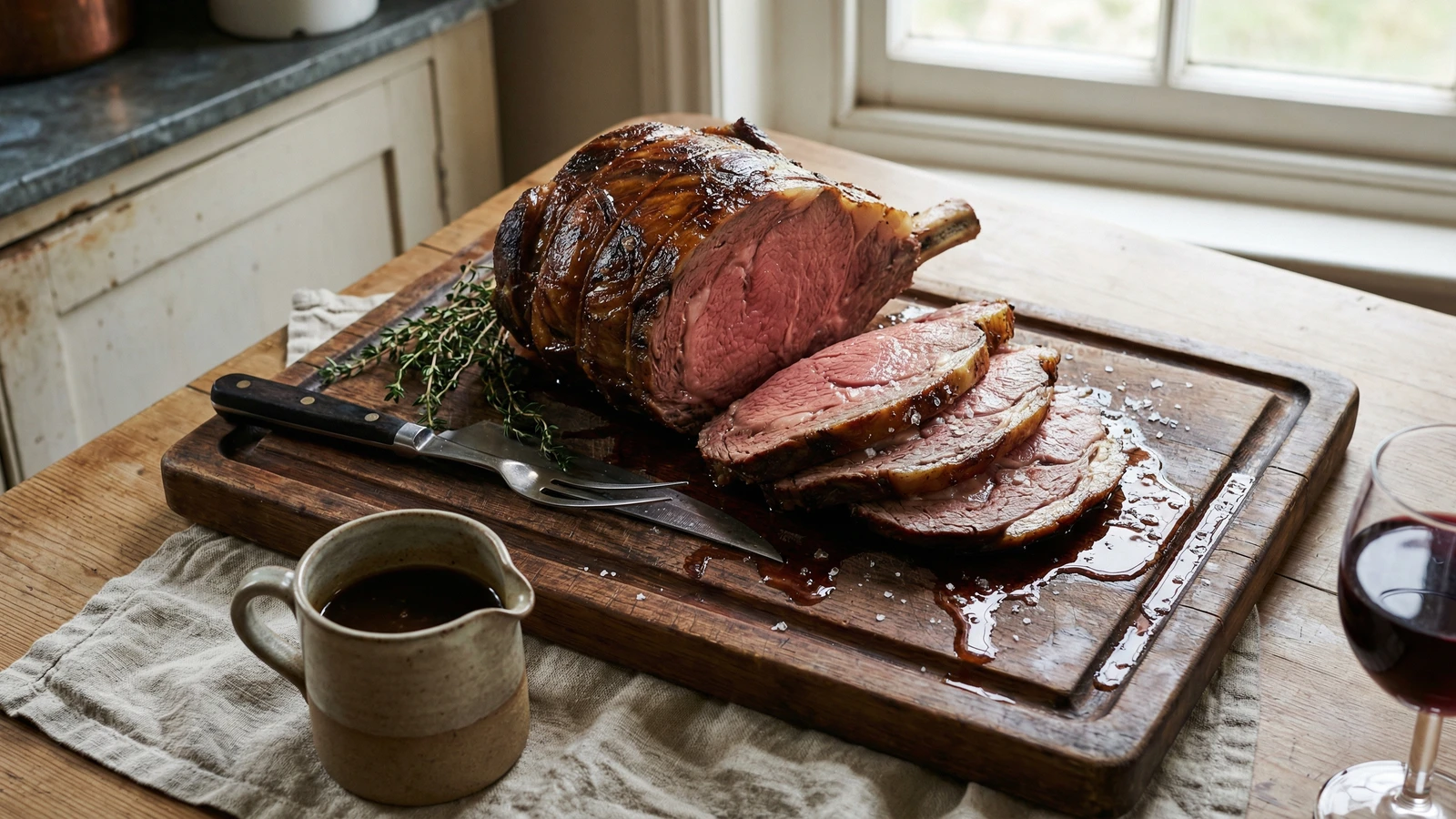
A rib of beef roasted on the bone until the fat renders to a deep, savoury crust and the meat blushes pink all the way through, carved at the table for the kind of evening that deserves it.
There is a moment, just after you open the oven door, when the whole kitchen changes. The heat rolls out. The fat is spitting and bronze. The beef sits on its bones looking like the most serious thing in the room. It is.
A rib of beef on the bone is not a Wednesday supper. It's a declaration. It says: tonight matters. The people at this table matter. I went to the butcher, I asked for the best he had, I brought it home and gave it the afternoon. This is Christmas food, or birthday food, or the kind of meal you cook when someone you haven't seen in too long is finally coming through the door and you want the house to smell like a homecoming.
Talk to your butcher. This isn't the place for a supermarket shelf. You want properly aged, well-marbled beef from an animal that lived on grass and had time to grow. Two ribs will feed four generously. Three ribs will feed six to eight, and the bone does the work of a roasting rack while flavouring the meat from the inside. Ask for the bones to be chined, which means the backbone is loosened so carving becomes simple afterwards. A good butcher will know what you mean.
The method is plain. Season it well, roast it hot, then roast it slow, and rest it for longer than feels comfortable. The resting is where everything comes together. The juices redistribute, the temperature evens out, and what you carve is pink from edge to edge rather than grey at the outside and raw in the centre. Trust the resting. Walk away. Make the gravy. Set the table. The beef will wait for you. I wrote it down in the notebook years ago: "the hardest part is doing nothing." It's still true.
Quantity
3 bones (about 3kg)
chined, brought to room temperature
Quantity
2 tablespoons
Quantity
1 tablespoon
Quantity
generous amount
Quantity
generous amount
freshly ground
Quantity
a few sprigs
Quantity
2 heads
halved crossways
Quantity
2
quartered, skin left on
Quantity
1 tablespoon
Quantity
200ml
Quantity
500ml
| Ingredient | Quantity |
|---|---|
| bone-in rib of beefchined, brought to room temperature | 3 bones (about 3kg) |
| beef dripping or softened unsalted butter | 2 tablespoons |
| English mustard powder | 1 tablespoon |
| flaky sea salt | generous amount |
| black pepperfreshly ground | generous amount |
| fresh thyme | a few sprigs |
| garlichalved crossways | 2 heads |
| onionsquartered, skin left on | 2 |
| plain flour | 1 tablespoon |
| red wine | 200ml |
| good beef stock | 500ml |
Take the beef out of the fridge a full two hours before you plan to cook it. This isn't optional. A cold joint in a hot oven seizes and tightens on the outside before the centre has woken up. Two hours on the counter, loosely uncovered, lets the temperature even out so the meat cooks steadily all the way through. Use this time to set the table, open the wine, do whatever needs doing. The beef is working even when you're not.
Set the oven to 230°C (210°C fan). Rub the beef all over with the dripping or softened butter, getting into every fold and crevice. Mix the mustard powder with a generous amount of salt and pepper, then press this mixture firmly into the fat cap and all the exposed surfaces. More than you think. The joint is large and needs seasoning that stands up to its size. Don't be cautious here. Timid seasoning is the most common mistake people make with a roast this size, and there's no fixing it at the table.
Scatter the onion quarters and halved garlic heads in the base of a large roasting tin. Tuck the thyme sprigs among them. Sit the beef on top, bone-side down, the ribs curving underneath like a cradle. The bones lift the meat off the base so the heat circulates beneath it. Put it into the hot oven and roast for twenty minutes. You'll hear it. The fat starts to spit and crackle, and the kitchen begins to smell like the kind of afternoon that has a purpose. This initial blast sets the crust.
Reduce the oven to 170°C (150°C fan). Continue roasting, calculating roughly fifteen minutes per 500g for medium-rare. For a 3kg joint, that's about an hour and a quarter at the lower temperature after the initial blast. Don't open the oven to check on it every ten minutes. Every time the door opens you lose heat and add time. Trust it. If you have a meat thermometer, you're looking for 52°C at the thickest part for medium-rare, remembering that the temperature will climb another five degrees as it rests. If you don't have a thermometer, press the meat with your finger: it should yield with gentle resistance, not firm, not soft, somewhere honest in between.
Lift the beef onto a warm carving board, the kind with a channel to catch the juices. Cover it loosely with foil and a clean tea towel on top. Leave it alone for at least thirty minutes. Forty-five is better. This is where a good roast becomes a great one. The muscle fibres relax, the juices settle back into the meat instead of running out onto the board, and the temperature evens out so you get that consistent blush of pink all the way through. Set the roasting tin with its onions and drippings aside for the gravy. The beef will hold its heat longer than you expect. Do not rush this.
While the beef rests, set the roasting tin over a medium flame on the hob. Squeeze the softened garlic cloves out of their skins and into the drippings. Sprinkle in the flour and stir it into the fat, scraping up all the dark, sticky bits from the bottom of the tin. Those bits are flavour. Every last one. Cook for a minute or so until the flour smells toasted, then pour in the red wine. Let it bubble fiercely and reduce by half. Add the stock and any juices that have collected under the resting beef. Simmer for ten minutes until the gravy has body and tastes rich and deeply savoury. Strain through a sieve into a warm jug, pressing the soft onions to extract everything they've given. Season and taste. Then taste again.
Remove any string. Run a sharp knife along the bones to separate them from the meat in one piece. Set the bones aside for whoever wants to gnaw on them later, and someone always does. Carve the beef into thick slices, generous as the occasion calls for. Arrange on a warm serving platter and pour over any juices from the board. Bring the whole thing to the table with the gravy jug beside it and let people help themselves. This is the kind of food that wants carving in company, the shared ceremony of a proper roast, the quiet theatre of a knife moving through good beef. We're only making dinner. But sometimes dinner is everything.
1 serving (about 320g)
Culinary guides, cultural storytelling, and the editorial depth that makes cooking meaningful.
Discover Culinary ExplorerChef Thomas
A whole bird rubbed with butter, stuffed with lemon and thyme, roasted until the skin crackles and the kitchen smells like the kind of evening you want to sit down and stay in.

Chef Thomas
Eggs bedded into leek-flecked mash under a blanket of sharp cheese sauce, baked until golden and bubbling. A Welsh supper dish that proves the simplest things are usually the best.

Chef Thomas
A cold evening carbonara made with good smoked back bacon, eggs, Parmesan, and more black pepper than seems reasonable, tossed together in the time it takes to boil the pasta.

Chef Thomas
Thick bacon chops, bronzed in butter and slicked with a mustard and honey glaze that catches and caramelises under a hot grill. Twenty minutes, two plates, a very good Tuesday.