
Chef Thomas
A Proper Roast Chicken
A whole bird rubbed with butter, stuffed with lemon and thyme, roasted until the skin crackles and the kitchen smells like the kind of evening you want to sit down and stay in.
A cooking platform built around craft, culture, and the stories behind what we eat.
Created by Chef Thomas
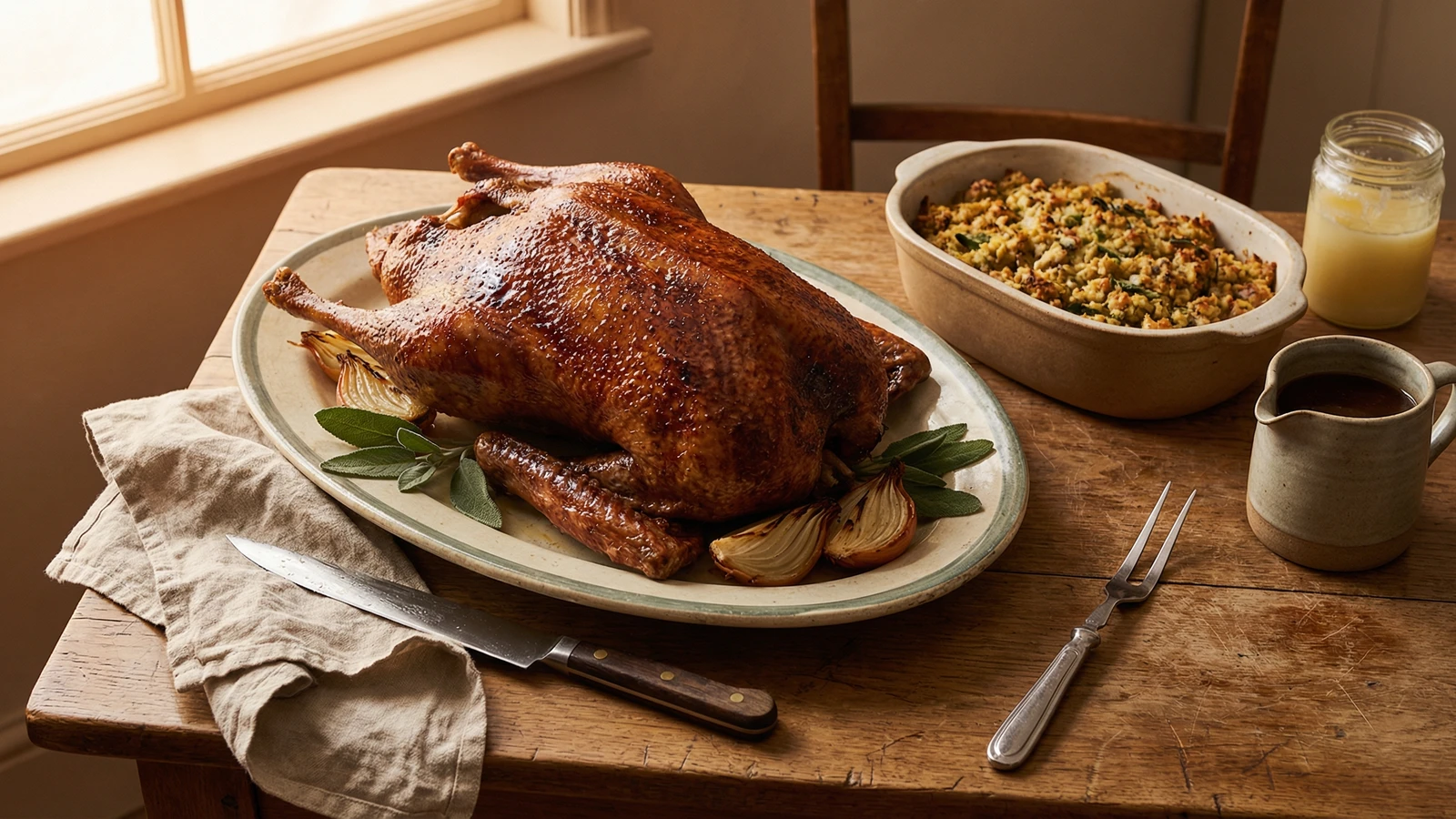
A whole roast goose, the skin burnished and crackling, the meat dark and rich beneath, with a sage and onion stuffing that smells the way December should and enough rendered fat to see you through to spring.
December. The light goes by half past three and the kitchen becomes the warmest room in the house. This is when the goose makes sense. Not turkey, which arrived late and loud and somehow took over. The goose was here first. It's the older bird, the one your great-grandmother would have saved for, and it rewards that kind of patience.
A goose is not a turkey and doesn't want to be treated like one. The meat is darker, richer, closer to game than poultry. There is less of it than you'd expect from a bird that size, because most of what's under that skin is fat, and the fat is half the point. It renders out during roasting, pooling in the tin in quantities that seem almost impossible, golden and clean and worth more than the bird itself if you know what to do with it. You save every drop. It goes into a jar, into the fridge, and for the next three months your roast potatoes will be the best you've ever made.
The stuffing is sage and onion. Not fashionable. Not clever. Just right. Soft, sweet onions cooked slowly in butter, torn bread, and enough fresh sage to make the kitchen smell like Christmas without a candle in sight. I cook it separately, in a dish alongside the goose, so it gets a proper crust on top while staying soft and giving underneath. The bird has enough to do without carrying a stuffing as well.
I wrote it down in the notebook years ago: goose, sage, dark afternoon, the kitchen windows running with condensation. That's the whole picture. There are few better feelings than carrying this to the table, setting it down in front of people you care about, and watching them lean forward.
Quantity
1, about 4.5-5kg
giblets removed, patted dry
Quantity
generous amount
Quantity
1
halved
Quantity
a few, for the cavity
Quantity
4 medium
finely chopped
Quantity
2 medium
quartered
Quantity
60g
Quantity
200g
torn into rough pieces, slightly stale
Quantity
a generous handful
roughly chopped
Quantity
1
beaten
Quantity
to taste
freshly ground
Quantity
a splash
Quantity
500ml
| Ingredient | Quantity |
|---|---|
| whole goosegiblets removed, patted dry | 1, about 4.5-5kg |
| fine sea salt | generous amount |
| lemonhalved | 1 |
| fresh sage sprigs | a few, for the cavity |
| onions for stuffingfinely chopped | 4 medium |
| onions for the tinquartered | 2 medium |
| unsalted butter | 60g |
| good white breadtorn into rough pieces, slightly stale | 200g |
| fresh sage leavesroughly chopped | a generous handful |
| large eggbeaten | 1 |
| black pepperfreshly ground | to taste |
| dry white wine or cider | a splash |
| chicken or goose stock | 500ml |
Take the goose out of the fridge a good hour before you plan to cook it. Cold meat in a hot oven doesn't end well. Pat the skin completely dry with kitchen paper, then prick it all over with a skewer or the tip of a sharp knife: legs, breast, anywhere you can see fat sitting under the skin. You're not stabbing through to the meat, just puncturing the skin so the fat has somewhere to escape during roasting. Be thorough. The crispness of the skin depends entirely on this step. Rub the bird generously with fine sea salt, working it into the pricked skin. Tuck the lemon halves and the sage sprigs into the cavity.
Set the oven to 220C/200C fan. Place the goose breast-side down on a rack set over a deep roasting tin. The rack matters: the bird needs to sit above the fat, not swim in it. Roast at this high heat for thirty minutes. The kitchen will start to smell extraordinary, rich and savoury, like something important is happening. After thirty minutes, take the tin out, carefully turn the goose breast-side up, and pour off the fat that has already collected in the tin into a heatproof bowl or jar. There will be more of it than you expect. This is the first pour. There will be others.
Turn the oven down to 180C/160C fan. Scatter the quartered onions into the tin beneath the rack. Continue roasting for another two and a half to three hours, pouring off the fat from the tin every forty-five minutes or so. Each time, the fat will be golden and clean. Each time, save it. The goose is done when the skin is deep bronze and feels taut and crisp, the leg joint moves freely when you wiggle it, and the juices from the thigh run clear when you pierce it at the thickest point. Trust your instincts. A goose tells you when it's ready if you pay attention.
While the goose is roasting, make the stuffing. Melt the butter in a wide pan over a low heat and add the chopped onions with a pinch of salt. Let them cook slowly, stirring now and then, for a good twenty to twenty-five minutes. You're not frying them. You're coaxing them from sharp and raw to soft, sweet, and translucent. When they smell like the best version of themselves, sweet and buttery and gentle, take them off the heat. Stir the onions into the torn bread along with the chopped sage, beaten egg, and a good grinding of pepper. Season well. The mixture should be moist but not wet, savoury and fragrant with sage. Spoon it into a buttered baking dish and set it aside.
When the goose has about forty-five minutes left, put the stuffing dish into the oven alongside it. The top should go golden and slightly crisp while the inside stays soft and giving. If the goose finishes before the stuffing, that's fine. The bird needs to rest anyway.
Lift the goose onto a warm platter or board. Cover it loosely with foil and a couple of tea towels. Let it rest for at least thirty minutes, longer if you can manage. Goose meat tightens if you carve it too soon. The resting is not optional. While it rests, the juices settle back into the meat and the skin stays crisp. Use this time to make the gravy and finish everything else.
Pour off all but a tablespoon or two of fat from the roasting tin, leaving the roasted onions and the dark, sticky juices on the bottom. Set the tin over a medium heat on the hob. Add the splash of wine or cider and let it bubble up, scraping the bottom of the tin with a wooden spoon to lift all the caramelised goodness. Pour in the stock and let it simmer for ten minutes or so, until it has reduced to something with body and flavour. Taste it. Season it. Strain it into a warm jug if you like, or don't. A rustic gravy with bits of onion in it is an honest thing. This is not a restaurant.
Carve the goose at the table if you can. The breast comes off in long slices, darker and richer than any chicken or turkey. The legs can be pulled away at the joint. Serve with the stuffing spooned alongside, the gravy poured over, and whatever else the season asks for: roast potatoes crisped in goose fat, braised red cabbage, steamed greens. Put it all on the table at once. Let people help themselves. This is the kind of meal that doesn't need fuss. It needs warm plates and good company.
1 serving (about 450g)
Culinary guides, cultural storytelling, and the editorial depth that makes cooking meaningful.
Discover Culinary ExplorerChef Thomas
A whole bird rubbed with butter, stuffed with lemon and thyme, roasted until the skin crackles and the kitchen smells like the kind of evening you want to sit down and stay in.

Chef Thomas
Eggs bedded into leek-flecked mash under a blanket of sharp cheese sauce, baked until golden and bubbling. A Welsh supper dish that proves the simplest things are usually the best.

Chef Thomas
A cold evening carbonara made with good smoked back bacon, eggs, Parmesan, and more black pepper than seems reasonable, tossed together in the time it takes to boil the pasta.

Chef Thomas
Thick bacon chops, bronzed in butter and slicked with a mustard and honey glaze that catches and caramelises under a hot grill. Twenty minutes, two plates, a very good Tuesday.