Culinary Explorer
A cooking platform built around craft, culture, and the stories behind what we eat.
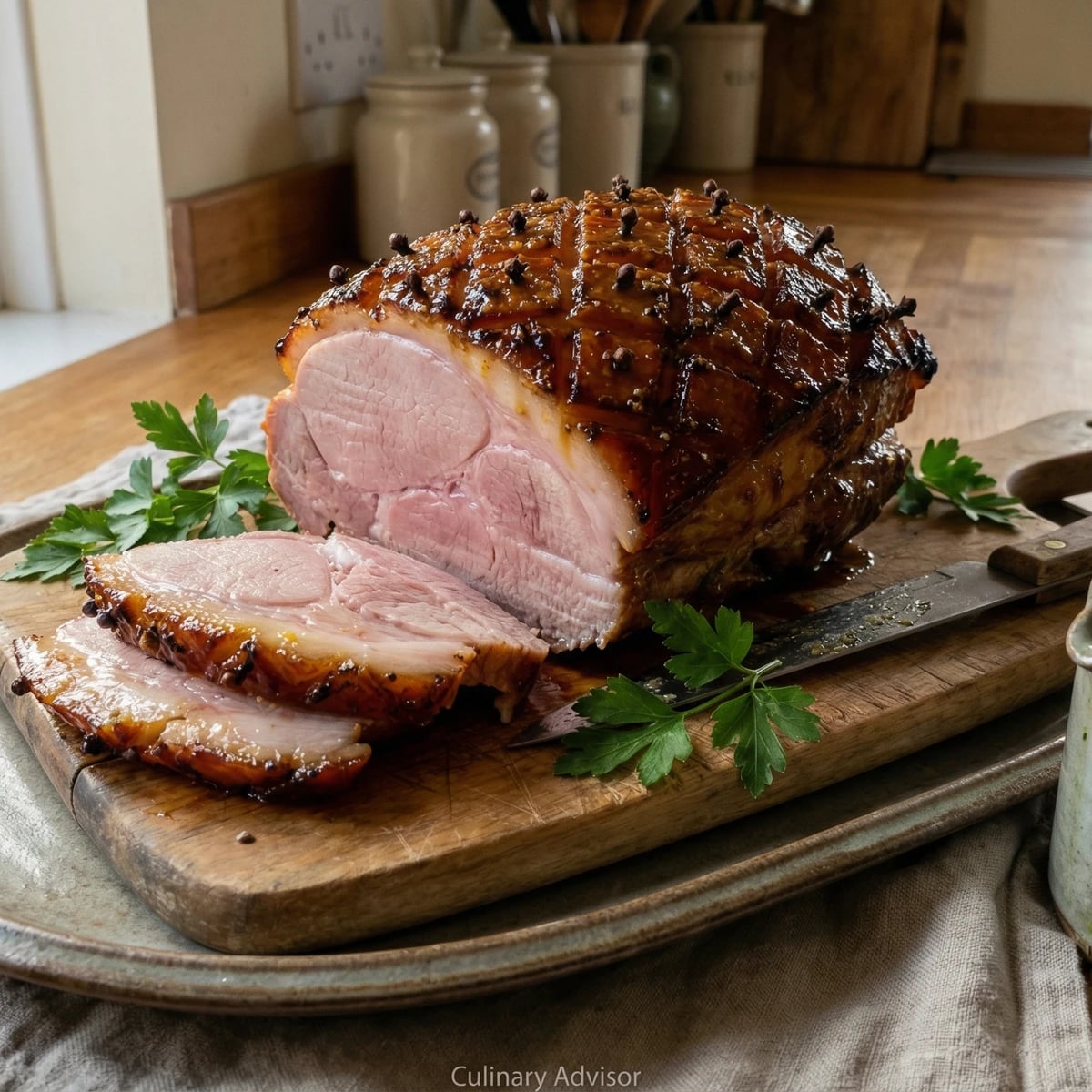
Roast Gammon with Parsley Sauce
Created by Chef Thomas
A simmered and roasted gammon with a mustard glaze, served with a proper parsley sauce made from the cooking liquor. The kind of meal that turns a Sunday into a memory.
The kitchen smells of bay and peppercorn and something slowly giving in. A gammon in a pot of water, ticking away on the back of the stove, is one of the most patient things a kitchen can do. There's no urgency. Just time and heat doing what they've always done, turning a salt-cured joint into something tender and deeply savoury.
This is the older way of doing it, and it's better. Simmer first, then roast. The simmering makes the meat yielding and gentle. The roasting gives you the glaze: mustard and dark sugar bubbling into a sticky, lacquered crust that catches and crisps at the edges. But the real reason for simmering is what it leaves behind. That cooking liquor, pale gold and rich with the flavour of the meat and the aromatics, is the foundation of the parsley sauce. You'd be a fool to pour it away.
Parsley sauce gets a bad reputation, mostly because people have only ever had a bad one. A thin, grey, floury thing from a packet or a school canteen. A proper parsley sauce, made with real butter and the gammon's own liquor and a reckless amount of fresh parsley, is something else entirely. It's rich and savoury and green, and it brings the whole plate together in the way that only a proper sauce can.
I wrote it down in the notebook years ago: gammon, parsley sauce, boiled potatoes, a cold Sunday. That's all it said. That's all it needed to say.
Ingredients
unsmoked gammon joint
Quantity
about 2kg
on the bone if you can get it
onion
Quantity
1
halved
bay leaves
Quantity
2
| Ingredient | Quantity |
|---|---|
| unsmoked gammon jointon the bone if you can get it | about 2kg |
| onionhalved | 1 |
| bay leaves | 2 |
Where cooking meets culture.
Culinary guides, cultural storytelling, and the editorial depth that makes cooking meaningful.
Discover Culinary Explorer