Chef Graziella
Arrosto di Maiale alle Erbe Aromatiche
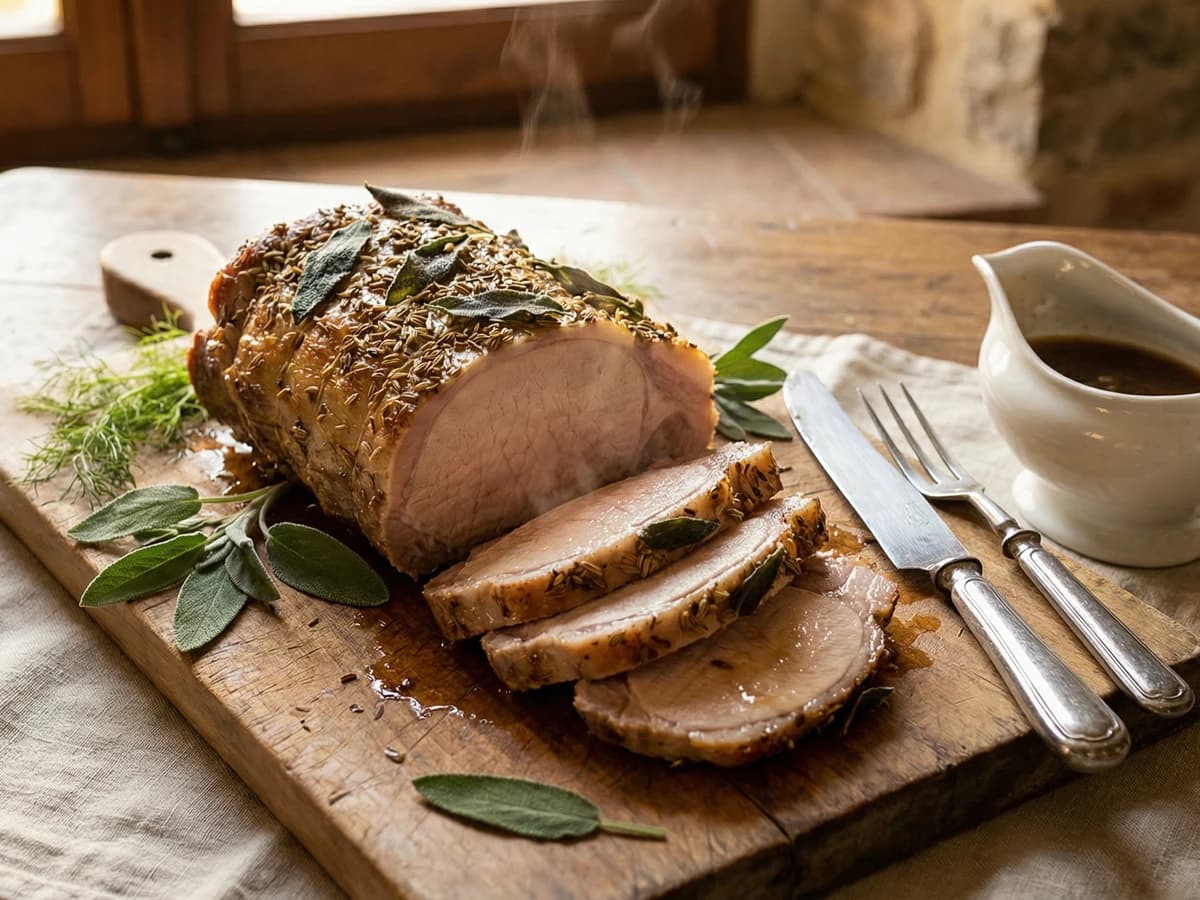
Bone-in pork loin rubbed with fennel, rosemary, and sage, roasted until the herbs form a crackling crust and the meat stays pink and succulent. This is the roast that brings Sunday to life.
A cooking platform built around craft, culture, and the stories behind what we eat.

Created by
Winter squash meets patient technique in this golden risotto from the Po Valley. No cream, no shortcuts: the creaminess comes from proper starch release and generous butter.
There is no cream in authentic risotto. I say this first because Americans reach for the carton before they understand what risotto is. The creaminess you seek comes from the rice itself, from the starch released through patient stirring and the final vigorous beating with cold butter and cheese. Add cream and you have made something else entirely.
Risotto alla zucca belongs to the flatlands of the Po Valley, where rice paddies stretch to the horizon and winter squash grows sweet in the autumn chill. Mantua claims it. So does Ferrara. The farmers' wives of Lombardy made it for centuries before restaurants discovered it. They roasted their squash in wood-fired ovens until the edges caramelized, then folded it into rice cooked with nothing more than broth, butter, and the local cheese.
The technique is not complicated, but it demands your attention for twenty minutes. You cannot leave. You cannot multitask. The rice needs your presence, ladle after ladle, stir after stir. This is meditation as much as cooking. Those unwilling to give it time should make something else.
Pumpkin risotto traces to the rice-growing regions of Northern Italy, where the cultivation of rice and winter squash overlapped in the fertile Po Valley. Mantua's zucca became famous in the 15th century, when the Gonzaga dukes served squash-filled tortelli at their court. The risotto variation evolved as a simpler preparation for farm families who lacked the time to make filled pasta.
Quantity
1 1/2 pounds
peeled, seeded, and cut into 1-inch cubes
Quantity
3 tablespoons, divided
Quantity
6 cups
Quantity
4 tablespoons, cold, divided
Quantity
1 medium
diced fine
Quantity
1 1/2 cups
Quantity
3/4 cup
Quantity
8
Quantity
1 cup, plus more for serving
freshly grated
Quantity
to taste
Quantity
to taste
freshly ground
Quantity
to taste
freshly grated
| Ingredient | Quantity |
|---|---|
| butternut squashpeeled, seeded, and cut into 1-inch cubes | 1 1/2 pounds |
| extra virgin olive oil | 3 tablespoons, divided |
| vegetable or light chicken broth | 6 cups |
| unsalted butter | 4 tablespoons, cold, divided |
| yellow oniondiced fine | 1 medium |
| Carnaroli or Arborio rice | 1 1/2 cups |
| dry white wine | 3/4 cup |
| fresh sage leaves | 8 |
| Parmigiano-Reggianofreshly grated | 1 cup, plus more for serving |
| kosher salt | to taste |
| black pepperfreshly ground | to taste |
| nutmegfreshly grated | to taste |
Heat the oven to 400 degrees. Toss the squash cubes with 2 tablespoons olive oil and a generous pinch of salt. Spread in a single layer on a sheet pan. Roast until tender and caramelized at the edges, 25 to 30 minutes. Set aside two-thirds of the cubes. Mash the remaining third with a fork until smooth. This dual texture, some silky puree, some intact pieces, is essential.
In a saucepan, bring the broth to a gentle simmer. Keep it warm over low heat. Cold broth added to hot rice shocks the starch and produces gummy risotto. The broth must be warm throughout the cooking.
In a heavy, wide pan or Dutch oven, warm the remaining tablespoon of olive oil with 1 tablespoon butter over medium heat. When the butter foam subsides, add the onion. Cook slowly, stirring occasionally, until completely soft and translucent, 8 to 10 minutes. The onion must not color. Add 6 of the sage leaves and cook one minute more until fragrant.
Add the rice to the soffritto all at once. Stir thoroughly with a wooden spoon for 2 minutes, coating every grain with the hot fat. The rice should become translucent at the edges while remaining opaque at the center. You will hear it click against the pan. This toasting creates the foundation for proper texture.
Pour in the white wine. It will hiss and steam. Stir constantly until the wine has evaporated completely and you can no longer smell raw alcohol, 2 to 3 minutes. The pan should be nearly dry before you proceed.
Stir in the mashed squash. Begin adding the warm broth, one ladleful at a time, stirring frequently. Wait until each addition is nearly absorbed before adding the next. The rice should always be moist but never swimming. This process takes 18 to 20 minutes. There is no shortcut. Taste the rice often. It should be tender but with a whisper of resistance at the center when done.
Remove the pan from heat. Add the remaining 3 tablespoons cold butter, cut into pieces, and the Parmigiano-Reggiano. Stir vigorously for one minute. This is the mantecatura, the beating that creates the creamy, flowing texture. The risotto should spread slowly when spooned onto a plate, what Italians call all'onda, like a wave. Season with salt, pepper, and a few gratings of nutmeg.
Fold in the reserved roasted squash cubes. Spoon the risotto into warm shallow bowls. Tear the remaining sage leaves and scatter over each portion. Risotto waits for no one. Once plated, it must be eaten immediately. Invite your guests to the table before you plate, not after.
1 serving (about 400g)
Culinary guides, cultural storytelling, and the editorial depth that makes cooking meaningful.
Discover Culinary ExplorerChef Graziella
Bone-in pork loin rubbed with fennel, rosemary, and sage, roasted until the herbs form a crackling crust and the meat stays pink and succulent. This is the roast that brings Sunday to life.

Chef Graziella
The ancient technique of salt-baking creates a sealed chamber where the fish steams in its own moisture. What emerges is flesh of remarkable purity, seasoned perfectly, ready for nothing but your best olive oil.

Chef Graziella
The ugly fish that cooks like veal, braised in tomatoes until the firm white flesh absorbs the briny sweetness of olives and capers. Fishermen's wives along the Adriatic knew its worth before restaurants discovered it.

Chef Graziella
A fifteen-minute lesson in restraint: pork chops, butter, sage, and the understanding that what you leave out matters as much as what you put in.