
Chef Joost
Bavarois met Frambozensaus
A French-Bavarian name, a Dutch party mould, and the quiet trick of gelatine: custard cooled just enough, cream folded gently, and a dessert made ahead like a host with sense.
A cooking platform built around craft, culture, and the stories behind what we eat.
Created by
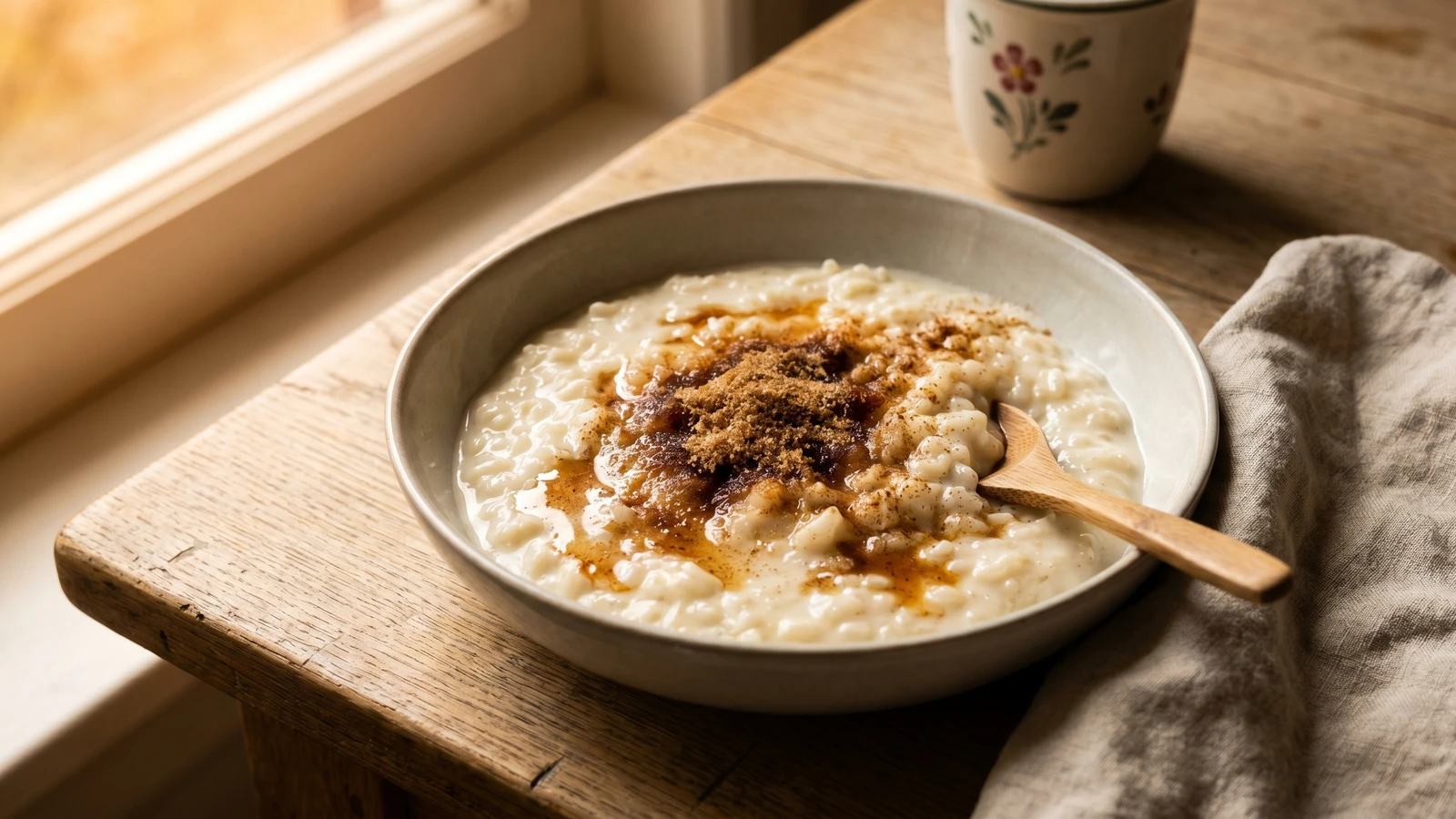
Rijstebrij is milk, rice, patience, and a spoonful of cinnamon sugar: a humble Dutch pudding that remembers when imported rice was still a small luxury.
In my grandmother's second notebook, the pudding pages are the most handled. Not the feast cakes, not the grand holiday things, but pap, custard, stewed fruit, rijstebrij. The foods that kept children quiet, old people fed, and a tired cook from making a ceremony out of supper.
The name already tells you nearly everything. Rijst is rice, brij is a thick porridge or soft mash, the sort of word that sits heavily in the mouth because the dish sits heavily, and kindly, in the bowl. But let me tell you a secret: this plain pudding is not proof of a plain kitchen. Rice did not grow in Dutch fields. It came through trade, through ships, through shopkeepers who weighed it out carefully, and then Dutch thrift did what it always does best. It stretched a little luxury with milk until the whole table could share it.
The method is the lesson. Don't boil it hard. Milk is proud and will punish arrogance by catching on the bottom. Keep the heat low, stir more often near the end, and let the starch leave the rice slowly until the spoon draws a soft path through the pot. Hou het altijd simpel, always keep it simple. A little vanilla, cinnamon, brown sugar, and the patience to stop before it becomes paste.
Rijstebrij, also called rijstepap, belongs to the long Dutch tradition of milk porridges, but rice itself was an imported ingredient before it became an everyday cupboard staple. Dutch cookbooks from the seventeenth and eighteenth centuries include sweet milk-and-rice preparations, reflecting how trade goods moved from urban shops into family cooking. In the southern provinces it remained especially associated with Sunday and feast-day tables, often served with cinnamon and dark sugar rather than elaborate pastry.
Quantity
150g
Quantity
1 liter
Quantity
1 bean or 2 teaspoons
Quantity
1 strip
Quantity
1/4 teaspoon
Quantity
40g
Quantity
1 tablespoon
Quantity
2 tablespoons
for serving
Quantity
1 teaspoon
for serving
| Ingredient | Quantity |
|---|---|
| pudding rice or short-grain rice | 150g |
| whole milk | 1 liter |
| vanilla bean or vanilla sugar | 1 bean or 2 teaspoons |
| lemon peel (optional) | 1 strip |
| fine salt | 1/4 teaspoon |
| granulated sugar | 40g |
| unsalted butter (optional) | 1 tablespoon |
| dark brown sugar or basterdsuikerfor serving | 2 tablespoons |
| ground cinnamonfor serving | 1 teaspoon |
Pour the milk into a heavy saucepan. Split the vanilla bean and scrape in the seeds, then add the pod, the lemon peel if using, and the salt. Warm gently until the milk trembles at the edge of the pan. Do not let it gallop; milk climbs when ignored.
Stir in the rice and lower the heat until the surface barely moves. Cook uncovered for about 35 to 40 minutes, stirring every few minutes at first and more often near the end. The rice should swell, soften, and give its starch to the milk until the pudding turns creamy rather than soupy.
When the rice is tender and the spoon leaves a soft trail through the pudding, remove the vanilla pod and lemon peel. Stir in the granulated sugar and the butter if you want a rounder finish. Taste now. Sweetness should sit behind the milk, not shout over it.
Let the rijstebrij stand for 5 minutes off the heat. It will thicken as it settles, so loosen it with a splash of warm milk if you prefer it softer. Spoon into bowls and finish with dark brown sugar and cinnamon. Serve warm, or chill it and serve cold with the same brown sugar melting slowly on top.
1 serving (about 285g)
Culinary guides, cultural storytelling, and the editorial depth that makes cooking meaningful.
Discover Culinary ExplorerChef Joost
A French-Bavarian name, a Dutch party mould, and the quiet trick of gelatine: custard cooled just enough, cream folded gently, and a dessert made ahead like a host with sense.

Chef Joost
An old Dutch moulded toetje, where bitter-almond macaroons soften into milk pudding and turn thrift, patience, and one good puddingvorm into celebration.

Chef Joost
A bowl of vanillevla with bitterkoekjes folded through it is the quiet Dutch trick that turns milk, eggs, sugar, and a few almond biscuits into a proper toetje.

Chef Joost
Goat-hoof biscuits made into a whole taart: almond meringue, chocolate, advocaat, and cream, the Dutch bakery counter quietly becoming a dinner-party secret.