Chef Zohra
Boushnikha
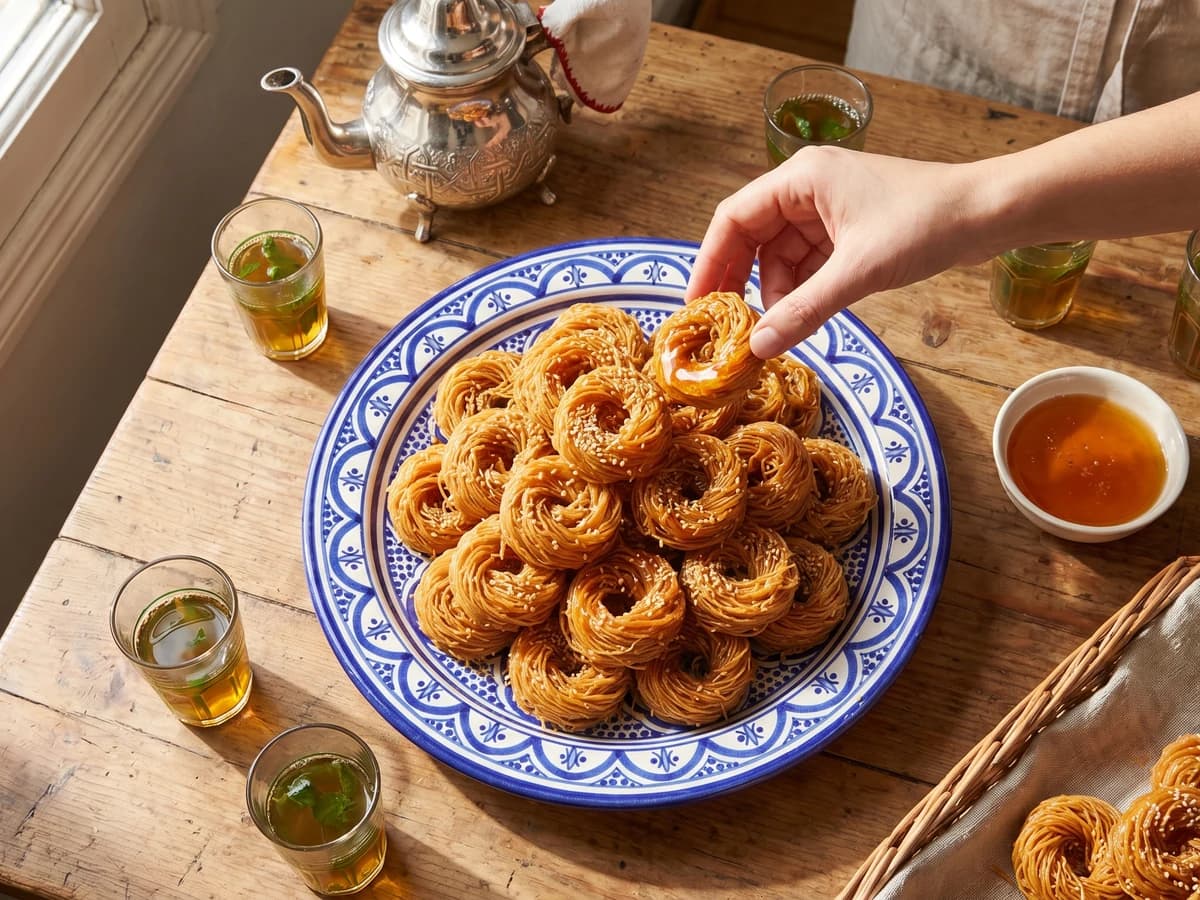
A Ramadan sweet lighter than chebakia: fine milk dough drawn into threads, fried until crisp, then bathed in orange-blossom honey and shared from a generous plate.
A cooking platform built around craft, culture, and the stories behind what we eat.

Created by
Thin anise biscuits from the Jewish-Moroccan table, mixed with oil and orange juice, rolled fine, pricked, and baked crisp enough to finish a meal with mint tea.
Everything here depends on how thin you roll the dough. Rifat should snap lightly under the teeth, not puff into a soft little bread. The oil makes the dough tender, the orange juice gives it fragrance and a little lift, and the anise leaves that clean, sweet warmth at the end of a meal.
This is a biscuit for after the table has already eaten well. You put out a plate with tea or a small digestif, and people keep reaching while the conversation loosens. It belongs to the Jewish-Moroccan branch of des cuisines marocaines (the many Moroccan cuisines), where celebration cookies often travel well, keep well, and feed more people than you counted.
Roll patiently. Prick the dough so it doesn't balloon, bake until pale gold at the edges, then let the biscuits cool fully before judging them. Crispness comes as they settle. Make a tin full. A table is a door you leave open, and biscuits like these are how it stays open after dinner.
Rifat belongs to the Jewish-Moroccan home repertoire, especially in cities with old Jewish communities such as Fez, Meknes, Rabat, Essaouira, and Casablanca, where oil-based biscuits were made for Sabbath, holidays, travel, and visits. Its anise, sesame, citrus, and oil point to the trade grammar of Moroccan Jewish baking across the western Mediterranean, with Andalusi and Maghrebi influences carried through family kitchens more than written books. The exact age of the biscuit is not firmly dated, and that's honest: many recipes like this survived because mothers and grandmothers kept making them, not because a court scribe wrote them down.
Quantity
500g
plus more for rolling
Quantity
120g
Quantity
2 tsp
Quantity
1/2 tsp
Quantity
2 tbsp
lightly crushed
Quantity
2 tbsp
Quantity
120ml
Quantity
120ml
Quantity
1 large
Quantity
1 tsp
finely grated
Quantity
1 tbsp
| Ingredient | Quantity |
|---|---|
| all-purpose flourplus more for rolling | 500g |
| granulated sugar | 120g |
| baking powder | 2 tsp |
| fine sea salt | 1/2 tsp |
| anise seedslightly crushed | 2 tbsp |
| sesame seeds | 2 tbsp |
| neutral oil, such as sunflower oil | 120ml |
| fresh orange juice | 120ml |
| egg | 1 large |
| orange zestfinely grated | 1 tsp |
| orange blossom water (optional) | 1 tbsp |
Whisk the flour, sugar, baking powder, salt, crushed anise, and sesame in a wide bowl. Crush the anise just enough to wake it up, not to powder it. You want little seeds in the biscuit, because they release their perfume as you bite.
In a second bowl, beat the oil, orange juice, egg, orange zest, and orange blossom water if using. Pour this into the flour and mix with your hand until a soft dough gathers. Knead only until smooth, 2 to 3 minutes. Too much kneading builds strength, and strength is what makes these bake like bread.
Cover the dough and let it rest for 20 minutes. This short rest lets the flour drink the liquid and makes rolling easier. Don't skip it, or you'll fight the dough and make the biscuits thicker than they should be.
Heat the oven to 180 C. Divide the dough into 3 pieces and keep the unused pieces covered. On a lightly floured surface, roll one piece as thin as you can manage, about 2 mm. This is the rule that decides the dish: roll fine, or the rifat will rise soft in the middle instead of baking crisp.
Cut the dough into diamonds, rectangles, or long strips with a pastry wheel or knife. Transfer to parchment-lined baking sheets, leaving a little space between them. Prick each biscuit several times with a fork so trapped air can escape and the surface stays flat.
Bake for 14 to 18 minutes, turning the tray once, until the biscuits are dry, firm, and pale gold around the edges. They should not go dark. Let them cool completely on a rack, because they finish crisping as they cool.
Serve with mint tea, coffee, or a small digestif after a celebration meal. Once fully cool, store in an airtight tin. If they soften after a few days, refresh them for 5 minutes in a low oven, then cool again.
1 serving (about 19g)
Culinary guides, cultural storytelling, and the editorial depth that makes cooking meaningful.
Discover Culinary ExplorerChef Zohra
A Ramadan sweet lighter than chebakia: fine milk dough drawn into threads, fried until crisp, then bathed in orange-blossom honey and shared from a generous plate.

Chef Zohra
Tissue-thin warqa folded into small triangles around orange-blossom almond paste, fried until gold, then dipped warm into honey. This is the sweet Fassi briouat that makes tea feel like a feast.
Chef Zohra
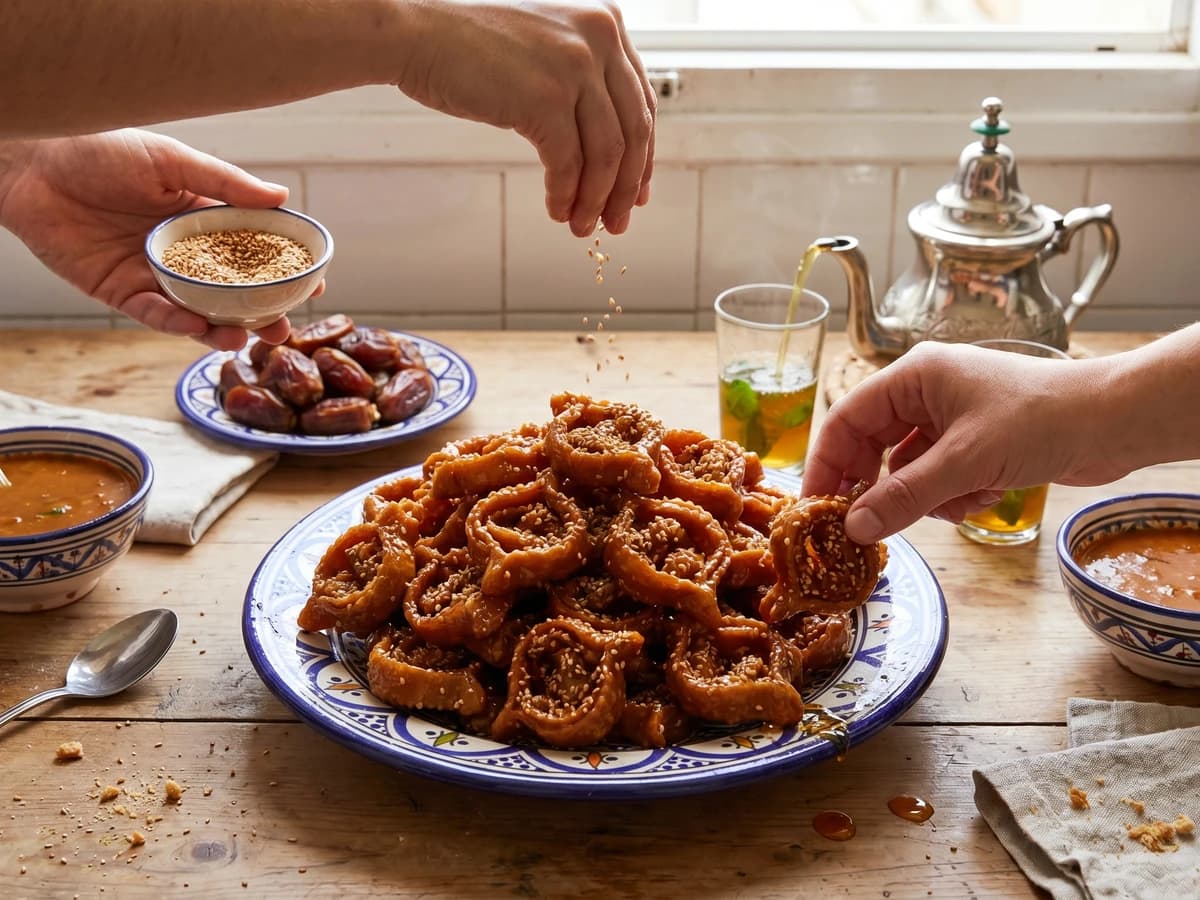
The flower of the Ramadan table: dough scented with toasted sesame, anise, saffron, and orange blossom water, fried crisp, then soaked in warm honey beside harira.

Chef Zohra
Slim warqa cigars filled with orange-blossom almond paste, fried until crisp under the teeth, then soaked in warm honey for the festive table.