
Chef Dimitra
Chios Nerantzi Glyko Koutaliou (Νεράντζι Γλυκό Κουταλιού)
Chios bitter orange peel rolled into tight coils, blanched through clean waters, then preserved in a clear fragrant syrup for the spoon-sweet tray.
A cooking platform built around craft, culture, and the stories behind what we eat.
Created by
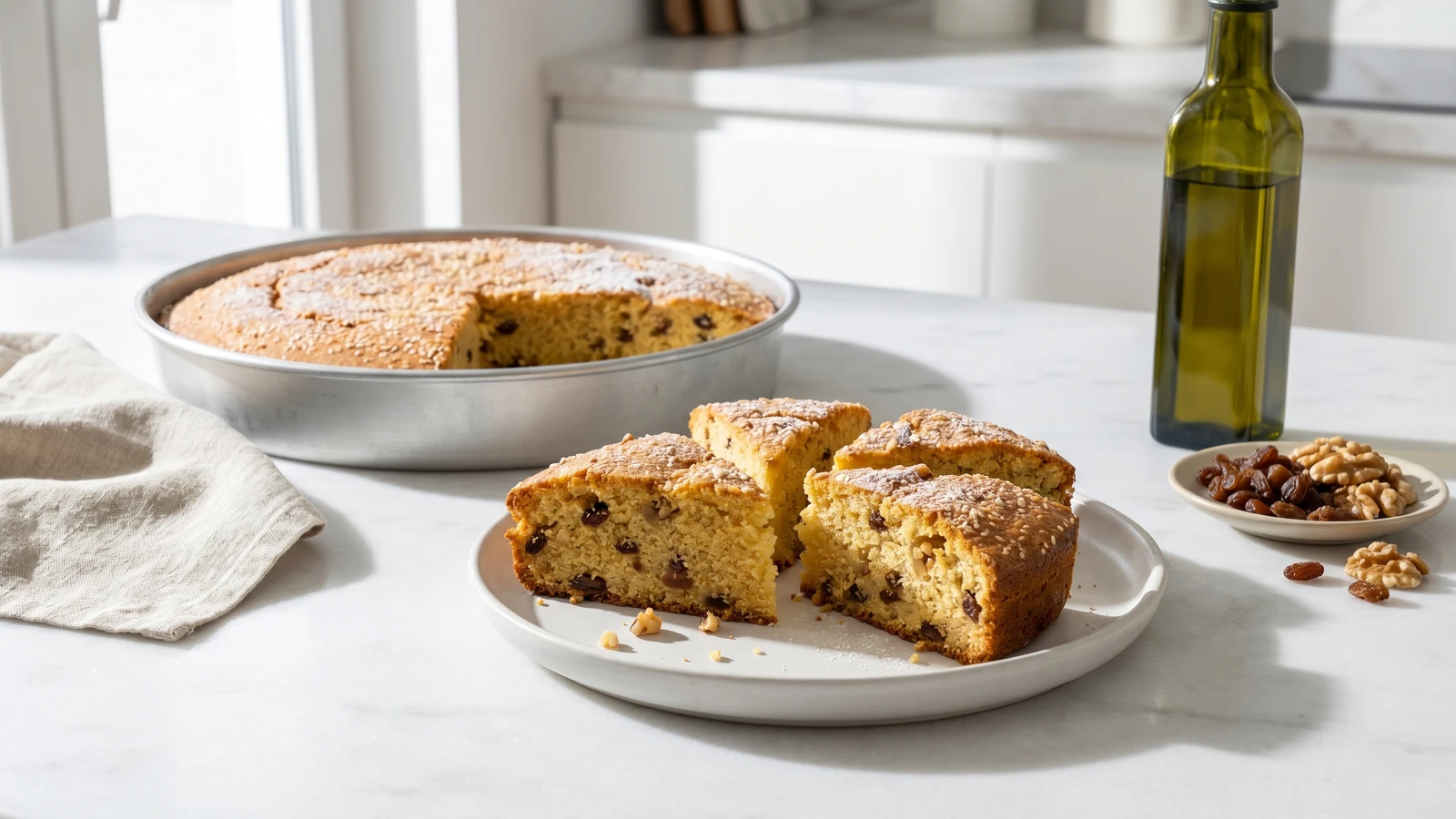
Rhodes-style Fanouropita is a simple nistisimo cake for Saint Fanourios: olive oil, orange juice, raisins and walnuts, baked plain so it can be blessed, shared, and kept moist for days.
Rhodes-style Fanouropita is the olive-oil and orange cake baked for Saint Fanourios, the saint people ask when something lost must be shown again. It is nistisimi, a fasting cake, with no eggs, butter, or milk. Its plainness is the point: olive oil gives the crumb, orange gives the scent, raisins and walnuts make it generous enough to carry to church and share.
The whole cake depends on restraint once the flour goes in. Whisk the oil, sugar, orange juice, and zest until the mixture is glossy, then fold in the flour only until it disappears and bake at once. The orange juice wakes the leavening. If the batter waits, the lift is spent in the bowl, not in the oven.
I keep this as the Rhodes register because the saint's story is tied to the island, though every Greek kitchen has its own hand for Fanouropita now. Some count seven ingredients, some nine. I keep the nine-ingredient habit here because it is the one most often sent to me from island families, and I don't change what makes it itself.
On Rhodes, the veneration of Saint Fanourios is tied to a late medieval icon found in a ruined church, and his feast is kept on 27 August. The name Fanourios is heard through fanerono, meaning 'to reveal,' which is why families bake Fanouropita when asking for something lost to be shown. Its seven or nine ingredients are popular devotional counting rather than church law, and the eggless, dairy-free batter belongs naturally to the Orthodox fasting table.
Quantity
500g, plus 1 tablespoon
plus extra for dusting the pan
Quantity
12g
Quantity
4g
Quantity
6g
Quantity
1g
Quantity
3g
Quantity
240ml, plus more for the pan
Quantity
220g
Quantity
300ml
Quantity
from 2 unwaxed oranges
finely grated
Quantity
120g
Quantity
100g
coarsely chopped
Quantity
15g
for the pan and top
Quantity
1 tablespoon
for dusting after cooling
| Ingredient | Quantity |
|---|---|
| all-purpose flourplus extra for dusting the pan | 500g, plus 1 tablespoon |
| baking powder | 12g |
| baking soda | 4g |
| ground cinnamon | 6g |
| ground clove | 1g |
| fine sea salt | 3g |
| extra virgin olive oil | 240ml, plus more for the pan |
| sugar | 220g |
| fresh orange juice | 300ml |
| orange zestfinely grated | from 2 unwaxed oranges |
| raisins | 120g |
| walnutscoarsely chopped | 100g |
| sesame seeds (optional)for the pan and top | 15g |
| icing sugar (optional)for dusting after cooling | 1 tablespoon |
Heat the oven to 170°C conventional, or 160°C fan. Oil a 26cm round metal tapsi, line the base with parchment, oil the parchment, and dust the sides with a little flour. If you're using sesame, scatter half over the base so it bakes into the crust.
Whisk the flour, baking powder, baking soda, cinnamon, clove, and salt in a large bowl until the spice color is even. Take 1 tablespoon of this dry mixture and toss it with the raisins and walnuts in a small bowl.
In a second bowl, whisk the olive oil, sugar, orange juice, and orange zest for about 1 minute, until the sugar feels less gritty and the mixture looks glossy and loose. It will not become creamy like butter cake batter. This is an oil cake, and it knows itself.
Pour the wet mixture into the dry ingredients and fold with a spatula only until no dry flour remains. Fold in the raisins and walnuts. The orange juice has already woken the leavening, so the batter belongs in the oven now, not after a long rest. That is how this fasting cake rises tender instead of heavy.
Scrape the batter into the prepared tapsi and smooth the top. Scatter over the remaining sesame if using. Bake for 45 to 55 minutes, until the top is deep golden, the edges pull slightly from the pan, and a skewer comes out with only a few moist crumbs.
Let the cake cool in the pan for 20 minutes, then turn it out carefully and cool completely on a rack. Dust with icing sugar if you like. If you're taking it for a blessing, keep it whole under a clean cloth and cut it afterward into small pieces for sharing.
1 serving (about 115g)
Culinary guides, cultural storytelling, and the editorial depth that makes cooking meaningful.
Discover Culinary ExplorerChef Dimitra
Chios bitter orange peel rolled into tight coils, blanched through clean waters, then preserved in a clear fragrant syrup for the spoon-sweet tray.

Chef Dimitra
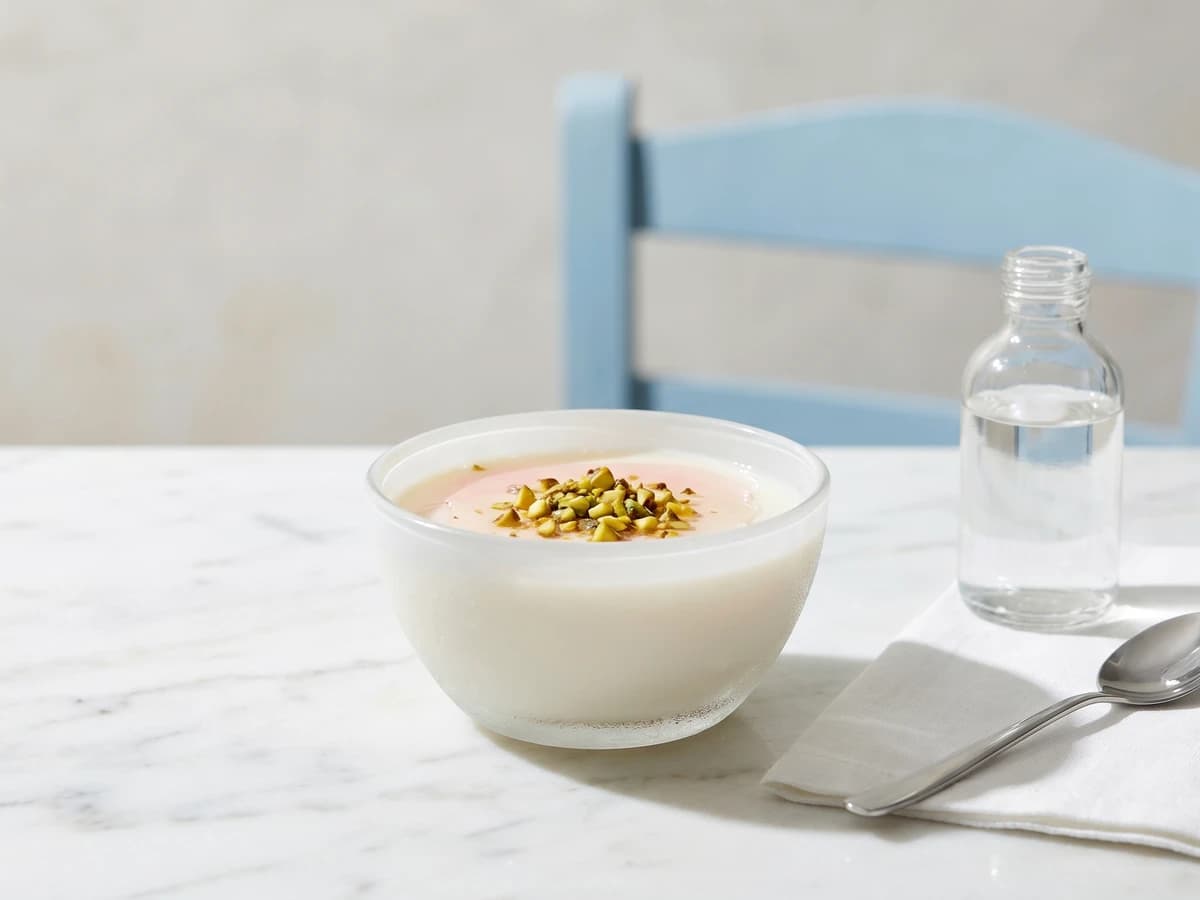
Chios gives vanilla submarine its mastic breath: a pearly spoon sweet stirred stiff, served cold in water, and offered as the simplest kerasma.
Chef Dimitra
Mahalepi is the cooling milk pudding of Cyprus and the Politiki table: pale, trembling, and loosened at the spoon with cold rosewater syrup.
Chef Dimitra
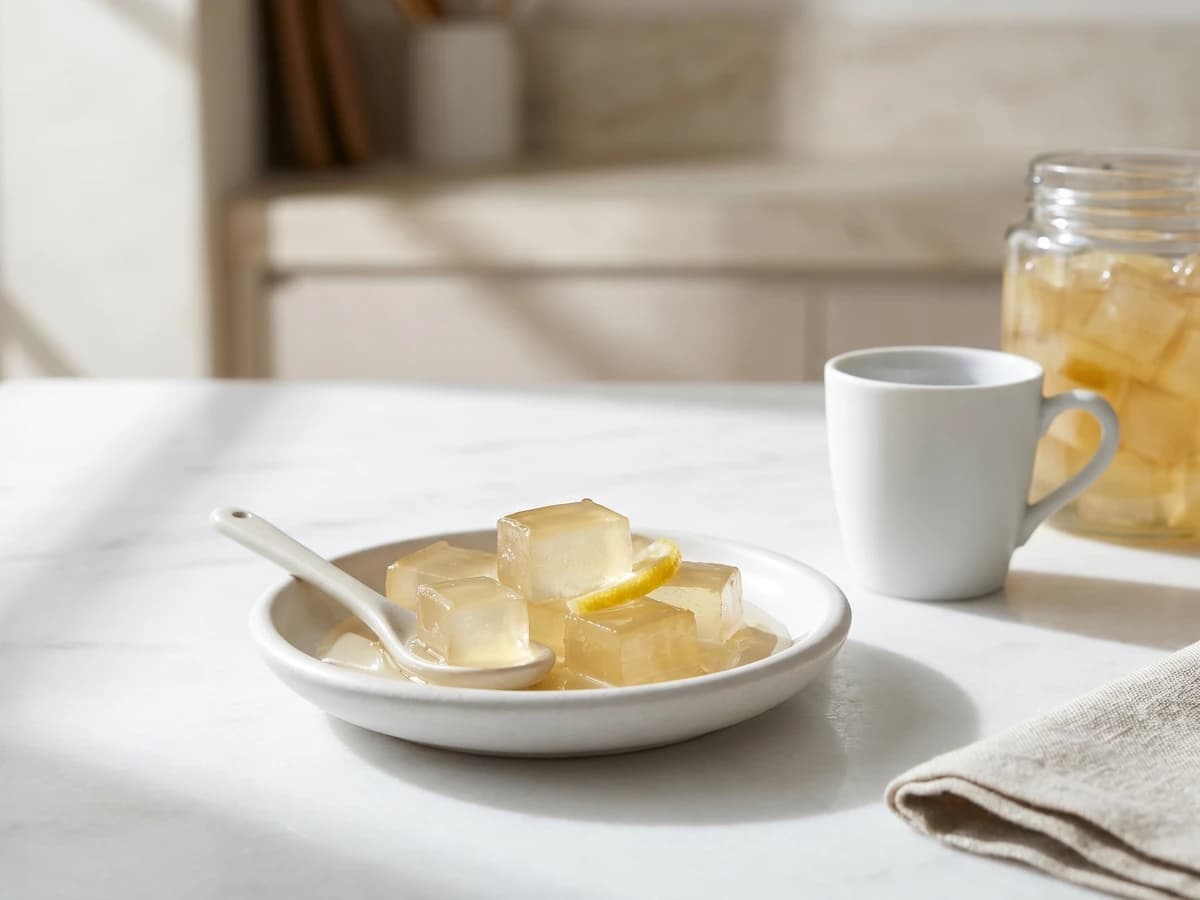
Cyprus keeps the watermelon after the red flesh is gone: firm white rind, lime-soaked for snap, simmered slowly in lemon syrup until each piece shines on the spoon.